How to Automate Replenishment Cycles and Zero-Party Data with Dodobird.ai and ActiveCampaign in 2026
Learn how to master automated replenishment emails and zero-party data in 2026 using Dodobird.ai and ActiveCampaign for habit-forming ecommerce growth.
In 2026, the DTC landscape has shifted from a gold rush of customer acquisition to a sophisticated game of hyper-retention. With customer acquisition costs (CAC) continuing their decade-long climb, the most profitable brands are no longer those with the biggest ad budgets, but those with the smartest habit-forming automation. For consumable brands in beauty, supplements, and pet food, the goal is no longer just a 'sale'—it is the engineering of a recurring consumption cycle. By leveraging the predictive power of Dodobird.ai alongside the robust orchestration of ActiveCampaign ecommerce automation, brands are now building 1:1 replenishment journeys that feel less like marketing and more like a personal assistant who knows exactly when your cupboard is bare.
The New Retention Economy: Why 2026 is the Year of the LTV
The math is undeniable: retaining an existing customer is 5 to 25 times less expensive than acquiring a new one according to data from Envive AI. In an era where privacy changes have made broad-stroke targeting less effective, focusing on the customers you already have is the only sustainable path to profitability. Statistics from HBR Data show that increasing customer retention by just 5% can boost profits by a staggering 25% to 95%.
| Metric | Acquisition Focus | Retention Focus (2026) |
|---|---|---|
| Relative Cost | High (Rising CAC) | 5x - 25x Lower |
| Profitability | Low (Initial Margin) | 25% - 95% Growth |
| Data Source | Third-Party Cookies (Deprecated) | Zero-Party Data |
| Message Type | Broad Discount Blasts | Predictive Replenishment |
As we navigate this year, the market for AI in marketing is projected to grow at a CAGR of 26.7% through 2034, as reported by the Digital Marketing Institute. This growth is fueled by tools that move beyond generic segments to create an "Audience of One," where every communication is tailored to an individual’s actual product usage.
"The marketer's role in 2026 has shifted from manual execution to strategic orchestration—humans provide the brand taste, while AI handles the data-heavy delivery."
Step 1: Calculating Individual Replenishment Cycles with Dodobird.ai
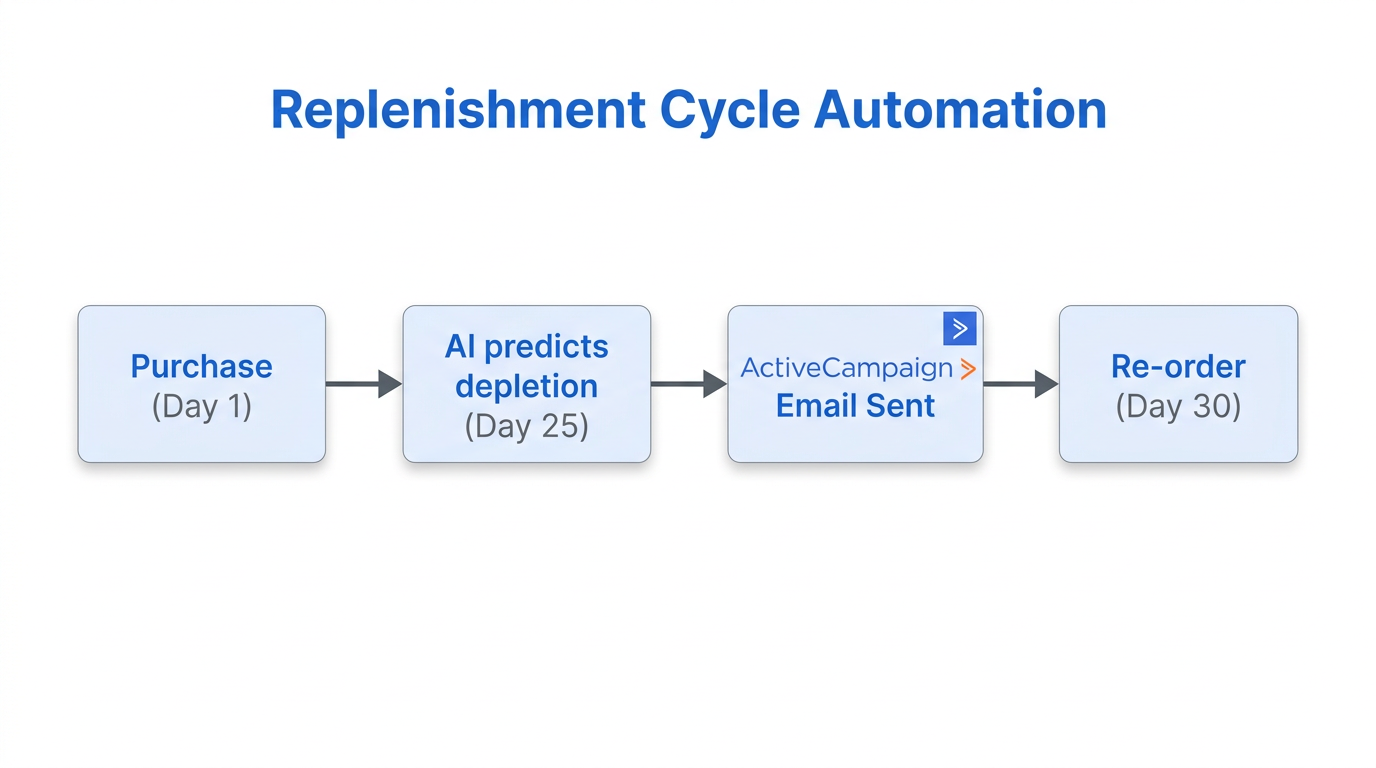
The biggest mistake consumable brands make is sending replenishment reminders based on an 'average' timeline. If you sell a 30-day supply of vitamins, sending a reminder on day 28 to everyone is inefficient. Some users take them every other day; others share them with a spouse. In 2026, static reorder emails are dead.
Using Dodobird.ai reorder reminders, brands can now calculate the exact date a specific customer is likely to run out of a product based on their unique consumption patterns. The AI analyzes past purchase frequency, quantity ordered, and even seasonal behavior to trigger a reminder precisely 3–5 days before the product is exhausted. This level of 1:1 hyper-personalization has led to businesses reporting a 41% increase in click-through rates (CTR) and a 20% increase in conversion rates, according to AI Bees.
Step 2: The Zero-Party Data Flow: Building Habit-Forming Tracks
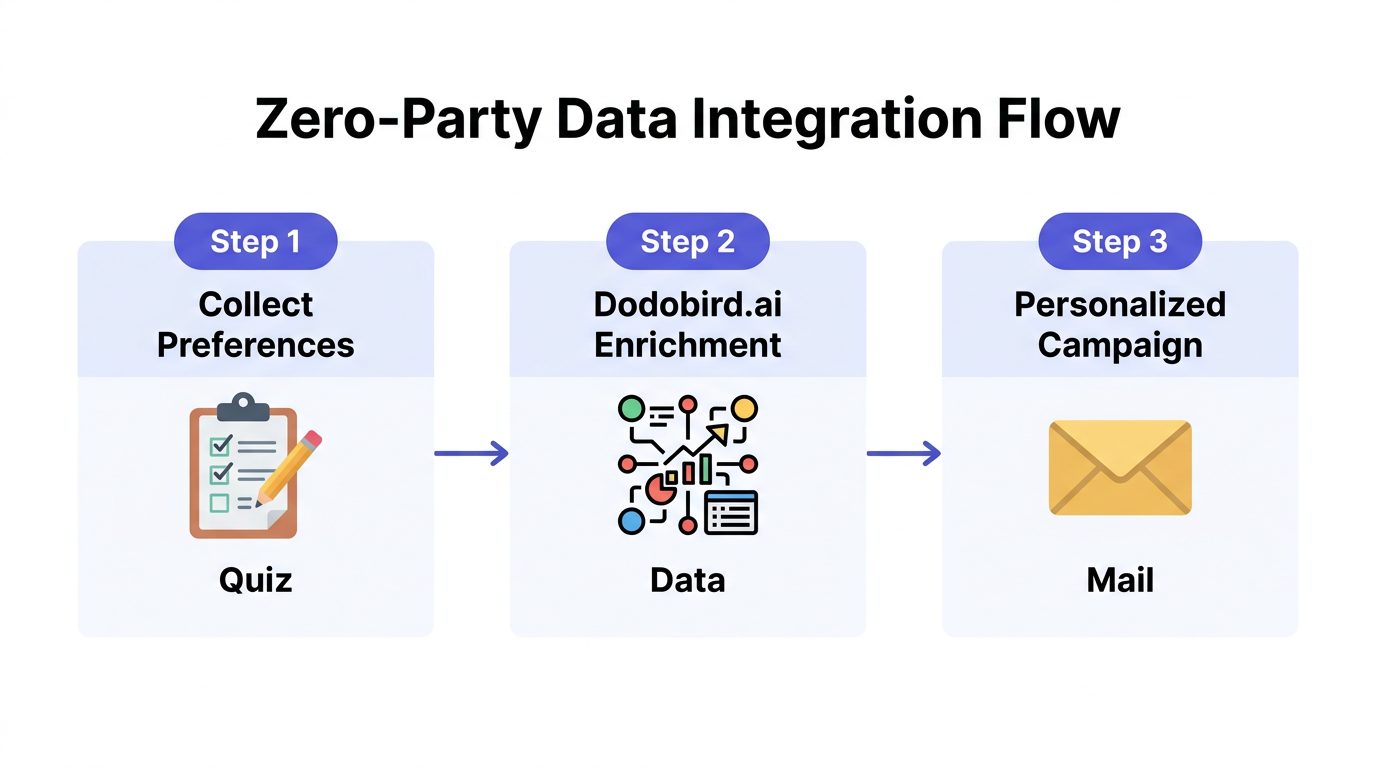
While replenishment data tells you when to sell, zero-party data tells you how to sell. Zero-party data is information that a customer intentionally and proactively shares with a brand. By 2026, experts at OneTrust predict that "privacy-first" marketing will be a major competitive advantage.
Using ActiveCampaign, you can trigger a post-purchase survey or quiz that asks the customer about their specific goals. For example, a skincare brand might ask: "What is your primary skin concern?" or "How many steps is your current routine?" This data is then fed into a "habit-building" email track. Instead of just asking for a reorder, the sequence provides a personalized 4-week guide to achieving their goals using the product they just bought. This shifts the relationship from transactional to transformational.
"Standard 'discount blasts' are losing effectiveness. AI is being used to weave personalized narratives that feel like a journey, not a sales pitch."
For brands looking to source authentic content for these guides, Stormy AI can help find UGC creators who specialize in specific niches, ensuring your habit-building tracks are fueled by relatable, high-quality video content that builds trust.
Step 3: Omnichannel Orchestration and Synchronization
In 2026, email is no longer a silo. To maximize consumable brand growth, you must synchronize email with SMS and push notifications. AI now ensures that if a customer opens your replenishment email, they don't get a redundant SMS two hours later. This unified retention ecosystem is critical; brands with strong omnichannel strategies retain 89% of customers compared to just 33% for those who don't, as noted by Klaviyo's latest benchmarks.
Your ActiveCampaign workflow should follow this logic:
- T-minus 5 days: Send a predictive replenishment email via Dodobird.ai data.
- T-minus 3 days: If the email was not opened, trigger a personalized SMS with a 1-click reorder link.
- T-minus 1 day: Use a mobile app push notification (if applicable) for a final reminder.
| Channel | Role in 2026 Workflow | Best Practice |
|---|---|---|
| The Foundation | Use for education and long-form storytelling. | |
| SMS | The Closer | Short, high-urgency with 1-click reorder links. |
| Push | The Gentle Nudge | Utility-focused reminders (e.g., "Time for your morning dose!"). |
Step 4: Optimizing for the 2026 'Intelligent Inbox'
A major shift this year is how Gmail and Outlook use AI to summarize and prioritize content. Marketers must now optimize for "machine-readable" content so that AI assistants accurately highlight the value proposition in the inbox preview. Experts at Validity emphasize that using clear schema markup and concise, benefit-driven pre-header text is no longer optional—it’s the difference between being featured in the "Actionable" summary or being buried in the archive.
Standard automated flows generate 320% more revenue than non-automated campaigns according to Campaign Monitor, but this only works if your email actually reaches the human eye through the AI filter. Focus on clear, intent-based subject lines that the AI can easily parse.
"Relevance over scale is the core driver of retention. AI tools are essential, but the psychology of timing remains the engine." — Chase Dimond
Case Study: How Jubilee Scents Competed with Enterprise Giants
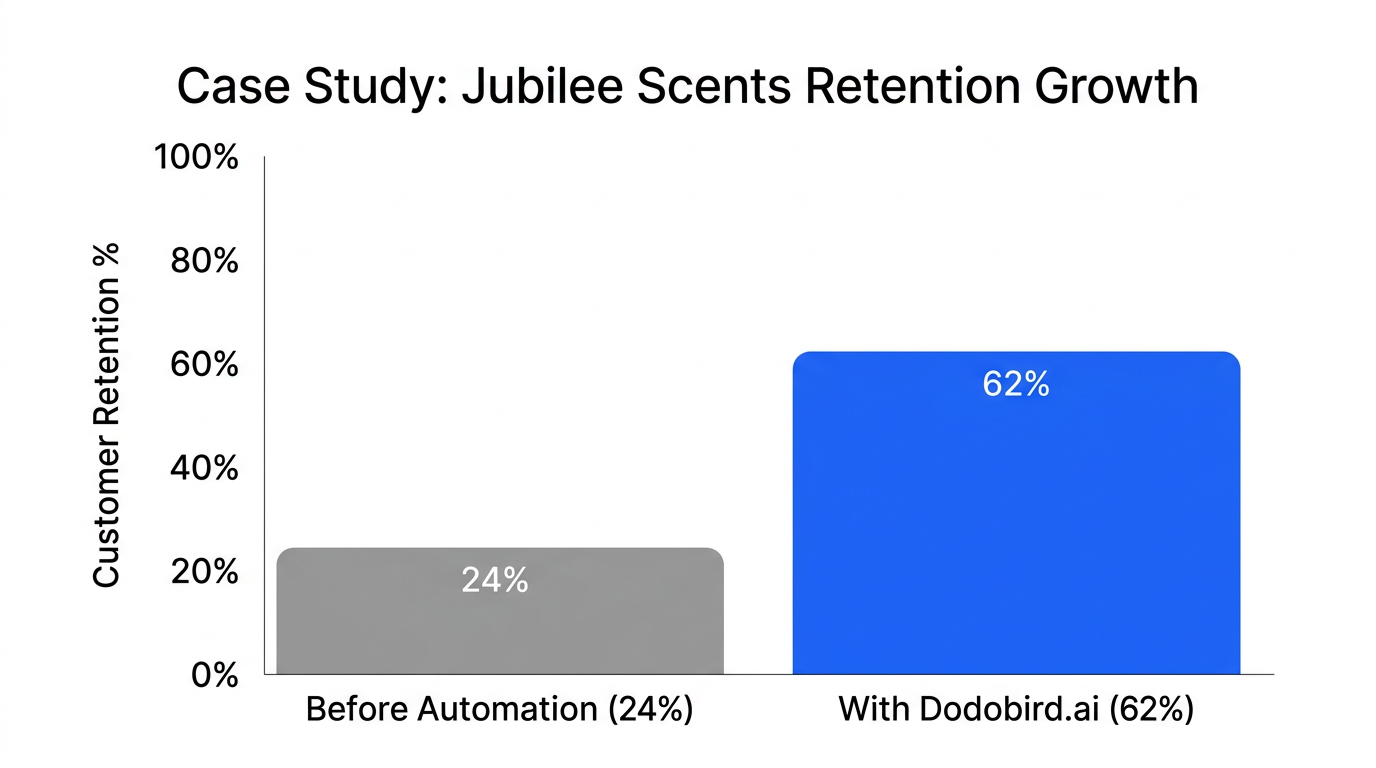
Jubilee Scents, a mid-sized fragrance brand, faced stiff competition from global conglomerates with massive budgets. By implementing AI-powered 1:1 post-purchase nurturing, they managed to achieve enterprise-level results. They used Dodobird.ai to track when customers were likely to finish their 50ml bottles and triggered a series of emails featuring UGC from Stormy AI-sourced influencers. The result was a 13.8% uplift in revenue and a significant reduction in churn, proving that AI levels the playing field for agile DTC brands. This story, highlighted by Done For You, demonstrates that automation is the great equalizer.
Conclusion: The Habit-Forming Future
Success in 2026 for consumable brands is measured by the strength of the customer habit. By combining the predictive intelligence of Dodobird.ai with the automation power of ActiveCampaign, you can transition from a brand that 'sells products' to a brand that 'supports a lifestyle.' Start by auditing your current reorder timelines, implementing a zero-party data survey, and ensuring your content is optimized for the new intelligent inboxes. The brands that master these 1:1 loops today are the ones that will dominate the market for the next decade.