In the high-stakes world of Silicon Valley, we’ve moved past the era of 'triple, triple, double, double.' In 2026, the new gold standard for hyper-growth is 10x, 10x, 10x. This isn't just a theoretical target; it's the reality for Anthropic, which recently stunned the market by clocking a record-breaking $6 billion in revenue in a single month. To put that in perspective, Anthropic’s monthly haul now exceeds the annual revenue of enterprise behemoths like Snowflake and Databricks. As we navigate the current landscape, the question isn't just who has the best model, but who is winning the hearts (and wallets) of the enterprise.
While OpenAI remains a household name, a significant shift is occurring in how high-performance marketing and operations teams select their stack. We are entering the era of vibe-based tool selection, where the nuances of a model's 'personality' matter as much as its parameter count. Whether it's using Claude for business use cases like creative writing or leveraging specialized platforms like Stormy AI for creator discovery, the enterprise is moving away from generalists and toward precision-engineered intelligence.
The $6 Billion Flashpoint: Deconstructing Anthropic’s 2026 Surge
 14:34
14:34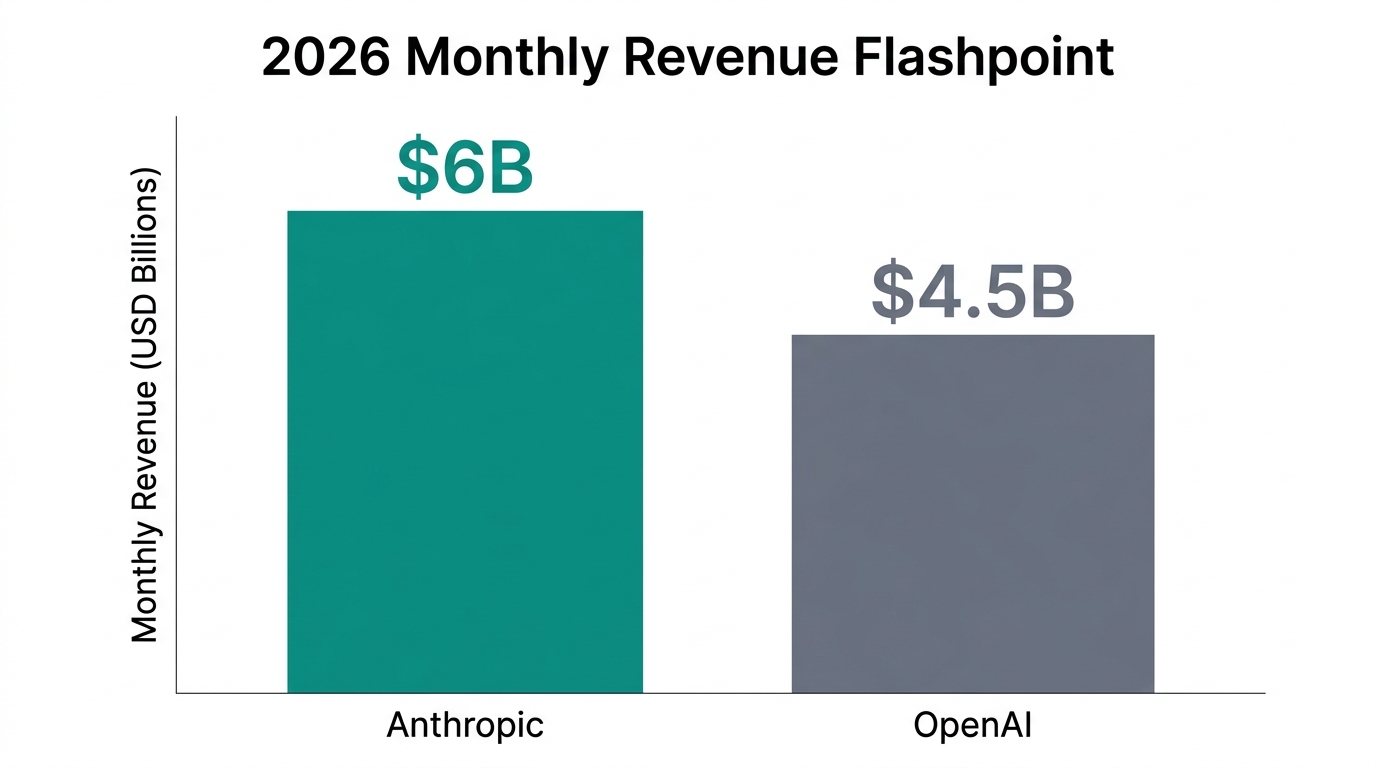
The Anthropic revenue growth 2026 trajectory is nothing short of an anomaly. Just two years ago, the idea of an AI lab generating $72 billion in annualized revenue would have been dismissed as fever-dream speculation. Yet, by February 2026, Anthropic achieved exactly that. This surge is driven by a massive pivot in how corporations deploy AI: moving from 'experimental playgrounds' to 'core infrastructure.'
Unlike the early days of 2024, where growth was capped by GPU scarcity, Anthropic’s CEO, Dario Amodei, has successfully navigated the 'buy or die' hardware cycle. By investing heavily in server inventory while maintaining a more disciplined roadmap than the trillion-dollar data center ambitions of Sam Altman, Anthropic has positioned itself as the stable, reliable partner for the Fortune 500. For growth-stage startups, this reliability is the foundation of their enterprise AI market share gains.
Vibe-Based Selection: Why Teams Choose Claude over GPT-5
50:48In 2026, high-performers are no longer 'monogamous' with their AI tools. They are increasingly 'polyamorous,' using different models for specific psychological and functional needs. This 'vibe-based' selection has become the secret weapon of elite marketing teams. When you need writing that feels human, nuanced, and empathetic, you go to Claude. When you need a legal question answered with cold, rigorous, and thorough logic, you might turn to Grok.
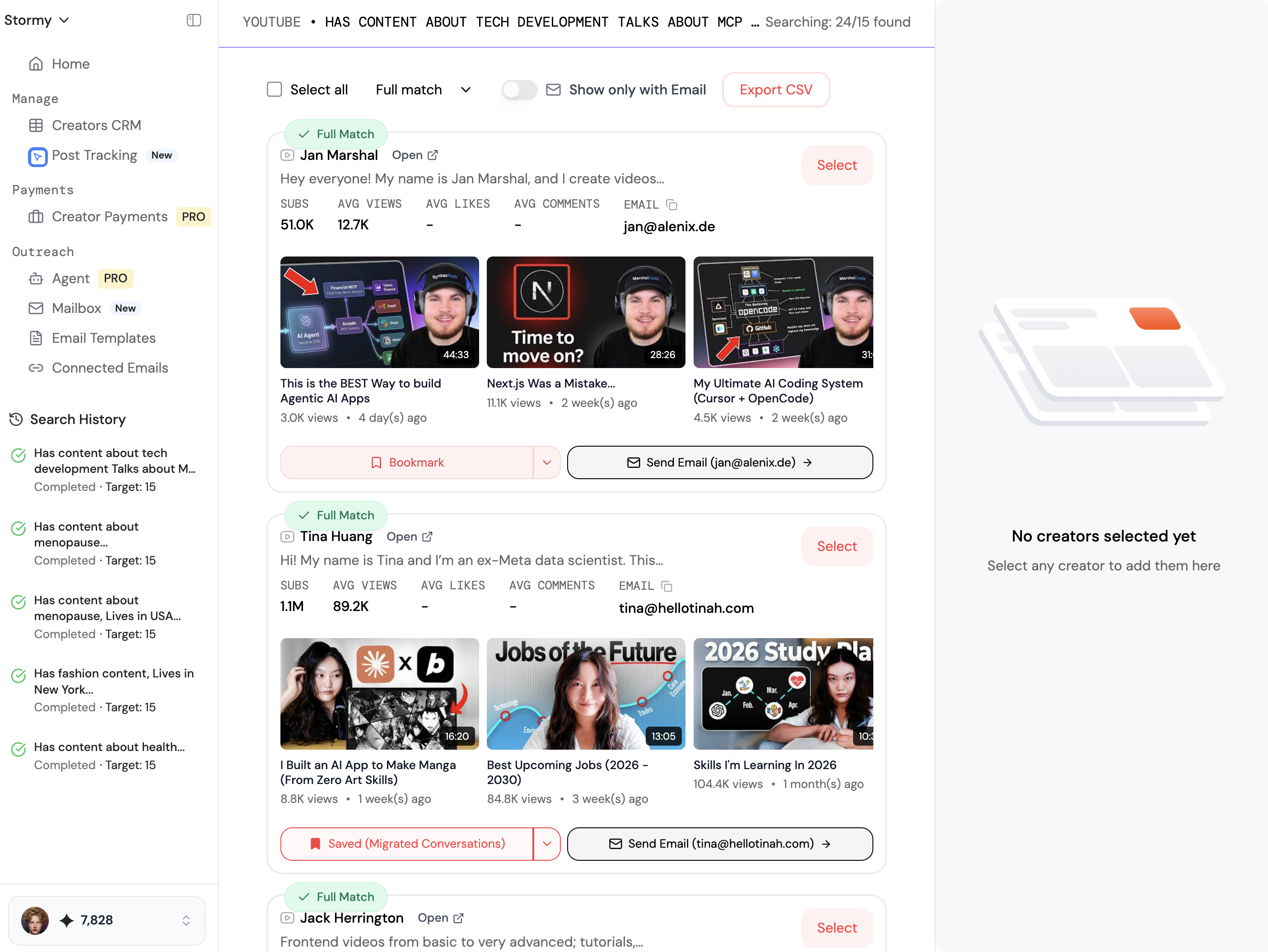
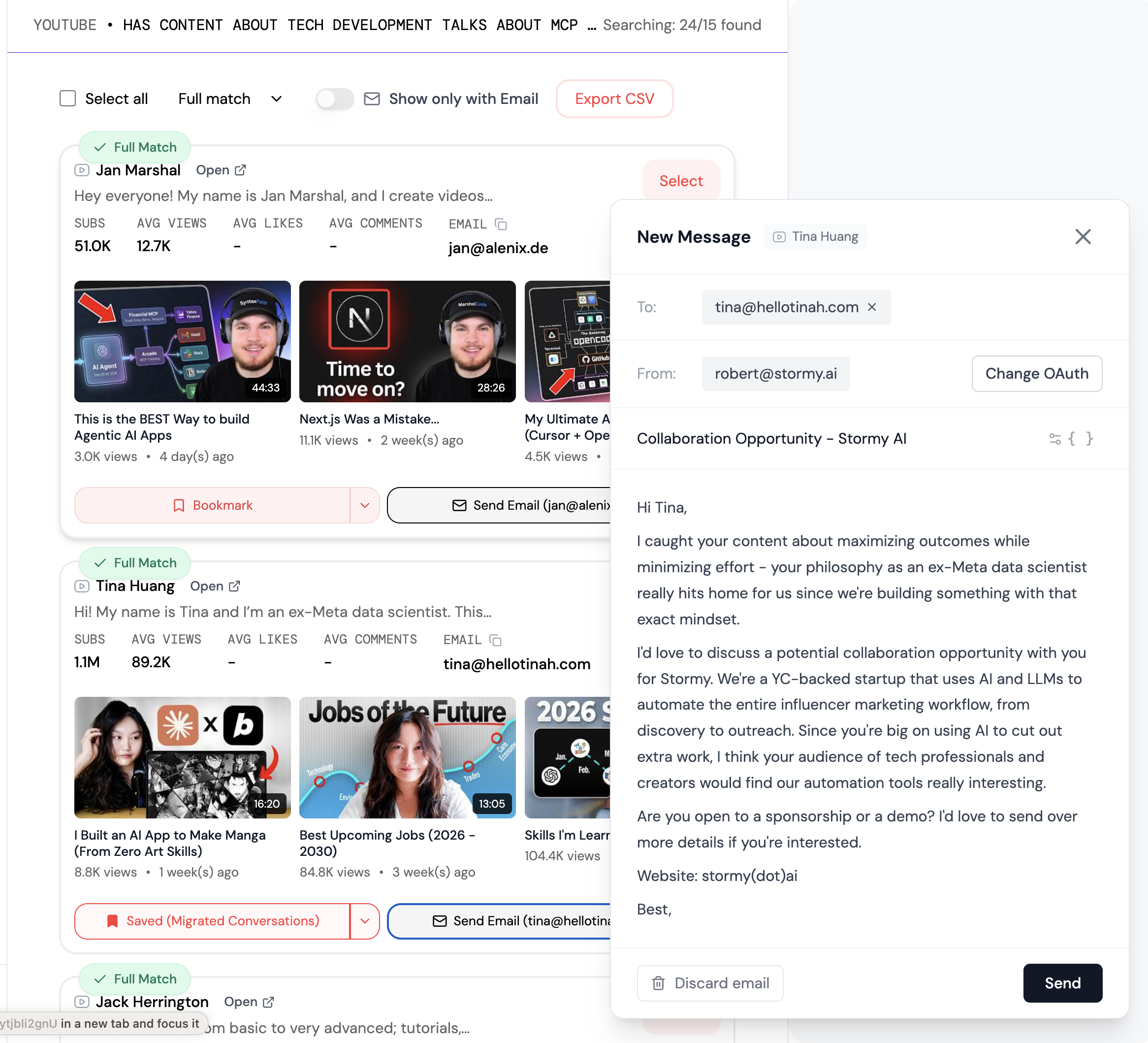
This specialization is particularly evident in the world of influencer marketing. General-purpose LLMs can write a decent caption, but they lack the real-time data to find the right creators. This is where Stormy AI takes the lead. By combining Anthropic-level reasoning with a live search engine across TikTok, Instagram, and YouTube, Stormy allows brands to move from 'vibe' to 'validation' instantly.
"We’ve reached a point where the 'vibe' of the AI is a feature, not a bug. Claude writes like a poet; GPT-5 writes like a consultant. Choosing between them is the new form of brand identity."
Founder Mode 2.0: Using Claude for Organizational Optimization
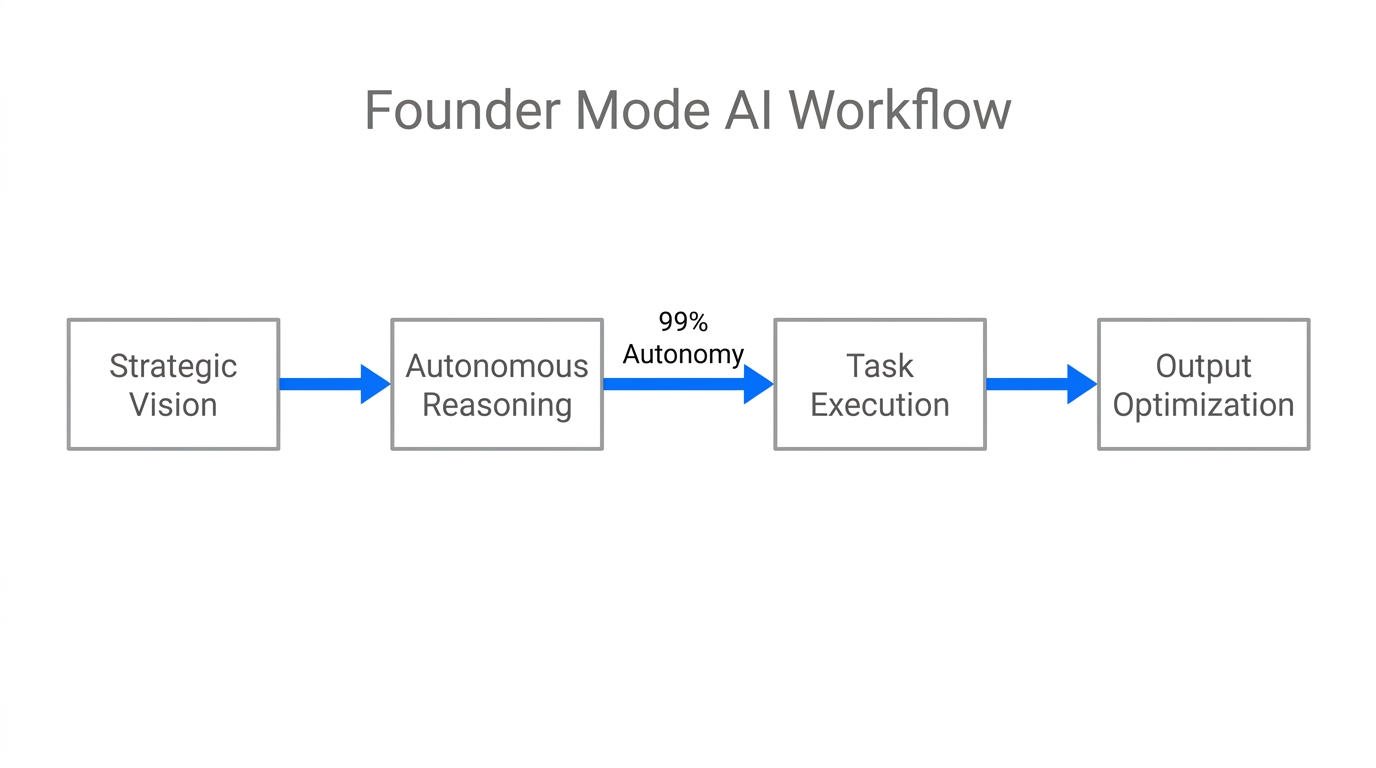
One of the most fascinating Claude for business use cases emerging this year is the optimization of partner dynamics and 'Founder Mode' communications. Savvy CEOs are now using Claude to read their Slack channels—not just for summaries, but for personality coaching. By feeding Claude communication logs and personality assessments (like the popular 2026 Wilkinson tests), founders are receiving real-time advice on how to manage conflict.
Imagine a CEO who is naturally blunt and critical. Claude can analyze a Slack draft and warn: 'Your partner tends to get defensive if you criticize operations directly. Try framing this as a shared opinion on future strategy instead.' This level of emotional intelligence is why Claude is winning the battle for the C-suite. It’s not just a tool for 'doing work'; it’s a tool for 'managing humans.'
| Feature | Anthropic (Claude) | OpenAI (ChatGPT) | Stormy AI (Specialized) |
|---|---|---|---|
| Primary Vibe | Creative, Nuanced, Empathetic | Analytical, Systematic, Generalist | Action-Oriented, Marketing-First |
| Best Use Case | Writing & Communication Strategy | Coding & Logic Heavy Tasks | Influencer Discovery & Outreach |
| Market Strategy | Enterprise Reliability | Ecosystem Dominance | Niche AI Transformation |
The Mobile Battlefront: How Anthropic Won the App Store
A major pillar of the Claude AI growth strategy has been its aggressive pursuit of mobile-first distribution. While OpenAI initially dominated the desktop, Anthropic recognized that 2026 is the year of the 'AI Sidekick.' By becoming the #1 app in the Apple App Store and Google Play, Claude has integrated itself into the daily workflows of mobile-first professionals.
This mobile dominance is crucial because it captures the 'interstitial time' of the modern executive—the 15 minutes between meetings where they need a quick briefing or a draft of a delicate email. Furthermore, the integration of AI agents that can 'see' and 'act' within mobile OS environments has widened the gap between Anthropic and its legacy competitors. For brands, this means their AI strategy must account for both desktop rigor and mobile agility.
The New Oil: Niche Data Moats and the Niantic Strategy
30:39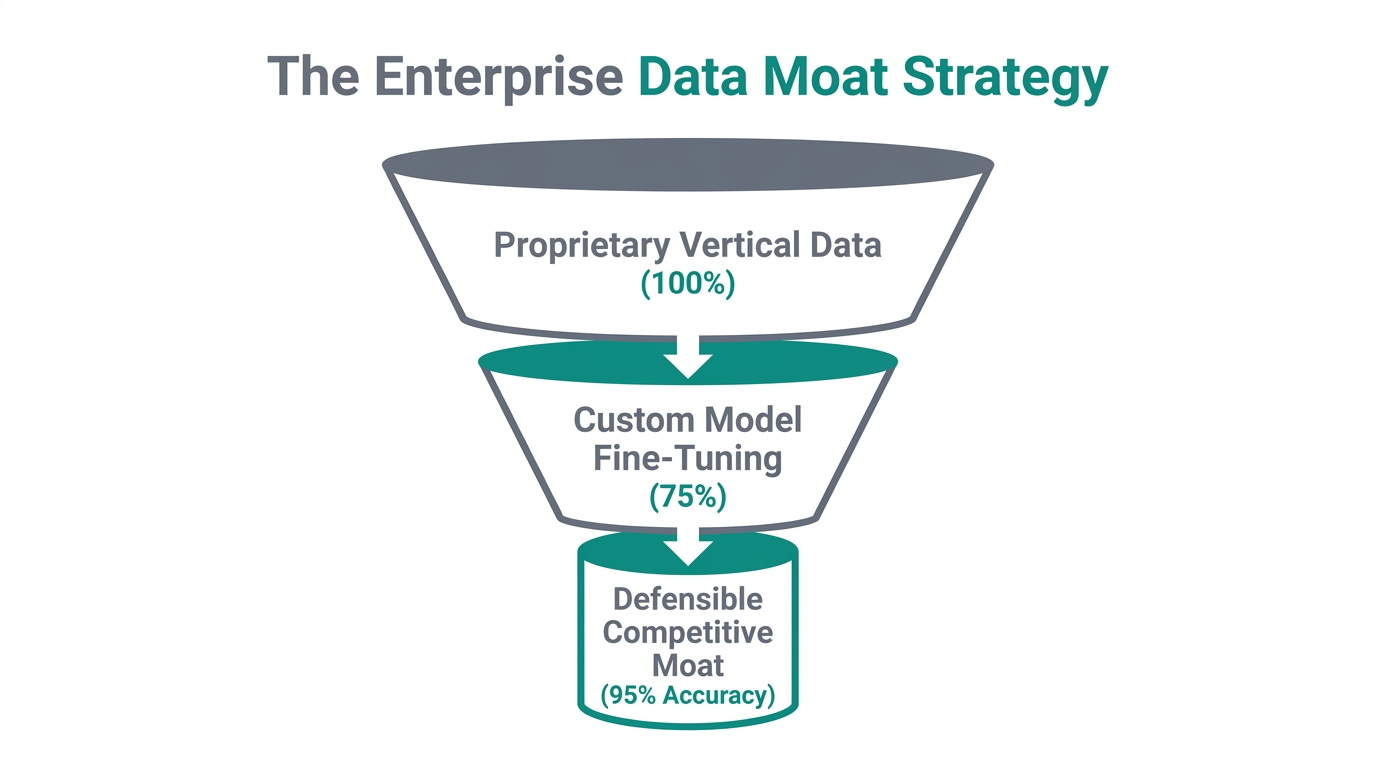
We’ve all heard that 'data is the new oil,' but in 2026, we’ve realized that generic web data is essentially kerosene—useful for lighting lamps, but not for winning a race. The real value lies in niche, real-world data sets. A prime example is Niantic, the creator of Pokémon Go. While the world thought they were just a gaming company, they were actually building a spatial data goldmine.
By licensing millions of street-level photos captured by players, Niantic is now the backbone of the AI delivery bot industry. They have the 'ground truth' of what every sidewalk in the world looks like—data that even Google’s Street View cars can’t match in frequency or detail. This enterprise AI market share battle is increasingly fought over who owns these unique, non-scrapable data sets.
"The biggest AI wins aren't coming from the smartest models; they're coming from the teams that found a lottery ticket in their back pocket—niche data that no one else thought to collect."
The Opportunity: Selling AI Transformation in 2026
32:40With the landscape shifting so rapidly, the biggest business opportunity today isn't building the next LLM—it’s selling AI Transformation. Much like the 'Social Media Marketing Agency' (SMMA) craze of the 2010s, 'AI Transformation Agencies' are the new business-in-a-box. Companies like Salesforce have paved the way by integrating AI into their core CRM, but local businesses still need a 'bridge' to understand how to apply it.
Whether you are helping a retail shopping center owner use Perplexity to track tenant expansions or helping a mobile app developer use Stormy AI to automate their UGC creator pipeline, the blueprint is the same: find a monotonous task, audit it, and sell the automated solution. The margins for these 'service-as-a-software' businesses are reaching a staggering 75%, making them as attractive to investors as traditional SaaS.
Conclusion: The Era of Specialization
As we look at the Anthropic vs OpenAI for marketing debate, it’s clear that OpenAI is building the 'OS of the world,' but Anthropic is building the 'companion for the professional.' For enterprise leaders, the choice isn't binary. The winning strategy in 2026 is to build a stack that leverages the creative empathy of Claude, the logical rigor of Grok, and the specialized precision of tools like Stormy AI.
The era of the 'one-size-fits-all' AI is over. We are now in the age of the specialized agent—where good taste, niche data, and automated implementation define the winners of the growth race. If you aren't already auditing your workflows for AI transformation, you aren't just behind; you're standing still while the rest of the world 10xes.