In 2026, the traditional search engine results page (SERP) has transformed into a conversation. The old dream of ranking #1 for a high-volume keyword has been replaced by a more complex, and often more rewarding, challenge: becoming the definitive source for the AI agents that users now rely on. With 69% of searches now ending without a single click, the battleground for visibility has shifted from blue links to Large Language Model (LLM) citations. If your brand isn't being quoted by Perplexity, Gemini, or ChatGPT, you effectively don't exist in the modern digital ecosystem.
This is the era of Answer Engine Optimization (AEO) 2026. It is no longer enough to be indexed; you must be ingested. Marketing teams are moving away from surface-level keyword stuffing and toward deep Logic Embedding, ensuring that when an AI agent synthesizes an answer for a potential customer, your brand’s data is the foundation of that response. This guide explores how tools like Eesel AI are facilitating this transition, allowing companies to reclaim their share of voice in a zero-click world.
The New North Star: AI Citation Frequency
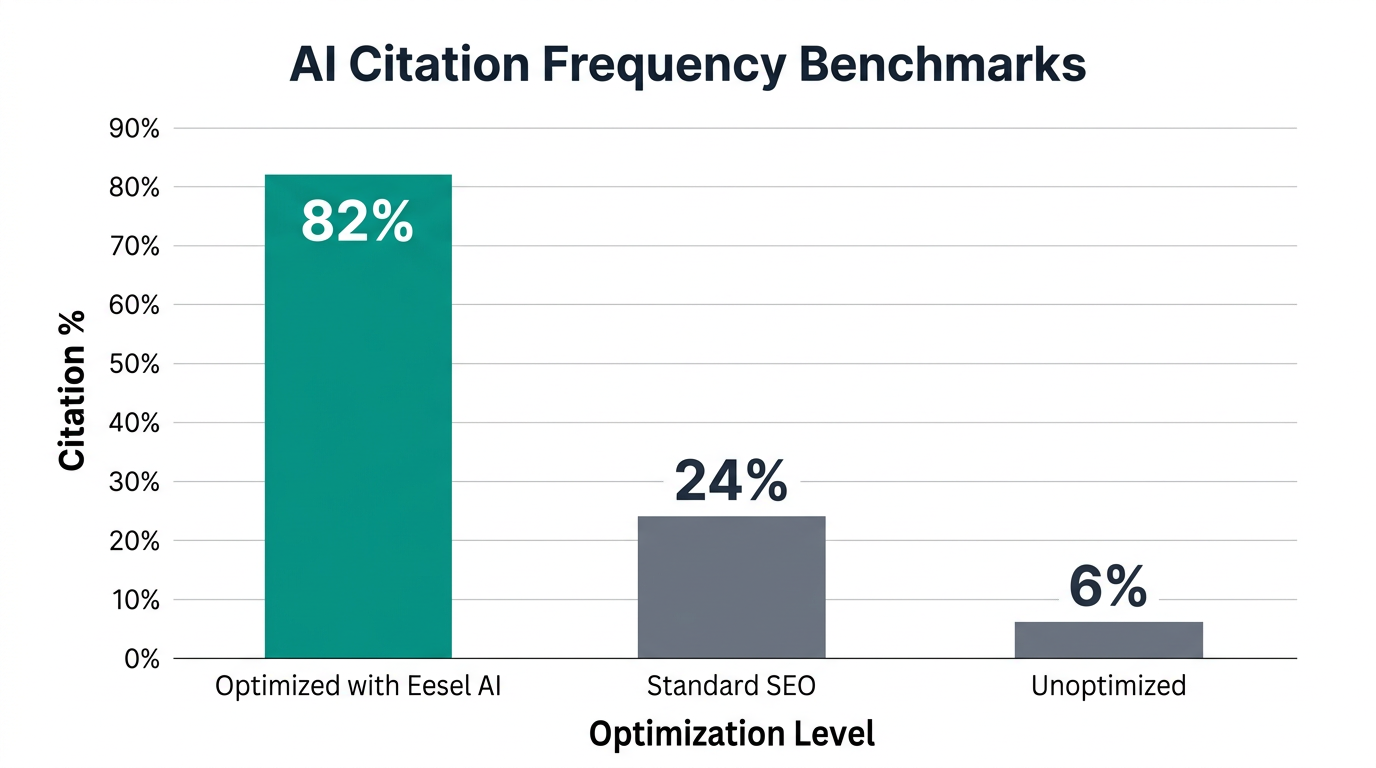
For decades, the metric of success was the click-through rate (CTR) from Google. However, as Search Generative Experiences (SGE) and standalone answer engines dominate the market, clicks have become secondary to AI Citation Frequency. This metric measures how often an AI agent cites your brand as a primary source when answering user queries. According to Averi AI, marketers who prioritize citation frequency over traditional rankings see a 40% higher brand recall among users who rely on voice and chat interfaces.
"AI Citation Frequency is the new PageRank. In 2026, your authority isn't measured by how many people click your link, but by how many AI models trust your data enough to quote it."
To win at AEO, you must understand that AI models don't just look for keywords; they look for relationships and structured truths. They prioritize sources that are clear, factual, and easily digestible by their training algorithms. High citation frequency leads to implied authority, which is the cornerstone of consumer trust in 2026. When a user asks, "What is the most reliable CRM for a startup?" and ChatGPT answers with your brand name, the conversion happens within the chat interface, long before a user ever lands on your pricing page.
Leveraging Eesel AI for SEO Domination
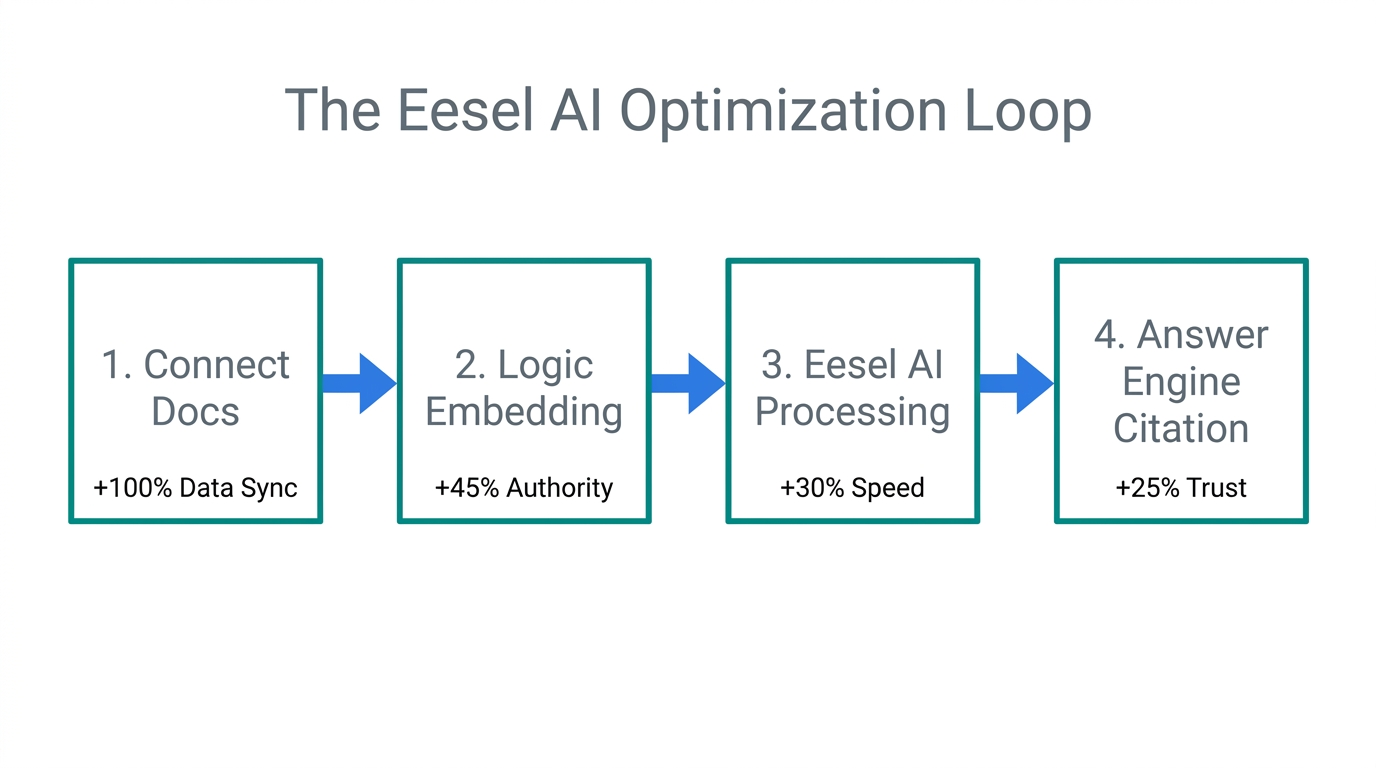
One of the most effective ways to influence AI models is to feed them the right data through the platforms they use to scrape and learn. Eesel AI has emerged as a leader in this space, offering a unique utility for marketers. While many see it as a knowledge management tool, savvy "Marketing Engineers" are using Eesel AI for SEO purposes by creating high-quality, structured data repositories that AI agents can easily parse.
By using Eesel AI for SEO, brands can generate content—such as detailed blog posts and technical documentation—specifically designed to target AI search citations. Eesel’s ability to treat AI as a utility, often charging as little as $99/month for 50 high-quality blog posts, allows for the scale needed to saturate the "latent space" of LLMs. This saturation ensures that when a model like Perplexity performs a real-time web search, it encounters your optimized content repeatedly across different high-authority nodes.
| Strategy Component | Legacy SEO (2022) | AEO with Eesel AI (2026) |
|---|---|---|
| Primary Goal | Organic Traffic/Clicks | AI Citation & Authority |
| Content Focus | Keyword Density | Logic Embedding & Entity Relations |
| Distribution | Social/Backlinks | AI Agent Knowledge Bases |
| Optimization | On-page Metadata | Structured Data & 'Brand Bibles' |
When you use Eesel AI to manage your brand's public knowledge, you are effectively creating a roadmap for AI agents. By structuring your most important product claims and data points into these agents, you reduce the likelihood of the "Sea of Sameness" where AI output becomes homogenized and generic. Instead, you ensure the AI pulls your specific definitions and your unique value propositions.
The Zero-Click Search Strategy: Winning Without the Visit
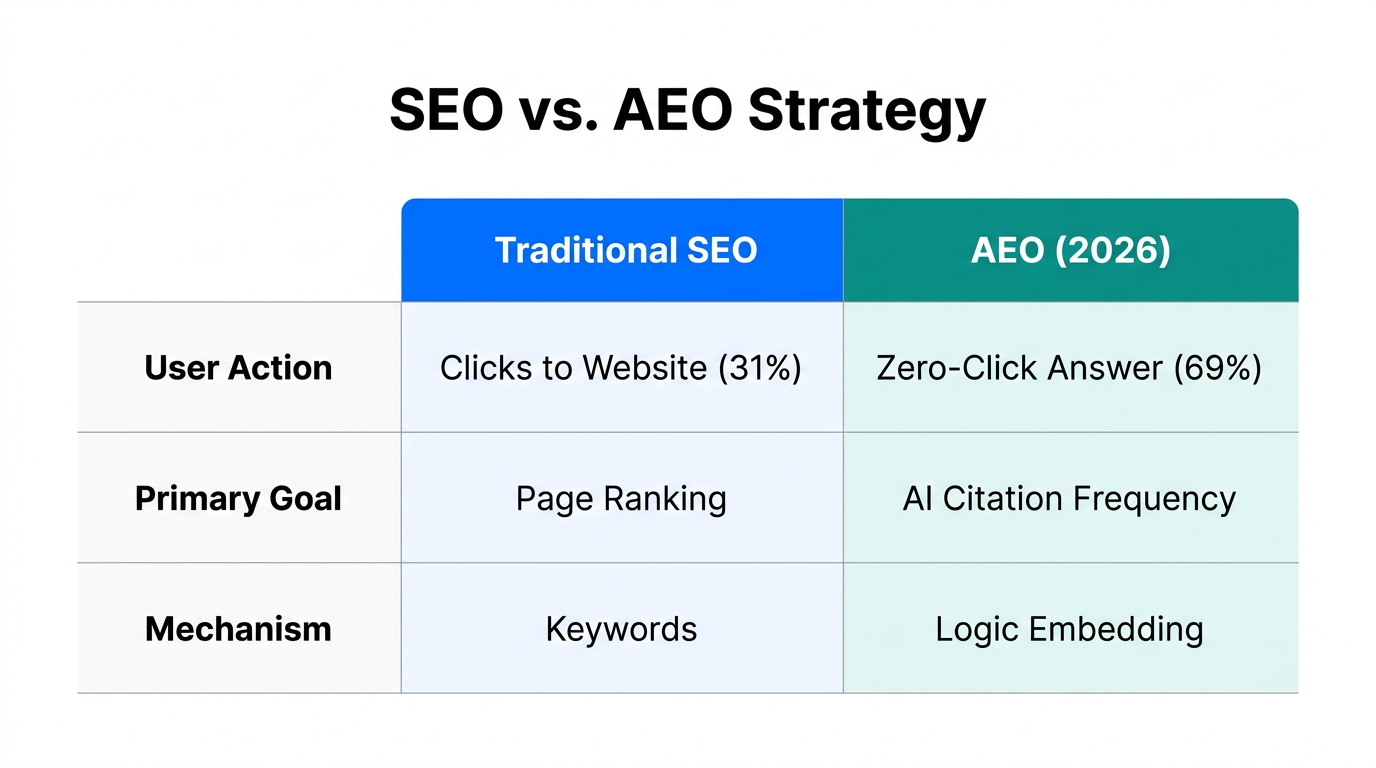
The zero-click search strategy is a response to a world where Google and Bing provide the answer directly on the result page. In 2026, informational queries—those that start with "How to" or "What is"—rarely drive traffic. However, they drive brand influence. To win, you must optimize your content to be the snippet that the AI uses. This requires a shift toward extremely concise, data-rich introductory paragraphs and clear, bulleted lists that AI agents can easily extract.
Consider the ROI reality of 2026: organizations that have integrated "Agentic AI" into their workflows are seeing a 32% reduction in CAC because they are capturing users at the intent phase within the answer engine, rather than competing for expensive clicks later in the funnel. Platforms like Stormy AI can help here by identifying the influencers and creators whose content is most frequently cited by AI, allowing you to collaborate with the very sources that are training the next generation of LLMs.
"If 70% of your users never reach your website, your website is no longer your most important asset. Your 'data footprint' is."
To implement a zero-click strategy, focus on conversational long-tail queries. While broad terms are swallowed by AI Overviews, specific, multi-layered questions like "How do I integrate Stripe with a custom React CRM for a subscription model?" still drive high-intent human traffic. These queries are too specific for a generic AI summary to satisfy fully, leading the user to click the cited source for deeper reading. This is where SEO.com reports the remaining 31% of clicks are currently concentrated.
Building a 'Brand Bible' and Logic Embedding
One of the biggest risks in 2026 is AI hallucination. When an LLM doesn't have a definitive source for your brand's specific details, it makes them up. To prevent this, marketers are now building "Brand Bible" PDFs—comprehensive, structured documents that outline every factual detail about the brand, from pricing tiers to technical specifications. By uploading these to custom GPTs, Claude Projects, or using a tool like Gumloop to feed them into your content workflows, you ensure consistency across all AI outputs.
This leads us to the concept of Logic Embedding. Unlike keyword stuffing, which focuses on repetition, logic embedding focuses on the semantic relationship between concepts. For example, instead of repeating the word "fast shipping," you embed the logic: "Our delivery infrastructure utilizes 14 regional hubs to ensure sub-24-hour fulfillment for 90% of the US population." The AI understands the logic of the speed, rather than just the keyword. This level of detail makes your brand more "citeable" because you are providing the evidence that AI agents crave to make their answers appear more credible.
The Playbook: Optimizing for Perplexity and Beyond
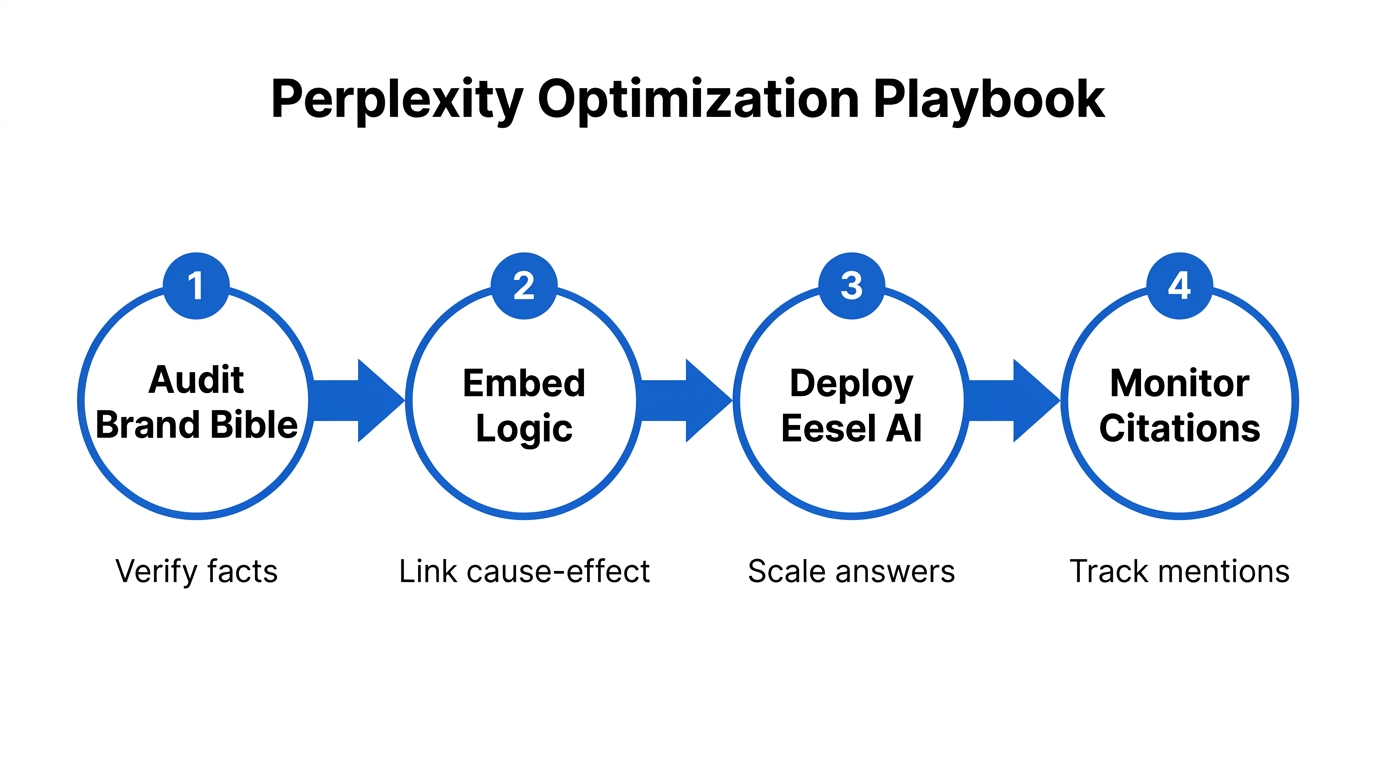
Winning in AEO requires a systematic approach. You are no longer just a content creator; you are a Marketing Engineer orchestrating a fleet of agents. Follow this 2026 AEO Playbook to stay ahead of the curve:
Step 1: Audit Your AI Citation Share
Use tools to monitor how often your brand appears in answers on Perplexity, Gemini, and ChatGPT. If your competitors are being cited more frequently for your core services, you need to identify the "Knowledge Gaps" where the AI is lacking information about you. Companies like 6sense are now providing predictive analytics that show which AI models are influencing your target buyers.
Step 2: Create Structured Data Repositories
Move beyond the blog. Create structured FAQ pages, technical wikis, and JSON-LD schema that describe your brand's entities. Use Eesel AI to organize this data into a searchable knowledge base that you can then "leak" to search crawlers through high-authority guest posts and press releases.
Step 3: Implement Logic Embedding
Rewrite your core service pages to focus on how and why your product works, rather than just what it is. AI agents are trained to recognize logical patterns. If you explain the mechanics of your value proposition clearly, the AI is more likely to use that explanation in its response to a user query.
Step 4: Monitor the 'Agent Registry'
Stay updated with the Agentic Advertising Management Protocols (AAMP). In 2026, agents are beginning to buy and sell ad inventory autonomously. Ensuring your brand is optimized for these protocols means your products will be the ones recommended when an AI assistant is tasked with "buying the best noise-canceling headphones under $300."
"The marketing factory of 2026 doesn't produce ads; it produces data sets that convince AI agents to produce ads for us."
Conclusion: The Future of AEO
The "Boring Truth" of marketing in 2026 is that the production layer has collapsed. AI handles the resizing, the versioning, and the basic copywriting. The real value now lies in the strategy of Answer Engine Optimization. By mastering AI Citation Frequency and utilizing tools like Eesel AI, you can ensure that your brand remains the primary source of truth in an increasingly automated world.
As you navigate this shift, remember that while AI can replicate patterns, it cannot replicate trust and original insight. Use AI to scale your presence, but use your human vision to define the logic that makes your brand worth citing. In a world of 69% zero-click searches, the brands that win aren't the ones with the most traffic—they're the ones that the world's most powerful AI models choose to talk about. For brands looking to discover the right creators to boost their citation frequency, Stormy AI offers the discovery tools necessary to find the voices that LLMs trust most.