Answer Engine Optimization (AEO) in 2026: Winning Search When AI Agents Do the Browsing
Master Answer Engine Optimization 2026. Learn how to win Share of Model, optimize for AI agents, and adapt to a 69% zero-click search landscape.
In 2026, the digital landscape has shifted from a world of blue links to a world of definitive answers. The primary intermediary between your brand and your customer is no longer a search engine results page (SERP); it is an AI agent. According to recent industry shifts, 69% of searches now result in zero clicks, as users get everything they need from LLM-powered responses. If your brand isn't being cited by ChatGPT, Perplexity, or OpenAI’s Operator, you simply don't exist to a growing segment of the market. This is the era of Answer Engine Optimization (AEO).
The Death of Traditional SEO: AEO vs SEO
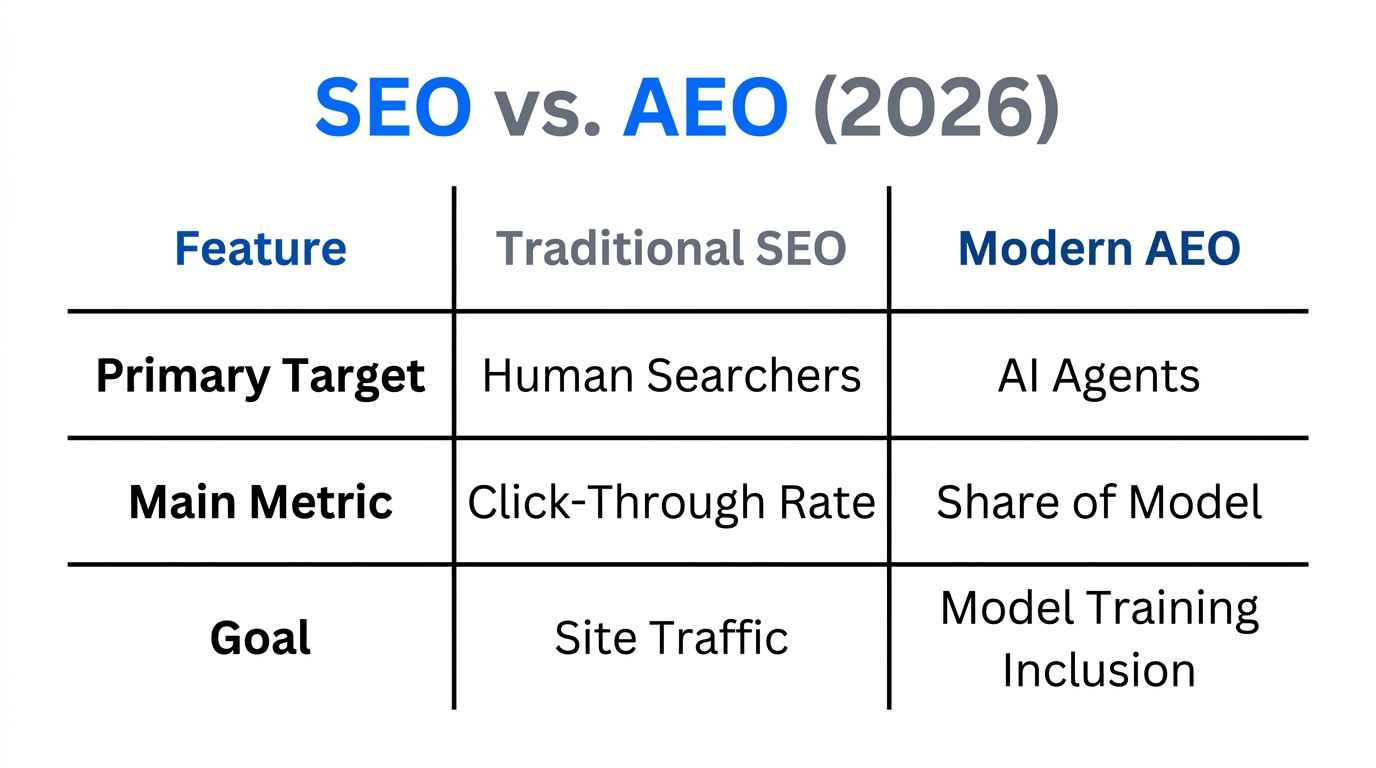
For two decades, SEO was about keywords, backlinks, and domain authority. Today, those metrics are secondary to Generative Engine Optimization (GEO). While traditional SEO focused on driving traffic to a website, AEO focuses on providing the authoritative context that an AI needs to answer a query. In this new paradigm, the "click" is a secondary conversion; the primary conversion is the citation.
As HubSpot’s State of Marketing 2026 reports, 90.3% of marketing organizations have integrated AI agents into their stack. This shift means that content must be structured not just for human readability, but for agentic parsing. Brands that fail to adapt are finding their organic visibility plummeting as AI assistants like HubSpot Breeze and Salesforce Agentforce become the gatekeepers of consumer attention.
Share of Model: The KPI That Replaced Rankings
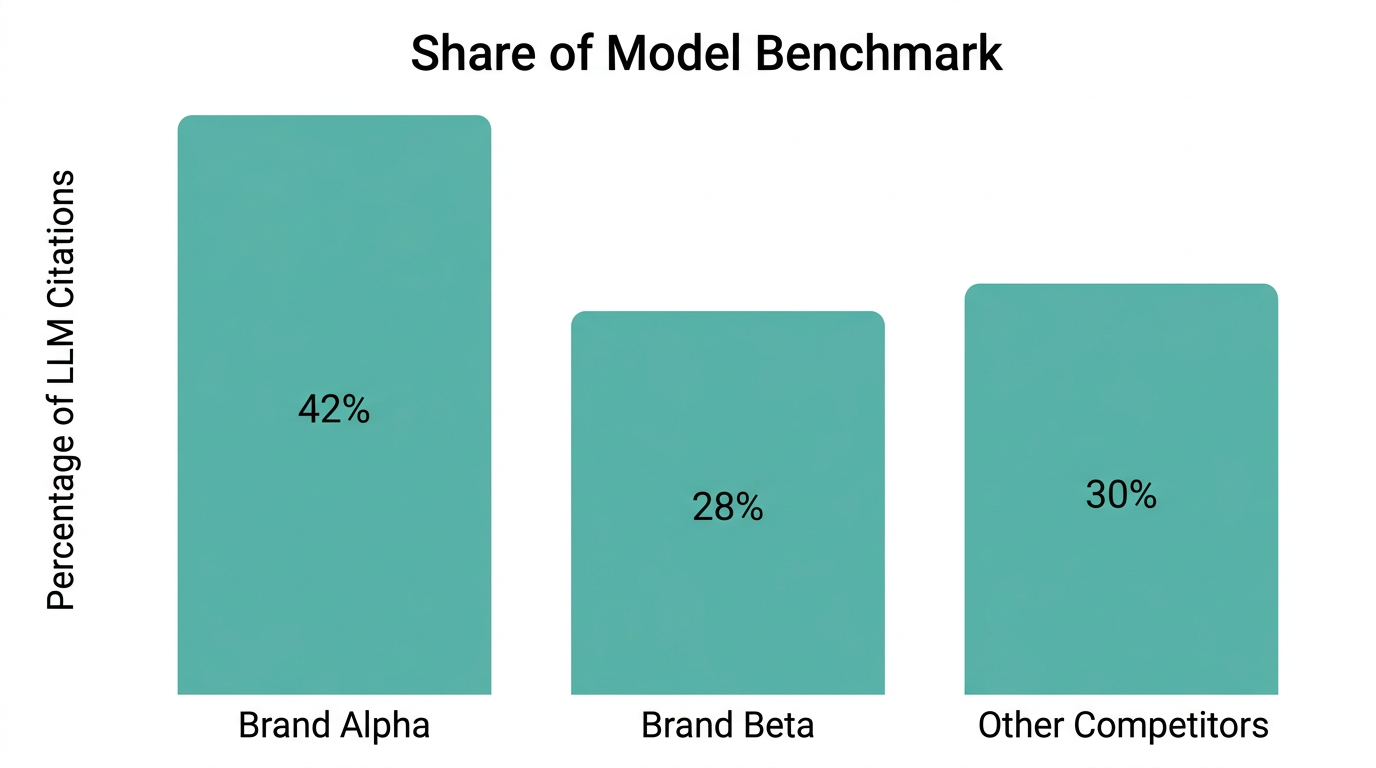
In 2026, the number one position on Google matters less than your Share of Model. This metric measures the percentage of time your brand or product is the recommended choice in an LLM’s response. According to NoimosAI’s GEO Guide, marketers are now benchmarking citation frequency across multiple models to gauge their true market reach.
"We are moving from managing campaigns to managing context. In the decade of AI agents, humans will win on EQ, while agents win on execution."
To win Share of Model, brands must move beyond thin content. AI models prioritize Entity Presence—a clear, verified digital footprint that links your brand to specific solutions. This involves aggressive technical optimization and a deep focus on Context Engineering. You aren't just writing blog posts; you are feeding the global knowledge graph with high-signal data.
| Metric | Traditional SEO (2024) | AEO / GEO (2026) |
|---|---|---|
| Primary Goal | SERP Ranking | Model Citation |
| Success Indicator | Click-Through Rate (CTR) | Share of Model |
| Content Focus | Keyword Density | Contextual Authority |
| User Path | User -> Search -> Webpage | User -> AI Agent -> Action |
Machine-Readable Brands: Optimizing for Agentic Browsing
If an AI agent cannot parse your real-time inventory, pricing, or service availability, you are effectively invisible. The 2026 market demands Machine-Readable Brands. This requires a shift in site architecture toward the Model Context Protocol (MCP), which allows agents to securely connect to enterprise data without custom API coding.
Consider the rise of autonomous browsing agents like Lindy.ai or Bardeen. These tools don't just read text; they execute tasks. They scrape websites to find the best deal, check stock levels, and even initiate purchases. To accommodate them, your technical SEO must include schema markup that is far more granular than in years past, covering real-time variables that change by the hour.
Managing this at scale requires modern tools. For example, platforms like Stormy AI streamline creator sourcing and outreach by using AI to analyze vast amounts of creator data, ensuring that brands are matched with influencers who already have a high 'Share of Model' in specific niches.
Agent-to-Agent Commerce: When Bots Buy from Bots
The most radical shift in 2026 is the emergence of Agent-to-Agent (A2A) Commerce. Gareth Cummings, CEO of eDesk, famously predicted that customer AI assistants would increasingly interact directly with brand agents. We are now seeing this in the wild: a customer’s personal AI agent negotiates a bulk discount with a brand’s Agentforce instance in milliseconds.
"AgentOps is the new DevOps. Managing a fleet of 100 agents requires a different operational layer focused on reliability and cost."
In this environment, your Answer Engine Optimization strategy must account for Negotiation Latency and Data Trust. According to PwC’s 2026 CEO Survey, while 79% of companies have adopted AI agents, only 16% of RevOps professionals fully trust their data accuracy. If your data is fragmented, your brand agent will "hallucinate" during a negotiation, leading to lost revenue or damaged reputation.
The 2026 AEO Playbook: Context Engineering
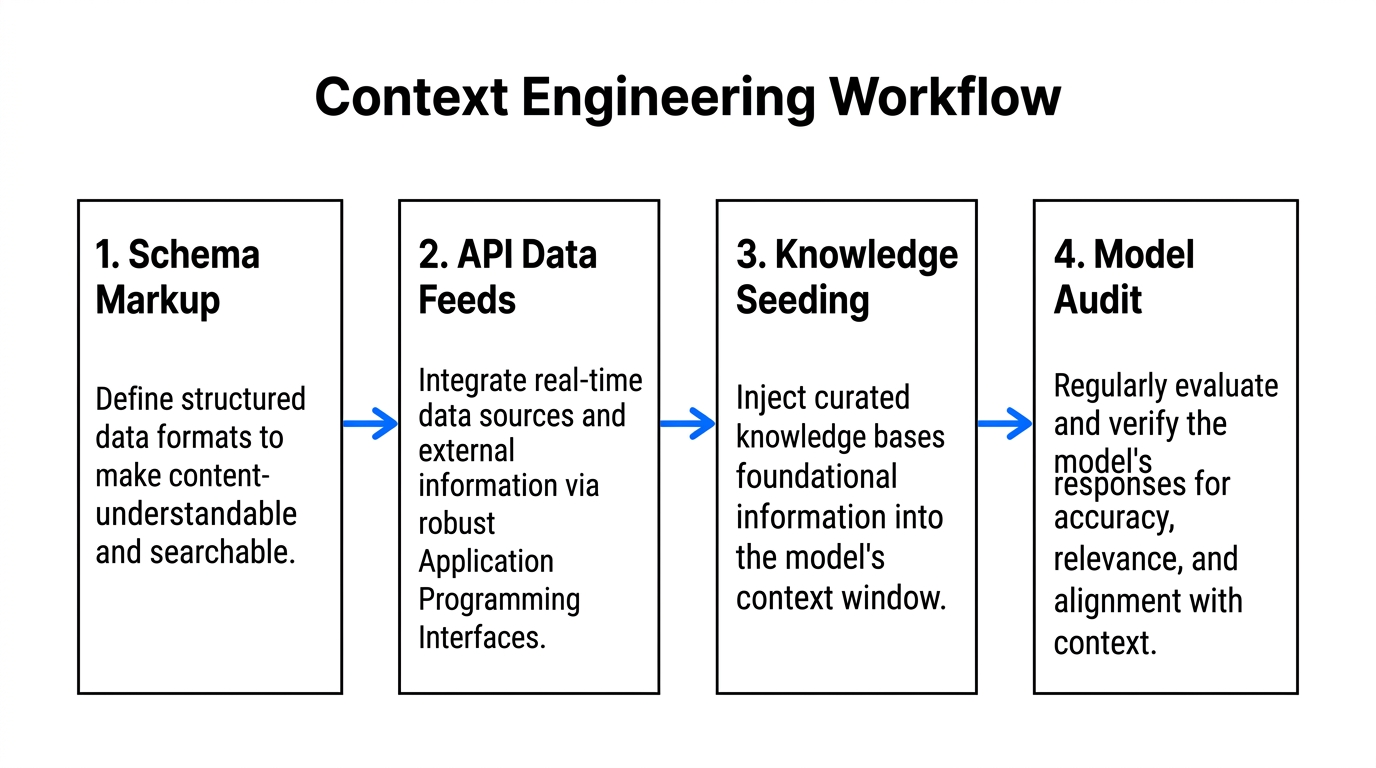
How do you win in a world where AI agents do the browsing? You stop writing for keywords and start Engineering Context. Follow this three-step framework inspired by HubSpot’s marketing strategy:
Step 1: Entity Mapping
Identify the core entities your brand represents. Are you a "SaaS for CRM" or a "Partner for Revenue Growth"? Use tools like Relevance AI to analyze how models currently categorize your brand and identify the "Context Gaps" where competitors are being cited instead of you.
Step 2: Structured Data Supremacy
Move beyond basic Schema.org. Implement real-time data feeds that agents can query. This includes using the Model Context Protocol to ensure that when a tool like CrewAI searches for a solution, your data is the most accessible and verifiable.
Step 3: Influencer-Model Synergy
In 2026, AI models weight social proof heavily. When creators talk about your brand on TikTok or YouTube, it creates a citation trail that LLMs pick up. Using Stormy AI's autonomous agent to manage daily creator outreach ensures a steady stream of third-party mentions, which directly boosts your Share of Model score.
The Bottom Line: Adapt or Become Invisible
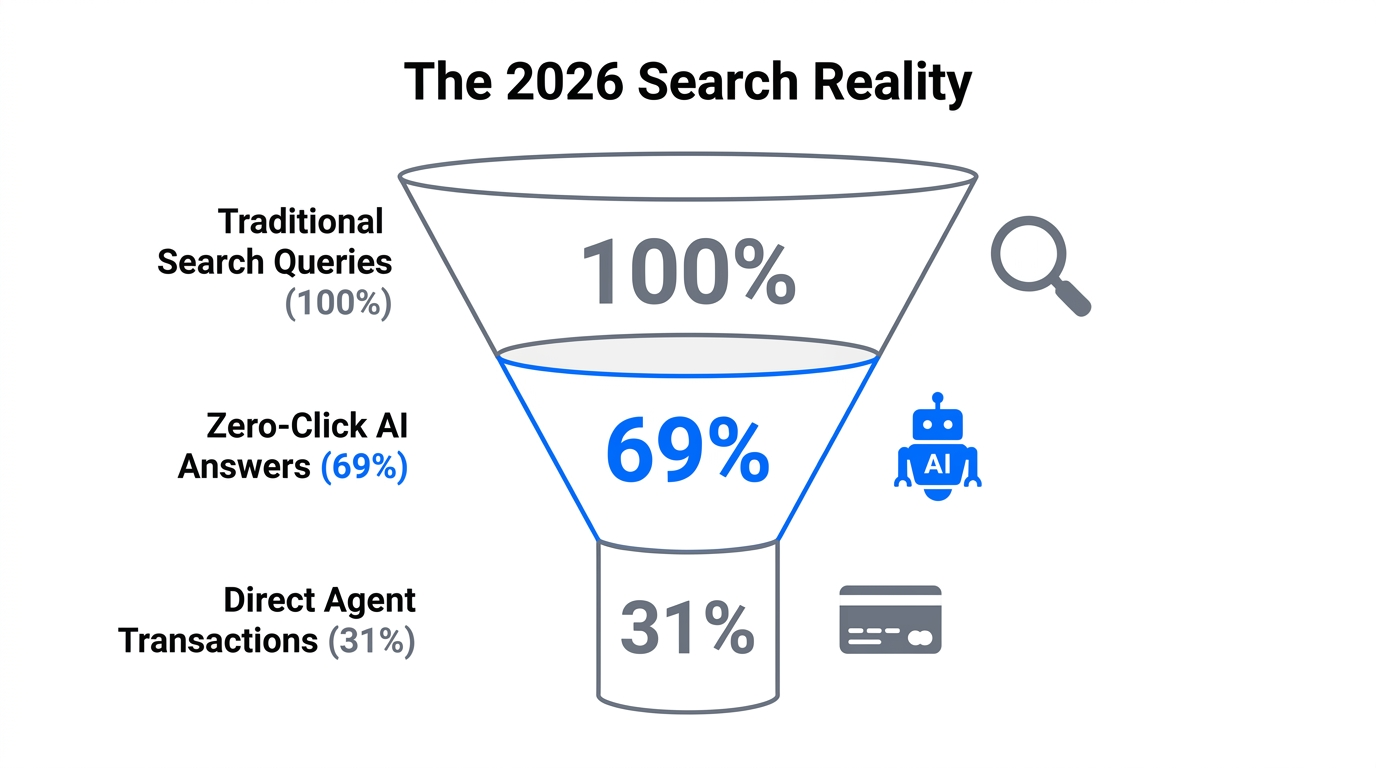
The transition from SEO to Answer Engine Optimization is not a trend; it is a structural revolution. With the agentic AI market exceeding $10.9 billion in 2026, the brands that win will be those that treat AI agents as their most important customer. By focusing on machine-readability, citation frequency, and context engineering, you can ensure your brand remains at the center of the conversation—even when humans aren't the ones starting it.