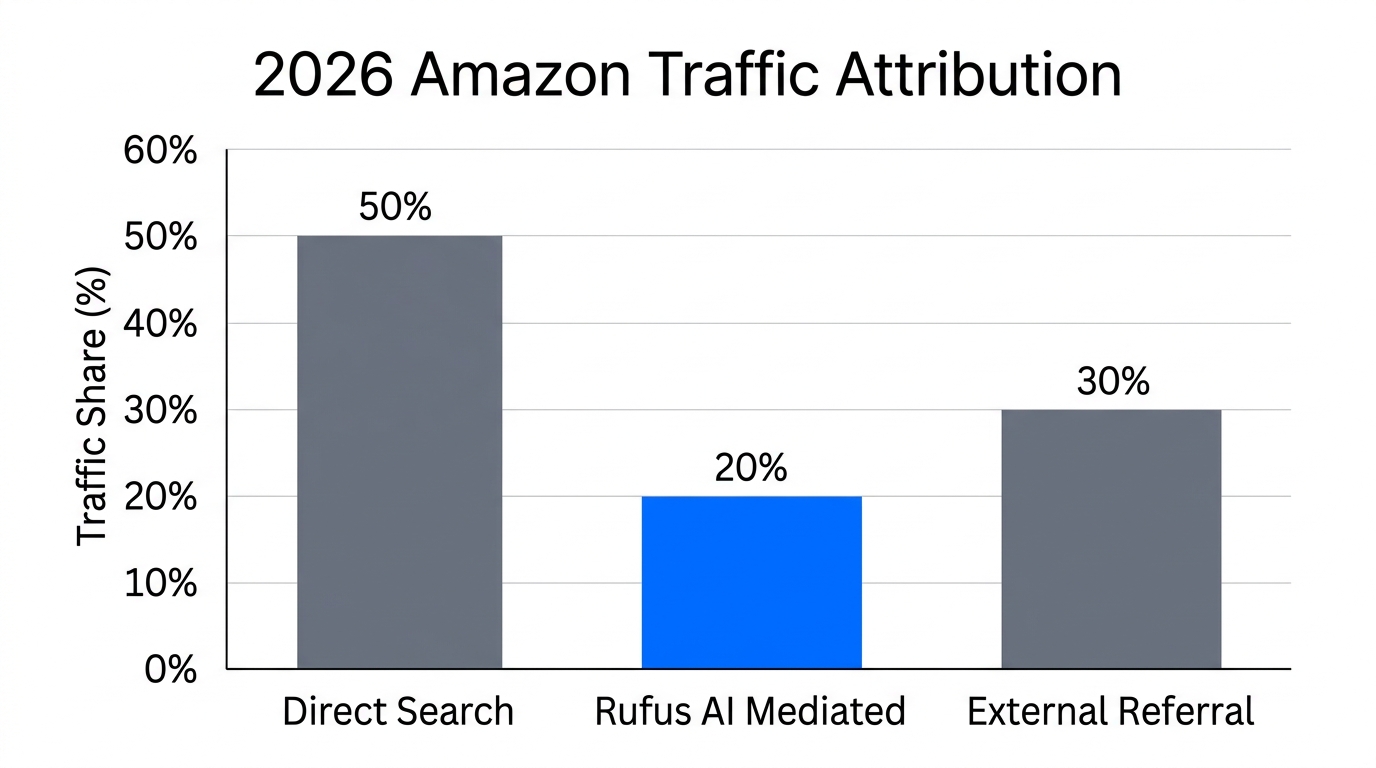
The Amazon advertising landscape in 2026 has officially moved past the "brute force" era of high-bid keyword matching. Today, with Amazon’s Rufus AI assistant mediating between 15% and 20% of all mobile search queries, the game has shifted from ranking for a word to winning a conversation. Brands that continue to rely on 2024-era tactics are seeing their ACoS skyrocket, while those practicing "Listing Engineering" are capturing the most pre-qualified traffic in the history of the platform.
Success this year requires a deep understanding of how Amazon's COSMO algorithm and semantic search engines interpret product data. It’s no longer about just being seen; it’s about being recommended by the agent that shoppers now trust to do their research. In this guide, we will break down the exact playbook for optimizing your Amazon Sponsored Products to dominate the Rufus era.
The Death of Keywords: Understanding the COSMO Algorithm Shift
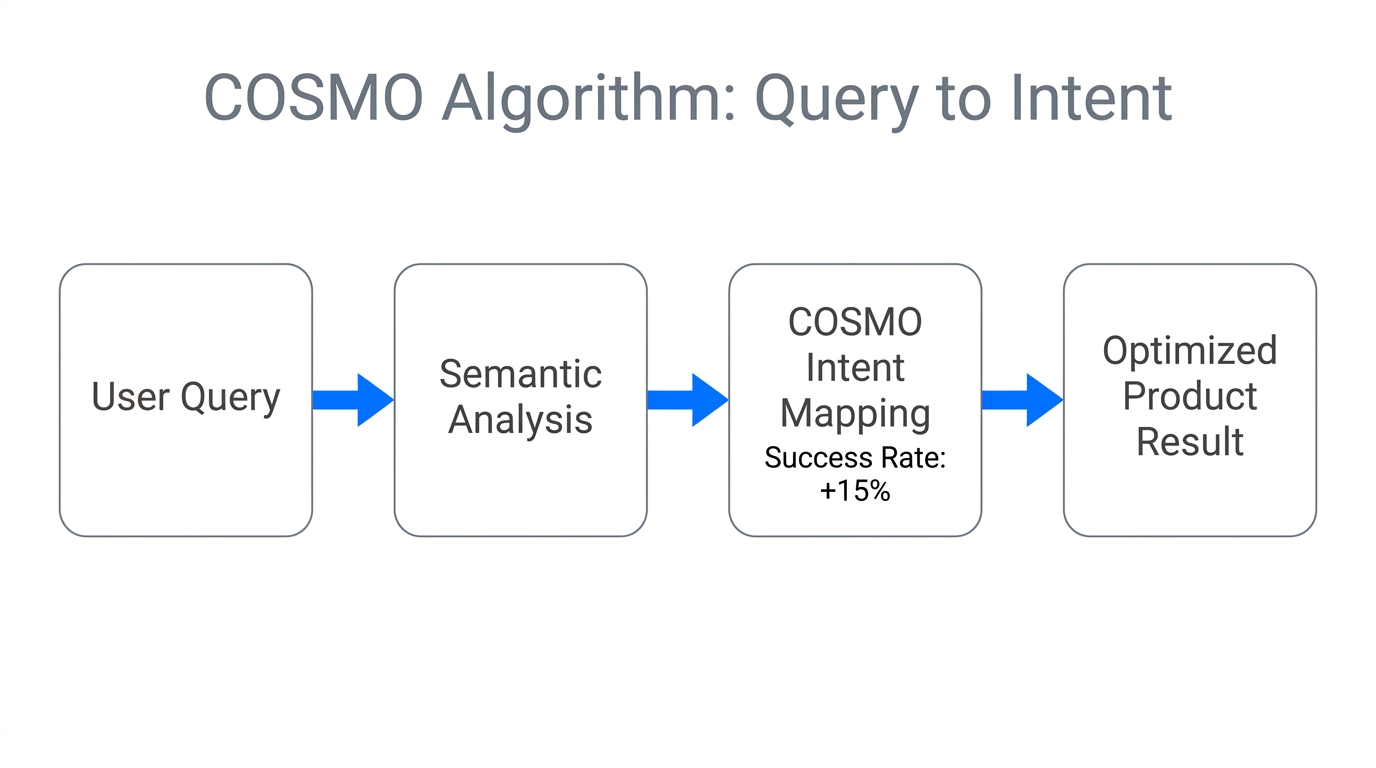
For over a decade, Amazon SEO was a game of keyword density and exact match bidding. However, according to recent insights on the COSMO effect, the 2026 algorithm prioritizes context-relevancy over simple keyword strings. COSMO (COmmon Sense knowledge graph for Marketplace Optimization) allows Amazon to understand the intent behind a query rather than just the words used.
Shoppers have shifted from "discovery" to "interrogation." Instead of searching for "water bottle," a typical 2026 query looks like: ‐Is this water bottle suitable for a 10-mile hike in 90-degree weather?‑ If your listing isn't engineered to answer that specific semantic question, Rufus will simply recommend a competitor who is. This is why Amazon SEO 2026 requires a complete overhaul of how you structure your product data, often analyzed through tools like Marketplace Pulse to track shifting consumer behavior.
‐AI didn’t kill search; it exposed the waste in how we measured it. The goal now is to train the AI to recommend you.‑
Listing Engineering: Noun-Phrase Title Construction
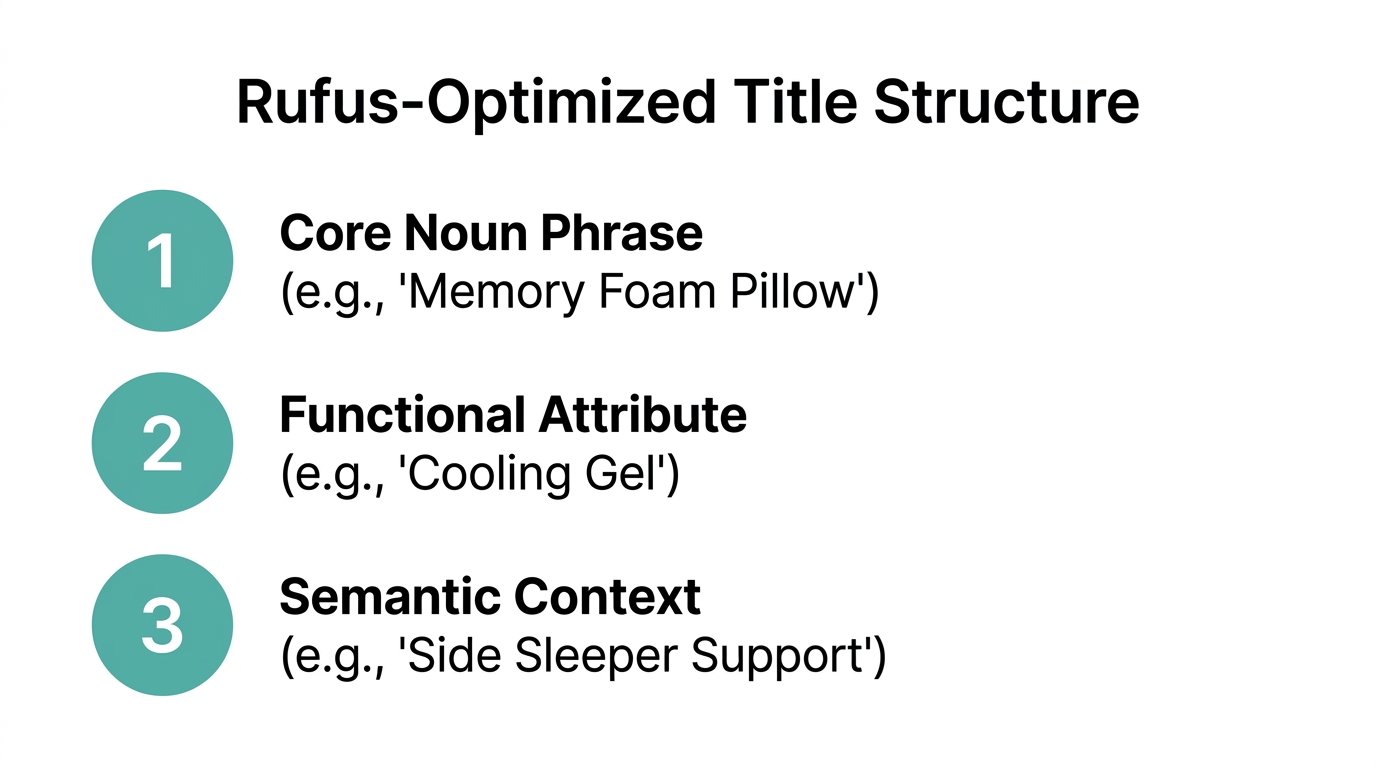
The first pillar of Amazon semantic search optimization is the "Noun-Phrase" title. In the past, sellers would stuff titles with commas and repetitive keywords. In 2026, Rufus reads titles as coherent descriptions to determine if a product fits a user's conversational prompt.
As noted by ZonGuru, you should replace fragmented keywords with descriptive phrases. For example, a 2024-style title might be: ‐Running Shoes, Men, Black, Size 10, Breathable.‑ A 2026-optimized title for Rufus would be: ‐Black Men's Running Shoes with Arch Support for Flat Feet, Size 10.‑ This structure allows the LLM (Large Language Model) to extract specific attributes like "arch support" and "flat feet" for complex user queries.
While you optimize these listings, managing the back-office updates can be a nightmare. Using tools to sync your optimized Noun-Phrase descriptions across your Shopify, Amazon, and TikTok Shop listings ensures brand consistency without manual data entry.
Optimizing A+ Content for 'Help Me Decide' Queries
One of the biggest shifts in 2026 is the "Help Me Decide" interrogation prompt. Statistics from Sequence Commerce show that 40% of Q4 2025 purchases originated from shoppers using Rufus to compare items. Rufus doesn't just look at your bullet points; it scrapes your A+ Content text modules to answer these questions.
To win here, your A+ Content should move away from being "image-only" and toward being "text-rich." Rufus uses these modules as a knowledge base. If a customer asks, "Is this yoga mat slippery when sweaty?", Rufus will look for the answer in your A+ text. Brands that have transitioned to scannable, text-heavy A+ modules have seen a 12% boost in organic impression share this year.
| Metric | 2026 Average | Top 10% Performers |
|---|---|---|
| Average CPC | $1.18 - $1.34 | $0.64 (Long-tail) |
| Conversion (CVR) | 10.2% - 11.5% | 18% - 22% |
| Average ACoS | 32.48% | 15% - 23% |
As Amazon Ads continues to evolve, these benchmarks show that the "efficiency era" has arrived. Those who can't hit a 20% CVR are often paying too much for short-tail keywords that Rufus is already filtering out.
Managing 'Shadow Penalties' and Sentiment Risk
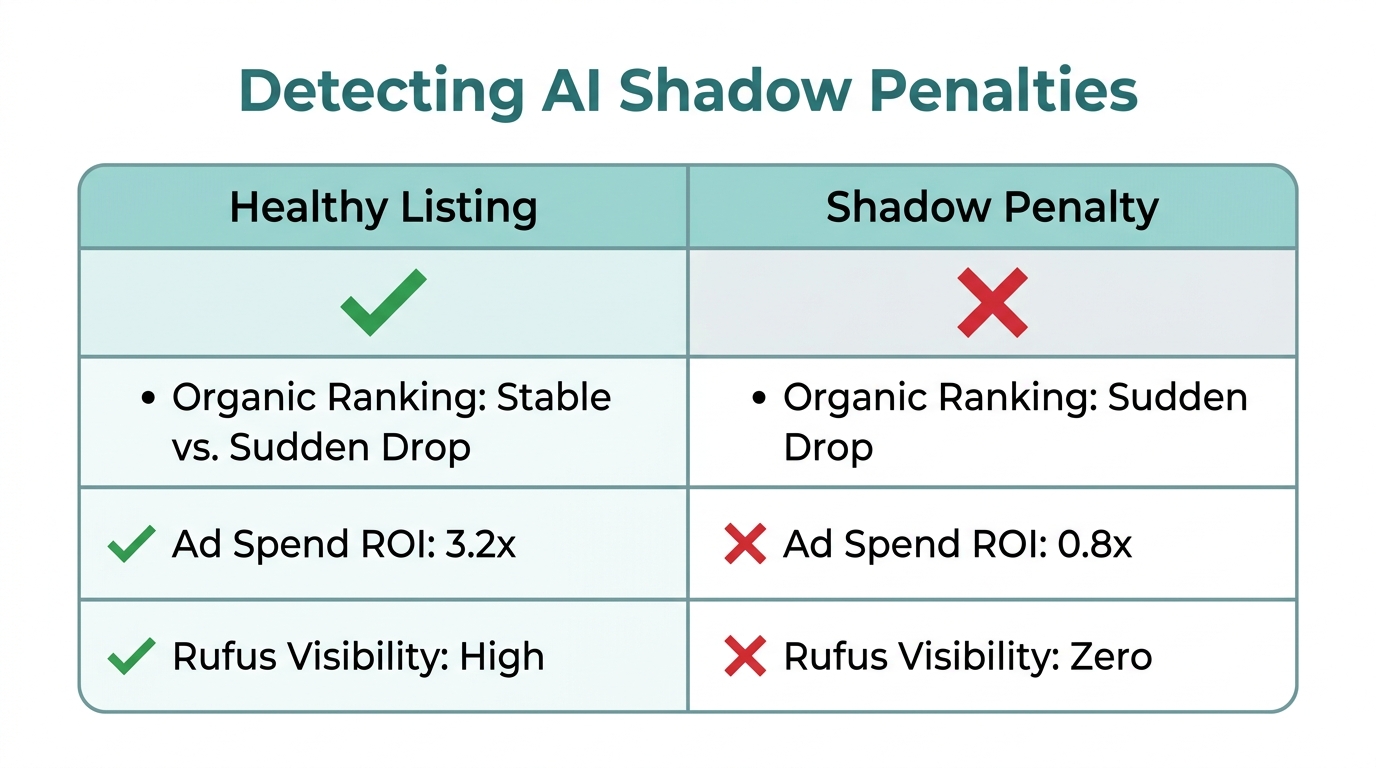
In 2026, Amazon Sponsored Products optimization isn't just about what you do in the ad console; it's about what your customers say in the reviews. The current algorithm now "shadow-penalizes" products that have high return rates or poor recent sentiment, even if their overall star rating is high.
Rufus summarizes the last 30 days of reviews into a single "buy recommendation." If you have a cluster of 5-7 negative reviews regarding a specific defect, Rufus will stop recommending your product in conversational search, and your ad's placement will drop. To prevent this, you need 24/7 monitoring. Stormy AI acts as an autonomous teammate that monitors your Amazon Seller Central account for these sentiment shifts, flagging potential return spikes before they trigger an algorithmic penalty.
‐A cluster of 5–7 negative reviews can now 'shadow-penalize' an ad's placement even if the overall star rating is 4.5+.‑
The 2026 Sponsored Products Playbook
If you are launching a new product or refreshing an old one, follow this step-by-step Amazon Ads tutorial to align with the current AI Discovery engine.
Step 1: The "Rule of 7" Data Gathering
Start with an Auto campaign set at the suggested bid. Do not touch it for the first 7 days. According to experts at Ad Badger, the algorithm needs this "soak time" to map your product's semantic neighbors within the COSMO knowledge graph.
Step 2: Atomic Campaign Structure
Organize your campaigns into four distinct tiers:
- Discovery: Low-bid Auto campaigns for keyword mining.
- Performance: Manual Exact campaigns for high-intent Rufus winners.
- Research: Manual Broad campaigns to find conversational variations.
- Conquest: ASIN targeting against competitors with higher prices or lower review sentiment.
Step 3: Intent-Based Harvesting
On Day 8, harvest the top-converting long-tail terms (6+ words) and move them to Manual Exact. Data from Sequence Commerce shows that these long-tail queries achieve a 13.5% CVR at nearly half the CPC of 3-word head terms.
Scaling with an AI Ecommerce Employee
The complexity of 2026 ecommerce means you can no longer manage these tasks in isolation. The most successful brands are using AI agents to bridge the gap between ad spend, inventory levels, and creative optimization.
For instance, Stormy AI can connect to your Meta Ads Manager and Google Ads accounts, pull performance data, and compare it with your Amazon Sponsored Products results in a single, dynamic spreadsheet. If Stormy detects that a specific SKU is running low on stock in Amazon FBA, it can automatically lower your Amazon ad bids to preserve margin while you wait for a restock—all while drafting a follow-up email to your supplier to check on the latest shipment status.
By automating these "messy" back-office tasks, you can focus on "Listing Engineering" and higher-level strategy. In an era where 40% of purchases involve AI discovery via Rufus, having an AI teammate like Stormy ensures you aren't just spending to grow, but optimizing to win.
Final Thoughts: The Future of Amazon SEO
Amazon SEO 2026 is no longer a static game of checkboxes. It is a dynamic, conversational environment where your product data must act as an education source for Rufus. By adopting Noun-Phrase titles, text-rich A+ Content, and an Atomic campaign structure, you can lower your ACoS and capture the high-intent traffic that defines this year’s market.
Ready to automate the boring parts of your Amazon back office? Let Stormy AI handle your inventory monitoring, supplier follow-ups, and cross-platform reporting while you dominate the Rufus search results.