The era of the generic cold email is officially dead. In 2026, buyers are no longer just ignoring automated spam; they are actively filtering it out using their own sophisticated AI-powered inbox assistants. To break through the noise, modern Go-To-Market (GTM) teams have shifted toward hyper-personalized, agent-led orchestration. The goal isn't just to send a message; it’s to deliver a tailored experience that feels human, even when it’s powered by a machine. By leveraging Airtable as an orchestration layer and connecting it to generative video platforms like HeyGen, sales leaders can now generate thousands of one-to-one video pitches that address specific prospect pain points with surgical precision.
Airtable as the Brain of Your 2026 Sales Machine
 4:02
4:02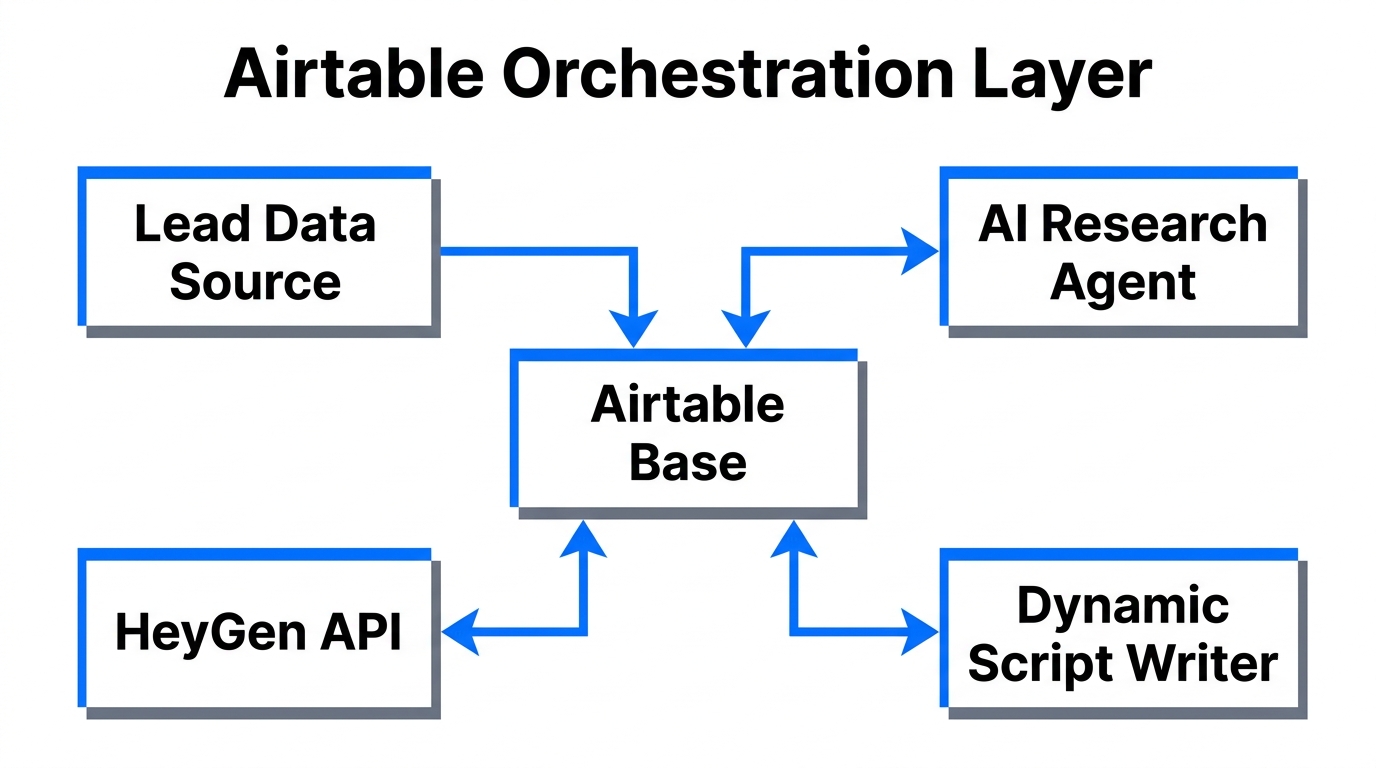
In 2026, a CRM is no longer just a database; it is an active participant in your sales cycle. As Howie Liu, founder of the $10 billion platform Airtable, suggests, the product has evolved into an "agentic-first" platform. With the release of tools like Omni, users can now build entire business applications and sales pipelines simply by talking to an AI agent. This allows lean teams to move faster than ever before.
For a high-performance GTM team, Airtable serves as the "central nervous system." Instead of jumping between traditional CRMs for data and various scraping tools for research, everything is centralized. You can now set up internal Airtable Web Agents to automatically browse the web, research target customers, and populate your base with deep insights. Imagine a row in your database that doesn't just list a lead's name, but includes a 500-word summary of their latest quarterly earnings call and three specific ways your product solves their current challenges.
"You can now create your own orchestration layer in Airtable to go and automatically, for each row, ask an AI to generate content programmatically. It's about moving from utilitarian bots to agents with personality."
The Automated Video Pipeline: Connecting Airtable to HeyGen
5:53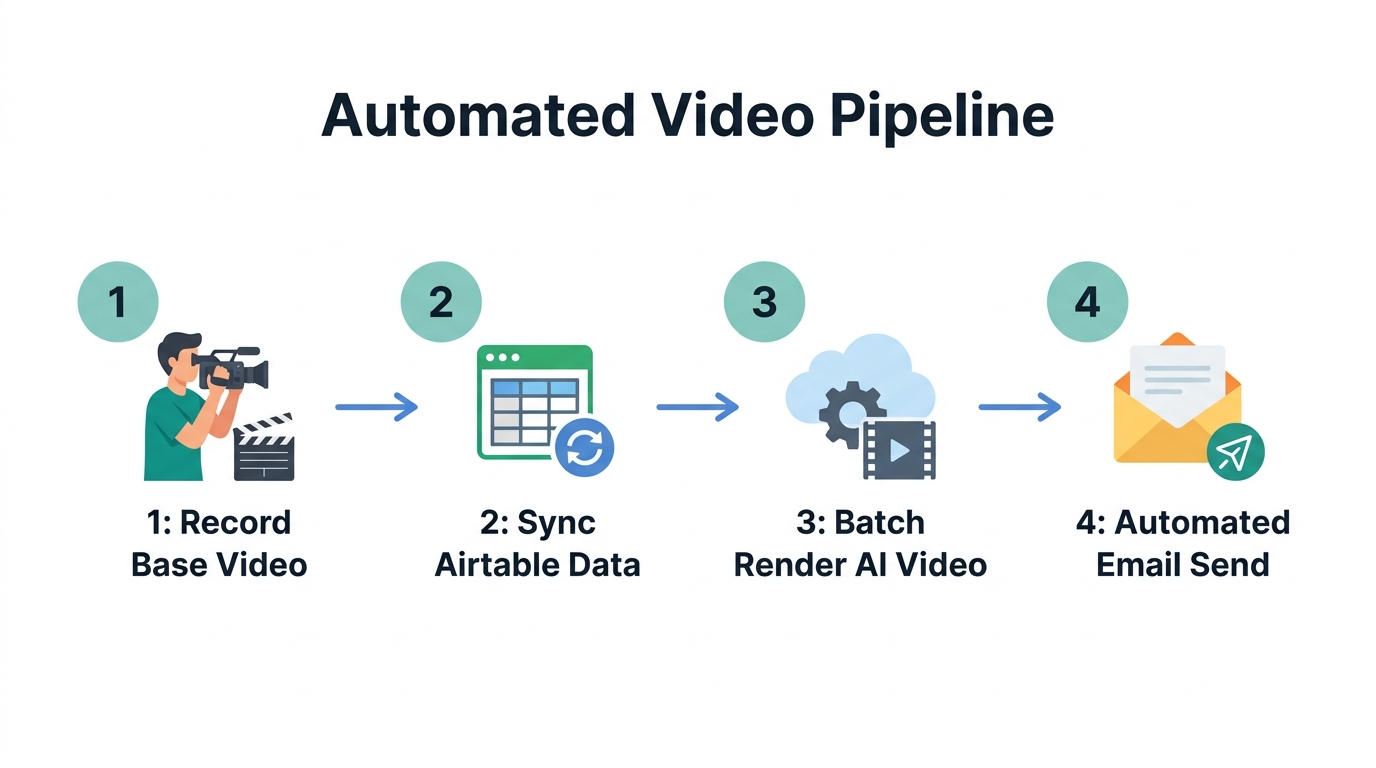
Once your Airtable base is enriched with prospect data, the next step is automated video outreach. Platforms like HeyGen have revolutionized the cost of video production. By licensing high-quality human avatars or creating your own, you can programmatically generate video files that look and sound exactly like your CEO or top account executive.
Step 1: Scripting with AI
In your Airtable base, use a formula field or a scripting block to combine your researched lead data into a personalized script. This script should mention the prospect's recent LinkedIn post, their company's specific goals, and a tailored call to action. You can use ChatGPT or Claude via API to ensure the tone is professional yet engaging.
Step 2: The API Handshake
Using Airtable’s built-in scripting layer, you can write a short piece of code to send that script to the HeyGen API. This triggers the creation of a personalized video. The API returns a link to the video, which is then automatically saved back into your Airtable record. This entire process happens while your sales team is asleep, creating a library of custom content ready for the morning.
Step 3: Multi-Channel Outreach
Once the video URL is in Airtable, you can use Zapier or Make to push that video into your outreach tools. Whether you are sending a personalized email via Lemlist or a direct message on LinkedIn, the prospect receives a video that addresses them by name and mentions their specific business needs.
| Feature | Traditional Outreach (2024) | Agentic Sales (2026) |
|---|---|---|
| Personalization | Name/Company Merge Tags | Customized 1:1 Video Pitches |
| Research Time | 15-20 mins per lead | < 5 seconds via Web Agents |
| Medium | Plain Text / Generic Images | Interactive AI Avatars |
| Scalability | Limited by SDR headcount | Infinite (API-driven) |
2026 Benchmarks: Personalized Video vs. Cold Email
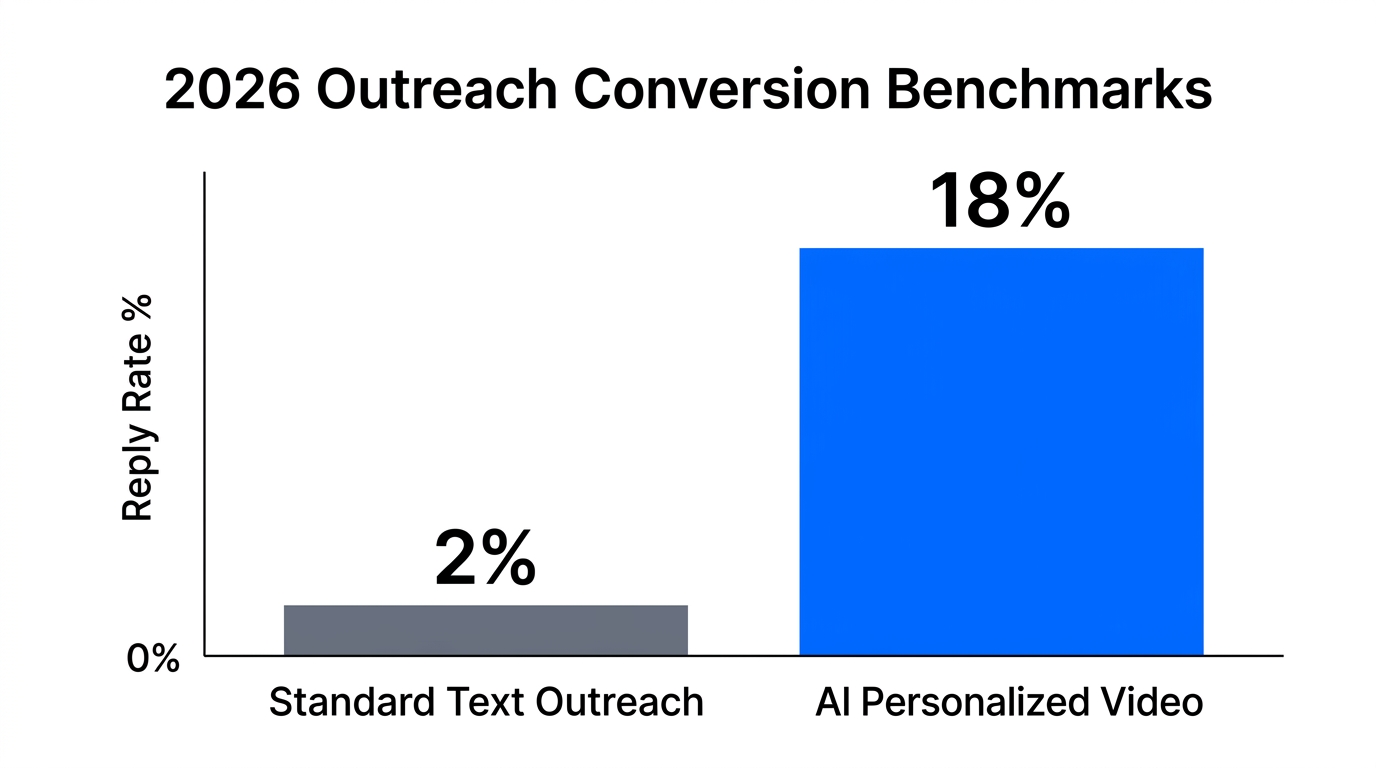
The performance gap between generic and personalized content has widened significantly this year. In 2026, buyers have developed a "blindness" to standard text-based outreach. Data from modern GTM teams shows that personalized AI video achieves significantly higher engagement rates. When a prospect sees a thumbnail of a real human talking about their specific problem, the "novelty factor" and the perceived effort drive much higher response rates.
- Cold Email Open Rates: 18-22% (down from 35% in 2024).
- Video Message Open Rates: 55-65% (with personalized thumbnails).
- Reply-to-Meeting Conversion: 3-5% for text vs. 12-18% for personalized video.
To feed this high-converting machine, many brands are looking for high-quality creators to represent their brand. Using platforms like Stormy AI, marketers can discover influencers and UGC creators who fit their brand voice perfectly, then use their likeness (with permission) to power these automated video agents across social platforms like TikTok and LinkedIn.
"In 2026, we've moved from 'WebMD says I'm sick' to 'ChatGPT says I'm sick.' Trust in AI-generated insights is higher than trust in humans who haven't done their homework."
Managing a $10M Pipeline with a Lean Team
8:50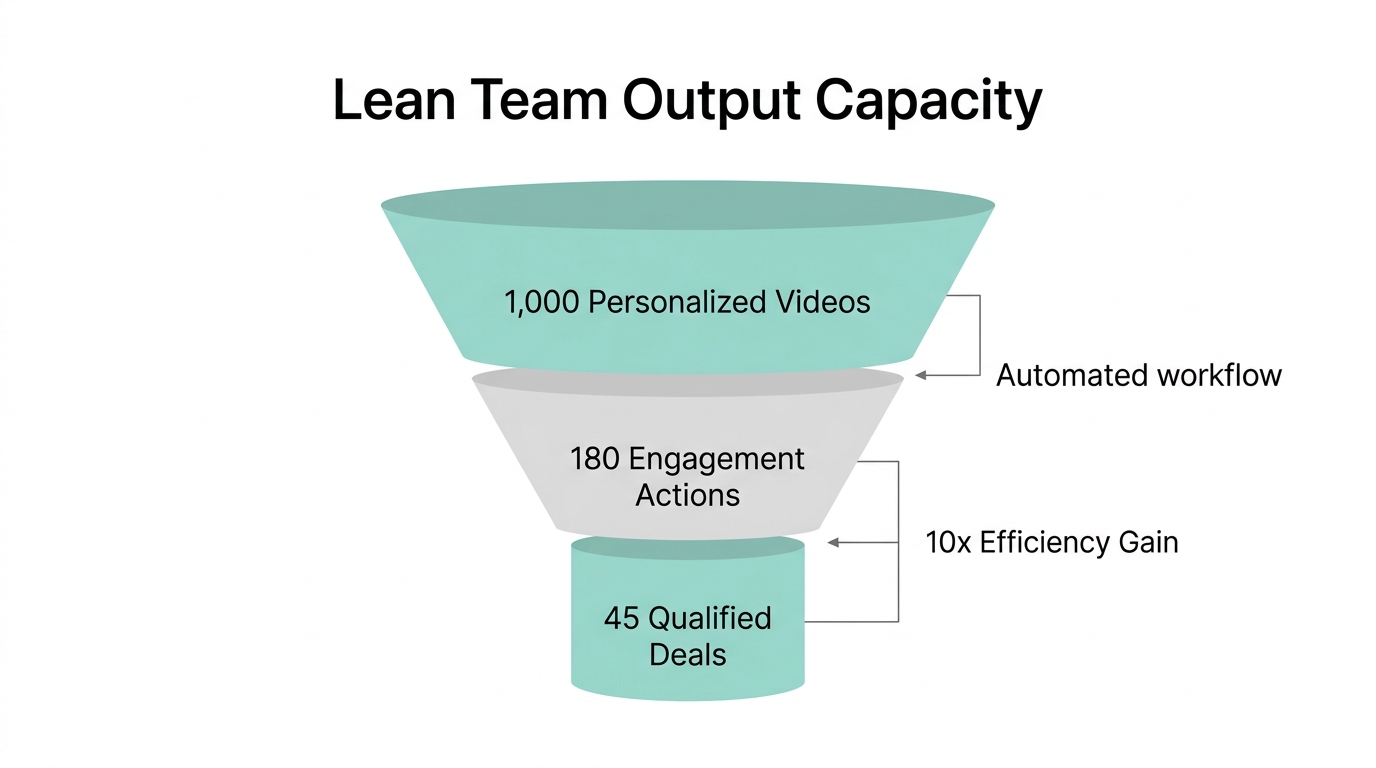
The most shocking shift in 2026 is the size of the teams managing massive revenue. We are seeing companies with just 2-3 "Sales Ops Engineers" managing a pipeline that previously required 20-30 SDRs. By replacing manual Business Process Outsourcing (BPO) with AI automation, these teams maintain 80%+ profit margins while scaling outreach to thousands of accounts per day.
This efficiency is made possible by the integration of tools. A modern growth stack might include Stripe for payments, Linear for project tracking, and Airtable as the master orchestration layer. When the AI agent identifies a lead in Salesforce or a social platform, it triggers the research-to-video pipeline instantly.
Ethical Transparency: The 'Novelty Factor' and Trust
41:28One of the biggest risks in using personalized sales at scale is the potential to deceive leads. In 2026, the best practice is radical transparency. Leading companies are finding that being upfront about using AI and synthetic media actually builds more trust than trying to hide it. As Howie Liu notes, telling a customer, "Hey, here's an avatar version of me saying thank you for attending our event," often "tickles their fancy" and showcases that your brand is at the cutting edge of technology.
Using AI shouldn't be about tricking people into thinking you spent an hour recording a video just for them. It’s about showing them that you value their business enough to build a sophisticated, automated system that delivers highly relevant information to them exactly when they need it. This "AI-native" transparency is what separates premium brands from low-quality spammers in 2026.
The 2026 GTM Playbook: Final Takeaways
The GTM strategy in 2026 is centered on one word: Orchestration. If you are still manually writing emails or using basic templates, you are leaving millions on the table. To stay competitive, you must embrace the AI agent revolution.
- Adopt Airtable as your CRM Brain: Move beyond simple data storage and start using Web Agents to automate lead research.
- Integrate Programmatic Video: Use the HeyGen API to turn your data into high-converting video pitches.
- Prioritize Creator Quality: Use tools like Stormy AI to find the right faces and voices to represent your brand in your automated campaigns.
- Stay Transparent: Use the novelty of AI to engage leads, not deceive them.
By following this playbook, you can transform your sales organization into a lean, mean, revenue-generating machine that scales with code, not headcount. The tools are ready—it’s time to build.