Creative is the New Targeting: How to Pass Your 2026 AI Facebook Ads Audit
Master your 2026 AI Facebook Ads Audit by shifting focus from audience hacking to creative diversification. Learn how DCO and UGC for Facebook Ads drive 22% higher ROAS.
In 2026, the mantra of the elite media buyer has shifted from "who are we targeting?" to "what are we showing them?" As Meta’s AI systems—specifically Advantage+ Shopping Campaigns—have matured, they have effectively stripped away the need for granular interest-based targeting. Today, the algorithm is smarter than your best audience hack. If you want to scale in this environment, your success depends almost entirely on your ability to feed that algorithm high-quality, diverse creative assets. Failing a modern AI Facebook Ads Audit isn't usually a technical glitch; it's a creative deficit.
The data from the past two years is undeniable. Advertisers leveraging Meta's core AI tools are seeing an average 22% higher return on ad spend (ROAS) compared to manual setups. However, that uplift is only possible if your creative engine can keep up with the machine's appetite for variation. This guide outlines the blueprint for passing your 2026 creative audit and using Dynamic Creative Optimization (DCO) to turn your ad account into a conversion machine.
The Great Shift: Why Creative is the New Targeting
For over a decade, Facebook advertisers obsessed over finding the "perfect" lookalike or interest group. In 2026, that effort is largely wasted. Meta’s AI now uses the creative itself to find your audience. When you upload a video of a fitness influencer—sourced through platforms like Stormy AI—the AI analyzes the visual elements, the captions, and the landing page to determine who will likely click. Research suggests that nearly 50% of advertising performance (and up to 80% in AI-driven environments) now relies on creative diversification rather than audience hacking.
As Markifact notes, the move toward account consolidation—often called the "Power 5"—means moving away from hundreds of micro-targeted ad sets. AI performs best when data is consolidated into fewer, higher-volume ad sets where it can achieve the 50 conversions per week required to exit the learning phase.
"The algorithm is no longer a black box to be tricked; it's a hungry engine that requires diverse creative fuel to run at peak efficiency."
Conducting an Ad Fatigue Analysis: The Silent Performance Killer
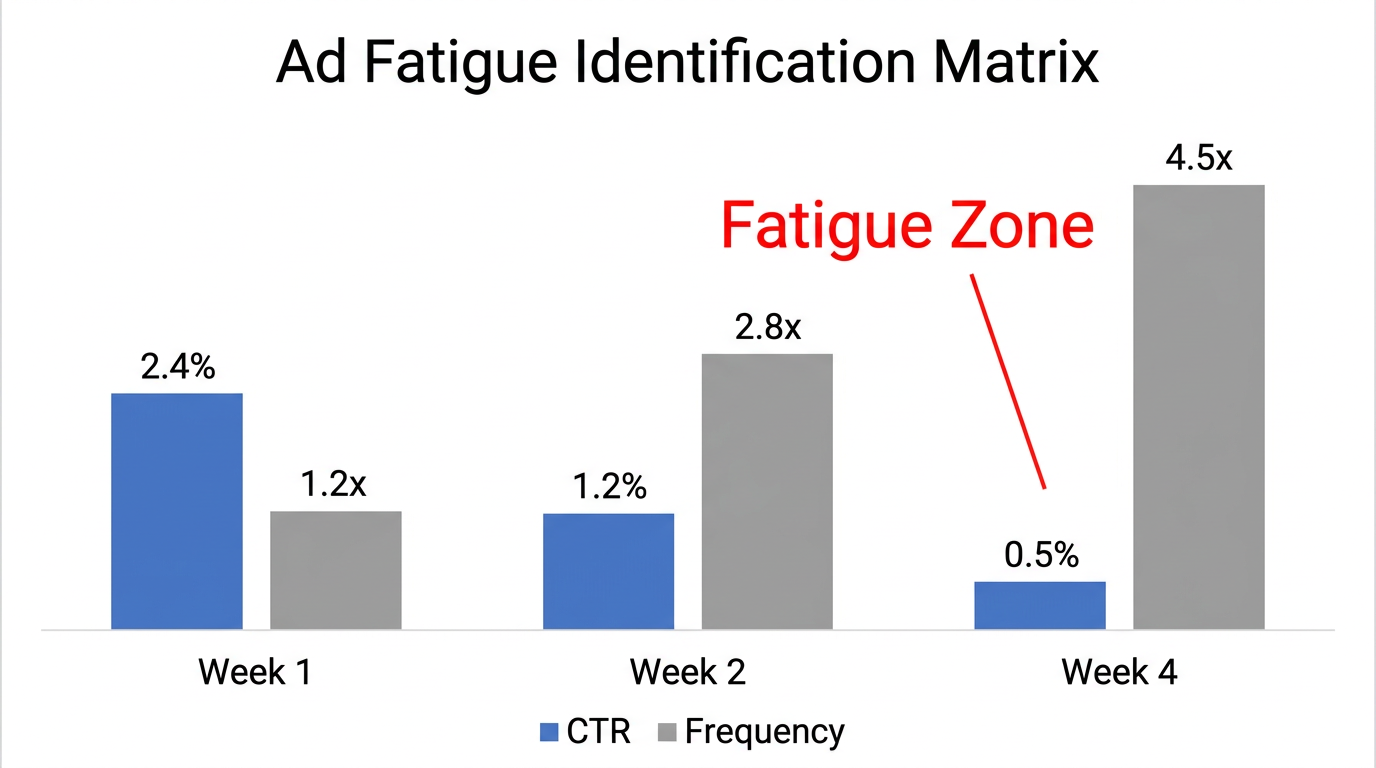
One of the most critical steps in an AI Facebook Ads Audit is the ad fatigue analysis. Ad fatigue occurs when your target audience has seen your ads so many times that they stop paying attention, leading to a spike in Cost Per Acquisition (CPA). In 2026, the thresholds for fatigue are tighter than ever because the AI optimizes for rapid delivery.
How to Spot Decay
Monitor your frequency scores closely. When the frequency for a specific creative asset rises above 5.0–7.0 within a single conversion window, you will often see a corresponding drop in ROAS. If your frequency is high but your CTR is plummeting, the AI has exhausted that specific creative's appeal within its current segment. You don't necessarily need a new audience; you need a new visual angle.
| Metric | Healthy Range | Fatigue Warning | Action Required |
|---|---|---|---|
| Frequency | 1.5 - 3.5 | > 5.0 | Introduce new creative angles immediately. |
| CTR (Link) | 1.8% - 2.5% | < 1.0% | Refresh the hook/thumbnail of the ad. |
| ROAS | Stable/Increasing | 20% Drop over 7 days | Pause high-frequency/low-performing assets. |
To automate this monitoring, platforms like Bïrch (formerly Revealbot) allow you to set automated rules that pause ads or notify your team when frequency thresholds are breached, ensuring you never overspend on dead creative.
Mastering Dynamic Creative Optimization (DCO)
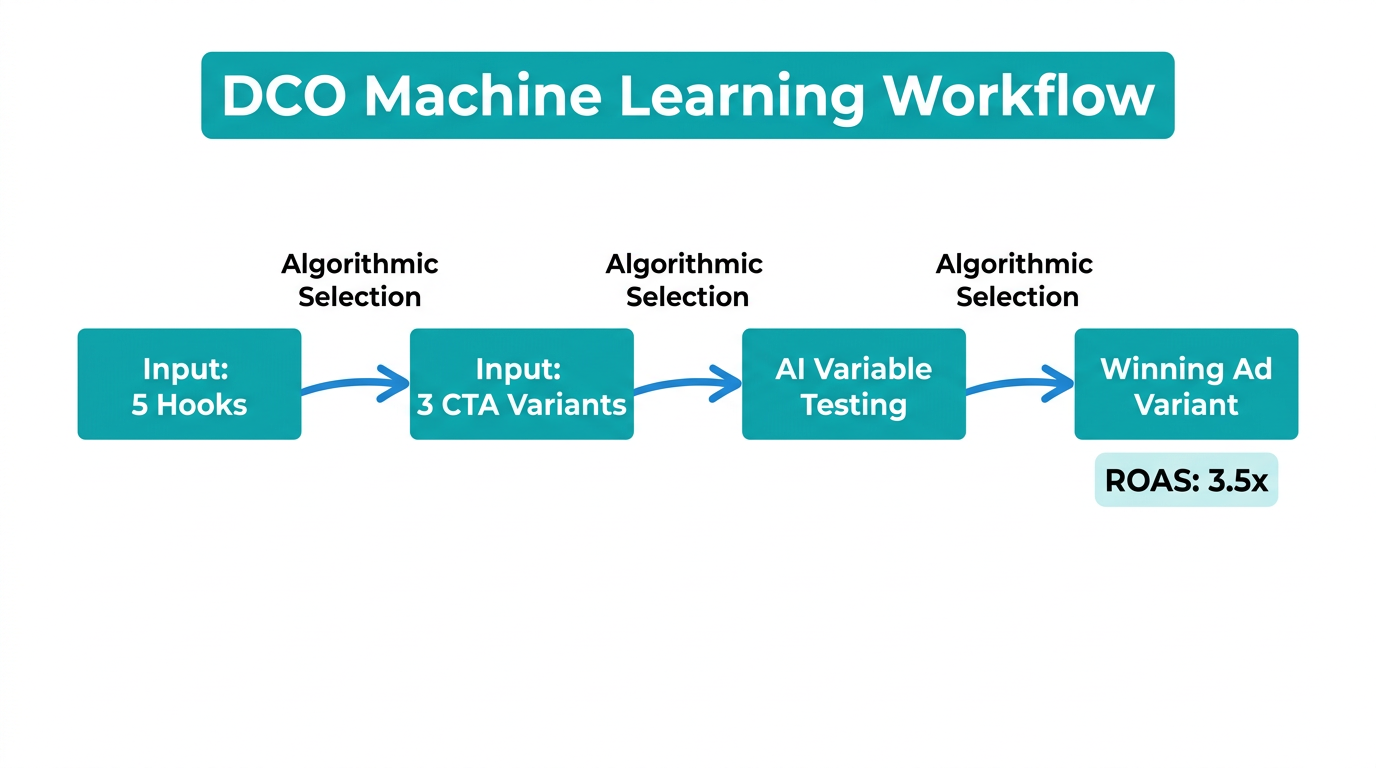
If creative is the engine, Dynamic Creative Optimization (DCO) is the turbocharger. DCO allows you to upload multiple images, videos, headlines, and descriptions, which Meta then mixes and matches to find the winning combination for each individual user. In a 2026 environment, DCO is no longer optional—it is the standard for high-growth brands.
Testing 150+ Variations Automatically
By utilizing Meta Advantage+ Shopping, a single campaign can effectively test over 150 variations of an ad. This rapid iteration allows the AI to discover winning hooks in real-time. To maintain this volume, top brands use Stormy AI to discover and manage creator partnerships, ensuring a steady stream of User Generated Content (UGC) is always ready for the DCO pipeline. This rapid iteration allows the AI to discover