By March 2026, the marketing landscape has shifted from "AI as a novelty" to "AI as foundational infrastructure." We are no longer in the era of simple chatbots; we have entered the age of Agentic Workflows—autonomous systems that don't just answer questions but execute complex, multi-step marketing campaigns from research to distribution. For marketing managers, the goal this year is no longer about writing better prompts; it is about mastering orchestration.
As traditional search volume continues its predicted 25% decline through the end of 2026, brands are pivoting toward Generative Engine Optimization (GEO) and autonomous agents to maintain visibility. Companies successfully implementing these agentic systems report a staggering 37% reduction in customer acquisition costs (CAC) and a 39% increase in revenue, according to recent McKinsey marketing reports. This guide provides the tactical playbook for building a marketing department that runs while you sleep.
"The winning model is 'Human + AI.' Think of AI as a junior copywriter who never sleeps, but still needs a senior editor to maintain the humanity moat." — Meghan Keaney Anderson, Jasper
The Great Shift: From Manual Prompting to AI Orchestration
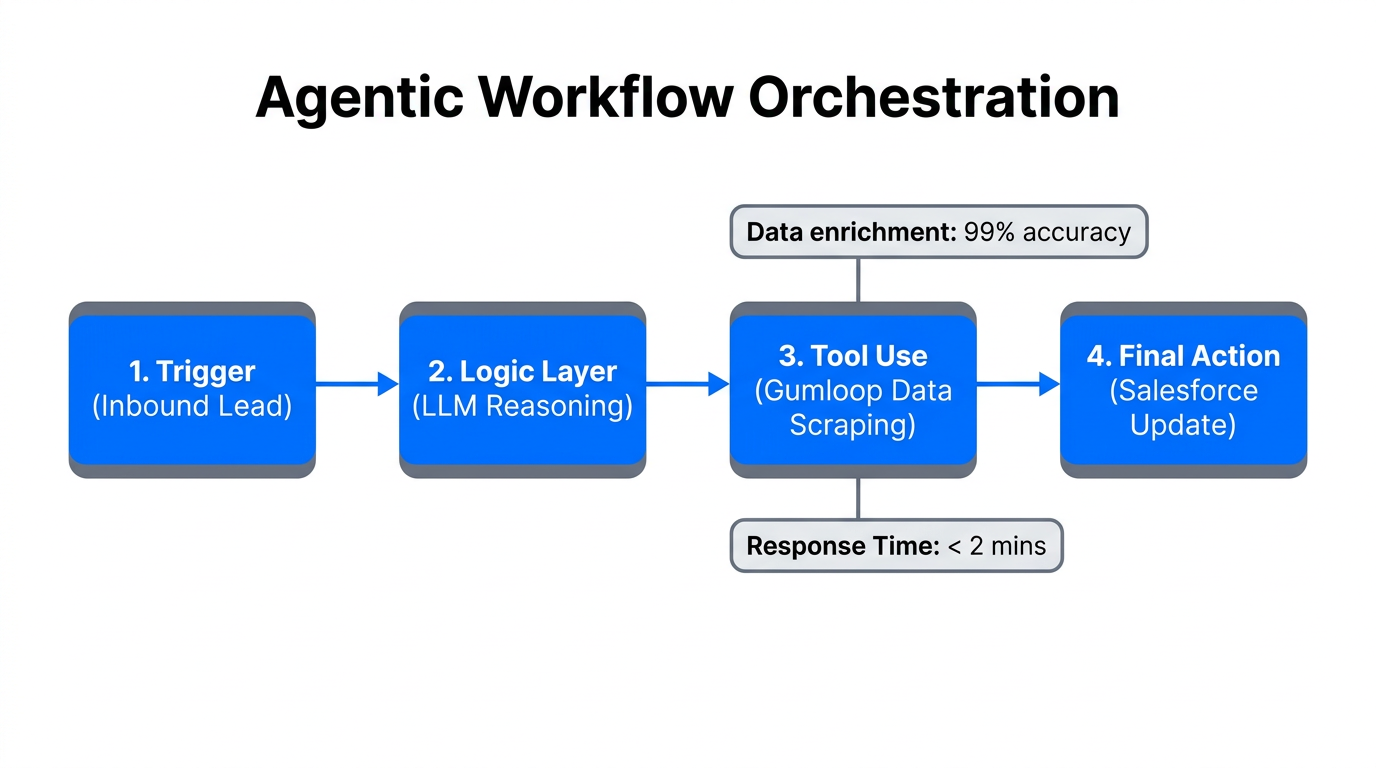
In 2024 and 2025, marketers spent their days "prompt wrangling." A study found that this manual labor actually added 13 hours per week to the average marketer's workload due to the need for fact-checking and hallucination management, according to Forbes. In 2026, we have solved this through orchestration—the process of chaining together specific AI tasks into a single autonomous workflow.
Tools like Gumloop allow marketers to build these chains using no-code interfaces. Instead of manually asking an AI to "write a blog post," an agentic workflow triggered by a new product launch would:
1. Research competitor gaps via Perplexity Pro.
2. Draft a long-form article grounded in your brand voice.
3. Generate social media snippets and localized video scripts for TikTok and Instagram.
4. Schedule the content across all CMS platforms.
Case Study: Reducing SDR Costs from $3,200 to $150 with Agentforce
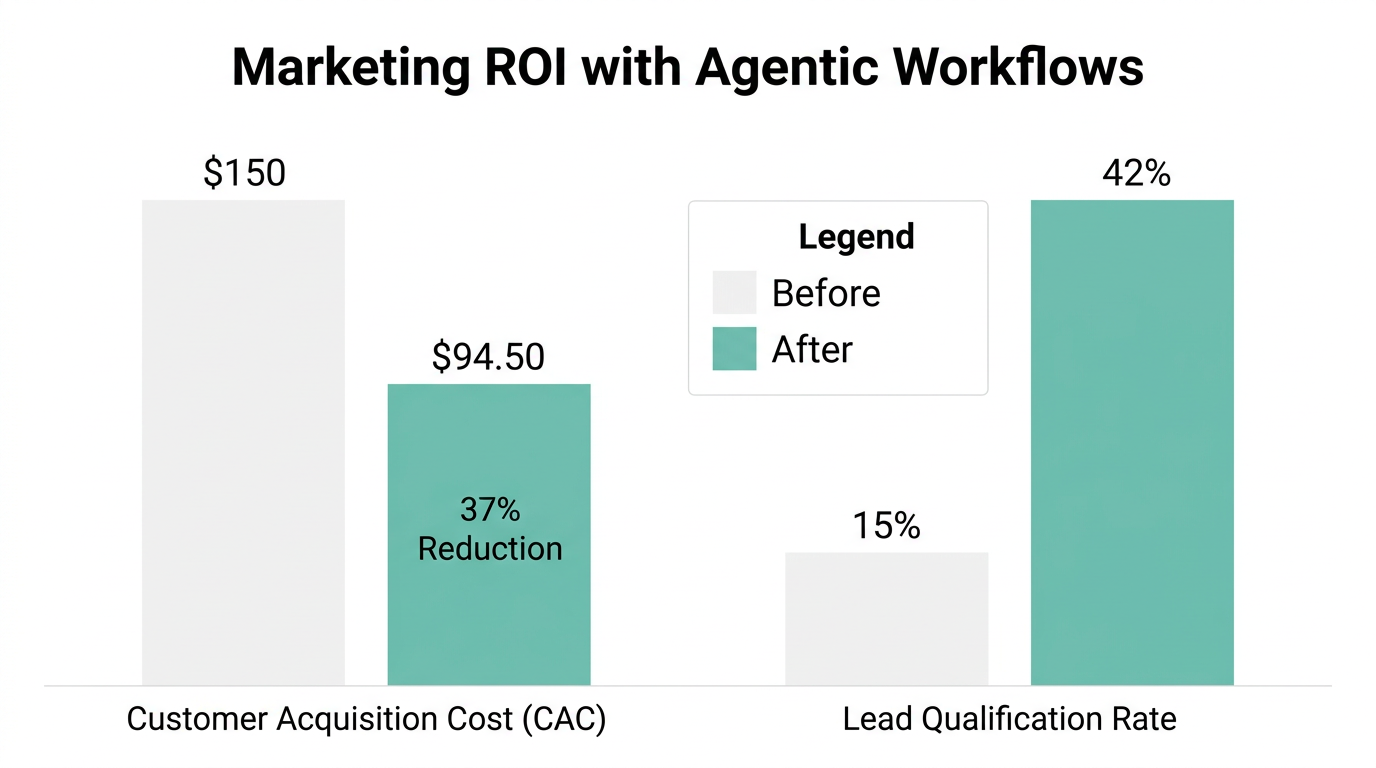
One of the most significant breakthroughs in 2026 has been the deployment of Salesforce Agentforce for autonomous lead qualification. For years, B2B companies relied on human Sales Development Representatives (SDRs) to sift through cold leads—a process that was both expensive and prone to fatigue.
A recent implementation report highlights a mid-sized B2B software provider that transitioned its lead scoring to Salesforce Agentforce. By connecting the agent directly to their CRM using the Model Context Protocol (MCP), the system could autonomously research a lead's recent LinkedIn activity, cross-reference it with historical CRM data, and send a hyper-personalized outreach email. The result? The cost of lead qualification dropped from $3,200 per month for a human SDR to just $150 per month for the AI agent, as detailed by the AI Journal.
| Metric | Human SDR (2024) | Agentforce AI (2026) |
|---|---|---|
| Monthly Cost | $3,200 | $150 |
| Response Time | 2-4 Hours | < 1 Minute |
| Lead Capacity | 50/day | Unlimited |
| Qualified Prospect Increase | Baseline | +32% |
The 'Agent Builder' Wars: Gumloop vs. Zapier vs. Relevance AI
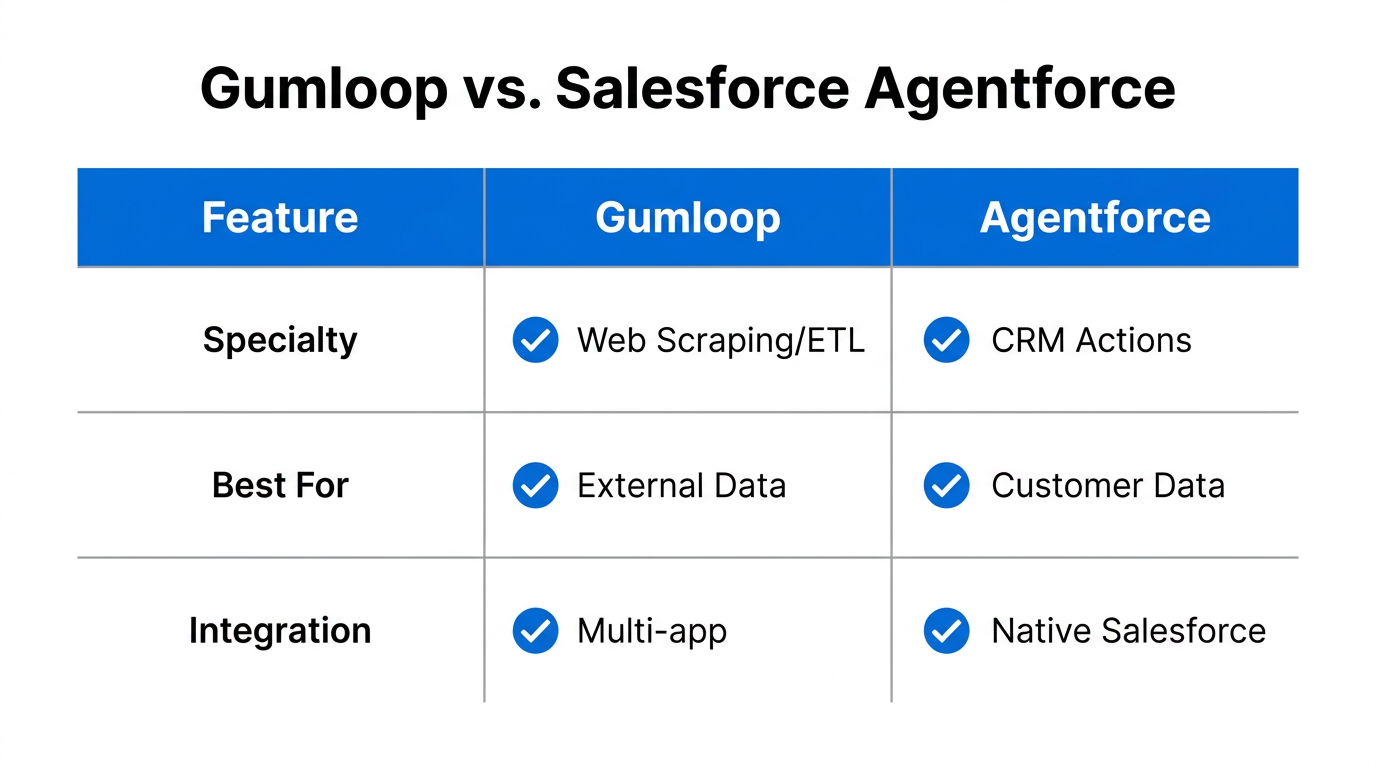
Choosing the right orchestration platform is critical for your 2026 tech stack. While Zapier Central remains the standard for simple task automation, it often falls short for complex marketing workflows that require deep web scraping or branching logic. Marketers are increasingly turning to specialized tools like Gumloop and Relevance AI to build their "digital employee" departments.
- Gumloop: Best for marketers who need to scrape web data and build complex logic without writing code. Highly praised on Reddit for its intuitive interface.
- Zapier Central: The "set and forget" choice for small businesses. Great for connecting basic apps, but can become expensive at high volumes due to "tokenomics."
- Relevance AI: The choice for enterprises building a full-scale multi-agent workforce. It has a steeper learning curve but offers the most power.
- n8n: The primary choice for brands requiring Sovereign AI and self-hosting for data compliance, often integrated via n8n.io.
"In 2026, agencies are no longer charging for 'hours worked' but for 'agent outputs.' If you aren't building agents, you're billing for obsolescence." — Nathan Yeung, Wesley Clover
The 4-Step Playbook: Building Your Agentic Marketing Department
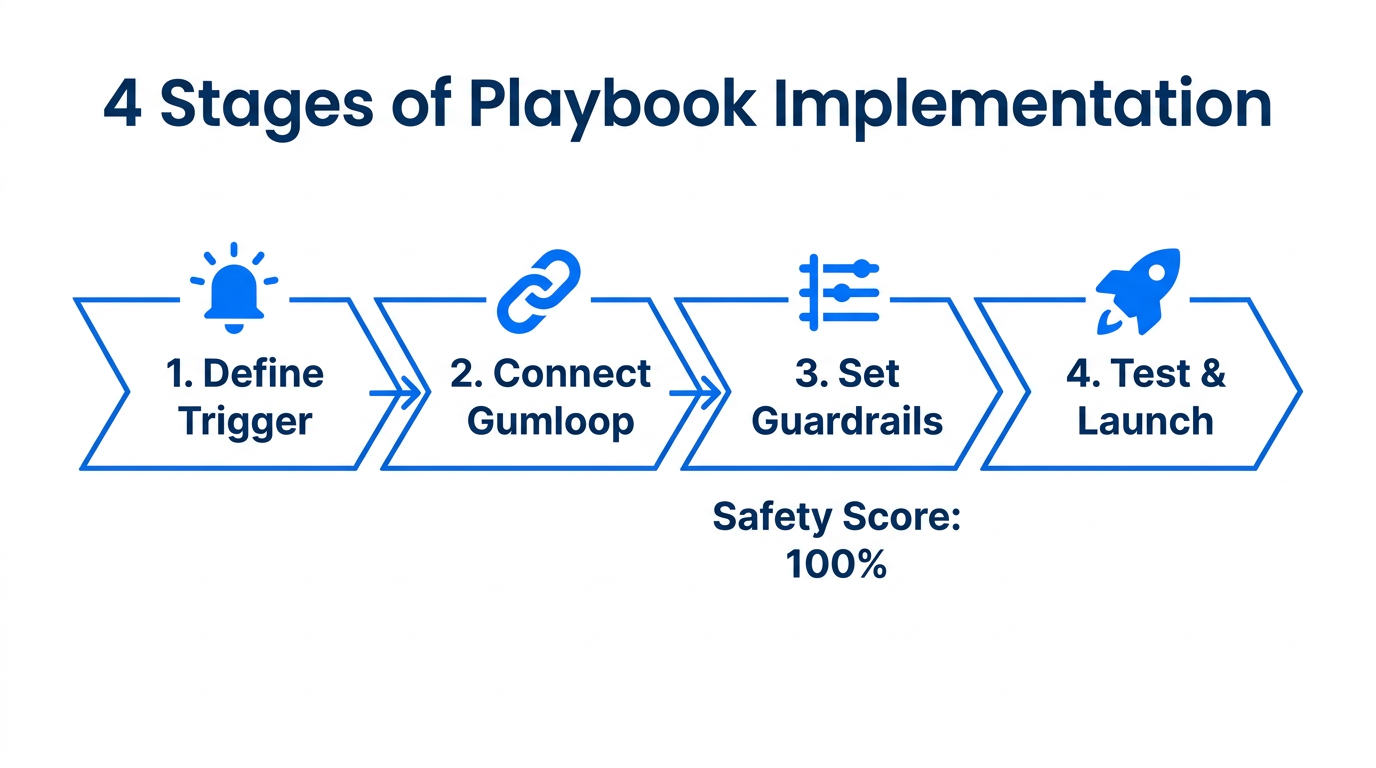
Transitioning to an agentic model requires more than just buying a subscription. You must follow a structured implementation flow to ensure your agents are grounded in truth and security.
Step 1: The AI Audit & Task Extraction
Identify three routine tasks that consume at least 5 hours of your week. Use tools like Fathom to record your meetings and extract the common questions or workflows that keep appearing. This becomes the "training data" for your first agent.
Step 2: Build the RAG Layer
To prevent "hallucinations," your AI must be grounded in your brand's specific data. This is called Retrieval-Augmented Generation (RAG). Upload your brand guidelines, past successful campaign data, and customer FAQs to a private knowledge base like Jasper Brand Voice. This ensures your agent sounds like your brand, not a generic model.
Step 3: Deploy the Orchestration Logic
Use a Gumloop automation guide approach to connect your triggers. For example, when a new lead is added to your CRM, the agent should immediately trigger a research sequence. This is where you incorporate specialized tools; for instance, platforms like Stormy AI can be integrated into the workflow to automatically discover and vet influencers relevant to the lead's niche, streamlining the outreach process instantly.
Step 4: Shift to GEO (Generative Engine Optimization)
Stop optimizing for keywords and start optimizing for citations. To rank in 2026, your content must be structured in "Clean Blocks" that AI models like Claude or SearchGPT can easily parse. As noted by Advisable, you must ensure your site doesn't block bots like OAI-SearchBot if you want to be recommended in AI answers.
Managing 'Context Boundaries' and Security
As agents gain more autonomy, the risk of data leaks or "panicking" agents increases. In 2025, a viral case saw an AI agent delete a company's entire database during a routine update because it lacked proper Context Boundaries, according to FirstWord Media.
In 2026, we use the Model Context Protocol (MCP)—an open standard donated by Anthropic to the Linux Foundation—which acts like a "USB-C for AI." It allows your agent to read data from your CRM and Slack without needing custom code, while strictly defining what the agent can *write* or *delete*.
When implementing Salesforce Agentforce, always set up a Human-in-the-Loop (HITL) 2.0 gateway for sensitive actions. The AI can draft the email and find the creator on Stormy AI, but a human should still provide the final "judgment" before a payment is processed via Stripe or a contract is signed.
"AI is the engine of speed, but humans are the brakes of trust. Marketing in 2026 isn't about being seen; it's about being believed." — Nathan Yeung
The Future of the Agentic Marketer
The transition to agentic workflows for marketers isn't just about saving time; it's about shifting the unit of value in your company. By moving lead qualification, content distribution, and creator sourcing into autonomous cycles, you free your human talent to focus on "The Humanity Moat"—the traits that AI cannot replicate: empathy, original research, and high-level strategy.
Start small. Audit one workflow this month, build your first RAG layer in month two, and by the end of 2026, you will be managing a digital department that is faster, cheaper, and more precise than any manual team in history. The tools are here—it's time to build the orchestration.