By 2026, the era of "chatting" with AI is officially over. The novelty of generating a single blog post or a catchy social caption has been replaced by the industrial-scale reality of agentic marketing 2026. We no longer ask AI to write; we command AI to do. With the global AI marketing market projected to reach $45.83 billion this year, the "Marketing Engineer" has emerged as the most critical role in the growth stack. This professional doesn't just manage a brand; they architect a system where tools like HubSpot Breeze and the Google Workspace CLI act as an autonomous workforce, delivering the 25% reduction in operational costs now standard for high-performance enterprise teams.
The Shift: From Generative Chat to Agentic Action
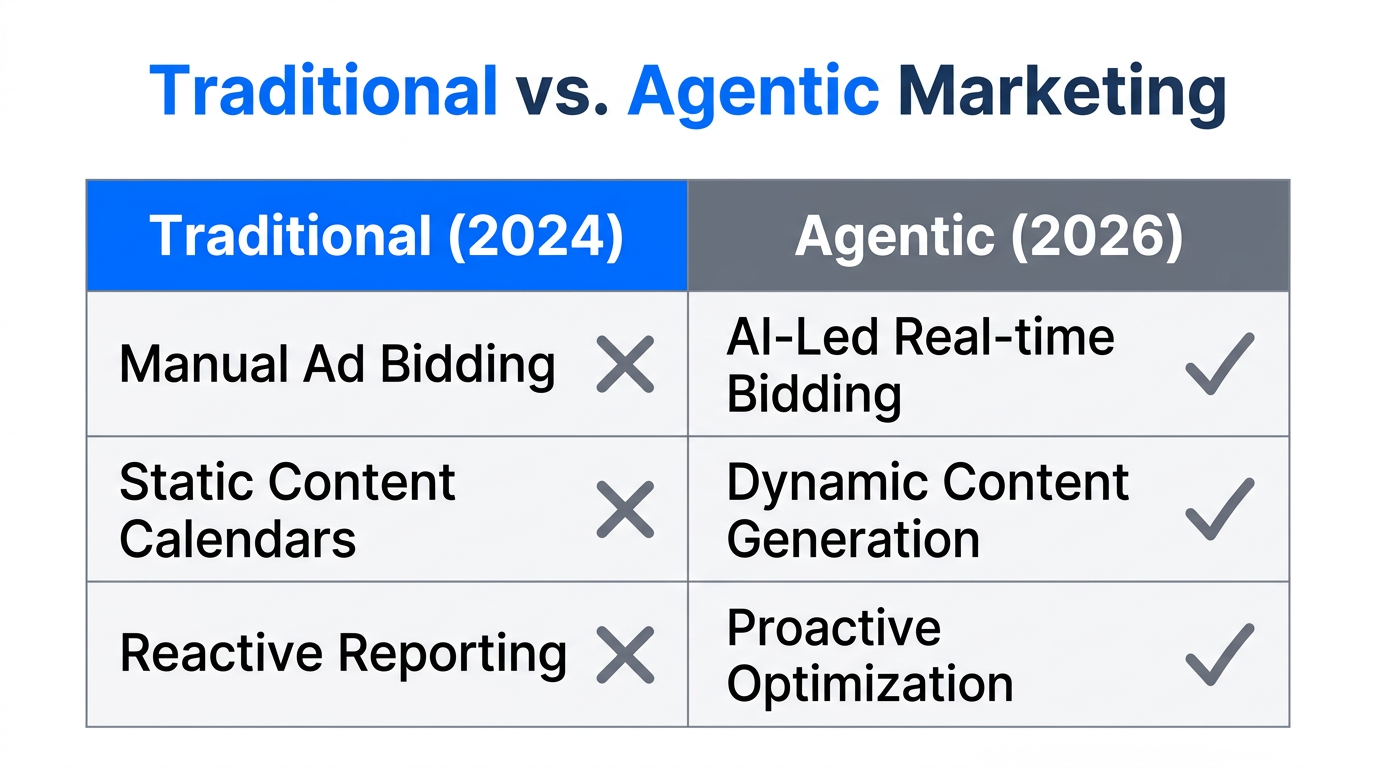
The core difference in 2026 is that AI agents now possess "tools"—the ability to use APIs and even native computer interfaces to execute complex sequences. While legacy platforms were limited to text output, OpenAI's latest models and its peers now feature native computer use, allowing agents to navigate the Meta Ads Manager or LinkedIn Campaign Manager just as a human would. This isn't just automation; it's orchestration. According to Gartner research, companies that have integrated these "Agentic AI" systems report a 12% increase in ROI on ad spend due to real-time, minute-by-minute optimization that no human team could replicate manually.
"AI isn't replacing the marketing team; it’s replacing the 'marketing factory.' The logistics, the resizing, the versioning—those are gone. The strategy remains human." — Scott Brinker, Chiefmartec
The HubSpot Breeze Automation Foundation
In 2026, HubSpot serves as the central nervous system for AI marketing orchestration. It has evolved from a simple CRM assistant into a full-funnel automation engine. For a marketing engineer workflow, Breeze handles the "boring truth" of marketing: lead scoring, content remixing, and cross-channel distribution. By connecting Breeze to proprietary data sets, brands avoid the "sea of sameness" that plagued 2024-era AI content. Today, Breeze uses your specific "Brand DNA" to ensure that every automated email and social post maintains a unique voice, mitigating the cynicism many consumers now feel toward generic AI-generated marketing.
| Feature | Traditional Workflow (2024) | Agentic Workflow (2026) |
|---|---|---|
| Campaign Setup | Manual entry & scheduling (Days) | Agentic orchestration (Minutes) |
| Content Scaling | Human-led repurposing | AI-driven remixing (Breeze) |
| Ad Optimization | Weekly manual checks | Real-time signal monitoring |
| Team Focus | Production-heavy roles | "Architect" & Editor roles |
The Playbook: Building Your Agentic Workflow
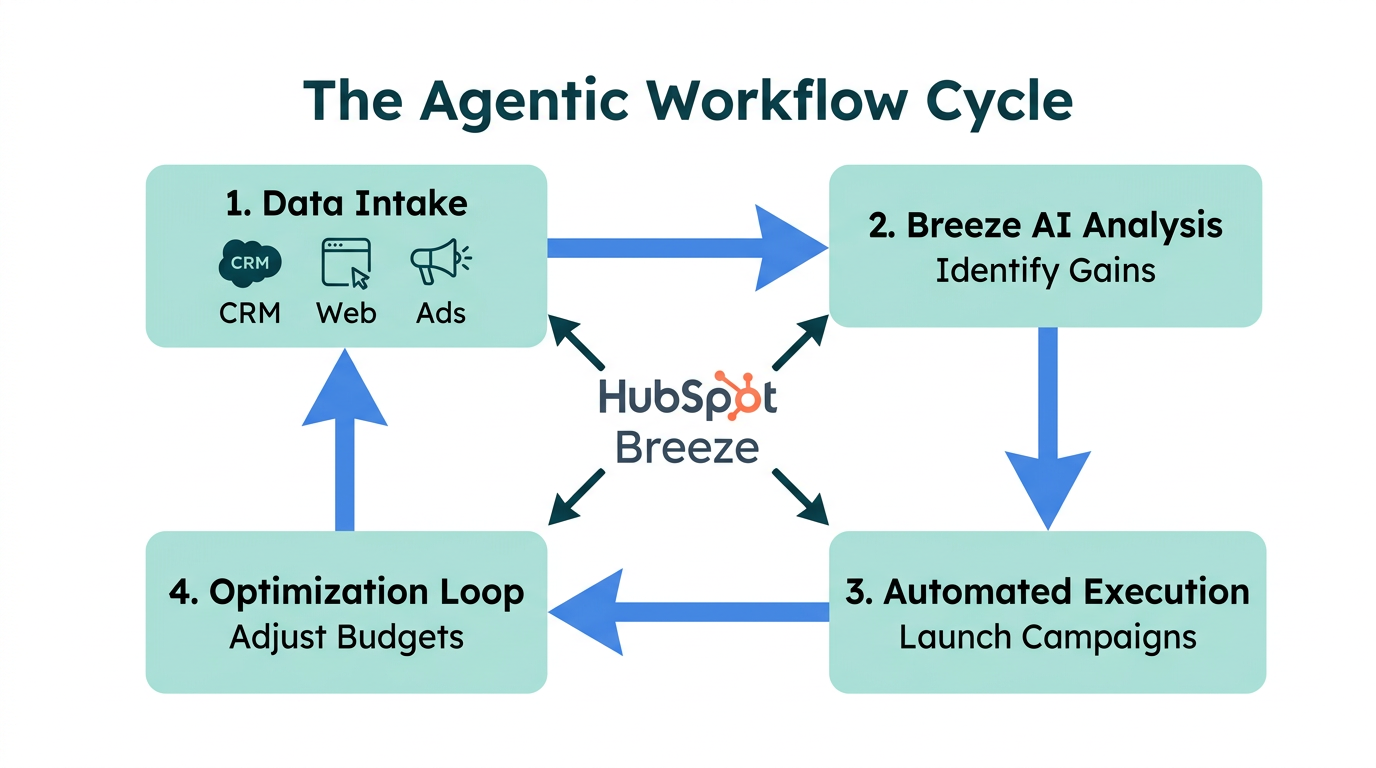
Transitioning to an agentic model requires a mindset shift from creator to architect. Follow these steps to build a marketing engineer workflow that leverages HubSpot Breeze and the Google Workspace CLI.
Step 1: Audit the "Boring" and Repeatable
Identify any task that takes longer than two hours and is performed weekly. This often includes turning webinars into LinkedIn posts, updating project trackers, or adjusting ad budgets based on performance. The goal is to automate the administrative middle management of your marketing operations. Tools like Make.com or Zapier are essential here for connecting your primary data sources to your AI agents.
Step 2: Connect Real-Time Signal Monitoring
Use predictive revenue AI like 6sense to monitor anonymous buyer intent. When a high-intent signal is detected, your agent should automatically trigger an action in the CRM. This could be a personalized email sequence or an automated adjustment to Google Ads bidding. Organizations using this "Signal-to-Action" loop report a significant reduction in Customer Acquisition Cost (CAC) compared to manual outreach.
"The key insight is that AI can now detect 'emotional vulnerability' or high-intent signals in real-time, allowing brands to serve the right message before a human even sees the data." — Naresh Khadka
Step 3: Deploy the Google Workspace CLI
The Google Workspace CLI (clasp) allows your AI agents to treat Gmail, Docs, and Sheets as a single unified system. Instead of multiple disparate automations, you can now have one "Orchestrator Agent" that updates a project plan in Google Sheets, drafts a campaign brief in Docs, and notifies the team via Slack. This handles the cross-team coordination that used to take hours of meetings.
Scaling with Influencers and UGC
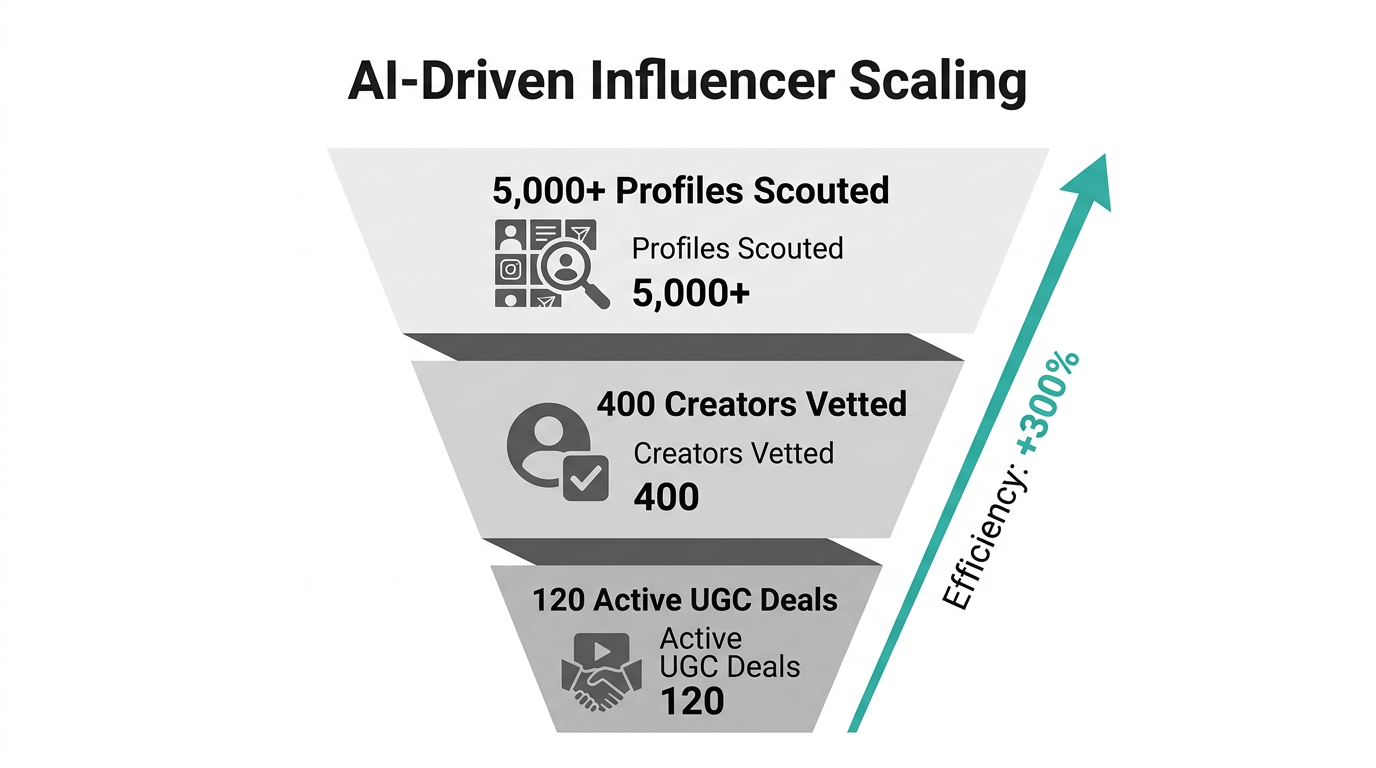
While HubSpot Breeze manages your internal CRM and email funnels, scaling top-of-funnel awareness in 2026 requires authentic human connection. AI is great at logic, but it still struggles with nostalgia and trust. This is where Stormy AI comes into the agentic workflow. While your CRM agents handle the data, you can use Stormy AI to autonomously discover, outreach to, and manage UGC creators who provide the "human soul" your campaigns need to stand out.
AEO: The New Currency of AI Citations
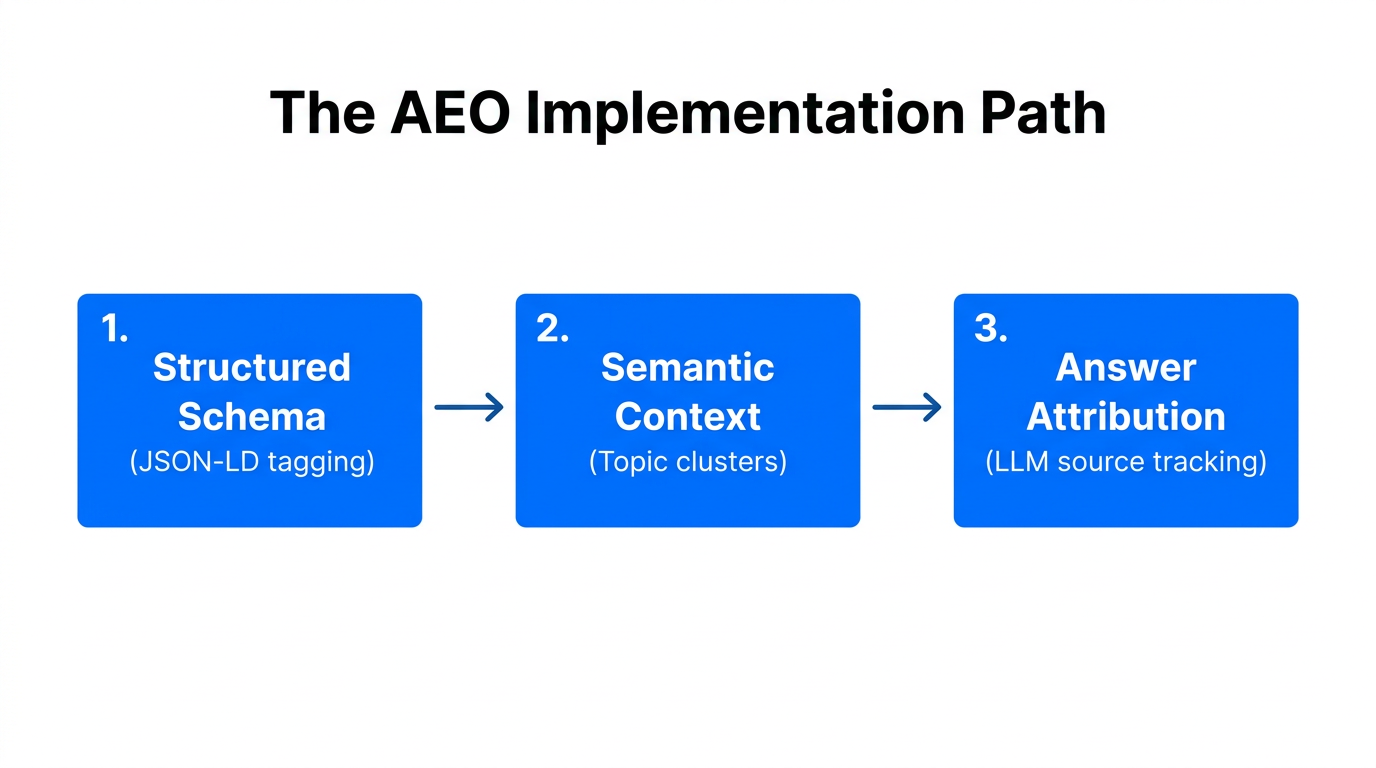
In 2026, traditional SEO has pivoted to Answer Engine Optimization (AEO). With a massive percentage of searches ending without a click, ranking #1 on Google is less important than being the primary citation in a Perplexity or Gemini answer. Your agentic workflow should include generating content specifically designed to be cited by AI search bots. Experts point out that "AI Citation Frequency" is now a leading indicator of brand authority in the age of automated search.
Conclusion: Entering the Architect Era
The transition to automated campaign management isn't just a technical upgrade; it's a structural one. By leveraging HubSpot Breeze automation and the Google Workspace CLI, marketing teams are evolving from production-heavy groups into lean units of "Architects." As Klarna demonstrated, shifting content production and operations to AI systems can save millions annually while increasing output. Start by auditing your boring tasks, embrace the role of the Marketing Engineer, and build the agentic systems that will define brand success in 2026.