The 2026 Virtual Influencer Playbook: Lessons from L’Oréal and Hyundai’s AI Campaigns
Discover how L’Oréal and Hyundai use virtual influencers in 2026 to drive 20x ROI. Learn to deploy AI influencer campaigns and hybrid digital creator strategies.
In the rapidly evolving landscape of 2026, the distinction between human and digital creativity has reached a fascinating equilibrium. For years, marketers viewed digital avatars as experimental novelties, but this year has proven they are the cornerstone of a high-growth marketing engine. The global influencer marketing spend is projected to reach $32.55 billion, reflecting a massive shift toward essential marketing channel status. Within this boom, the virtual influencers 2026 market has exploded, providing brands with an unprecedented level of control, scalability, and performance.
Today’s marketing leaders are no longer asking if they should use AI, but how they can integrate digital personas into an 'always-on' campaign structure. With 92% of brands now leveraging AI for their influencer workflows, according to research from Impact.com, the focus has shifted to the strategic deployment of virtual creators who can speak 50 languages, never sleep, and maintain zero logistical overhead. This playbook breaks down the lessons learned from pioneers like L’Oréal and Hyundai, providing a roadmap for your digital creator strategy.
"The future of AI isn’t human vs. AI—it’s human with AI. Operation efficiency through automation is now the single biggest competitive advantage for global brands."
The Virtual Influencer Explosion: Why Now?
The rise of the digital persona is fueled by the need for consistency in a fragmented media environment. Unlike human creators who face travel constraints, creative burnout, or personal controversies, virtual influencers offer a brand-safe, meticulously curated alternative. The virtual influencer market is forecasted to reach a staggering $37.8 billion by 2030, as noted by Grand View Research, because they solve the primary bottleneck of traditional influencer marketing: scalability.
By 2026, AI influencer campaigns have moved beyond simple static images to fully interactive, real-time video content. These digital creators can inhabit multiple virtual spaces simultaneously, participating in a livestream in New York while appearing in an AR campaign in Tokyo via Snap AR. This 'multi-presence' capability is why legacy influencer models are being disrupted by modern, agentic automation tools that handle the discovery and management of these personas autonomously.
Case Study: How Hyundai Delivered 20x ROI with Kenza Layli
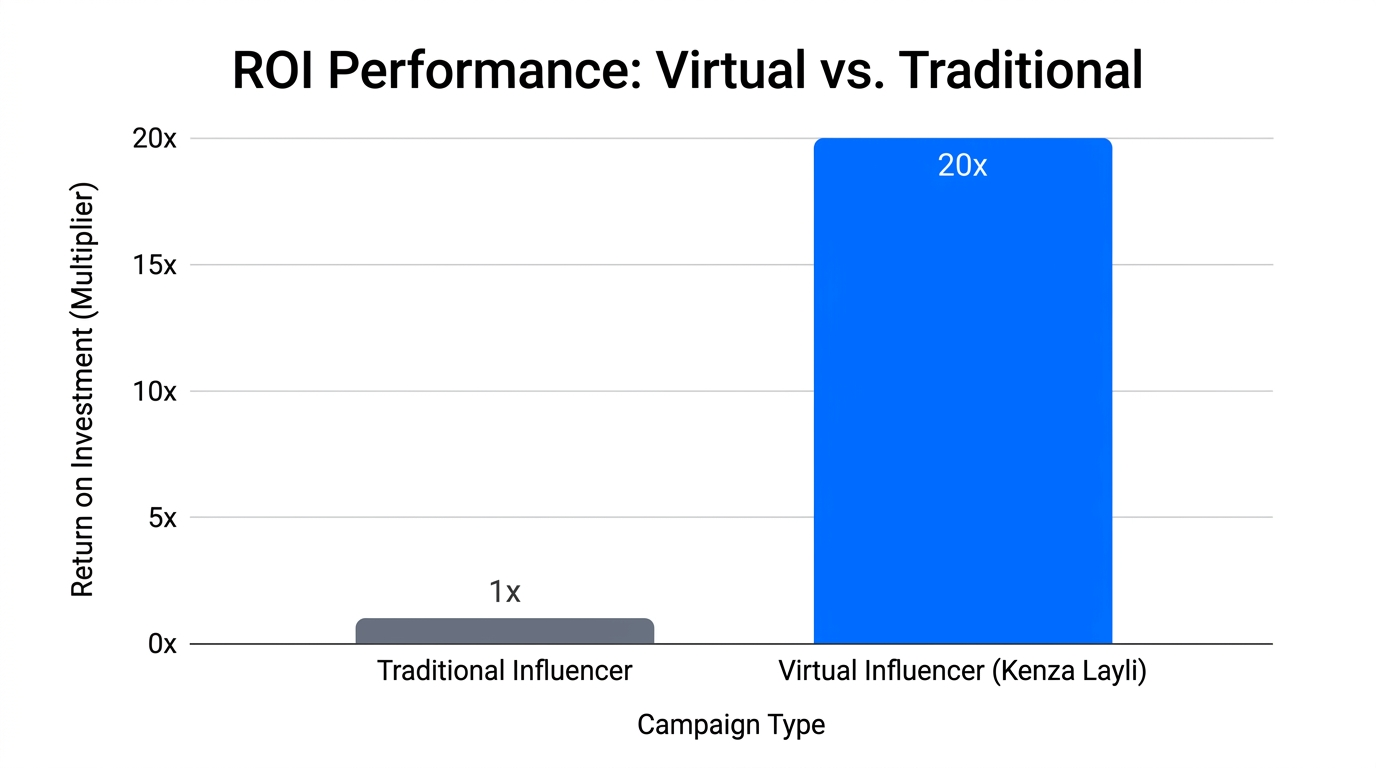
The Kenza Layli Hyundai case study remains one of the most cited examples of digital creator success in 2026. To launch the Kona, Hyundai moved away from traditional celebrity endorsements and leaned into the power of Kenza Layli, a virtual persona capable of communicating across multiple cultures and languages. The result was a masterclass in precision targeting that delivered a 20x ROI for the brand.
The campaign succeeded because of its granular approach. While a human influencer might require weeks of scheduling and a massive production crew to film in eight different languages, Kenza Layli’s content was generated and localized in real-time. This allowed Hyundai to hyper-personalize the message for different regions without increasing the budget. Brands in 2026 are finding that budgets for creator marketing have increased by 171% precisely because AI-driven operational efficiency has made such high returns possible.
| Metric | Traditional Influencer (Avg) | Hyundai (Kenza Layli) |
|---|---|---|
| ROI | $5.78 per $1 | $20.00 per $1 |
| Localization | Manual / High Cost | Automated / 8 Languages |
| Campaign Duration | Fixed Production Dates | 24/7 Always-On |
Case Study: L’Oréal’s 100 Million Views with Kyra
The L'Oreal influencer marketing strategy took a different turn by focusing on mass engagement through Kyra, a virtual creator known for her high-fashion aesthetic. The campaign didn't just reach a wide audience; it resonated deeply, generating 100 million views and a 5% engagement rate. This engagement level is significantly higher than the industry average for mega-influencers, proving that digital personas can build genuine connections with followers.
L'Oréal’s success stems from treating Kyra as a long-term brand ambassador rather than a one-off tool. By using advanced AI sentiment analysis, the brand monitored global conversations to adjust Kyra's 'personality' and content in real-time. This allowed the campaign to remain culturally relevant and responsive to trends as they happened, something that is nearly impossible with pre-recorded human content.
"Virtual influencers like Kyra allow us to push the boundaries of storytelling. We aren't limited by physics or logistics; we are only limited by our imagination."
The Economics: Why 'Always-On' is Winning
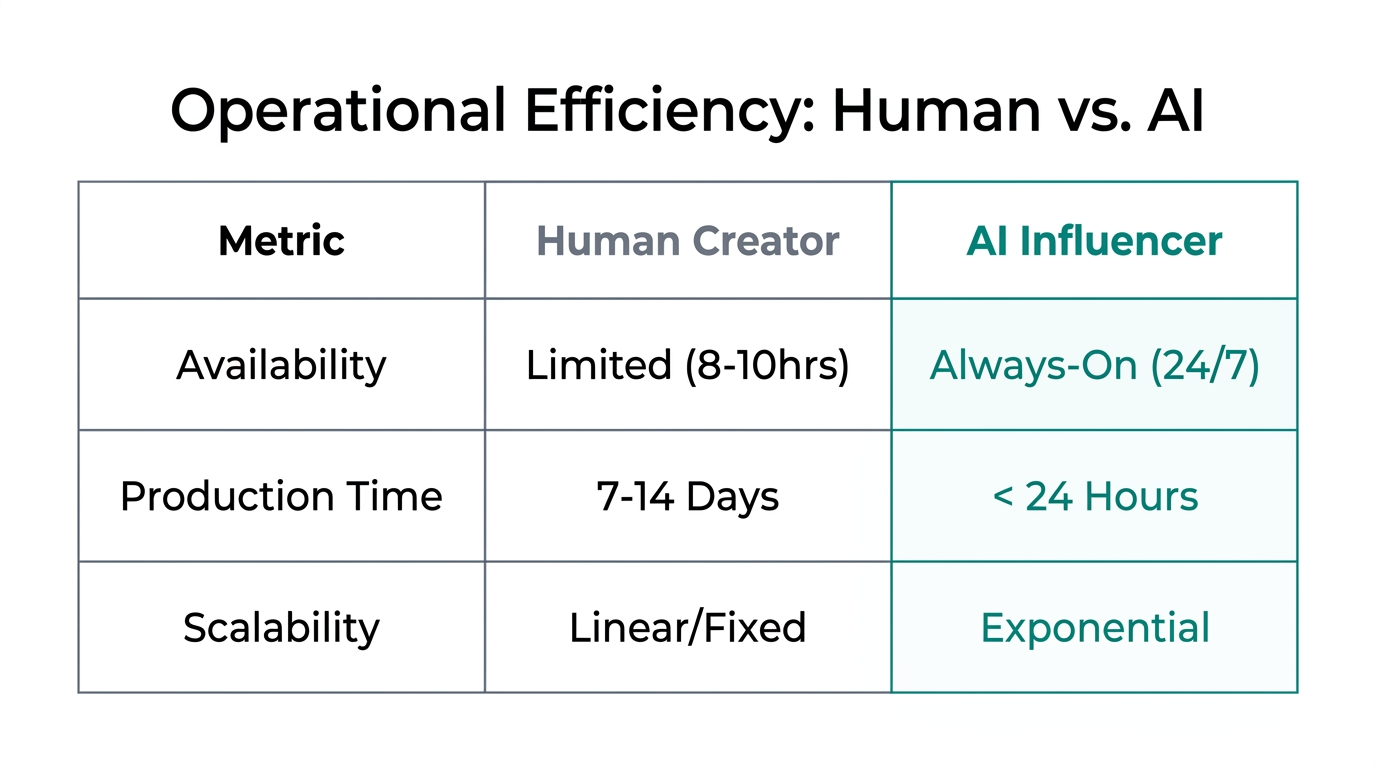
The financial argument for virtual influencers in 2026 is becoming undeniable. When you remove the costs of flights, hotels, visas, and talent fees, the cost-per-impression drops dramatically. However, the real value lies in the 'Always-On' content engine. Traditional campaigns are often episodic—a burst of activity followed by silence. Virtual influencers allow for a constant stream of high-quality content that keeps the brand top-of-mind 365 days a year.
Furthermore, businesses are shifting away from flat-fee payments toward commission-based performance models. In 2026, AI-powered CRMs track conversions in real-time, automating payouts to creators via Stripe. For virtual influencers owned by the brand or an agency, this creates a highly predictable cost structure. While human creators still dominate in areas requiring deep emotional nuance, virtual influencers are winning on volume, speed, and safety.
The 2026 Playbook: Building a Hybrid Content Engine
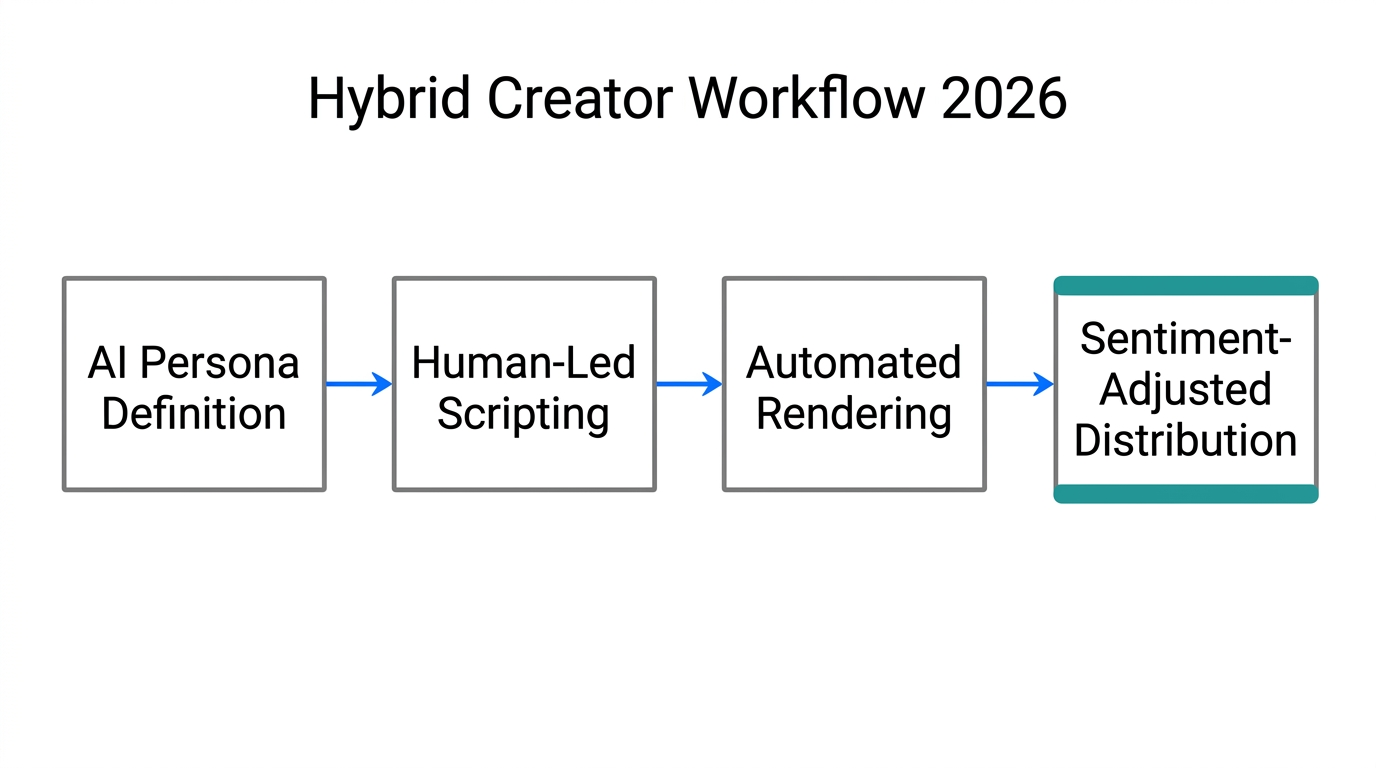
How do you maintain authenticity while using a digital avatar? The answer lies in a 'Hybrid Content' engine. This strategy involves using AI to handle the data-heavy tasks—discovery, vetting, and initial outreach—while human creativity drives the storytelling and brand voice. For example, platforms like Stormy AI enable brands to discover a mix of human micro-influencers and digital creators that perfectly align with their niche.
Step 1: Automated Discovery and Vetting
Use AI to scan years of a creator’s history in minutes. In 2026, vetting for brand safety is mandatory. Advanced vetting tools now flag political speech or brand-clashing content before a single contract is signed. This ensures that your virtual persona isn't associating with problematic accounts or trends.
Step 2: Generate Hooks with AI, Edit with Humans
Use a Hybrid Content engine where AI generates campaign briefs and hook ideas based on trending data from platforms like TikTok Creative Center, but allow your creative team to edit the final scripts. This ensures the digital persona sounds authentic and human-centric, rather than robotic.
Step 3: Pair Virtual Personas with Human Micro-Influencers
The most successful campaigns in 2026 use virtual influencers as the 'face' of the brand and human micro-influencers (under 50k followers) to provide social proof and community trust. AI data shows that nano and micro-influencers consistently deliver engagement rates of 15% on TikTok, which complements the massive reach of a virtual avatar.
Monitoring Success: AI Sentiment Analysis
Once your digital persona is live, the work isn't over. You must monitor how the world reacts. Brands like Armani use advanced AI sentiment analysis via Sprinklr to track nuanced customer conversations. This allows them to detect shifts in perception instantly—whether a virtual influencer's outfit is trending or if a specific campaign message is falling flat.
By monitoring sentiment, you can pivot your digital creator strategy in hours rather than weeks. If the AI detects a 20% boost in engagement around a specific topic, your virtual influencer can be updated to double down on that content immediately. This level of responsive marketing is the new standard for the creator economy in 2026.
"The speed at which we can now iterate on content is the true power of AI. We are moving from a 'plan-and-execute' model to a 'monitor-and-evolve' reality."
Predictions: The Future of the Creator Economy
As we look toward the second half of 2026 and beyond, several trends are clear. First, the intersection of human creativity and AI-generated personas will become seamless. We will see more digital twins of human influencers, allowing them to scale their presence without physically being present at every shoot.
Second, agentic AI systems will become the primary way brands manage these relationships. These systems won't just find creators; they will negotiate contracts, handle payments, and provide performance reports autonomously. For brands wanting to stay ahead, the goal is to build a tech stack that supports this automation today. Using a tool like Stormy AI to centralize your creator CRM and outreach is no longer a luxury—it’s a necessity for survival in a $37 billion market.