In the landscape of 2026, the ecommerce back office has undergone a radical transformation. We have officially moved past the era of the "deflection chatbot" and entered the age of the Autonomous AI Employee. For Shopify merchants, this shift isn't just about reducing ticket volume; it's about fundamentally changing the unit economics of customer interaction. Data from Lorikeet and Grand View Research indicates the global AI customer service market will hit $15.12 billion this year, yet the real winners aren't just saving on labor. They are using agentic workflows to turn every support inquiry into a high-intent sales opportunity.
The 154% Conversion Lift: Why Support is the New Sales
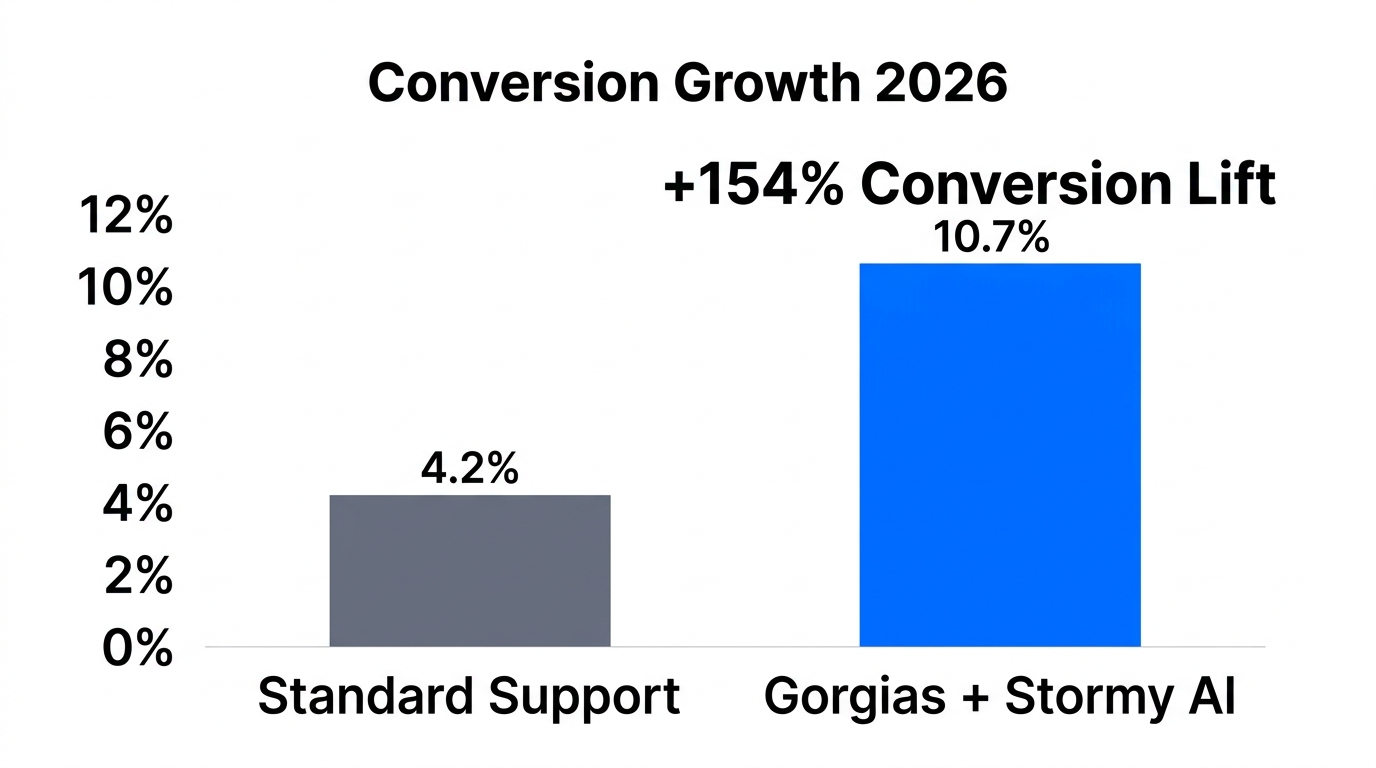
The most shocking statistic of 2026 is the documented ROI of AI-led interactions. Recent benchmarks show that shoppers who interact with a Shopify AI shopping assistant or a high-performance agent show a 154% higher conversion rate than those who browse in silence. Even more impressively, Gorgias data suggests that 80% of purchases driven by AI recommendations now happen on the same day.
This massive lift in Shopify conversion rate optimization occurs because modern AI agents like Stormy AI and Gorgias 2.0 don't just answer questions—they anticipate needs. While a human agent might take 20 minutes to respond to a sizing query, an AI agent resolves it in seconds, links to the exact SKU in the customer's size, and offers a personalized bundle discount before the shopper's dopamine hit fades.
"The 'Chatbot' era is officially over. 2026 belongs to Autonomous AI Agents that execute actions—refunds, inventory checks, and upsells—rather than just pointing to help articles."
Step-by-Step: Configuring 'Intent Detection' for High-Value Buyers
To maximize revenue, you cannot treat a "Where is my order?" (WISMO) ticket the same as a "Do you have this in blue?" query. Gorgias revenue tracking relies on your ability to segment these intents. In 2026, setting up agentic workflows requires a surgical approach to the Amazon-style efficiency we now see on Shopify.
Step 1: Sync Your Shopify Sidebar Widget
Ensure your Gorgias environment is fully synced with your Shopify backend. This allows the AI to see the customer's lifetime value (LTV), recent tags, and cart contents in real-time. Without this data, your AI is flying blind.
Step 2: Map Custom Intents
In the Gorgias settings, navigate to Automation -> Intent Detection. You must create specific rules for "High-Value Inquiry" versus "Routine Support." If a customer asks about product compatibility or material quality, the AI should immediately trigger a sales-focused workflow rather than a standard resolution script.

Step 3: Establish the Human-Handoff Rule
As Gartner analyst Emily Potosky notes, AI should handle speed while humans handle empathy. Configure your rules so that any ticket with a sentiment score below -0.5 (indicating anger) or any ticket from a VIP customer (LTV > $500) is automatically escalated to a senior human rep with a full AI-generated summary.
Using Stormy AI for Support-to-Sales Transitions
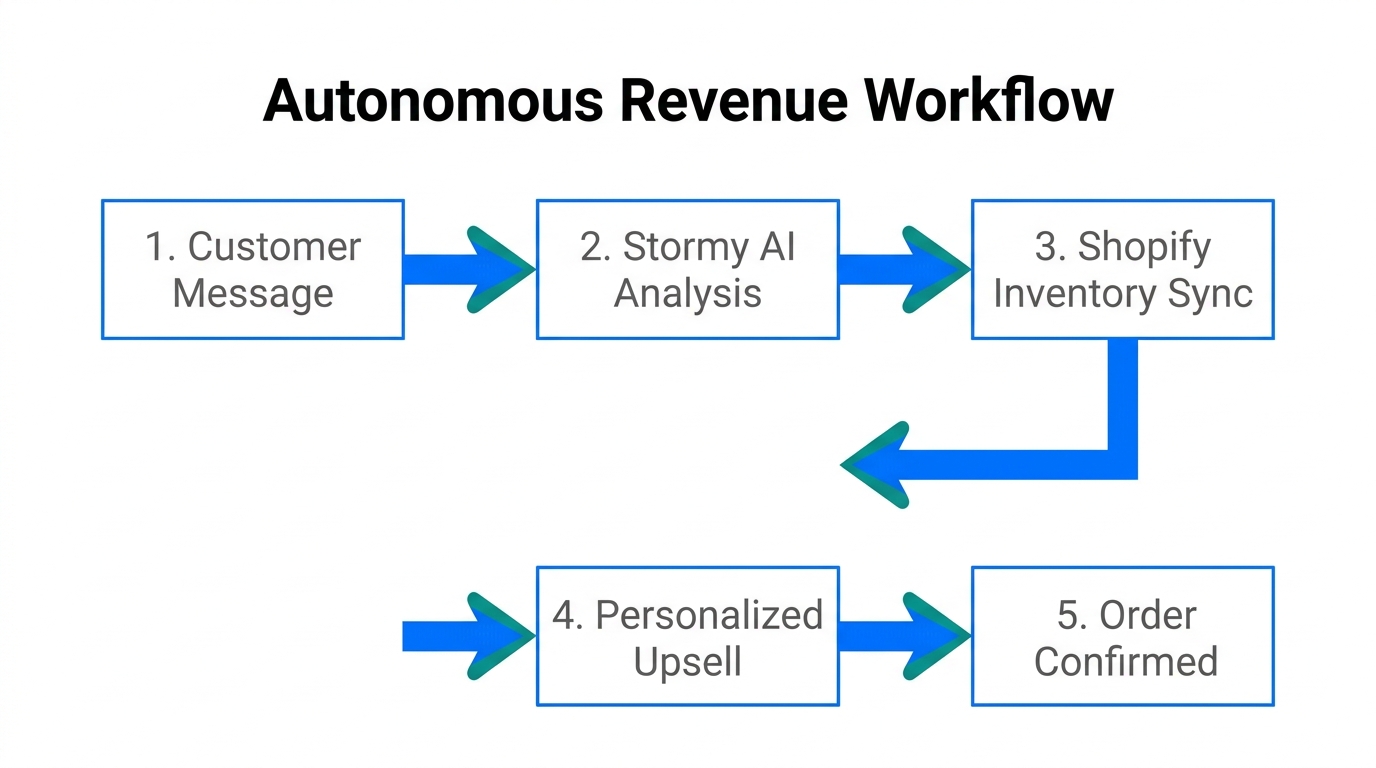
While Gorgias excels at managing the reactive inbox, Stormy AI acts as your proactive AI ecommerce employee. Stormy doesn't just wait for a ticket; it uses "Computer Use" technology to navigate your store's back office, Meta Ads Manager, and Klaviyo accounts to drive revenue.
One of the most effective AI ecommerce growth strategies is using Stormy to bridge the gap between support and creator marketing. For example, when a customer leaves a glowing 5-star review or asks a sophisticated question that shows they are a power user, Stormy can automatically:
- Check the customer's social following via its discovery engine.
- Draft a personalized outreach email inviting them to join your affiliate program.
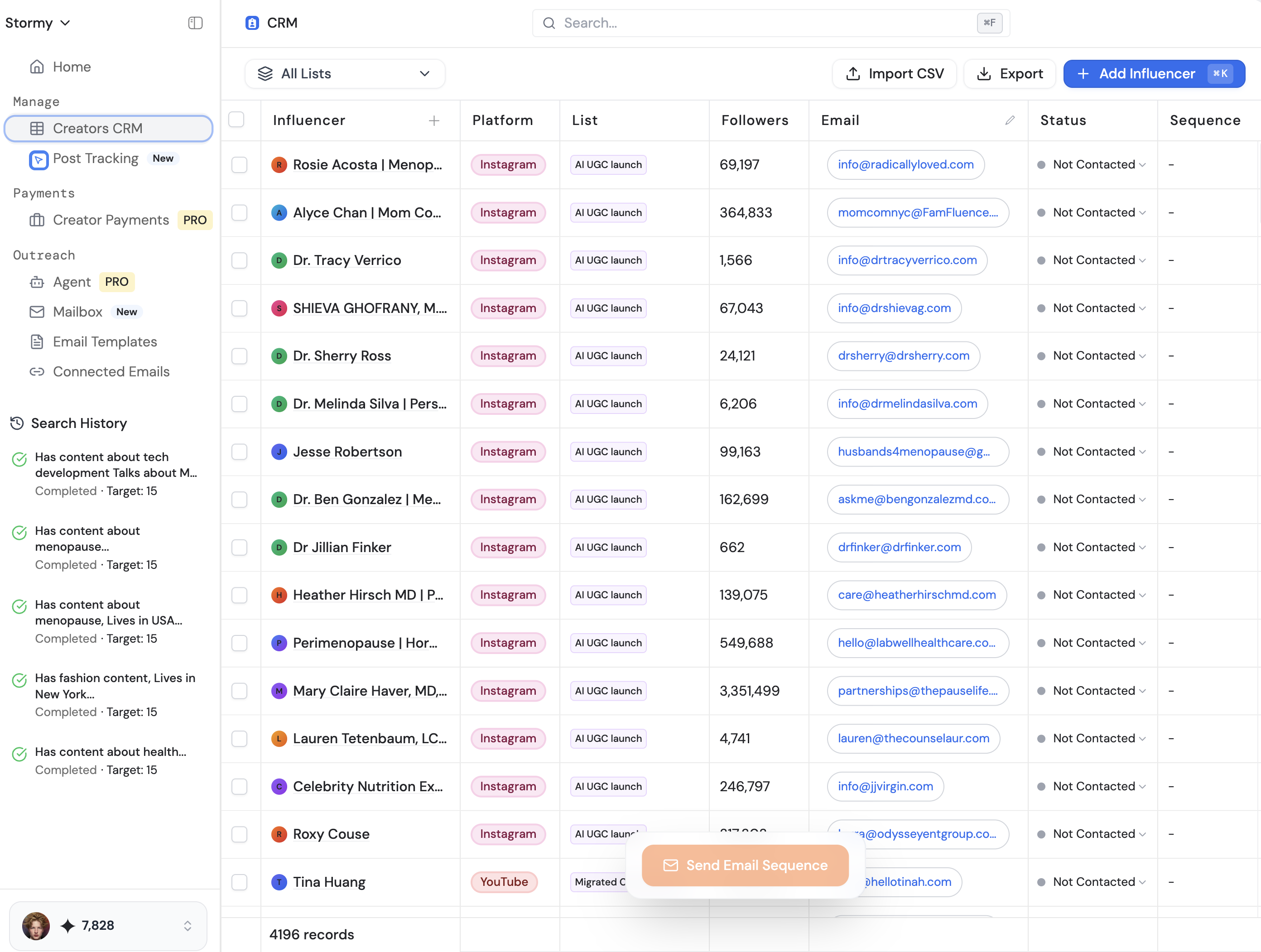
- Add them to a dedicated Creator CRM for long-term tracking.
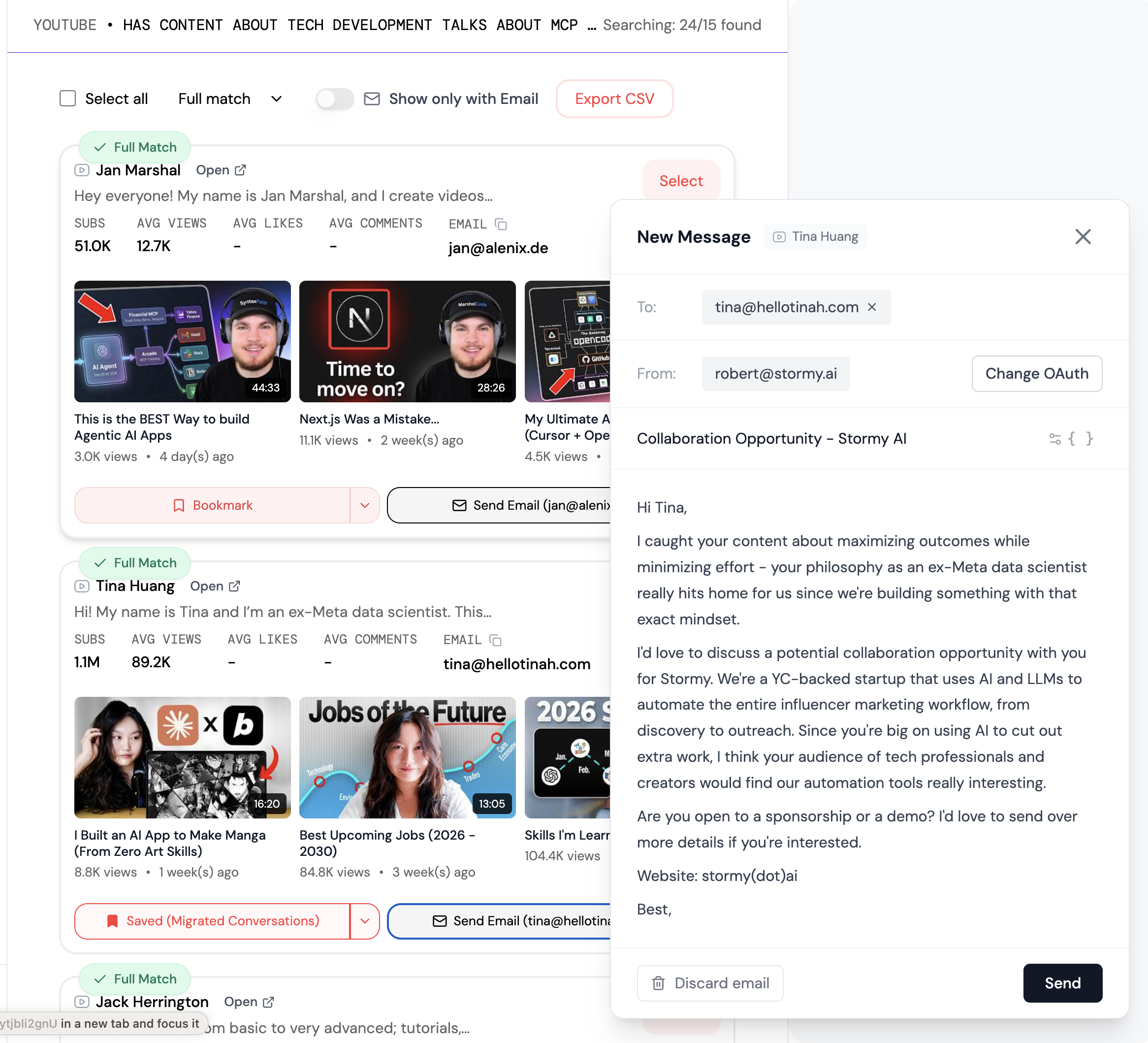
This agentic approach means your support channel becomes a lead generation engine for your marketing team. According to Groove HQ, 88% of contact centers are using AI, but the few who integrate it into autonomous growth workflows like this are seeing 23x ROI on their automation spend.
Measuring Success: Revenue-per-Resolution
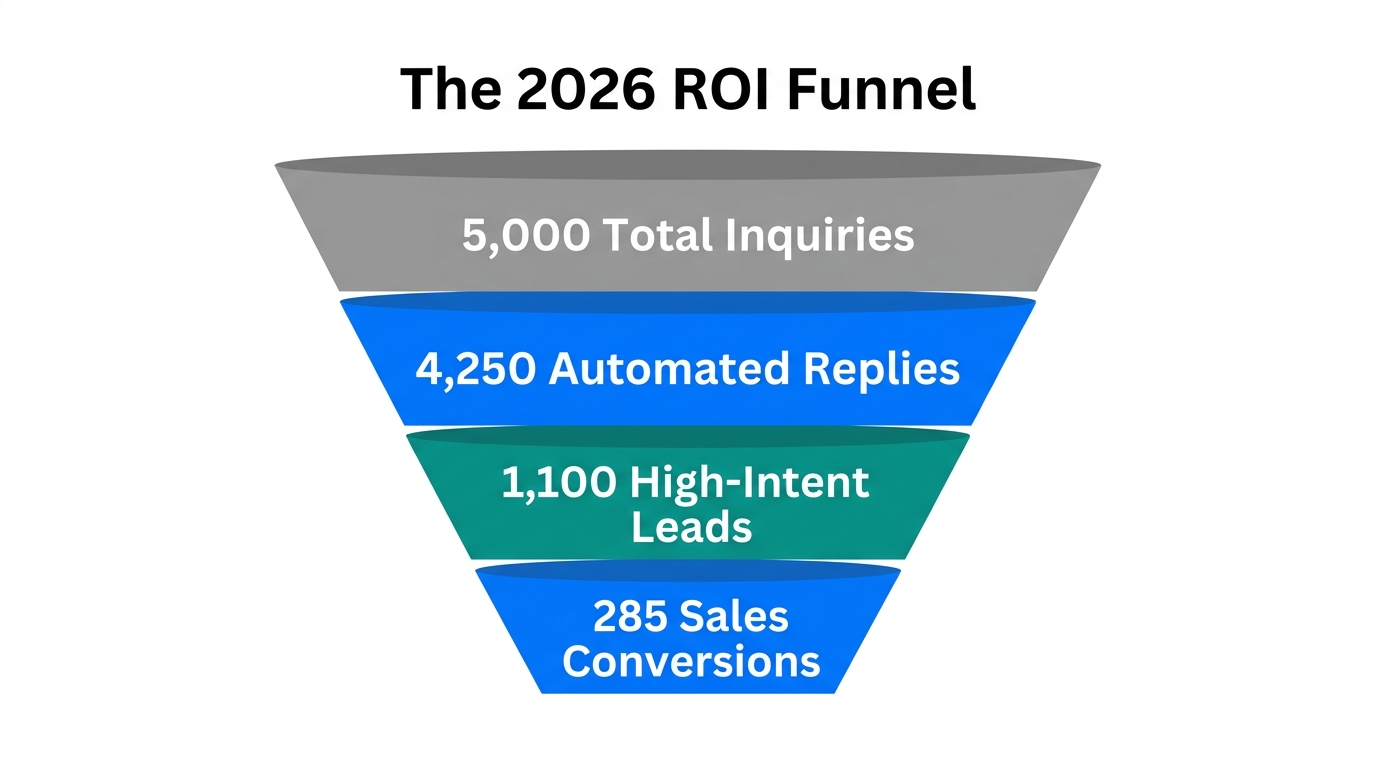
In 2026, measuring "Ticket Volume" is a legacy metric. If your AI agent resolves 1,000 tickets but drives zero sales, it's a cost center. If it resolves 500 tickets and generates $10,000 in attribution, it's a profit center. Brands are now shifting to Revenue-per-Resolution (RPR) as their North Star metric.
| Metric | Traditional Support (2024) | Agentic Support (2026) | Impact |
|---|---|---|---|
| First Response Time | 2-4 Hours | < 10 Seconds | Higher CSAT |
| Primary Goal | Ticket Deflection | Revenue Generation | Profitability |
| Cost per Interaction | $13.50 | $1.84 | 86% Cost Savings |
| Conversion Rate | Negligible | 154% Increase | Scalable Growth |
By using Zipchat AI or the Gorgias Shopping Assistant, you can track exactly how many sales were influenced by an AI conversation. If you notice a high RPR on specific product categories, you can ask Stormy AI to prioritize those SKUs in your automated customer retention sequences.
"The future of ecommerce isn't about having a larger team; it's about having a smarter AI employee that runs the messy back office while you focus on brand vision."
Avoiding the 'Uncanny Valley' of AI Sales
Despite the efficiency, there is a risk. Data from IBM's Trust in AI Report suggests that a significant percentage of consumers report dissatisfaction with AI that "tries too hard" to sell during a sensitive support interaction. To avoid the "Uncanny Valley," follow these rules:
- Grounded Knowledge: Only allow the AI to recommend products that are currently in stock by syncing it with your inventory management software. Recommending an out-of-stock item is the fastest way to lose trust.
- Transparent Identity: Never try to trick customers into thinking the AI is a human. Use clear labels like "Brand Assistant" or "Stormy AI Agent."
- The "Hallucination Tax": AI errors cost businesses billions last year. Use "Grounded Knowledge" shields—a feature standard in Gorgias 2.0—to ensure the AI only speaks from your verified help center and product pages.
The Bottom Line for 2026
The gap between the top 1% of Shopify brands and everyone else is widening based on their adoption of agentic AI. By combining the reactive power of Gorgias with the proactive, growth-oriented capabilities of Stormy AI, you can run a 100-million-dollar operation with a lean, high-leverage team.
Whether you are managing Google Ads spend or following up with suppliers, remember that 2026 is the year of the autonomous ecommerce employee. Don't just install a tool; hire an agent that works while you sleep.