The 2026 Playbook for AI Abandoned Cart Email Recovery: Timing, Incentives, and Intent Scoring
Master the 2026 abandoned cart email sequence with predictive intent scoring and dynamic discount strategy to boost ecommerce customer retention and ROI.
In 2026, the battle for consumer attention in the e-commerce landscape is no longer won on the storefront alone; it is won in the inbox and the messaging app. Despite advancements in UI/UX, the global average cart abandonment rate continues to hover between 70.19% and 76.8%, according to data from the Baymard Institute. This represents a staggering $260 billion in recoverable revenue in the US and EU alone. However, the days of sending a generic "You forgot something!" email 24 hours later are over. To capture this lost revenue today, brands are turning to a sophisticated marketing automation playbook driven by predictive intent scoring and real-time behavioral data.
The 2026 Abandonment Crisis: Why Traditional Methods Fail
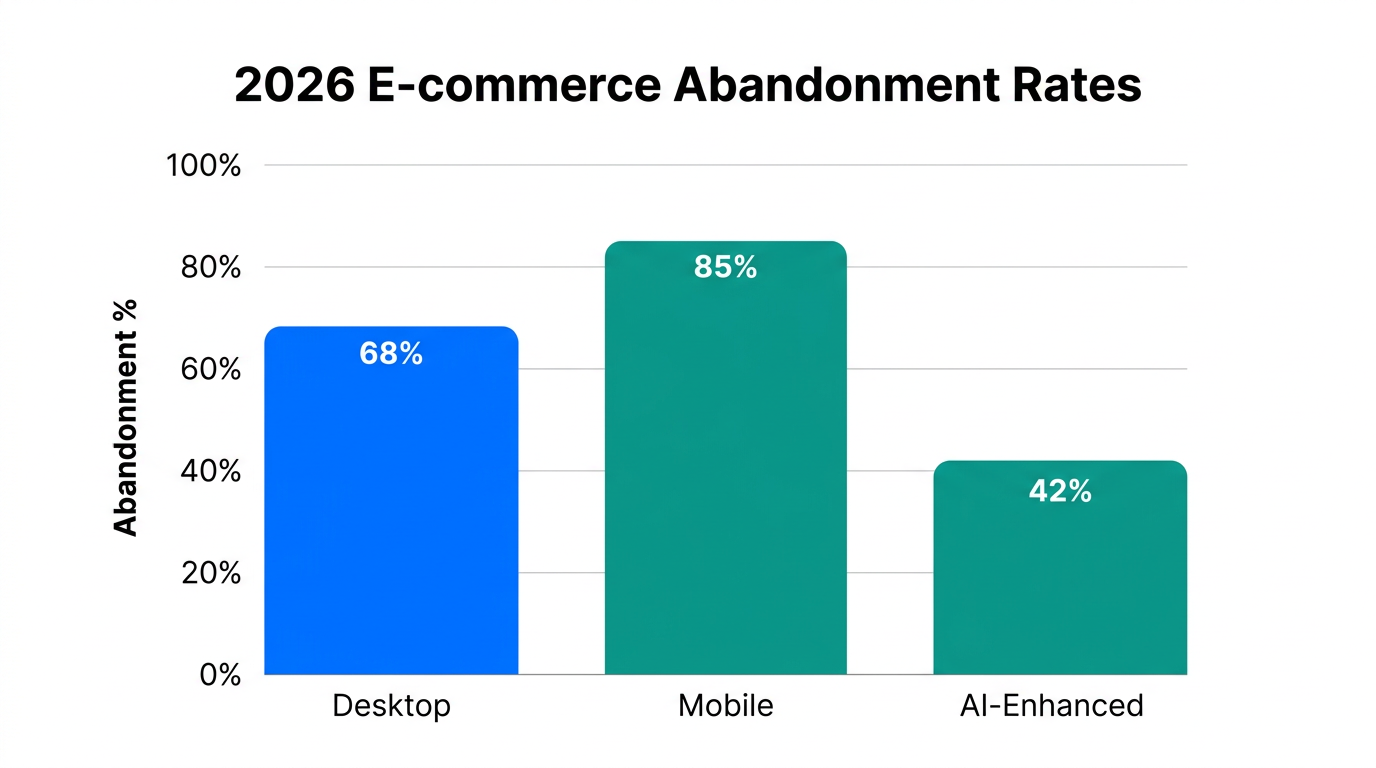
Traditional recovery sequences typically see a meager 15% success rate. In contrast, industry research reports that modern AI-powered recovery systems achieve success rates of 45–56%. The difference lies in precision. Static sequences treat every shopper the same—whether they are a price-sensitive first-time visitor or a loyal VIP who simply got distracted by a phone call. In 2026, efficiency is the priority; Omnisend research shows that AI-powered emails generate 22x more orders than standard promotional blasts because of their ability to personalize content in real-time.
Furthermore, mobile optimization is no longer optional. With mobile abandonment reaching as high as 80.2%, your abandoned cart email sequence must be paired with AI tools like Envive that optimize for mobile-first behaviors, including one-tap checkouts and SMS integrations.
The 'Golden Hour' Rule: Why Timing is Non-Negotiable
The most critical variable in your recovery strategy is the clock. In 2026, the "Golden Hour" rule dictates that the first recovery touchpoint must occur within 30 to 60 minutes of the abandonment event. Data suggests that adhering to this window can boost open rates by 18–25%.
Why is this timing so effective? It targets the shopper while their purchase intent is still fresh. If you wait 24 hours, the conversion rate drops to roughly 12.2%, compared to over 20% when the message arrives within the first hour. By the time a full day has passed, the customer may have already purchased from a competitor or lost interest in the item entirely. The goal of the Golden Hour email isn't to sell—it's to resolve friction.
"Most retailers fail because they talk at the shopper. Real-time automation allows a two-way discussion while purchase intent is fresh, turning a lost lead into a loyal customer."
Using WhatsApp Business or AI voice agents, brands are now even experimenting with handling these "friction questions" (e.g., questions about shipping or returns) in real-time, often yielding recovery rates 3x higher than email alone.
Predictive Intent Scoring: Intervening Before They Leave
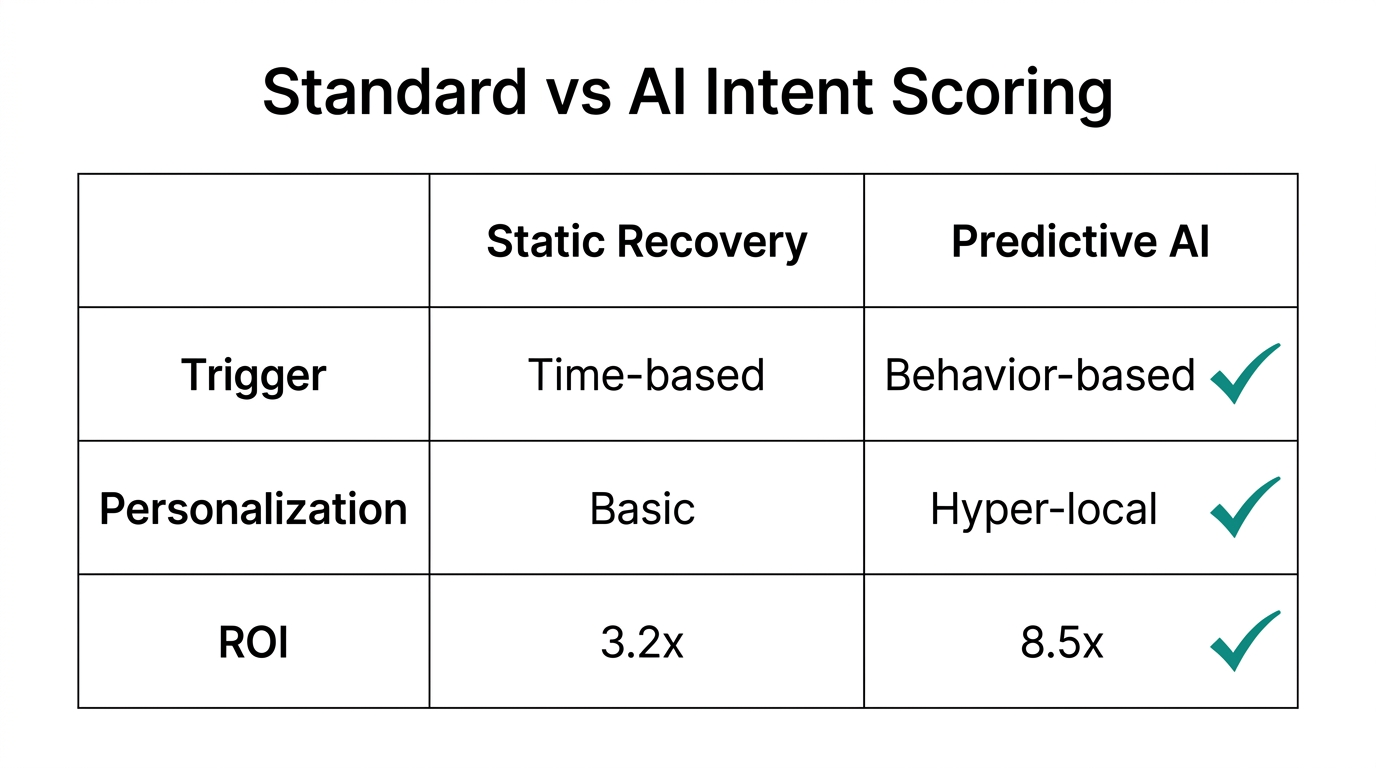
The most advanced e-commerce brands aren't just reacting to abandonment; they are predicting it. Predictive intent scoring uses machine learning to analyze user behavior in real-time. Tools like Alhena AI monitor mouse velocity, scroll depth, and tab switching to identify "exit intent."
By scoring a user's intent, the system can intervene 2–4 seconds before the user closes the tab. If the AI detects high intent but high friction (e.g., the user spent 2 minutes on the shipping policy page), it can trigger a proactive AI chatbot to offer assistance. This prevents the abandonment from happening in the first place, which is significantly more cost-effective than trying to win them back via email later.
Dynamic Discount Logic: Protecting Your Margins
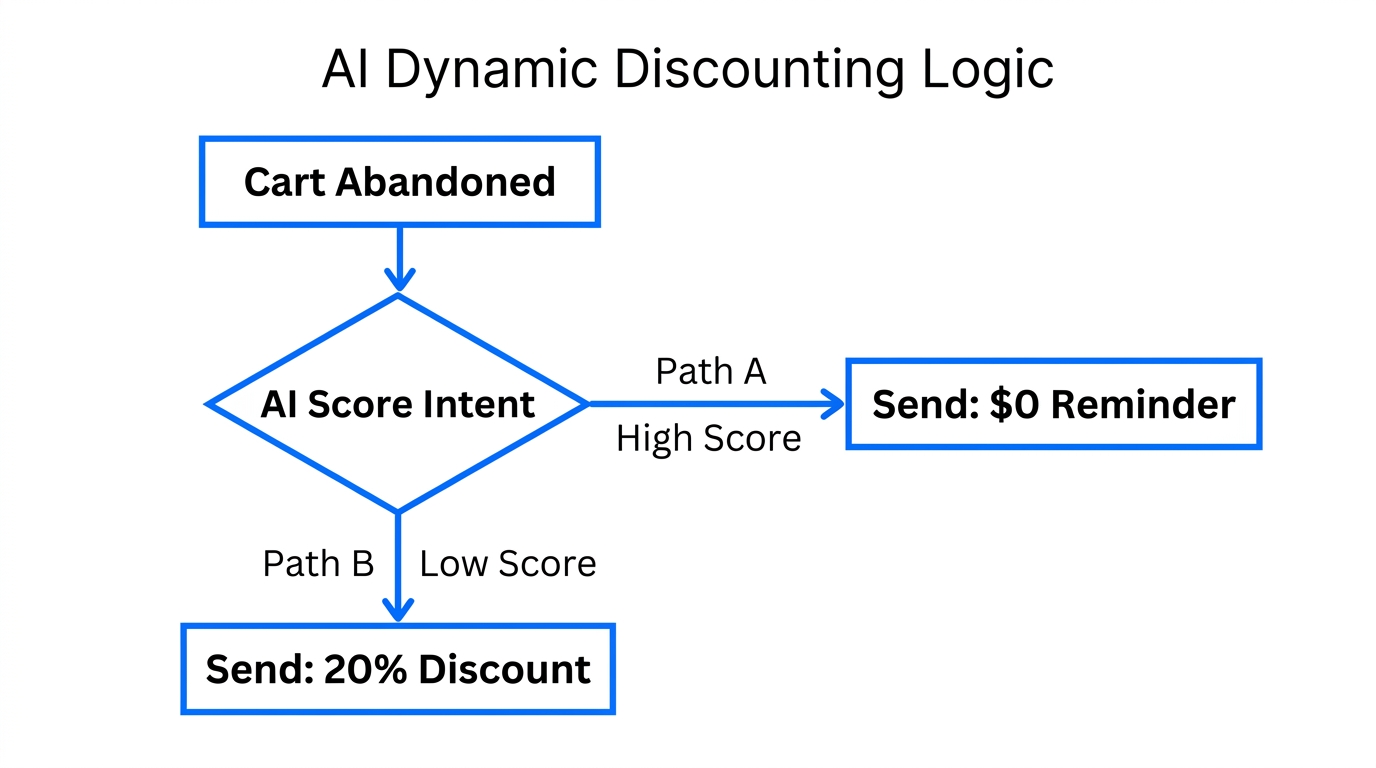
A major pitfall in traditional ecommerce customer retention is over-discounting. If you always send a 15% coupon an hour after abandonment, you train your customers to leave their shopping carts on purpose. This "margin bleeding" is a silent killer for many DTC brands.
In 2026, the dynamic discount strategy uses AI to determine if a discount is even necessary. Platforms like Shopware allow retailers to segment users by loyalty and intent. If a repeat buyer with a high lifetime value abandons a cart, the AI might send a simple "service reminder" or an offer for a free gift-wrap instead of a discount. Conversely, a first-time visitor showing high price sensitivity might receive a limited-time coupon to push them over the finish line.
| Shopper Profile | AI Intent Score | Recommended Action | Incentive Level |
|---|---|---|---|
| Loyal Repeat Buyer | High | Service Message / Reminder | None (Protect Margin) |
| New Visitor (Price Sensitive) | Medium | Dynamic Discount | 10-15% Coupon |
| High-Value Cart (Distracted) | Very High | Direct Link + Social Proof | Free Shipping |
| Window Shopper | Low | Newsletter Invite | Content/Education |
The 3-Stage Recovery Sequence: A Playbook for 2026
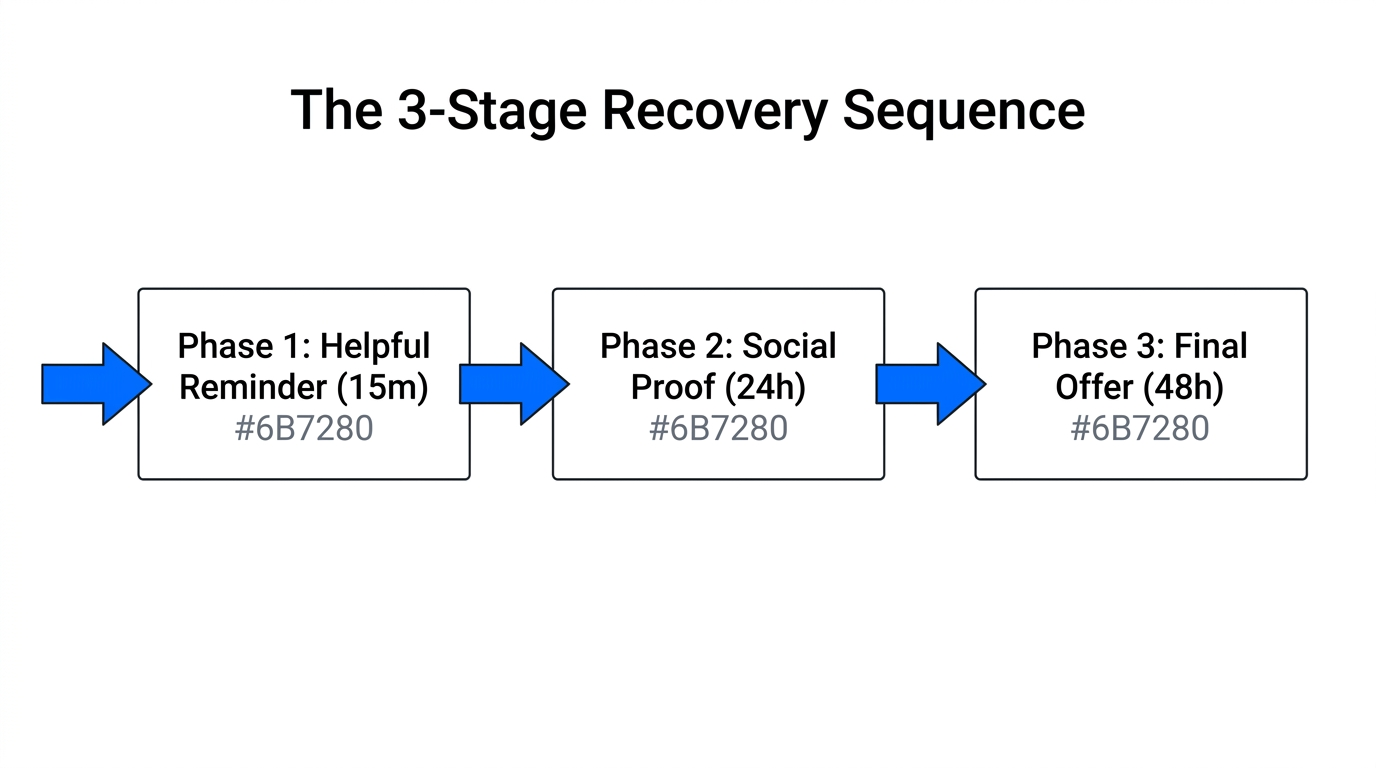
To maximize recovery, your automated flow should follow a logical progression of psychology. Experts recommend a three-stage sequence designed to move the customer from forgetfulness to desire to action.
Step 1: The Soft Reminder (1 Hour)
The first email should be a low-pressure nudge. The subject line should be helpful, not salesy. "Did you forget something?" or "We saved your cart for you" works best. This email must include a direct link to the checkout page with the items already loaded. AI personalization tools can even dynamically update the email copy based on the specific items in the cart to make it feel 1:1.
Step 2: Social Proof & Validation (24 Hours)
If they haven't purchased after a day, the barrier is likely trust or uncertainty. This is where you deploy social proof. Instead of generic reviews, use AI to pull specific testimonials for the items left in the cart. This is a great opportunity to include User-Generated Content (UGC). For example, finding creators who have reviewed your product on TikTok or Instagram can provide the visual proof needed. Brands can use Stormy AI to discover and collaborate with creators who produce high-converting UGC for these specific email assets.
"Social proof isn't just about five stars; it's about showing the customer someone exactly like them enjoying the product they almost bought."
Step 3: The Final Incentive (3–5 Days)
The final email is the "last chance" notification. This is where you apply urgency. Use a countdown timer and, if the AI intent score warrants it, a limited-time discount code. According to research from n8n, prioritized automated workflows during peak seasons can recover hundreds of thousands of dollars by hitting this final stage with surgical precision.
How to Use Identity Resolution for Anonymous Shoppers
One of the biggest leaks in the bucket is the "anonymous guest." Traditionally, if a shopper didn't log in or enter an email, they were lost. In 2026, identity resolution technology, pioneered by platforms like Blueknow, allows brands to identify up to 40% of anonymous traffic by matching cookies and device IDs against a secure identity graph. This enables you to send recovery emails even to users who never reached the checkout form, vastly expanding your reachable audience for ecommerce customer retention.
Common Pitfalls to Avoid
Even with the best AI tools, strategic errors can tank your ROI. Here are the most common mistakes cited by Unific:
- Lack of Frequency Capping: Nothing damages brand reputation faster than receiving a recovery email for a product you literally just bought. Ensure your marketing automation playbook has a "stop" trigger that fires immediately upon purchase.
- Over-Personalization Creep: While 1:1 content is effective, avoid being "creepy." AI should be used to be helpful, not to show the customer you've been tracking every single mouse movement they made.
- Ignoring Mobile UX: If your recovery email looks great on a desktop but the "Checkout Now" button is unclickable on an iPhone, you are wasting 80% of your potential revenue.
The Essential 2026 AI Recovery Stack
Building a world-class recovery system requires a specialized tech stack. While Stormy AI is excellent for sourcing the creators needed for Stage 2 social proof, you will need the following tools to manage the core email and automation functions:
| Tool Category | Recommended Platform | Primary Use Case |
|---|---|---|
| Email & SMS Automation | Klaviyo | Core 3-stage recovery flows and segmentation. |
| Conversational AI | Intercom | AI-driven support and real-time recovery chat. |
| Identity Resolution | Bluecore | Identifying and targeting anonymous guest shoppers. |
| Exit-Intent Prediction | Uptain | On-site interventions before abandonment occurs. |
| AI Copywriting | Jasper AI | Generating high-converting email subject lines at scale. |
Conclusion: The Future of Retention
Recovering abandoned carts in 2026 is no longer about persistence; it is about relevance and respect for the customer's journey. By implementing the Golden Hour rule, leveraging predictive intent scoring to protect your margins, and using identity resolution to find anonymous shoppers, you can turn a passive loss into an active growth engine. The most successful brands will be those that use AI not just to automate, but to humanize the digital shopping experience—providing the right nudge, with the right incentive, at exactly the right time.