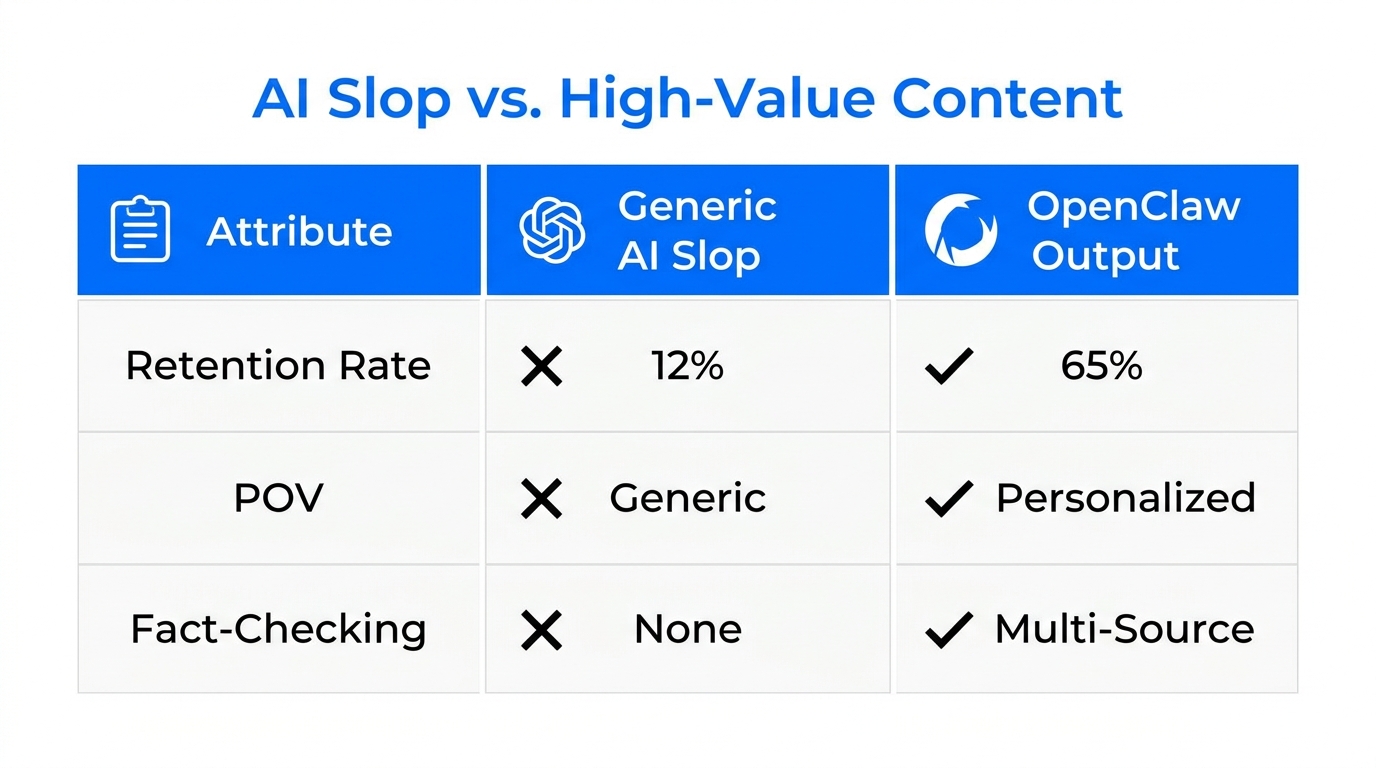
"In the age of infinite AI generation, the only remaining moat is your unique perspective and the human 'soul' behind your content."
What is OpenClaw? Understanding the Agentic Shift
 0:00
0:00Before we dive into the 2026 playbook, we must distinguish between standard LLMs and agentic systems. Unlike ChatGPT, which lives in the cloud and functions primarily as a chat interface, OpenClaw is a personal agent that lives locally on your machine. It is proactive, remembers your preferences over time, and has direct access to your local files and browser.
While tools like Claude Code and Claude Co-work from Anthropic have introduced local file reading and writing, OpenClaw remains the superior choice for marketers due to its open-source flexibility. It isn't locked into a single ecosystem; you can communicate with it via Telegram, Slack, or WhatsApp, and its 'heartbeat' functionality allows it to perform tasks autonomously every 30 minutes without you ever sending a prompt.
Step 1: Establishing a Troubleshooting Baseline
Most creators fail with OpenClaw because they treat it like a search engine rather than a complex system. To 10x your efficiency, the first step is creating a 'troubleshooting baseline.' Use a tool like Context7 to grab the most up-to-date OpenClaw documentation and upload it into a dedicated Claude project.
Step 2: Personalizing Your 'Digital Soul'
12:47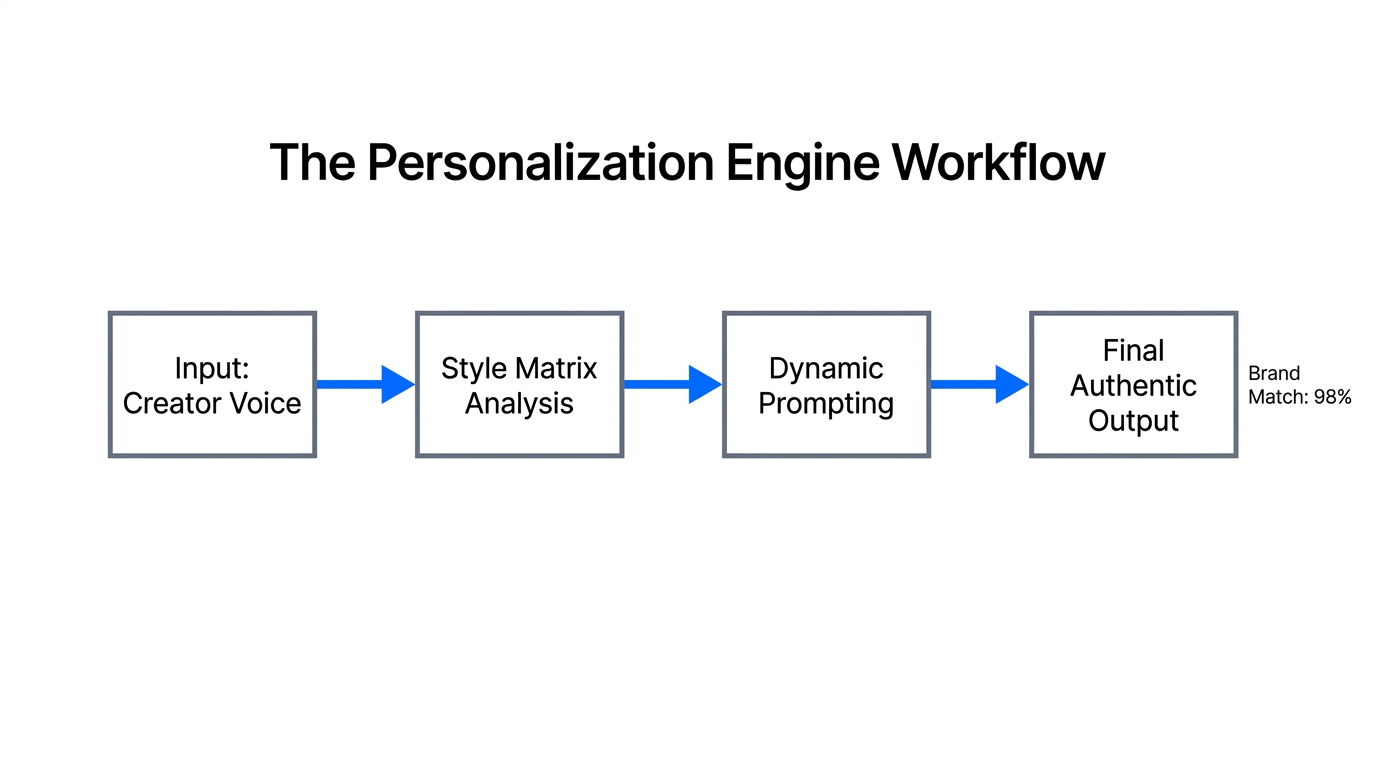
To avoid 'slop,' your agent must understand your voice. Inside your OpenClaw workspace, you’ll find critical files: soul.md, identity.md, and user.md. These are not just metadata; they are the behavioral constraints of your agent. You should feed these files with your past successful X posts, transcripts of your best YouTube videos, and your core brand values.
The goal is to move away from generic AI responses. If you tell your OpenClaw to 'always be contrarian' or 'use short, punchy sentences like my 2025 blog posts,' the scripts it generates will feel like an extension of your brain rather than a template from a 2025 prompt library.
Step 3: Configuring Persistent Memory
15:17A major frustration with AI is its 'forgetfulness.' In OpenClaw, you must ensure your memory.md file is active. This serves as the agent's long-term storage for insights, preferences, and content performance. You can even set a 'heartbeat' instruction to force a memory flush every 30 minutes, summarizing current sessions so context is never lost during LLM context window compactions.
Step 4: Building the 'Backup Brain' Hierarchy
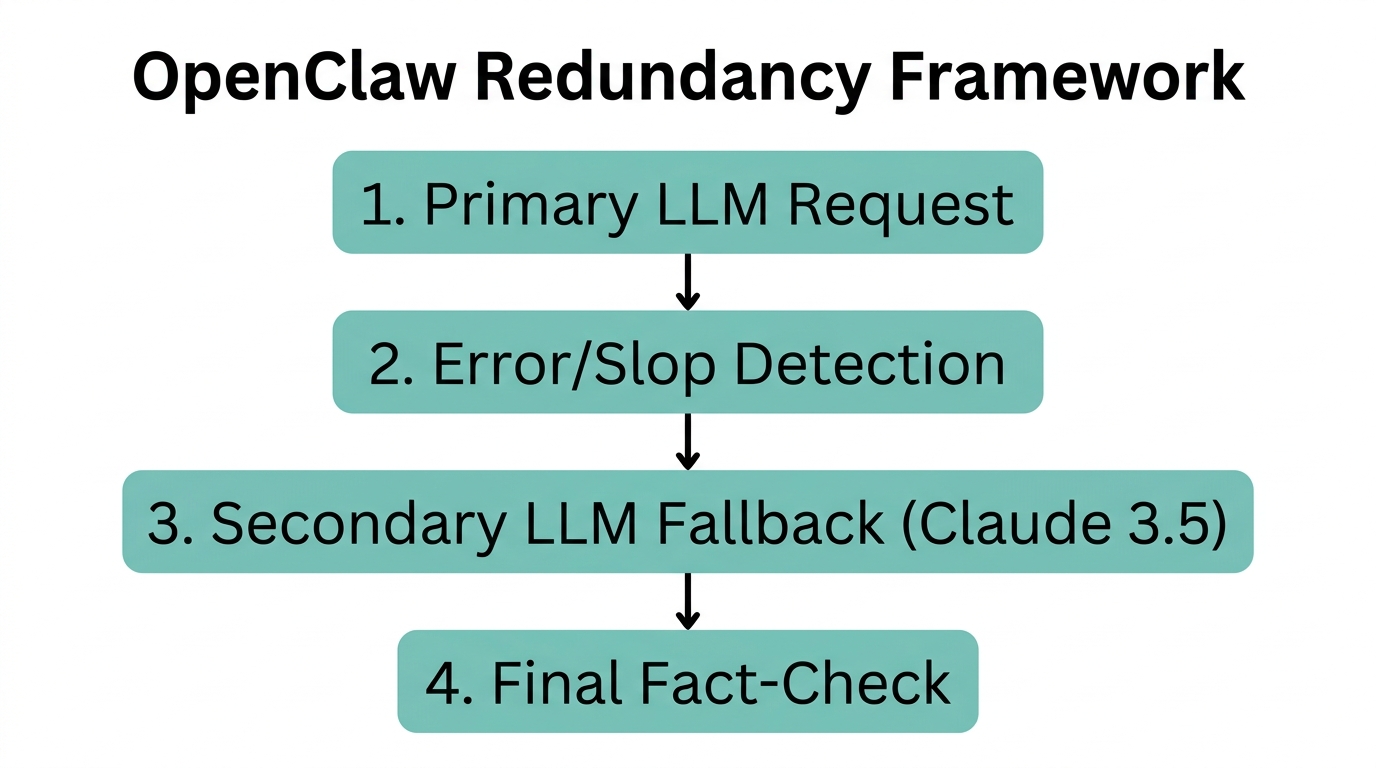
Reliability is the cornerstone of a professional content machine. In 2026, relying on a single API is a recipe for disaster. You need a hierarchy of models to ensure your 'digital employee' never goes offline. We recommend using the OAuth method to connect your existing ChatGPT Plus subscription as your primary 'Brain #1' while keeping a secondary Anthropic or OpenRouter connection as a fallback.
| Model Tier | Primary Model | Fallback Model | Use Case |
|---|---|---|---|
| Brain #1 (Strategic) | GPT-5.4 Codex | Claude 4.6 Opus | Deep scripting and strategic planning |
| Brain #2 (Creative) | Claude 4.6 Sonnet | GPT-5.3 | High-speed content drafting and editing |
| Brain #3 (Utility) | Haiku 4.1 | Llama 4 (Local) | Quick summaries and heartbeat checks |
The 7-Step 'Anti-Slop' Content Playbook
Now that your system is configured, you can implement the automated content engine that powers high-growth brands in 2026. This system moves from Idea Capture to Final Distribution with minimal human friction.
1. Automated Idea Capture
Instead of manual scrolling, set up a cron job in OpenClaw to track specific YouTube channels and X accounts. Your agent can scrape the latest high-performing videos in your niche, log their views, and summarize the 'hooks' into a markdown file. You can also send interesting posts directly to your agent via Telegram, which it will then categorize into your 'Ideas Vault.'
2. Strategic Planning
Once a week, your agent reviews the Ideas Vault and creates a Weekly Content Plan. Crucially, it doesn't just pick random topics; it analyzes your past performance data stored in its memory to suggest themes that are actually trending for your specific audience.
3. The Scripting Library
This is where you kill the 'slop.' Your agent should reference a Style Library—a folder of your best scripts. When generating a new script, it isn't pulling from the general internet; it’s mimicking your specific pacing, humor, and call-to-actions. You then review the draft in a tool like Notion or Linear.
4. The Human 20%: Filming
You cannot automate the face and the 'vibe.' Spend 10 minutes filming the scripted takes. Because the AI handled the research and hooks, you are fresh and energetic for the camera. This 20% of human effort is what prevents your content from being ignored by the 2026 algorithm.
5. Asset Management
Upload your raw footage. Your OpenClaw agent, integrated with Google Drive, automatically pings your editor or triggers an automated editing workflow in CapCut or Descript.
6. Automated Distribution
Using its built-in managed browser, OpenClaw can log into TikTok, Instagram, and YouTube to post the finished assets. It bypasses the need for manual scheduling tools that often break or limit reach.
7. The Analytics Loop
Finally, your agent fetches the views and engagement stats. It writes these back into your memory.md file. The next time you ask for a script, it knows that 'Tutorial style videos on X outperformed Vlogs on TikTok' and adjusts its suggestions accordingly.
"The future of marketing isn't about more content; it's about smarter loops. If your AI isn't learning from yesterday's failures, it's just a glorified typewriter."
Security: Protecting Your Digital Employee
34:47In 2026, 'Prompt Injection' is a real threat. Hackers may try to hide commands inside emails that your agent reads. To mitigate this, always install OpenClaw on a local Mac rather than a cloud VPS. Local machines benefit from Apple’s hardware-level security and are not constantly exposed to the open web. Additionally, follow the principle of least access: only give your agent access to specific folders and dedicated 'agent-owned' accounts rather than your primary personal Gmail.
For creators and agencies looking to scale their reach further, pairing this internal content machine with external influencer discovery is key. Platforms like Stormy AI can help you find high-authenticity creators who align with your brand voice, allowing your agentic system to handle the outreach while you focus on the creative partnership.
The Agentic Future
The 'No AI Slop' movement is more than a trend; it is a necessity in a world where content production has become commoditized. By using OpenClaw to handle the heavy lifting of the content lifecycle, you free yourself to be a true creator again. Start small: set up your troubleshooting baseline, configure your soul.md, and let your agent handle your first week of idea tracking. The magical moments of automation are addictive, and in 2026, they are the only way to build a brand that lasts.