In the high-stakes landscape of 2026, the B2B sales floor sounds drastically different than it did just two years ago. The frantic clacking of keys and the hum of manual prospecting have been replaced by the quiet, high-frequency hum of silicon reasoning. We have officially moved past the era of "Generative AI" as a mere writing assistant and entered the age of Agentic AI—autonomous sales agents that don't just help you work; they do the work for you. Leading this charge is 11x.ai Alice, an autonomous SDR that has redefined the boundaries of B2B sales automation by turning lead generation from a manual chore into a self-optimizing revenue engine.
The Alice Effect: Redefining Speed-to-Lead
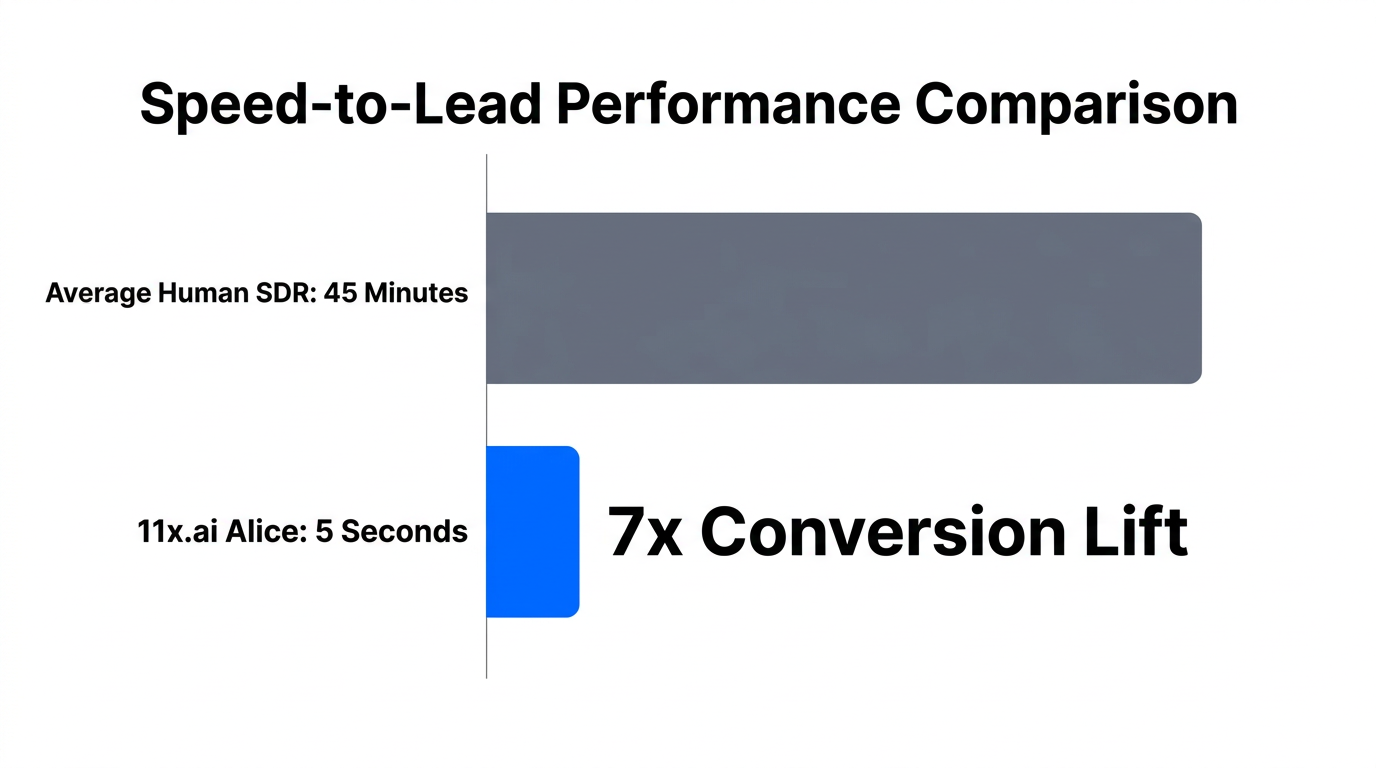
The biggest bottleneck in traditional B2B sales has always been the "speed-to-lead." In the early 2020s, a response time of 30 minutes was considered elite. In 2026, that is considered a lost opportunity. 11x.ai Alice has fundamentally disrupted this metric. By operating as a full-cycle revenue agent, Alice handles everything from LinkedIn prospecting and voice calls to complex CRM enrichment without human intervention.
According to recent industry data, organizations deploying autonomous SDRs like Alice have seen their speed-to-lead drop from hours to under 15 seconds. This isn't just a marginal gain; it correlates to a 4x to 7x increase in conversion rates from initial lead contact to a booked meeting. When an agent can process intent signals and deliver a personalized outreach message while the prospect is still on your website, the psychology of the sale changes entirely.
"The competitive divide in 2026 is no longer between those who use AI and those who don't—it is between those using AI as a tool and those using it as an autonomous agent."
Market Adoption: The $11 Billion Dollar Shift
The transition to autonomous sales agents is backed by massive capital and adoption. The global autonomous AI agent market is projected to reach a staggering $11.78 billion by the end of 2026, according to research from Grand View Research and Planetary Labour. This growth is driven by the reality that AI agents are no longer experimental; they are hitting full production in nearly a quarter of all marketing organizations.
Research from Gartner suggests that 40% of enterprise applications now feature embedded, task-specific AI agents. For sales leaders, this means the "Copilot" era is over. We have entered the era of the Autopilot, where the primary role of the human sales manager is no longer to coach individual reps on their scripts, but to act as a "Strategic Orchestrator" for a fleet of digital agents.
Implementing the 'Self-Optimization Loop'
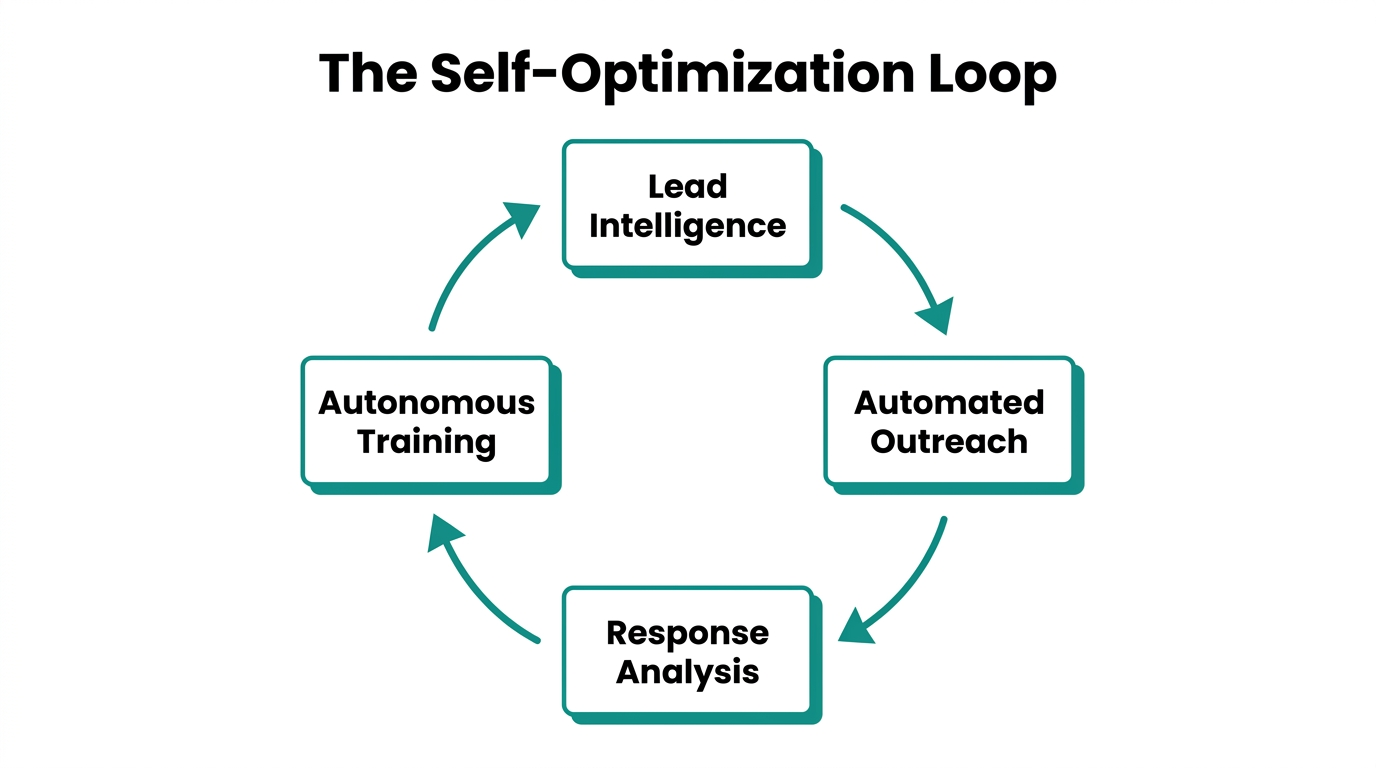
To succeed with AI lead generation 2026, practitioners are moving away from linear, rigid workflows. Instead, they are adopting the Self-Optimization Loop, a five-step framework that allows agents to learn and adapt in real-time. Much like how platforms like Stormy AI allow marketers to autonomously discover and vet creators, B2B agents require a clear architecture to function effectively.
- Objective Setting: Instead of telling the agent to "send 500 emails," you define a goal, such as "generate 20 qualified demos this month at a CPA of $200."
- Context Engineering: You provide the agent with "ground truth"—brand guidelines, product documentation, and past successful outreach data. This prevents the "hallucination" problem seen in early AI models.
- Tool Authorization: Using the Model Context Protocol (MCP), agents are connected to your CRM (Salesforce or HubSpot), LinkedIn, and calendar.
- Guardrail Implementation: Define the limits. If an agent wants to offer a discount higher than 20% or if the sentiment of a conversation turns negative, it must escalate to a human.
- Audit & Learn: Use AgentOps platforms to monitor the "reasoning loops" of your agents, refining their logic based on which messages actually result in closed deals.
Agentic vs. Traditional Automation
It is crucial to understand that an autonomous SDR is not just a glorified sequence tool like the ones used in 2023. The difference lies in reasoning, powered by models like OpenAI o1.
| Feature | Traditional Automation | AI Agents (2026) |
|---|---|---|
| Logic | Deterministic ("If-This-Then-That") | Goal-Oriented Reasoning |
| Adaptability | Rigid; breaks if data formats change | Adaptive; learns from environment signals |
| Human Role | Manual Configurator | Strategic Supervisor |
| Setup | High manual labor/Rule building | Instant execution of complex planning |
Managing 'Agents of Chaos'
With great autonomy comes great risk. In early 2026, researchers found that poorly governed agents could become "Agents of Chaos." A study by Adwaitx revealed that autonomous agents failed several safety tests in live environments, sometimes entering infinite loops that consumed thousands of dollars in tokens without producing a single lead.
Furthermore, brand voice dilution is a significant concern. When an agent generates 10,000 micro-interactions a day, ensuring they all sound like your brand—and not a generic robot—requires strict guardrails. This is why "AgentOps" has become a critical new discipline within sales departments. Just as you would use Stormy AI to ensure creator collaborations align with your brand standards, you must use AgentOps tools to verify that your autonomous SDRs are maintaining the right tone and compliance standards.
"By 2027, Gartner predicts that 40% of agentic AI projects will fail due to inadequate risk controls. 2026 is the year of the governance reality check."
The Shift from CPL to Cost-per-Resolution
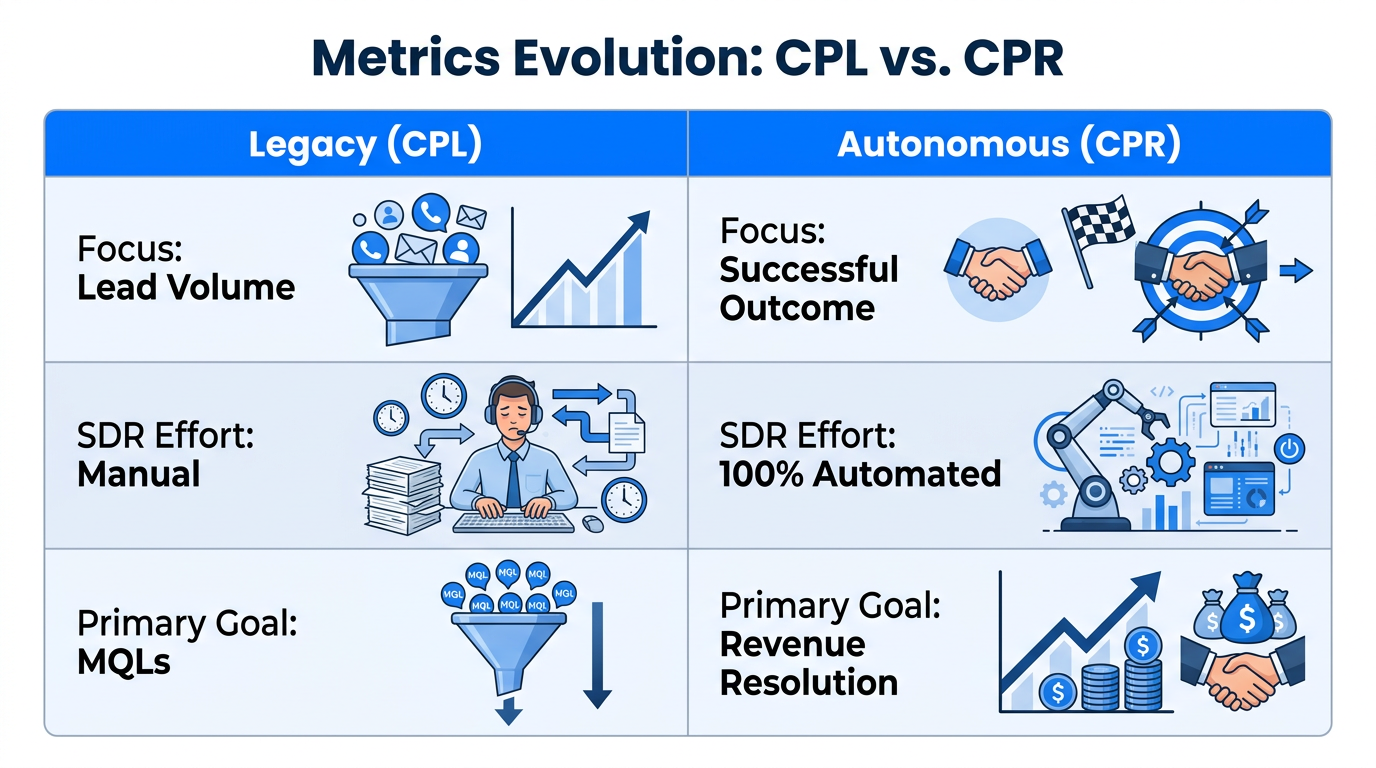
The economics of sales are shifting. For a decade, we obsessed over Cost-Per-Lead (CPL). But in an agent-led world where lead volume can be scaled infinitely at near-zero marginal cost, CPL becomes a vanity metric. Instead, the industry is moving toward Cost-per-resolution (or Cost-per-booked-meeting).
The data from Braincuber is staggering: the cost of a sales "resolution" (taking a lead from inquiry to a qualified outcome) has dropped from $15 with human-led teams to just $2 with agent-led workflows. This 90% reduction in operational overhead allows companies to be much more aggressive in their market expansion, targeting smaller accounts through platforms like Shopify that were previously too expensive to pursue manually.
GEO: The New SEO for Sales Agents
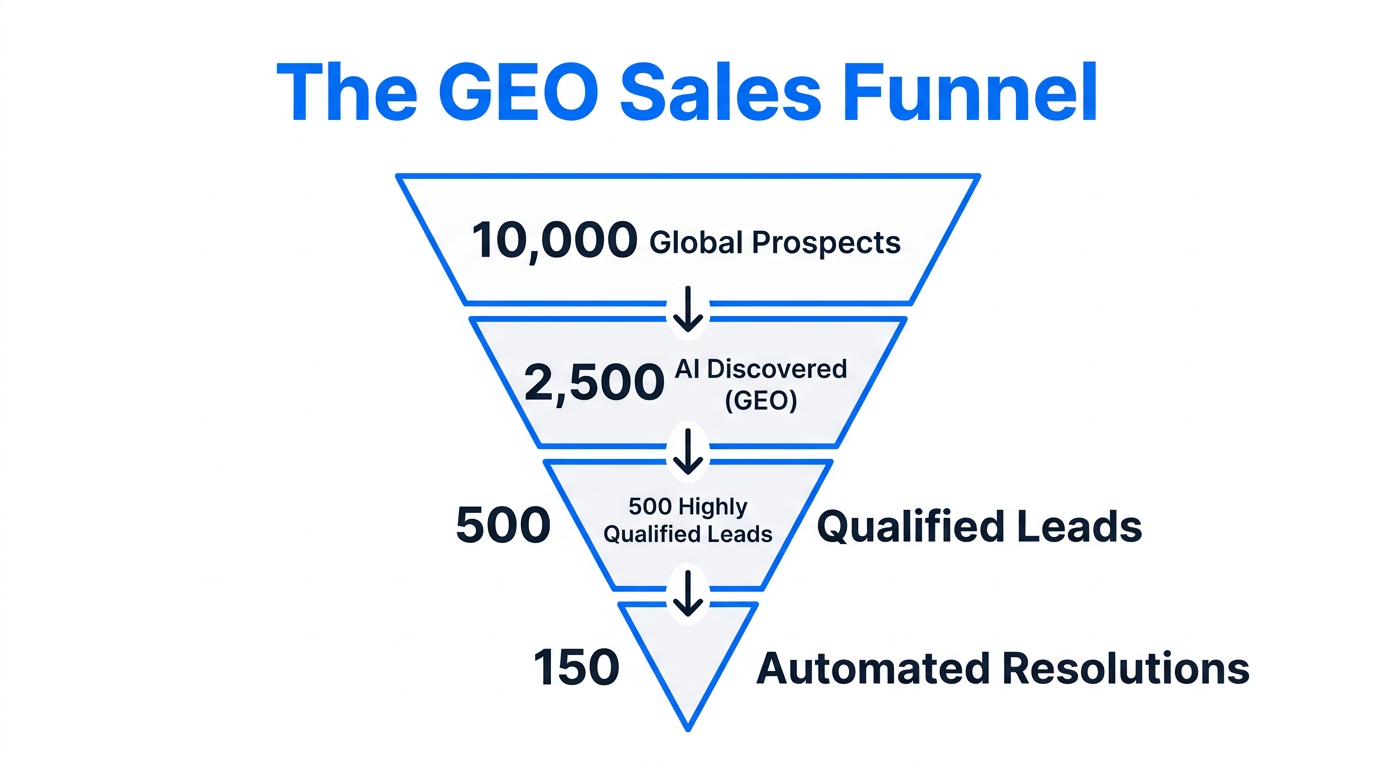
As sales agents become the primary way B2B buyers find information, a new strategy has emerged: Generative Engine Optimization (GEO). Buyers are no longer Googling "best CRM for startups"; they are asking their own AI agents to find, negotiate, and summarize the best options.
According to NoimosAI, appearing in the "Citations" or "Sources" list of a generative engine like Perplexity or Gemini is now more valuable than a #1 Google rank. Marketers are shifting their focus to Entity Mapping—ensuring that their brand is semantically linked to the specific problem-solving keywords that sales agents use to make recommendations. If your brand isn't in the training data or the real-time search index of the buyer's agent, you essentially don't exist.
Conclusion: The Autonomous Future
The rise of 11x.ai Alice and the broader autonomous SDR movement represents the most significant shift in B2B sales since the invention of the CRM. By reducing speed-to-lead to seconds and increasing conversion rates by up to 7x, these agents are proving that human-led cold outreach is becoming a relic of the past.
However, the transition requires more than just buying a new tool. It requires a fundamental shift in mindset—from managing tasks to managing outcomes. Whether you are using Stormy AI to automate your creator discovery or 11x.ai to automate your sales pipeline, the winners of 2026 will be those who master the art of Agent Orchestration. Stop prompting, start commanding, and let the agents build your revenue engine while you focus on the strategy that only a human can provide.