Building Emotional Brand Loyalty with Zinrelo and Nector: A 2026 Creator Economy Guide
Discover how to build emotional brand loyalty in 2026 using Zinrelo and Nector. Learn strategies for UGC incentives, micro-segmentation, and gamified rewards.
The marketing landscape of 2026 has undergone a fundamental transformation. For years, brands relied on the high-octane engine of customer acquisition, but as customer acquisition costs (CAC) skyrocketed by nearly 60% over the last half-decade, the focus has shifted. Today, the most successful brands aren't just buying attention; they are building deep, emotional reservoirs of loyalty. In this new era, emotional brand loyalty strategies have moved beyond the antiquated 'points for purchases' model to become dynamic customer ecosystems that adapt to behavior in real time.
According to research from Envive AI, AI-powered loyalty programs are currently delivering an average ROI of 4.8x to 5.2x, driving 40% more revenue than traditional static programs. This article explores how modern enterprises are leveraging platforms like Zinrelo and Nector to foster true affinity, rewarding everything from social media advocacy to sustainable shopping habits.
The 2026 Shift: Why Emotional Loyalty Wins Over Transactional Points
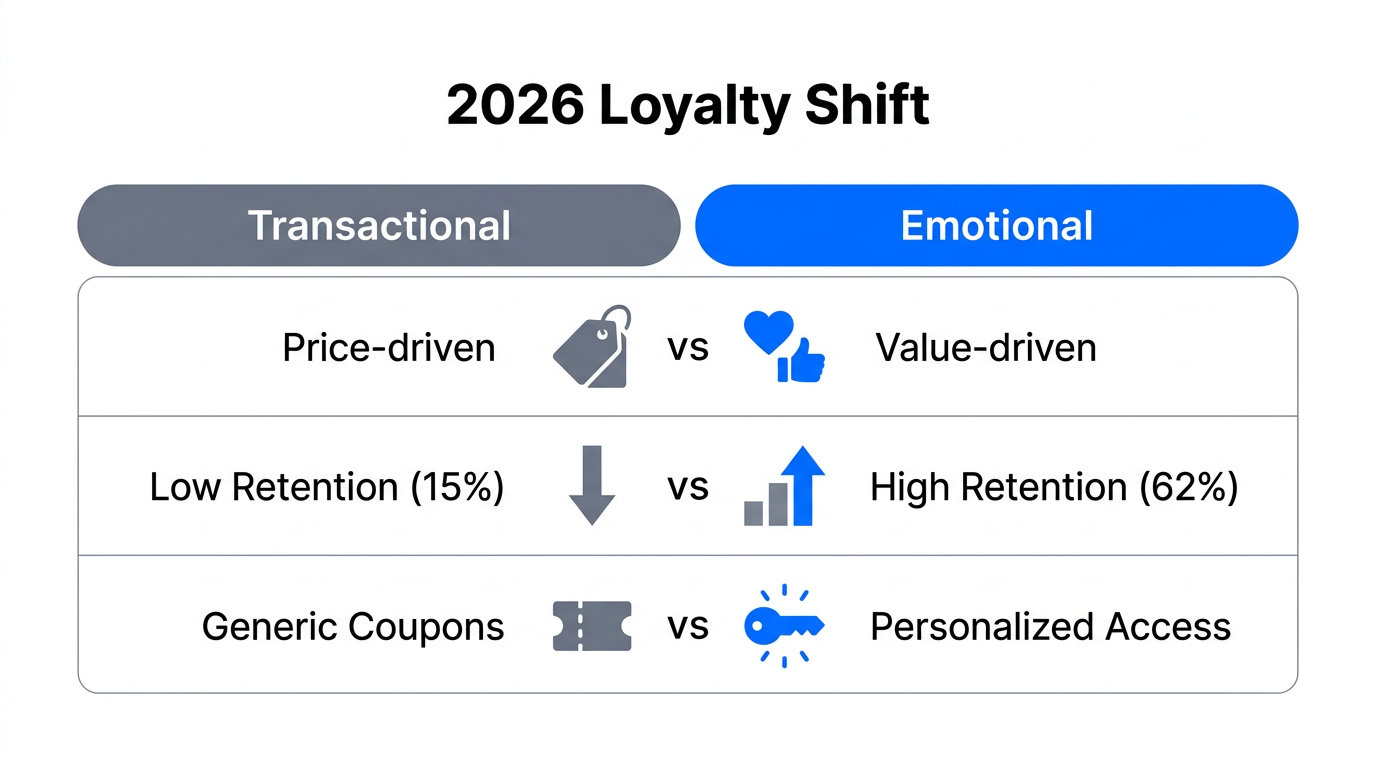
In 2026, the consumer mindset has evolved. Transactional loyalty—where a customer stays because of a discount—is fragile. If a competitor offers a lower price, that loyalty vanishes. Emotional loyalty, however, is built on a sense of belonging and shared values. Data from Shopr indicates that 34% of consumers now prioritize emotional loyalty over transaction-based points, up significantly from previous years. Research by McKinsey & Company suggests that brands excelling in personalization generate 40% more revenue from those activities.
This shift is driven by what experts call "Agentic Commerce." As AI agents become personal shopping assistants for many households, these digital proxies choose brands based on a program's real-time value and data availability, as noted by Loyalty & Reward Co. To compete, brands must move from being a utility to being a partner in the consumer's lifestyle.
"Loyalty must be treated as a 'living ecosystem' that adapts to behavior in real time, not a fixed marketing tactic." — Chemi Katz, CEO of Wandz.ai
Micro-Segmentation Playbook: Using Zinrelo for Affinity-Based Rewards
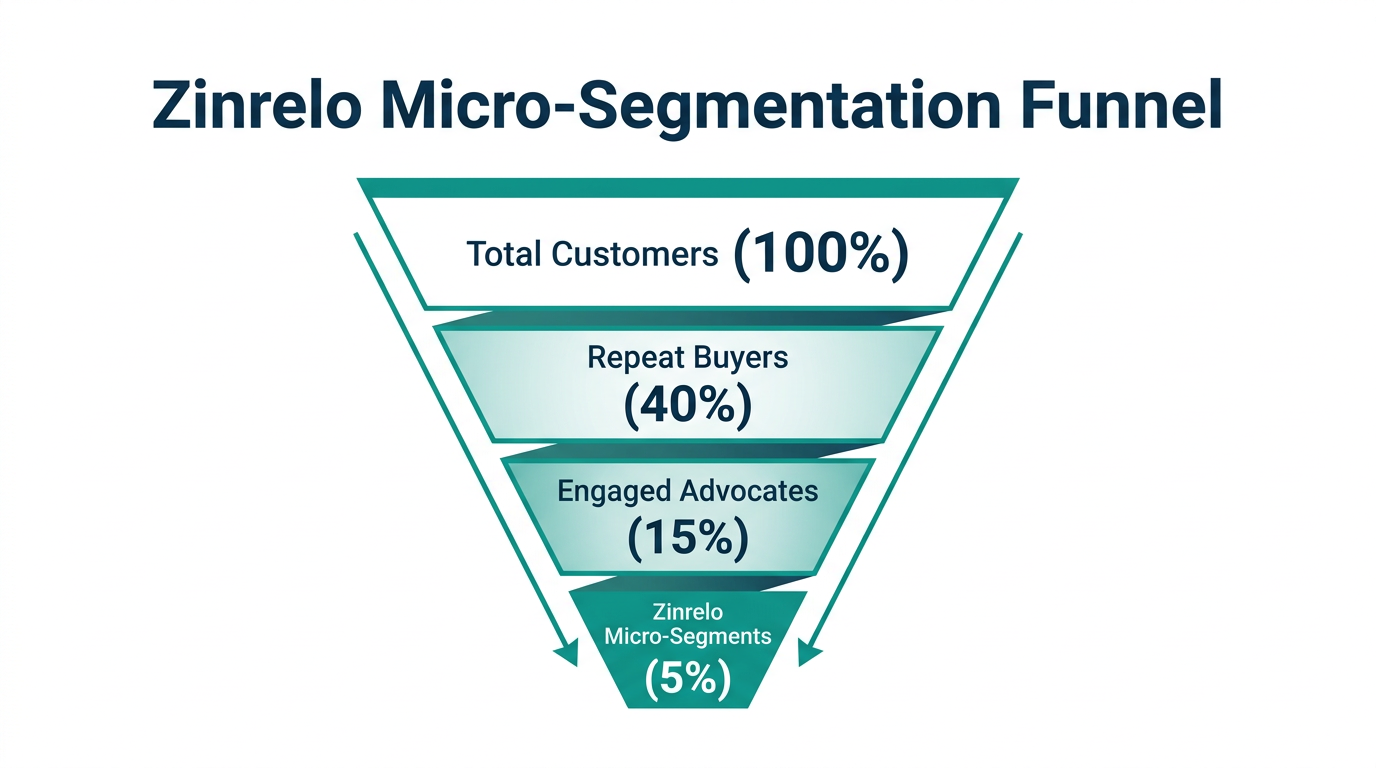
The days of one-size-fits-all loyalty tiers are over. Modern retention requires Zinrelo loyalty personalization to slice audiences into micro-segments based on browsing patterns, product affinity, and even lifestyle choices. Instead of sending a generic 10% discount to everyone, brands can now offer exclusive, high-value experiences to their most engaged cohorts.
Step 1: Move Away from Demographic Tiers
Instead of segmenting by age or location, use AI to identify behavioral clusters. For example, a beauty brand can identify a "Skincare Enthusiast" segment—users who frequently read articles about retinol but haven't purchased yet—and offer them early access to a new dermatologist-led webinar or product drop.
Step 2: Trigger "Surprise and Delight" Moments
Using predictive AI, platforms like Appstle can detect declining engagement rates before a customer churns. By identifying these "at-risk" behaviors months in advance, brands can automatically trigger a personalized bonus. This isn't just a discount; it's a message that says, "We noticed you're interested in X, here's something special just for you."
| Strategy Type | Traditional Approach | AI-Driven (2026) |
|---|---|---|
| Segmentation | Basic demographics (Age, City) | Micro-behavioral patterns |
| Rewards | Fixed % discounts | Experiential early access |
| Timing | Scheduled weekly emails | Real-time behavioral triggers |
Rewarding the Creator Economy: Gamifying Engagement with Nector
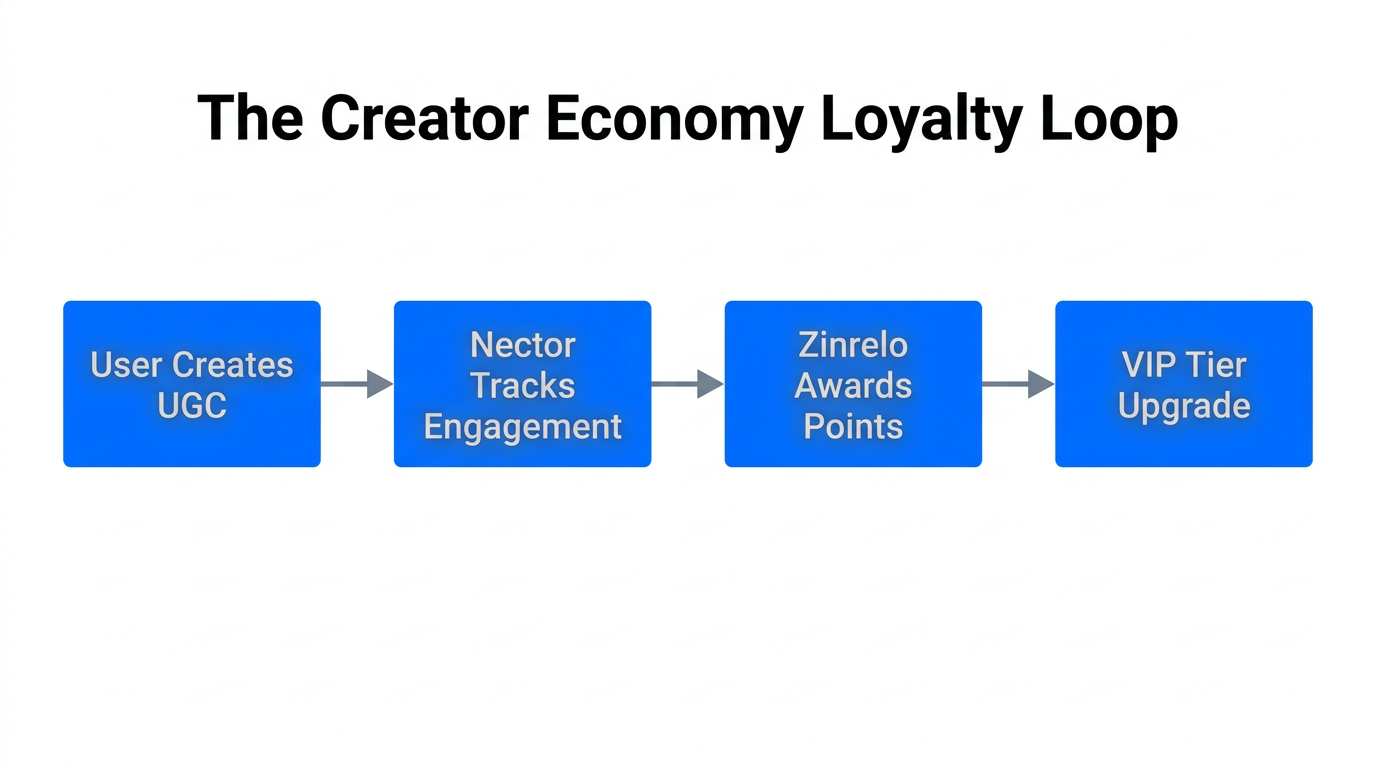
We are firmly in the age of the creator economy. Every customer is now a potential micro-influencer. Nector gamified rewards allow brands to capitalize on this by incentivizing User-Generated Content (UGC), social shares, and reviews. This turns a passive customer base into an active marketing force.
By integrating loyalty with the social ecosystem, brands can reward users for:
- Social Advocacy: Earning points for sharing a product video on TikTok or Instagram.
- Review Quality: Higher rewards for video reviews versus simple star ratings.
- Community Building: Incentives for answering questions in the brand's community Discord or forum.
For brands looking to scale this strategy, platforms like Stormy AI are essential for identifying which creators within their loyalty program have the highest engagement potential. By finding these high-impact creators through AI search, brands can invite them into exclusive VIP tiers that offer deeper collaboration opportunities.
"Shoppers interpret AI-driven utility as 'care' rather than 'promotion.' When a brand anticipates your needs, it feels personal, not intrusive." — Hasan Beyari, Academic Researcher
Sustainability as a Loyalty Lever: Rewarding Ethical Consumption
In 2026, UGC loyalty incentives are often tied to brand values. Consumers, particularly Gen Z and Millennials, are increasingly motivated by sustainability. Research from NielsenIQ shows that consumers are increasingly willing to pay more for sustainable products, and they expect their loyalty programs to reflect this.
AI now enables brands to track and reward "ethical" behaviors, such as:
- Choosing carbon-neutral shipping options at checkout.
- Participating in product recycling or trade-in programs.
- Opting for digital receipts instead of paper.
By rewarding these actions through platforms like Raleon, brands move the needle from a purely commercial relationship to a shared mission. This is the hallmark of emotional brand loyalty strategies: making the customer feel like their purchase power is contributing to a greater good.
Case Studies: How Nike and Sephora Drive 50% CLV Increases
The giants of retail have already mastered the art of AI-driven emotional loyalty. Their success serves as a blueprint for any growth-focused brand in 2026.
Nike: Fitness as a Loyalty Metric
Nike doesn't just reward purchases; it rewards sweat. By using AI to track fitness milestones via the Nike App and Run Club, the brand can predict exactly when a member's shoes are likely to be worn out. As noted by Nector, Nike then sends a personalized reward for a new pair of gear at the precise moment of need, resulting in massive spikes in AOV and retention.
Sephora: Hyper-Personalized Beauty
Sephora’s "Beauty Insider" program is a masterclass in relevance. By using AI to tailor offers based on specific skin types, seasonal needs, and facial recognition technology, Sephora has seen a 20% increase in conversions. According to SuperAGI, this level of detail makes the customer feel "seen" by the brand, fostering a bond that transcends simple price-matching.
Common Mistakes: Avoiding the "Set-it-and-Forget-it" Trap
While the potential for AI in loyalty is vast, there are several pitfalls that can derail even the best-funded programs. Brands must be vigilant to avoid these common errors identified by Stamped and Rivo:
- Data Fragmentation: If your loyalty data is siloed away from your POS or ERP systems, your AI cannot make accurate predictions. Fragmented data is "fatal" for emerging AI agents.
- Over-Reliance on Discounts: Purely discount-led programs hurt margins. Successful brands in 2026 use AI for "experiential rewards," such as exclusive events or travel perks, as suggested by Wapping.
- Complexity Overload: If a customer cannot understand your loyalty rules in 10 seconds, they will not join. AI should simplify the user experience, not add layers of confusion.
- Privacy Pitfalls: With a significant portion of consumers worried about AI data misuse, brands must adhere to strict GDPR and data privacy standards to maintain trust.
The Bottom Line: Building a Loyalty Ecosystem for 2026
Building emotional brand loyalty in the creator economy requires a shift in perspective. You are no longer just selling a product; you are facilitating an experience and rewarding a community. By leveraging Zinrelo for deep personalization and Nector for gamified engagement, you can turn your customers into lifelong advocates.
As you build these social engagement loops, remember that the fuel for your loyalty program is content. Using an AI-powered platform like Stormy AI to discover and manage the creators who represent your brand ensures that your loyalty ecosystem remains vibrant, authentic, and high-performing in the competitive 2026 market.