Building a successful software-as-a-service (SaaS) platform used to require a massive engineering team and a venture-backed marketing budget. However, the rise of AI-native development and community-led growth has rewritten the rules. Avnish, a former engineer at Microsoft and Instagram, recently shared his journey on Starter Story about scaling his platform, Savewise, to $25,000 in Monthly Recurring Revenue (MRR) in just 15 months. The most shocking part? He did it without spending a single dollar on traditional advertising.
The Modern SaaS Tech Stack 2024: Building for Speed
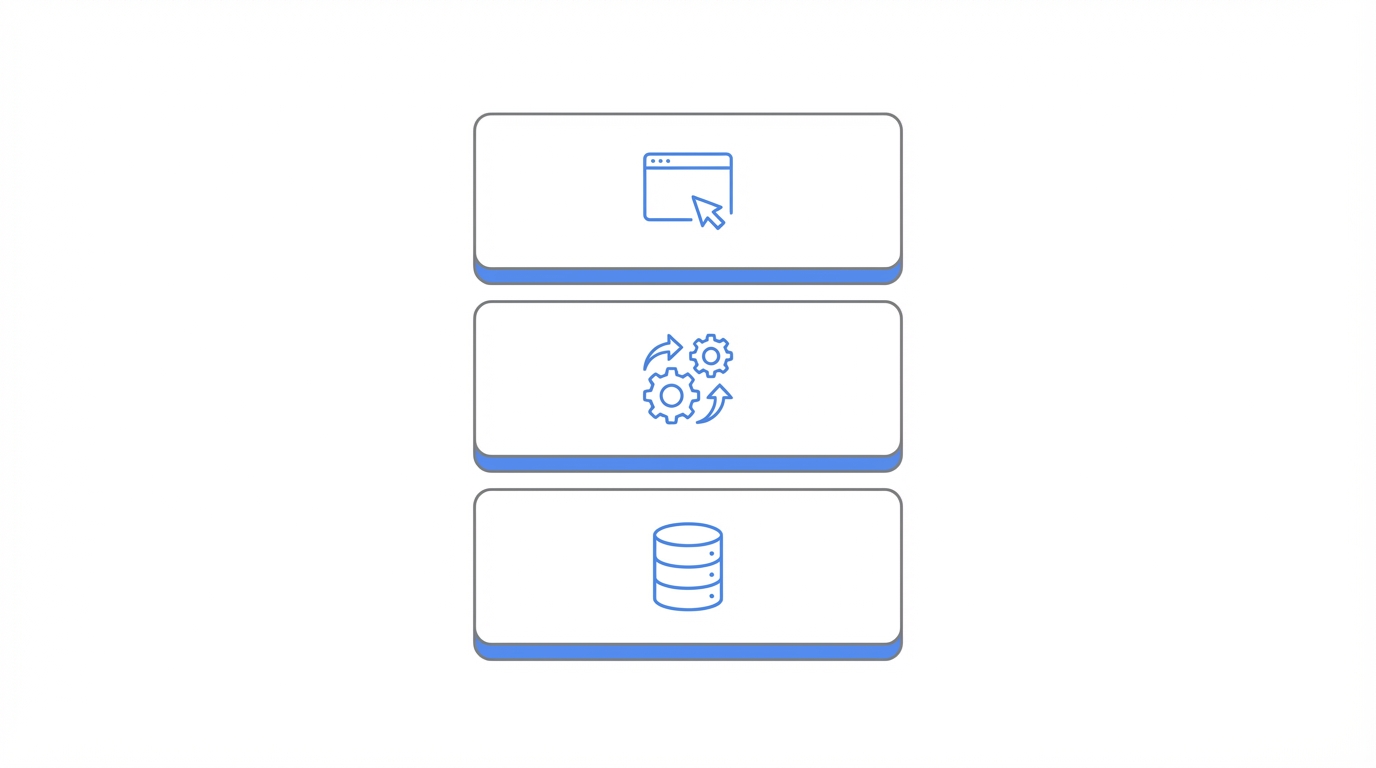
To scale as a solopreneur, your tools must prioritize velocity over perfection. Avnish built Savewise using a stack designed for rapid iteration. The frontend is powered by Next.js, a React framework that offers optimized performance and SEO benefits right out of the box. For deployment, he relies on Vercel, which allows for instant previews and global scaling without managing servers.
Managing user identity is often a bottleneck for small teams. Instead of building a custom auth system, Avnish utilized Clerk to handle Google and Apple logins seamlessly. This focus on third-party infrastructure extends to his data management; while the heavy lifting happens on Azure, he uses Retool to create internal dashboards. This allows a single person to interact with complex databases through a simple UI rather than writing manual SQL queries for every administrative task.
AI for Product Development: Bridging the Execution Gap

For many founders, the leap from "idea" to "feature" is the hardest part. Avnish credits ai for product development as his primary productivity multiplier. He moved away from traditional design tools like Figma and adopted V0.dev, an AI tool that generates high-quality UI components from text prompts. By describing a feature, he can generate the code needed for his Next.js frontend in seconds.
Beyond design, the coding process itself is now heavily automated. By using Cursor and GitHub Copilot, solopreneurs can write logic, debug errors, and refactor code without needing a senior architect on payroll. This AI-first approach allows founders to focus on target customer needs rather than syntax.
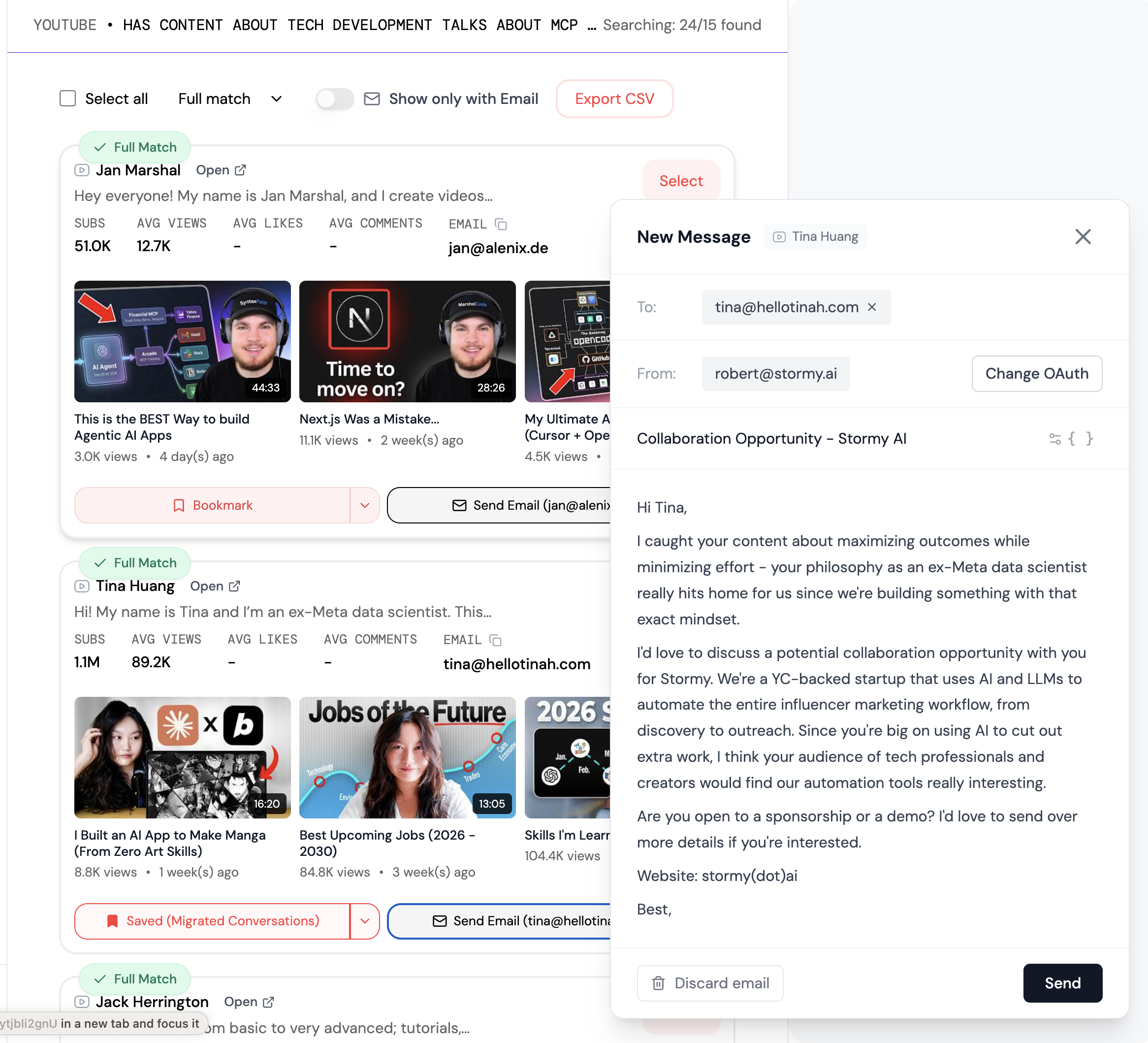
When you are ready to move from building to promoting, finding the right creators to talk about your product is the next hurdle. While Avnish manually emailed 400 influencers with little success, modern founders are using Stormy AI's search engine to find niche-specific creators across TikTok, YouTube, and Instagram. Instead of guessing who might care about credit card points or travel deals, Stormy identifies influencers with high audience quality and relevant interests in seconds.

The Zero-Dollar Marketing Playbook: Reddit and Facebook Groups
Avnish's breakthrough came when he stopped looking for "product enthusiasts" and started looking for "problem solvers." He ignored subreddits about building SaaS and focused on communities like r/CreditCards. His solopreneur marketing tools weren't paid ads; they were strategic engagement tactics. He utilized the "Map of Reddit" to visually trace connections between subreddits, finding overlooked communities where his product solved a direct pain point.
To execute this at scale, he followed a five-step playbook:
- Keyword Brainstorming: Identify 10-15 interests (e.g., "Rakuten stacks," "Amex offers") where users already gather.
- Observational Joining: Enter groups without posting to learn the specific language and etiquette of the community.
- Comment-First Engagement: Start by answering questions in the comments to build social capital before attempting a top-level post.
- Automated Monitoring: Use tools like F5Bot to get real-time email alerts whenever a specific keyword is mentioned on Reddit.
- Value-Add Posting: Instead of a sales pitch, share a resource. Avnish shared a SQL-generated spreadsheet of travel deals, which drove 1,500 visitors in a single day.
If you find that manual outreach is too time-consuming, you can automate the relationship-building process. Stormy AI's creator CRM and AI email agent can handle the heavy lifting of identifying creators and sending hyper-personalized outreach. This allows you to scale your community presence while you sleep, ensuring you never miss a chance to collaborate with a relevant voice in your niche.
The 'Lifetime Deal' Revelation: Rethinking SaaS Pricing Models
One of the most surprising insights from Avnish’s journey was the rejection of the standard subscription model. While the tech industry pushes for monthly recurring revenue, he discovered that consumers often hate subscriptions. This subscription fatigue is a growing trend, and after receiving multiple requests for a one-time payment option, he introduced a lifetime membership.
The result was staggering: 97% of his revenue shifted from subscriptions to lifetime deals. This injection of upfront cash flow is vital for solopreneurs who don't have VC funding to cover operational costs. When evaluating saas pricing models, consider offering a high-ticket lifetime option to capture users who are fatigued by the "death by a thousand subscriptions" economy.
PostHog Analytics Guide: Tracking Real-Time Growth

You cannot scale what you cannot measure. Avnish relies on a posthog analytics guide mentality to monitor his funnel. While Google Analytics is excellent for viewing real-time traffic spikes from a Reddit post, PostHog provides the deep product-level insights needed to understand why users are (or aren't) converting.
Key metrics to track in your analytics stack include:
- Feature Adoption: Which parts of your tool are being used daily?
- Bounce Rate by Source: Are Reddit users sticking around longer than Product Hunt users? (Avnish found Product Hunt had a 95%+ bounce rate).
- Conversion Attribution: Which specific community post or comment led to a lifetime sale?
For those looking to track more than just website clicks, Stormy's post tracking and analytics dashboard can monitor how your product is being discussed across social media. By tracking individual videos and posts, you can see which pieces of content are driving the most engagement and views, allowing you to double down on the strategies that actually move the needle.
The Solopreneur Path to $25K MRR
The success of Savewise proves that the barrier to entry for building a profitable SaaS in 2024 has never been lower. By combining a high-velocity stack like Vercel and Next.js with AI-powered development tools, a single founder can outpace traditional teams. The secret isn't a massive ad spend; it's relentless helpfulness in niche communities and a pricing model that reflects what customers actually want.
To start your own journey, focus on solving a manual problem you have, build the MVP with V0 and AI, and then use Stormy AI to find the creators and communities that will help you scale to your first $25K month. The tools are ready—now it's time to build.