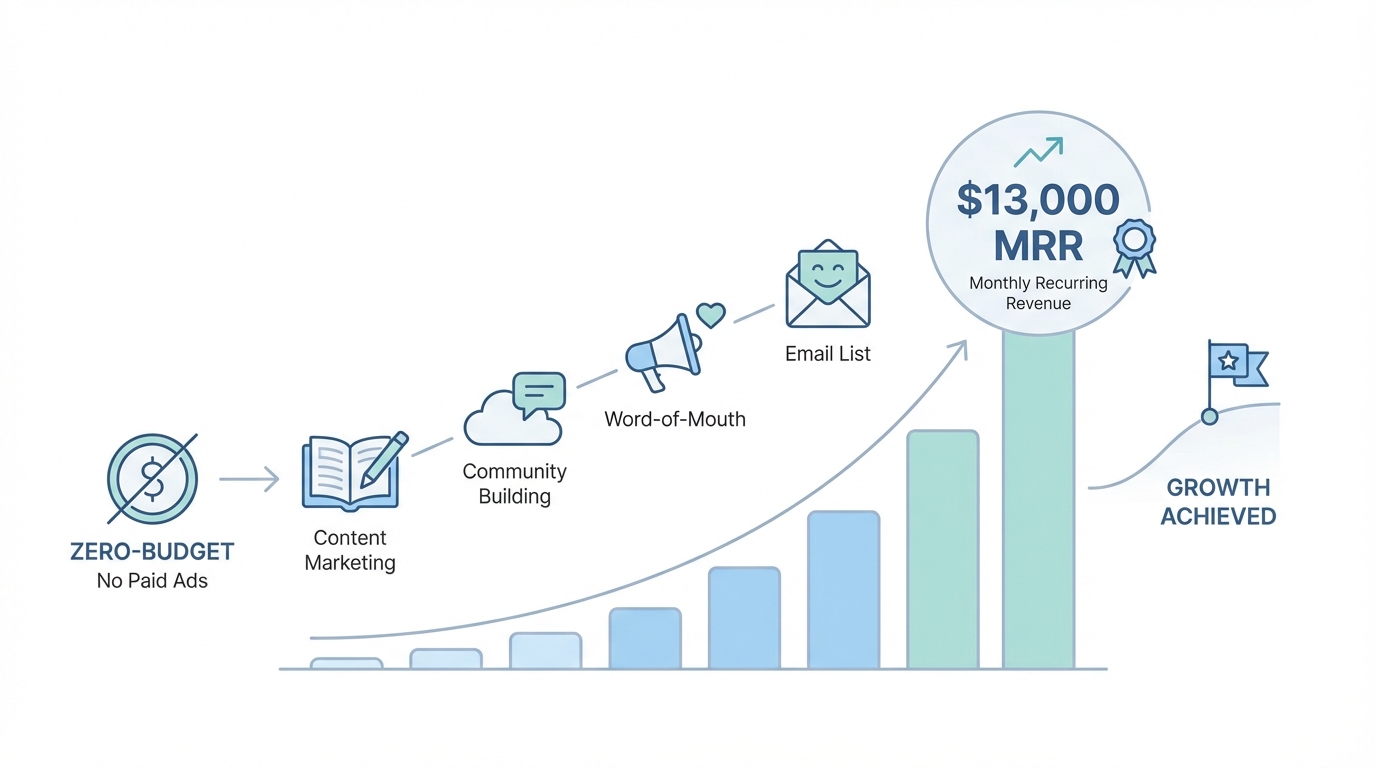
Imagine building a software business that attracts over one million visitors without spending a single dollar on traditional advertising. For most founders, this sounds like a pipe dream, but for Banu, an independent developer from India, it is a documented reality. By leveraging a high-leverage organic acquisition strategy known as "Engineering as Marketing," Banu scaled SiteGPT to $13,000 in Monthly Recurring Revenue (MRR) and successfully exited a previous venture for a quarter-million dollars. This approach doesn't require a massive marketing team or a venture capital war chest; it requires the ability to build small, useful tools that solve immediate problems for potential customers.
The Economics of Engineering as Marketing: Organic vs. Paid CAC

Most SaaS founders fall into the trap of thinking that growth requires a choice between two evils: expensive paid ads or months of grueling content creation. However, saas marketing for developers often works best when it leans into their core strength—coding. This is where "Engineering as Marketing" comes into play. Instead of writing a 2,000-word blog post that might get buried in search results, you build a functional tool that provides instant value. Platforms like Stormy AI serve as an AI search engine across TikTok, YouTube, and Instagram, helping founders find niche creators to amplify their tools, but for a solo developer, building their own traffic-generating assets is the ultimate zero budget marketing hack.
The difference in Customer Acquisition Cost (CAC) is staggering. While paid search on platforms like Google Ads can cost several dollars per click, a free tool ranks organically and delivers traffic indefinitely. Banu’s strategy has resulted in over 50,000 monthly visitors, with 90% of that traffic coming from free tools he built in just minutes using AI. When your acquisition cost is essentially zero, your profitability and margins become the envy of the industry, allowing for a sustainable bootstrapped saas growth trajectory that isn't dependent on the next funding round.
Maximizing Customer Lifetime Value (LTV) Through Organic Intent-Matching
One of the most impressive metrics in Banu's business is the Customer Lifetime Value (LTV), which currently sits between $1,700 and $1,800. This high LTV isn't an accident; it's a direct result of organic intent-matching. When a user searches for a specific utility—like an "AI Reply Generator"—and finds a free tool on your site, they are already demonstrating a need for the core technology you sell. By providing a "lite" version of your solution through a free tool, you build trust and authority before even asking for a credit card, as documented in several success stories on Starter Story.
This strategy ensures that the leads you generate are high-quality. Out of 50,000 monthly visitors, SiteGPT captures around 200 leads, with 60 of those converting to trials. Because these users came in through a tool that solved a specific pain point, 25% to 40% of trials convert into paying customers. This high conversion rate is the cornerstone of a successful startup growth without ads strategy, where the focus shifts from volume to the quality of the funnel entrance. For those managing complex acquisition funnels, Stormy AI can be used to track individual videos and monitor performance across all platforms in its Post Tracking section to see which assets drive the most value.
The 7-Step Playbook for Free Tool Marketing

Banu’s success isn't based on luck; it's a repeatable process. If you want to replicate this organic acquisition strategy, you can follow his precise 7-step playbook. This method focuses on finding "low-hanging fruit" in search engines where you can rank quickly and drive meaningful traffic to your main product.
Step 1: The Blank Search Trick
The first step is finding where the demand is. Banu recommends using a professional SEO tool like Ahrefs. Instead of guessing keywords, go to the Keywords Explorer and leave the search bar blank. This allows you to see the entire landscape of what people are searching for without biasing the results with your own assumptions.
Step 2: Apply Category Filters
Once you have the broad data, you need to narrow it down to your niche. If you are building an AI-powered product, filter the results to include terms like "AI," "generator," "builder," or "creator." This ensures the keywords you find are actually relevant to the saas marketing for developers goals you have set.
Step 3: Filter for Keyword Difficulty (KD)
This is where most founders fail. Don't try to rank for "AI Image Generator" (which has a KD of 87). Instead, set a filter for Keyword Difficulty less than 10. These are keywords that any decent website can rank for within a few weeks of launching a page.
Step 4: Target High Volume
Filter for keywords that have at least 1,000 monthly searches. This ensures that even if you only capture a fraction of the traffic, it will result in a significant number of visitors. Banu has built nearly 50 free tools using this exact criteria to diversify his traffic sources.
Step 5: Organize in Notion
Collect all your viable keywords in a central database. Use a tool like Notion to list the keyword, its volume, and its difficulty. This becomes your roadmap for development over the coming months.
Step 6: Define Your Call-to-Action (CTA)
Every free tool must have a clear path to your paid product. For example, if you build an "AI PDF to Markdown" tool, your CTA should be: "You've converted one PDF. What if you could create a chatbot for all your business PDFs? Try SiteGPT." This bridge is essential for zero budget marketing to actually result in revenue.
Step 7: Prioritize and Build
Rank your list based on four factors: Volume, Low Difficulty, Ease of Build, and Product Relevance. Start with the ones that are easiest to build but have the highest relevance. With modern AI tools like Cursor, Banu claims he can now build and launch a new free tool in less than five minutes.
The 'Launch First' Philosophy: Feedback Over Perfection
A major hurdle for many developers is the desire to "over-engineer" the product before anyone ever sees it. Banu’s advice for bootstrapped saas growth is the opposite: Launch with the core feature only. He spent only two weeks moving from an idea to the initial launch of SiteGPT. By getting the product into the hands of users quickly, he allowed user feedback to dictate the development roadmap rather than his own assumptions.
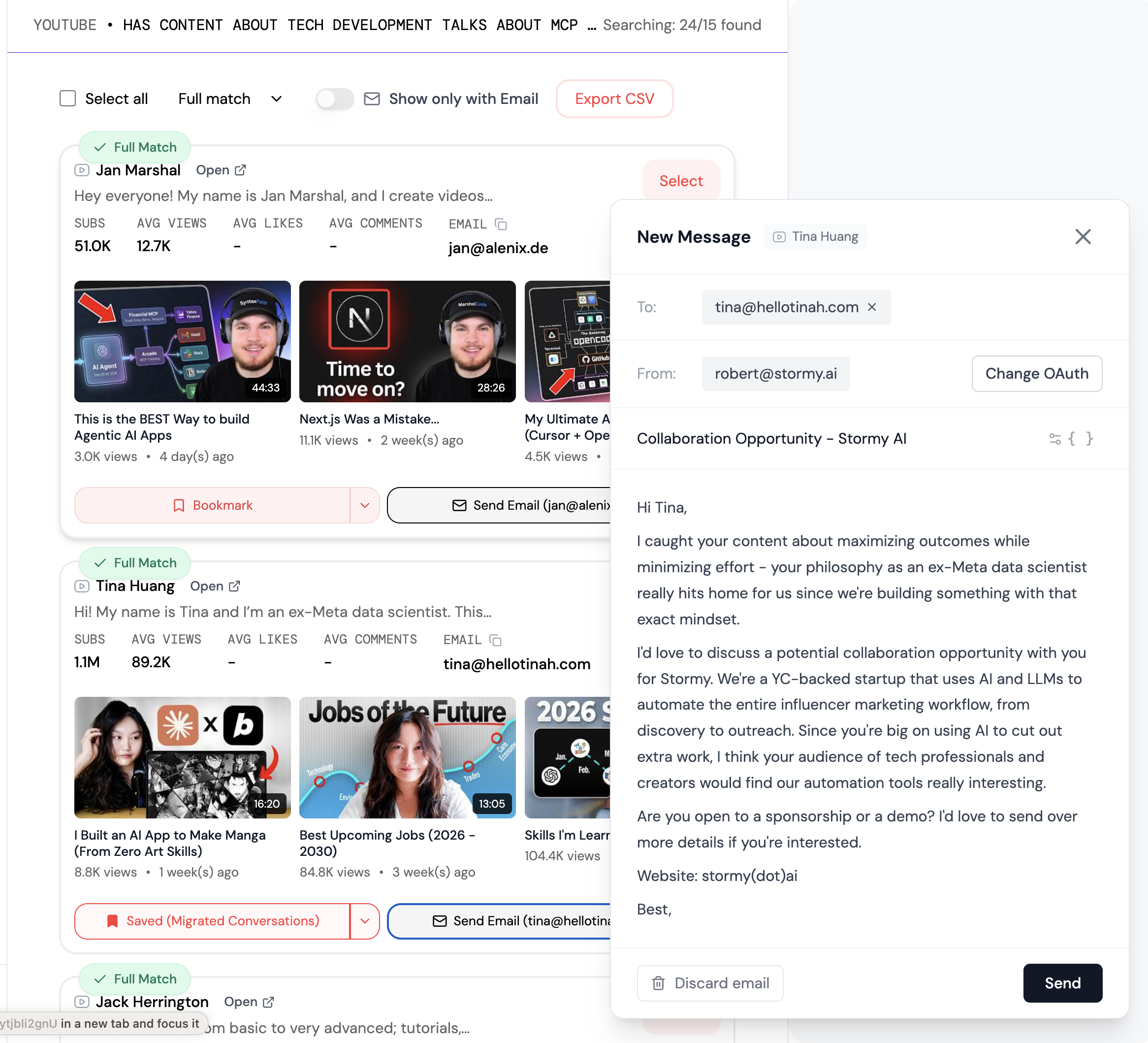
This "Launch First" mindset is critical for startup growth without ads. When you don't have a marketing budget, your users become your primary source of growth and direction. If you are building a SaaS that requires visual social proof, Stormy AI can help you reach out to relevant creators instantly with hyper-personalized emails and an AI agent that handles follow-ups while you sleep, which is a game-changer for early-stage UGC campaigns.
The Tech Stack of a Profitable Solo Founder

Maintaining a $13,000 MRR business as a solo developer requires an extremely efficient tech stack. Banu relies on a mix of automation and specialized tools to handle everything from customer support to deep analytics without needing a full-time staff. His stack is a masterclass in saas marketing for developers efficiency:
- SEO & Research: Ahrefs for identifying low-difficulty keywords for new free tools.
- Analytics: PostHog for product analytics and understanding user behavior.
- Customer Support: SiteGPT (his own tool) to handle 24/7 automated support.
- Scheduling: Cal.com for managing customer success and sales calls.
- Email Marketing: Bento for personalized email sequences and lead nurturing.
- Documentation: Mintlify for high-quality developer and user documentation.
- Revenue Tracking: ChartMogul to monitor churn, MRR, and lifetime value trends.
How to Sell a SaaS for 6-Figures After Organic Scaling

The ultimate goal for many bootstrapped founders is a profitable exit. Banu’s first major success was Feather, a Notion-to-blog tool he grew to $6,000 MRR using these same organic acquisition strategy principles. When the traction for his second product, SiteGPT, became too large to ignore—hitting $10,000 MRR in its first month—he decided to sell Feather for $250,000.
A six-figure exit is much easier to achieve when your business has "defensible assets." In Banu's case, those assets weren't just the code; they were the 50+ free tools ranking on the first page of Google. A buyer isn't just purchasing a software product; they are purchasing a proven traffic engine that requires $0 in ongoing ad spend to maintain. For app developers looking to achieve similar exits, using Stormy AI to manage all creator relationships and deal stages in a professional Creator CRM can add that extra layer of marketability and social proof that buyers look for.
Conclusion: Building Your Own Organic Growth Engine
The story of Banu and SiteGPT serves as a powerful reminder that zero budget marketing is not only possible but can be more effective than traditional paid acquisition. By treating engineering as marketing, you create assets that grow in value over time, rather than expenses that disappear the moment you stop paying. The bootstrapped saas growth journey is about finding leverage—and for a developer, there is no greater leverage than a tool that ranks on Google and solves a problem for a thousand people a month. If you are ready to stop chasing ads and start building assets, begin by identifying those low-difficulty keywords and launching your first free tool today.