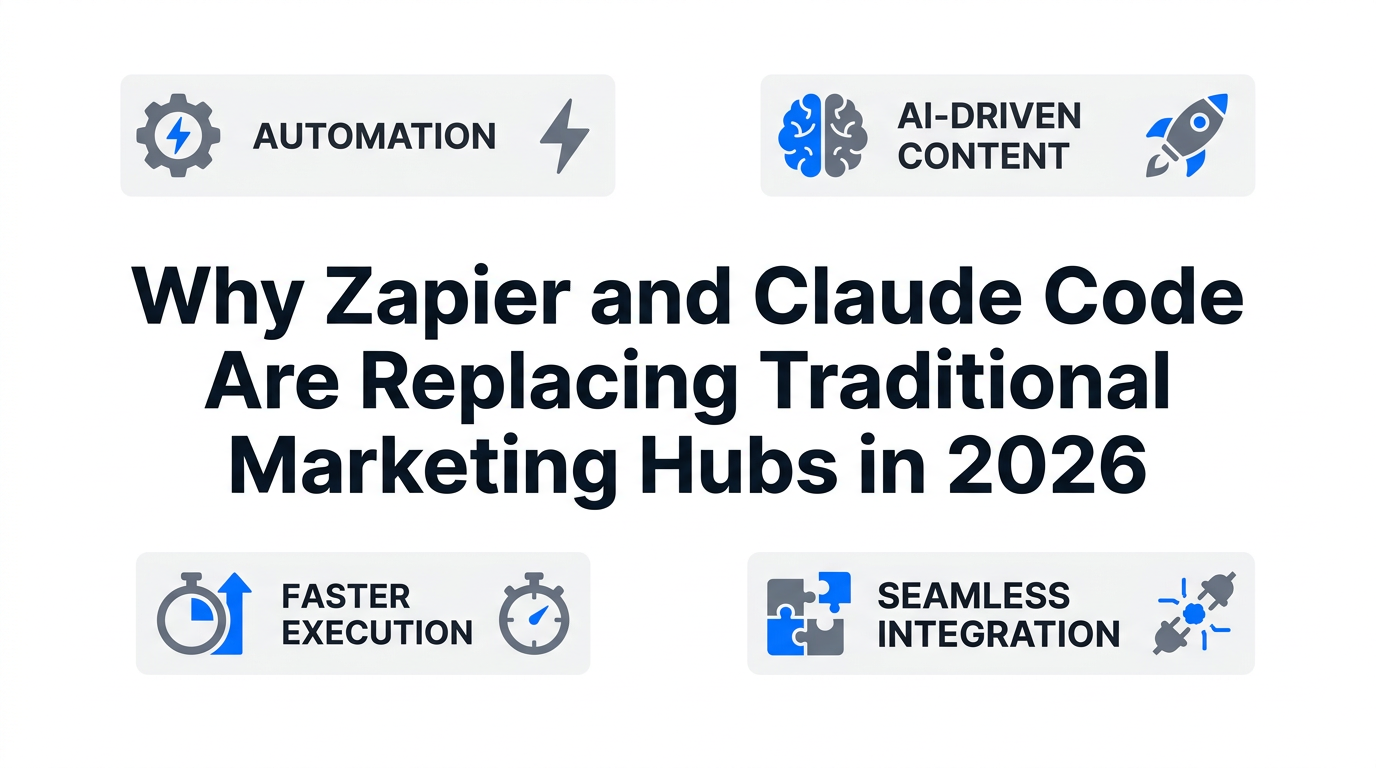
In the landscape of 2026, the Chief Marketing Officer's toolkit has undergone a fundamental transformation. For over a decade, the industry was dominated by "all-in-one" monolithic hubs—gigantic CRM ecosystems that promised to do everything but often left teams trapped in rigid, expensive workflows. Today, that paradigm is collapsing. Forward-thinking founders and marketing leaders are migrating toward a "Goldilocks" stack: an agile orchestration layer powered by Zapier and a cognitive engine driven by Claude Code. This shift isn't just about technical preference; it's a strategic move to reclaim flexibility, reduce "Automation Debt," and achieve a 35% reduction in content production costs that monolithic systems simply cannot match.
The ROI of Agentic Orchestration in 2026
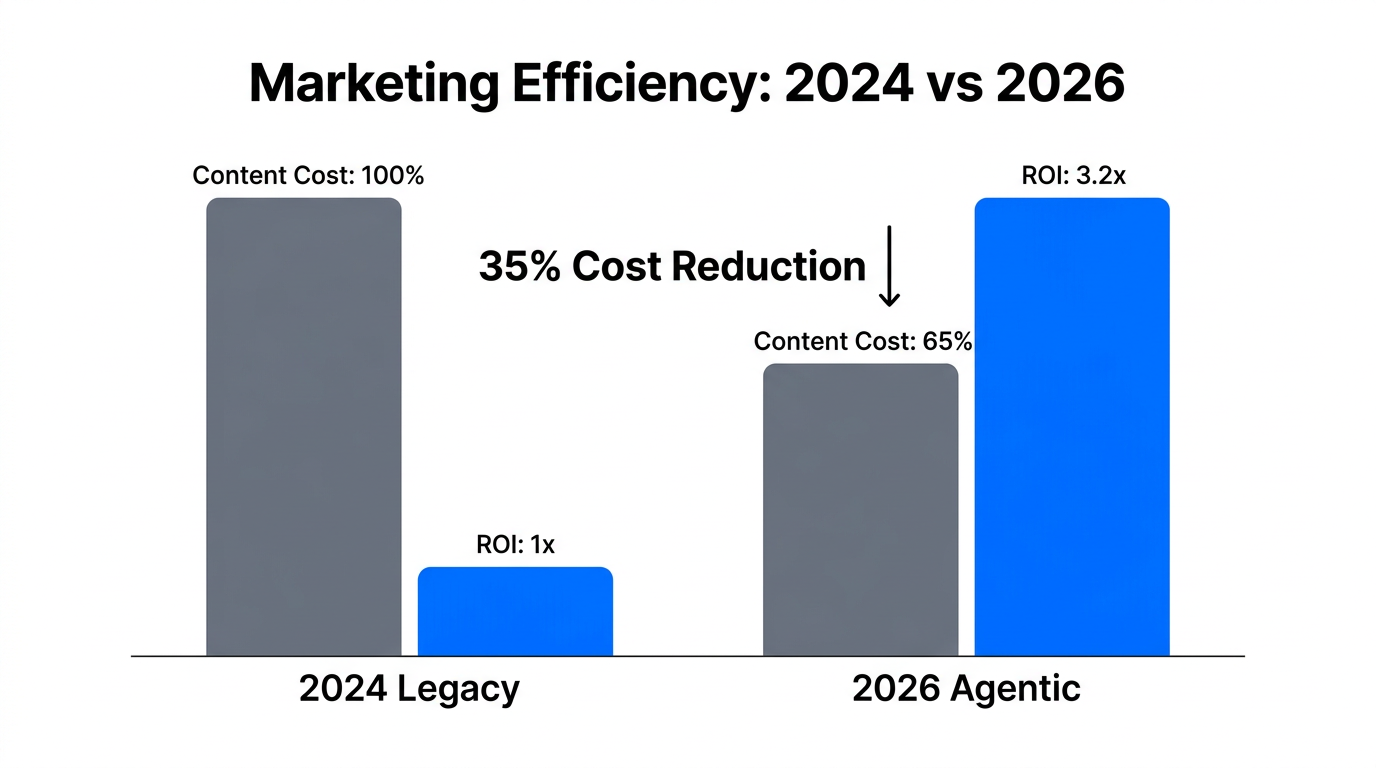
The global marketing automation market is on a trajectory to reach $13.71 billion by 2030, but the real story is in the sub-sector of AI-driven orchestration, which is currently expanding at a blistering 28% CAGR. Marketing leaders are no longer satisfied with simple "if-this-then-that" logic. They are moving toward "agentic" workflows—systems where the AI doesn't just follow a path, but decides the path based on a specific goal. Data from late 2025 indicates that firms implementing these agentic stacks via Zapier and Anthropic’s Claude report an average 22% increase in lead conversion. This is largely due to the ability to execute hyper-personalized outreach at a scale that was previously impossible without a massive human workforce.
"Agentic workflows, where AI cycles through 'thought, action, and observation,' are the biggest shift in productivity since the cloud."When comparing the economics of 2026 marketing, the math is undeniable. While a human content marketer in a major hub might cost $45–$60 per hour, a "Powerhouse" setup utilizing Claude 3.5 Sonnet via API costs approximately $0.12 per 1,000-word SEO-optimized blog post in raw API fees. This allows startups and SMBs to scale their output from four pieces of content a month to forty or even four hundred without adding a single headcount. By using AI marketing orchestration tools, companies are effectively turning their marketing departments into high-output software engineering teams.
Zapier Central vs. Claude Code: The Rise of the Marketing Engineer
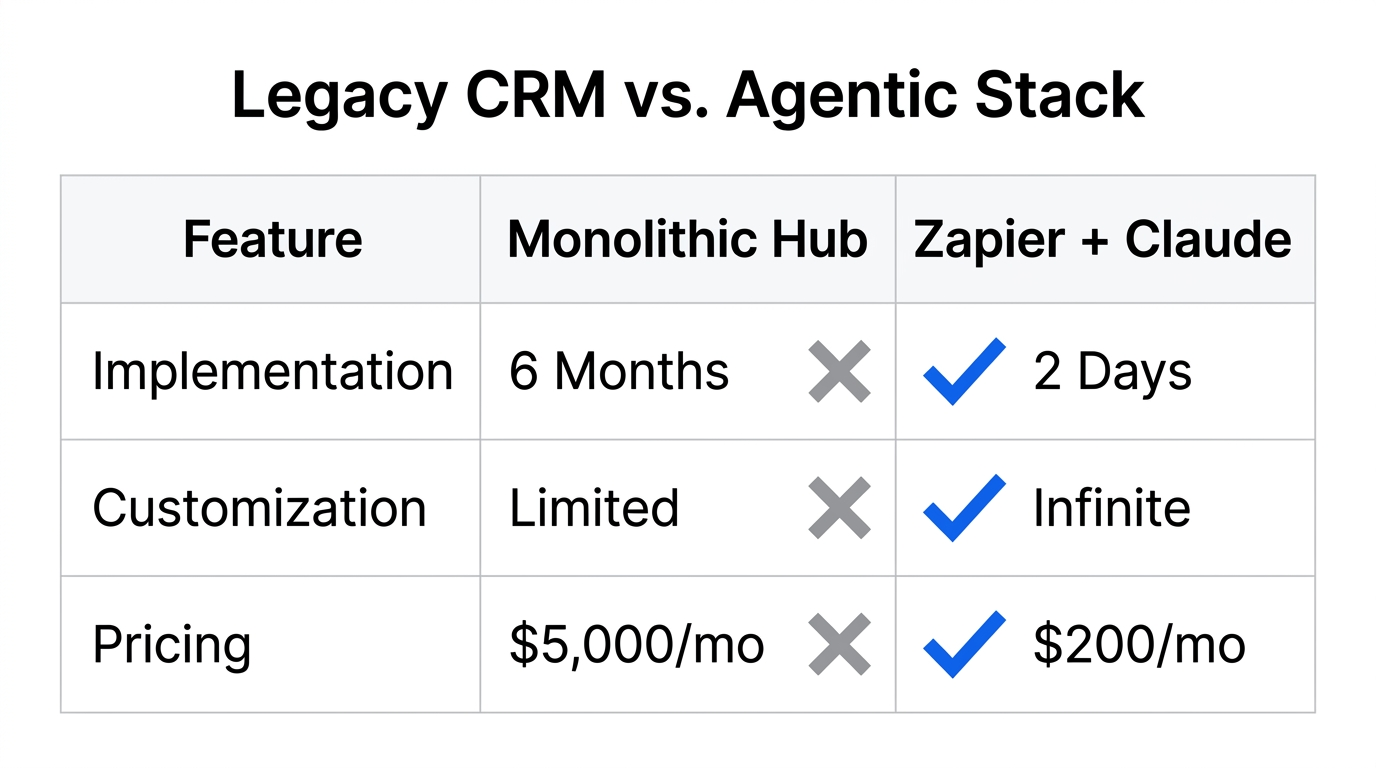
In 2026, the distinction between a "marketer" and a "developer" has blurred. The emergence of Claude Code as a general availability tool has allowed non-technical marketers to run complex Python scripts directly within their automation steps. This has created a significant divide between the rigid features of the HubSpot Content Hub and the infinite flexibility of an orchestrated stack. While HubSpot offers ease of use, it limits users to its internal ecosystem. In contrast, the Zapier + Claude stack acts as the "glue" for over 7,000 different applications, enabling workflows that HubSpot simply cannot support natively.
| Feature | Zapier + Claude Code | HubSpot Content Hub | Custom Python Builds |
|---|---|---|---|
| Flexibility | Extreme. Connects 7,000+ apps. | Limited to internal ecosystem. | Infinite, but requires dev. |
| Reasoning Power | High. Agentic "Chain of Thought." | Moderate. Uses general models. | Depends on the model. |
| Setup Time | 1–2 hours. | 15 minutes. | Weeks. |
| Cost Efficiency | Very High. Usage-based. | Moderate. High monthly fees. | Low (high dev cost). |
The power of Zapier Central lies in its persistent memory. Unlike previous iterations of automation, Claude can now "remember" a brand’s specific tone of voice and historical campaign data across fifty different Zaps. This eliminates the need for repetitive, long-form prompting and ensures that every piece of AI-generated content—from a LinkedIn post to a customer support response—remains consistent. For businesses looking to scale their creator relationships, this logic is equally applicable; niche platforms like Stormy AI are being used alongside these stacks to automate the discovery and vetting of UGC creators with the same agentic precision.
From Step-Based to Goal-Based: The 2026 Playbook
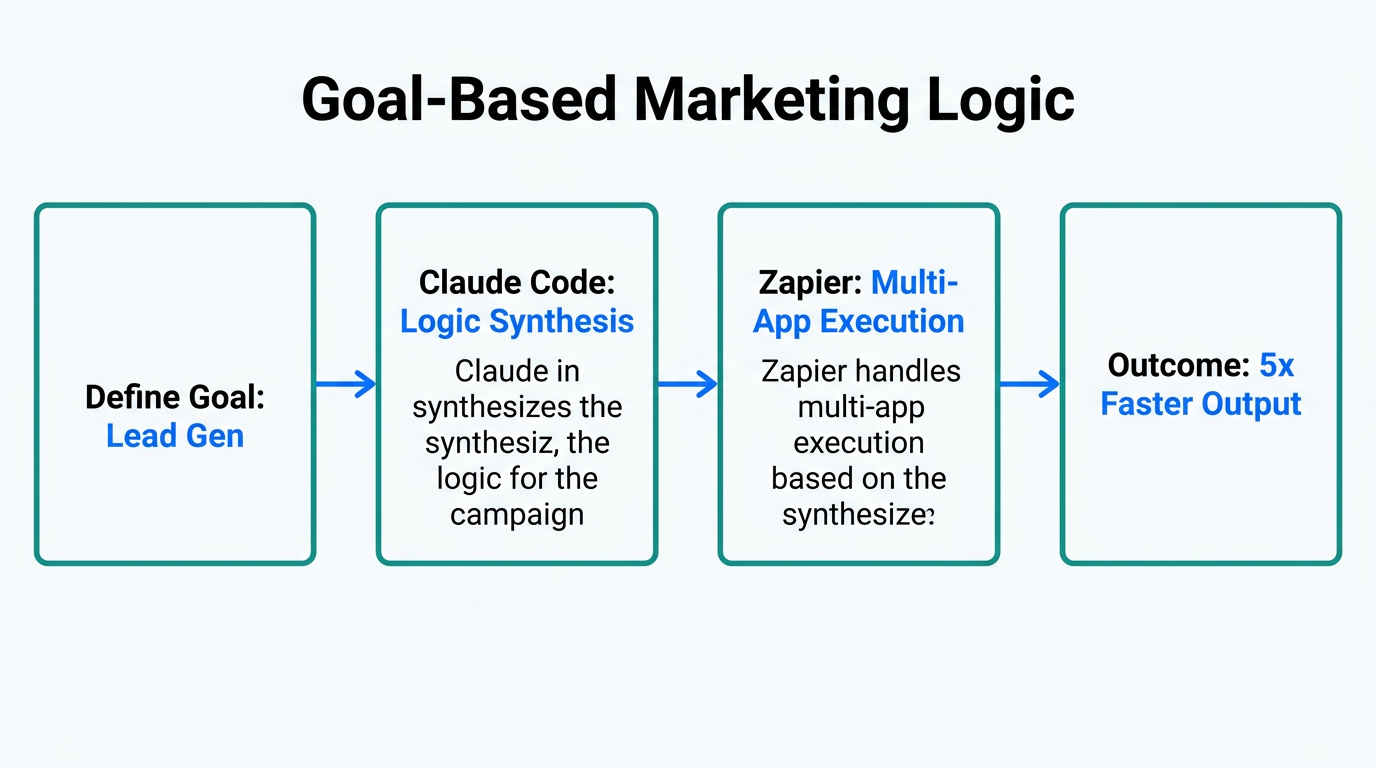
We are moving away from the era of building 50-step linear workflows. In 2026, the best marketers describe an outcome and let the AI build the process. As Wade Foster, CEO of Zapier, famously noted, the future of automation isn't you building the workflow; it's you describing the outcome. This is the core of the "Infinite Content Engine" strategy. By combining the cognitive capabilities of Claude-driven personalization with Zapier's connectivity, brands are achieving 14% to 27% higher reply rates on their outbound campaigns.
The Infinite Content Engine Playbook:
- Trigger: A new raw video or transcript is uploaded to Google Drive or YouTube.
- Reasoning: Claude Code extracts the "viral-worthy" hooks and sentiment using a custom Python script.
- Generation: The Claude API drafts 5 LinkedIn posts, 10 X (Twitter) threads, and a long-form article.
- Human-in-the-Loop: Zapier sends a Slack notification for approval to prevent the "Hallucination Trap."
- Distribution: Upon approval, the content is automatically pushed to Buffer, Hootsuite, or Meta Ads Manager.
"Marketers who don't learn to 'prompt' their automation stacks will be replaced by those who can orchestrate 10x the output with 1/10th the headcount." — Paul RoetzerAddressing Automation Debt: Self-Healing Workflows
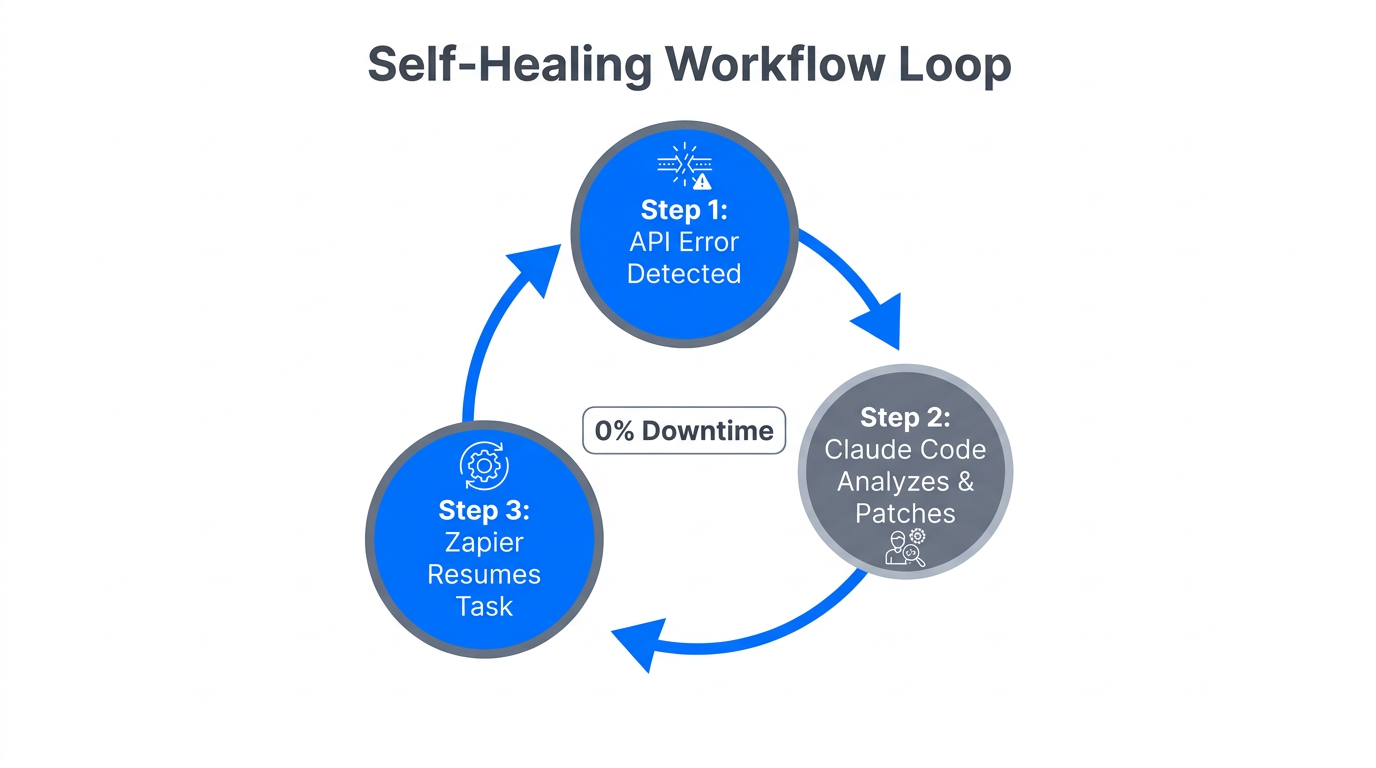
One of the biggest risks in 2026 is "Automation Debt"—the accumulation of fragile, broken workflows that occur when APIs change or webhooks fail. In the past, a broken LinkedIn API would crash a marketing sequence for days. Today, Claude Code acts as a "Marketing Engineer" that can identify a broken step and automatically suggest—or even write—a fix for the Python logic in real-time. Organizations are reporting a 92% reduction in manual data prep because these agentic systems handle unstructured data cleaning autonomously, as highlighted in the 2026 Automation Confidence Report.
However, this autonomy comes with risks. The "Hallucination Trap" remains a primary concern for CMOs. If Claude is given too much creative freedom without a safety net, it may invent product features or pricing. To combat this, the "Powerhouse" stack incorporates Human-in-the-Loop (HITL) steps. By using Relay.app or Zapier's internal approval tools, marketers can ensure that every automated output is vetted by a human before it reaches a customer's inbox.
Navigating GDPR and CCPA in the Age of AI
As we automate lead enrichment at scale, data privacy has become more critical than ever. In 2026, feeding unstructured lead data into an LLM without masking PII (Personally Identifiable Information) can result in severe GDPR or CCPA violations. Marketers must use data-masking scripts—often written by Claude Code itself—to ensure that emails and phone numbers are scrubbed before being sent to the cloud for sentiment analysis. For companies in high-compliance industries like fintech or healthcare, self-hosted alternatives like n8n are increasingly popular for maintaining data sovereignty while still leveraging the power of AI-driven content strategies.
Furthermore, as platforms like SparkToro have pointed out, there is a risk of "content homogenization." If every brand uses the same Claude-driven stack to optimize for SEO, the internet risks becoming a "sea of average." To remain distinctive, CMOs must use the time saved by automation to invest in original research and high-level strategy. The AI should handle the distribution and formatting, while the human provides the unique insight.
"The goal of AI orchestration isn't to remove the human; it's to give the human a thousand hands to execute their best ideas."Conclusion: Building Your 2026 Powerhouse
The traditional marketing hub is not dead, but it has been demoted. In 2026, the CRM is merely a database—the "destination" for data rather than the engine of growth. The real power lies in the orchestration layer. By combining Zapier for connectivity, Claude Code for reasoning, and platforms like Stormy AI for creator discovery and Clay for enrichment, brands are building a marketing machine that is more flexible, more intelligent, and significantly more cost-effective than anything we saw in the early 2020s. For those looking to dive into this new era, start by identifying your most repetitive manual task and asking: "If I could describe the outcome to an AI, what would it look like?" That is where your powerhouse stack begins.