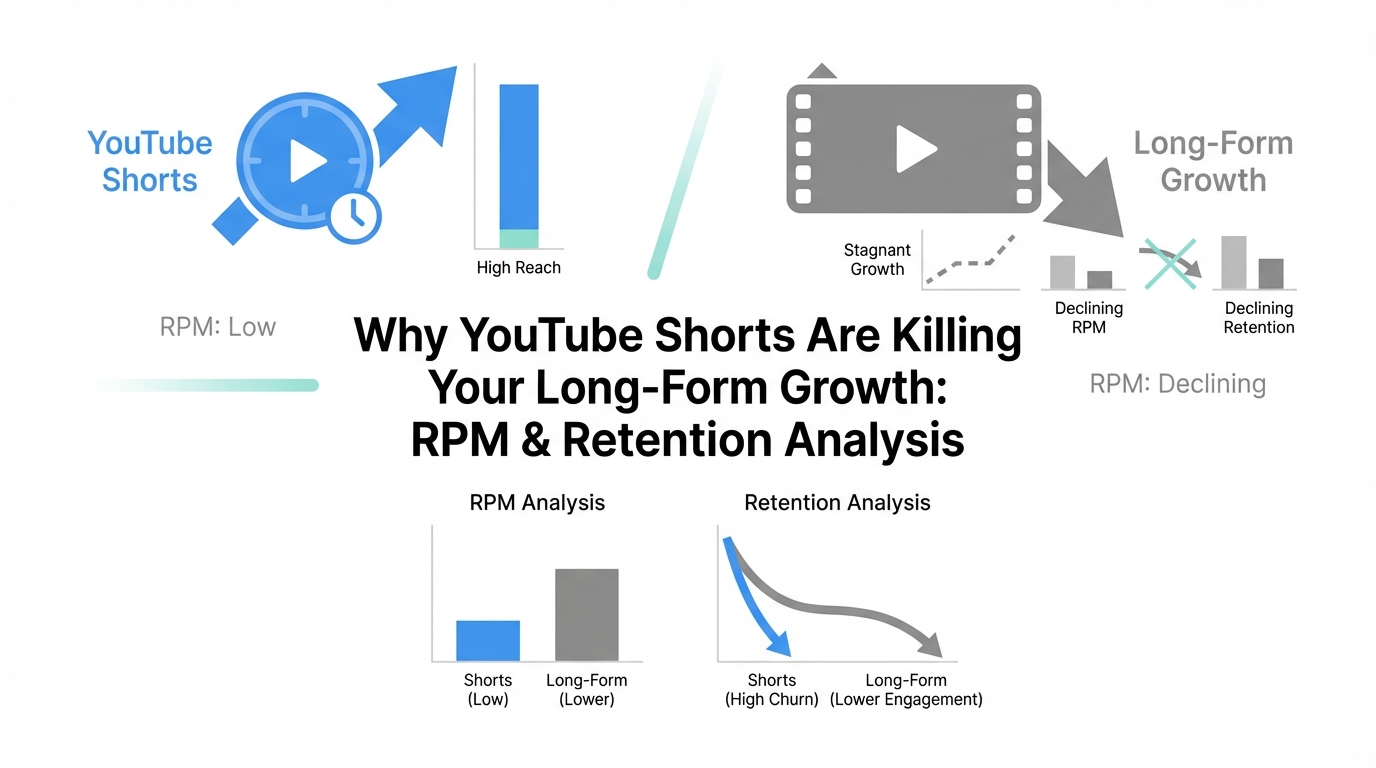
For the modern content creator, the allure of the "viral lottery" is hard to resist. With the explosion of YouTube Shorts, many creators have shifted their entire YouTube monetization strategy toward short-form vertical video, seduced by the promise of millions of views and a rapidly climbing subscriber count. However, beneath the surface of those vanity metrics lies a sobering financial reality. For creators looking to build a sustainable business, the pivot to Shorts might be doing more harm than good to their long-term growth and brand equity.
The disparity between YouTube Shorts vs long form content is not just a matter of video length; it is a fundamental difference in how audiences are captured and how revenue is generated. While a viral Short can reach millions, the quality of that engagement and the resulting YouTube creator revenue often pale in comparison to a dedicated long-form strategy. In this analysis, we will dive into the data regarding RPM (Revenue Per Mille), retention mechanics, and why your channel's authority might be at risk if you prioritize quantity over depth.
The Revenue Gap: Why $7.00 RPM Long-Form Beats $0.06 Shorts
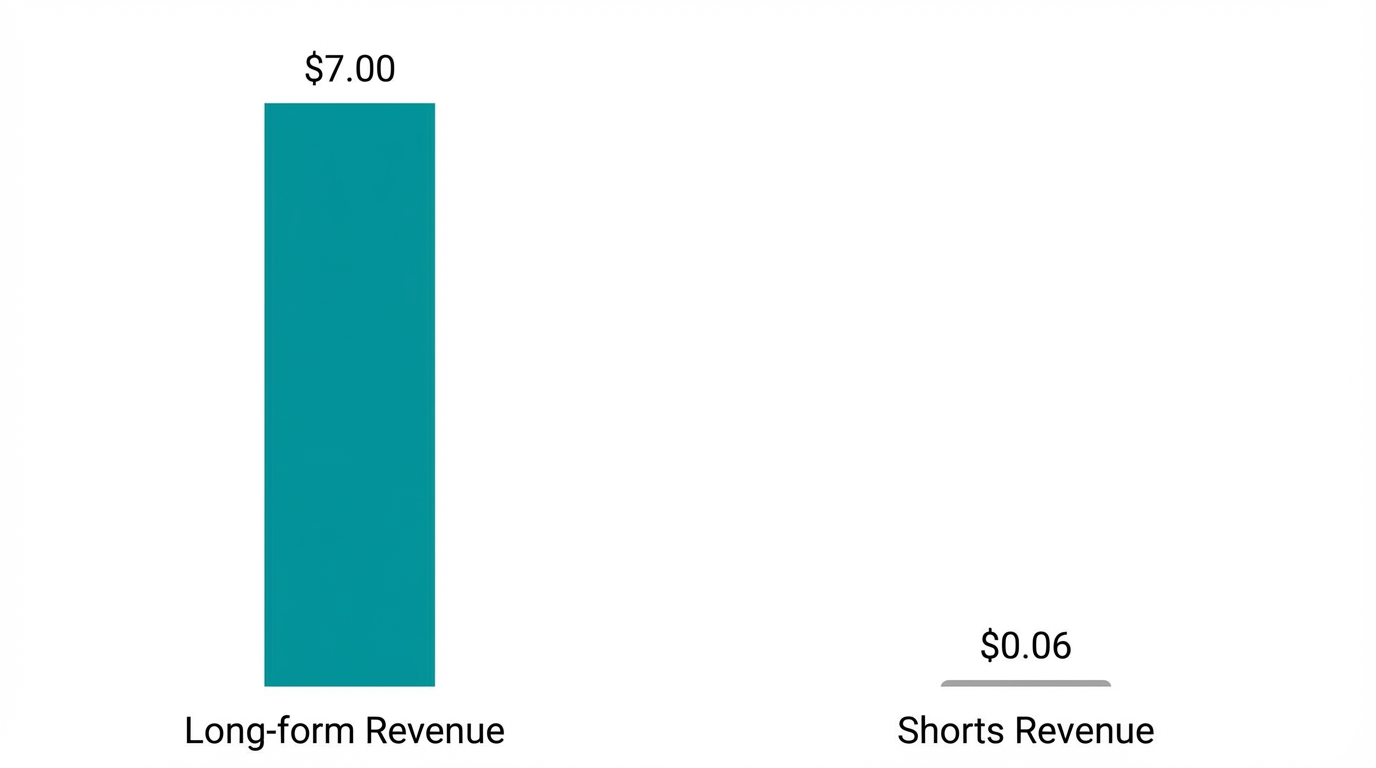
The most immediate and painful metric for creators to digest is the RPM disparity. Revenue Per Mille (RPM) represents how much money a creator earns per 1,000 views after YouTube takes its cut. In the world of finance and education niches, long-form video RPMs can easily reach $7.00 to $20.00 depending on the audience's demographic. In contrast, the current average for YouTube Shorts hovers around a meager $0.04 to $0.06 per thousand views.
To put this into perspective, if a long-form video earns a $7.06 RPM, a creator needs only 141,000 views to generate approximately $1,000 in AdSense revenue. To earn that same $1,000 from Shorts at a $0.06 RPM, that same creator would need over 16.6 million views. For most creators, consistently hitting 16 million views on every upload is a statistical impossibility, whereas building a loyal audience that provides 100,000 views on a long-form video is a repeatable, sustainable business model.
This revenue gap exists because of how advertisers value the viewer's attention. A viewer who sits through a 10-minute deep dive on an investment strategy or a technical tutorial is considered high-intent and highly engaged. They are more likely to click on mid-roll ads and follow through with a purchase. Conversely, a Shorts viewer is often in a "passive scroll" state, flicking through content at a rapid pace. Research into mobile attention spans shows that advertisers are simply unwilling to pay a premium for that fleeting second of attention, leading to the massive YouTube RPM by niche differences we see today.
The Subscriber Trap: Why Reach Isn't Always Revenue
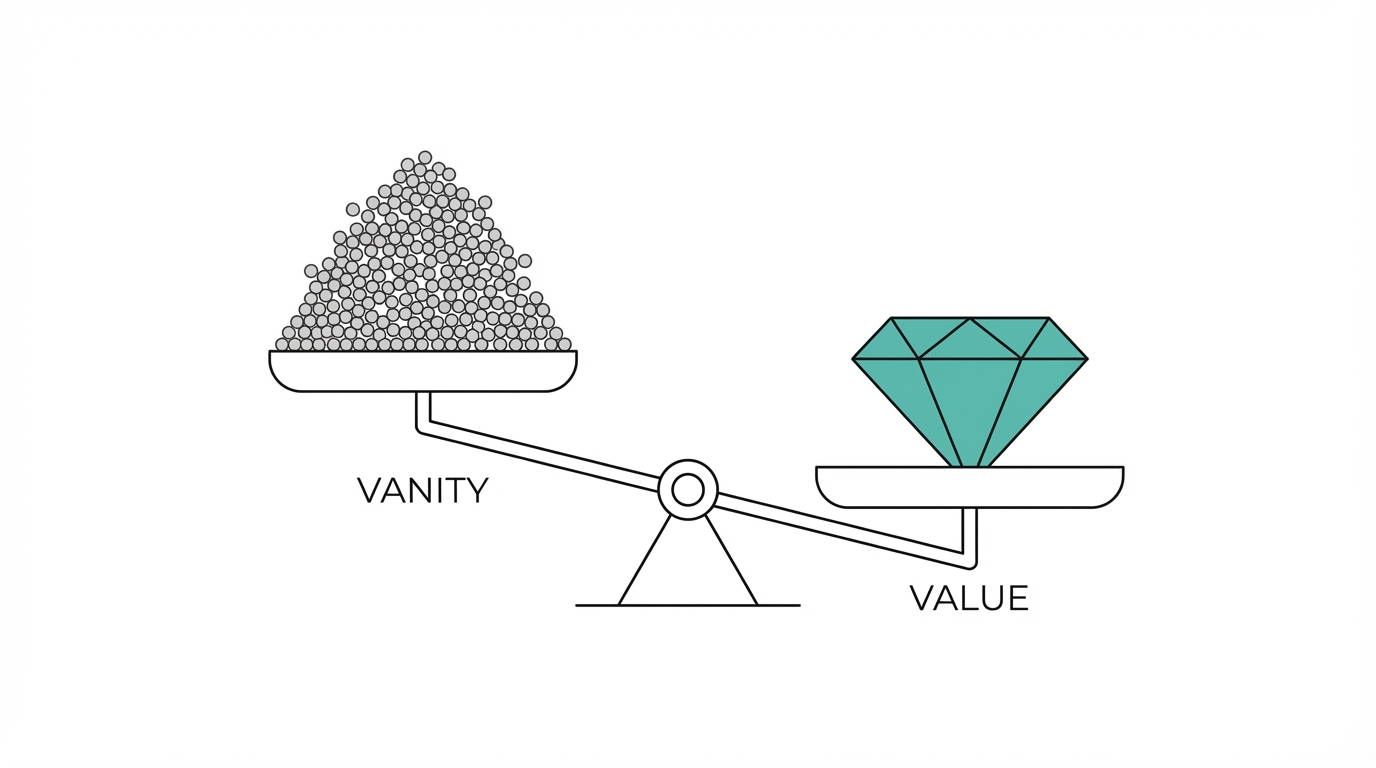
Many creators justify their focus on Shorts because of the "subscriber explosion." It is common to see channels gain 10,000 subscribers in a week from a single viral Short. However, this is often a subscriber trap. These new followers are subscribing to a 60-second format, not to you as a creator or your long-form expertise. When you eventually post an 8-12 minute video, these "Shorts subscribers" rarely transition over to watch.
Data shows that Shorts viewers have a significantly shorter attention span and a different consumption habit than traditional YouTube audiences. If your channel's growth is fueled by Shorts, you may end up with a high subscriber count but a critically low engagement rate on your primary content. This creates a disconnect that can be seen in Google Analytics and YouTube Studio data, where the "Subscription Status" metric often reveals that over 80% of views come from non-subscribers while your actual sub-base ignores your long-form uploads.
This lack of transition is dangerous because it signals to the algorithm that even your most "loyal" fans aren't interested in your new content. When your subscribers don't click on your videos in their feed, YouTube's recommendation engine assumes the video is poor quality and stops pushing it to the 122 million daily visitors who use the platform. In essence, by chasing the easy subscribers that Shorts provide, you may be unintentionally training the algorithm to ignore your most valuable, revenue-generating content.
Algorithmic Friction: How Shorts Can Hurt Your Home Page Presence

YouTube is fundamentally two different platforms stitched together: the Browse/Search engine and the Shorts Feed. The algorithm for the Browse page (your Home screen) prioritizes Click-Through Rate (CTR) and Average View Duration (AVD). Success in the Browse category—which typically accounts for over 50% of views for successful channels—requires getting a user to stop their scroll, click a thumbnail, and stay for several minutes.
When you flood a channel with Shorts, you are optimizing for a completely different set of metrics. The Shorts Feed relies on a "swipe-away" rate. If your channel becomes known for high-volume, low-depth Shorts, your authority on specific long-form keywords begins to dilute. Tools like TubeBuddy can help you track how your channel ranks for specific topics, but no tool can fix a fundamental mismatch between what your audience wants and what you are providing.
For brands and businesses, this friction is even more pronounced. If you are using YouTube as a top-of-funnel lead generation tool for an app or service, you need viewers who are willing to engage deeply with your message. High-quality creators are moving back toward a long-form first strategy to ensure they are attracting the right demographic. For businesses looking to source these high-impact creators, platforms like Stormy AI allow you to discover influencers who maintain high engagement and audience quality rather than just inflated subscriber counts from viral Shorts.
The 30-Second Rule and Thumbnail Science

If you choose to prioritize long-form growth, you must master the "science" of the platform. Unlike Shorts, where the algorithm forces your content in front of users, long-form content must earn every single click. This begins with Thumbnail Science. A general best practice highlighted by Creator Insider is to keep your thumbnail text to under five words. The human brain processes images 60,000 times faster than text; if a viewer has to read a paragraph on your thumbnail while scrolling on mobile, they will simply move on.
Once you get the click, the first 20 to 30 seconds are the most critical. This is the "hook" phase. Successful creators like MrBeast emphasize that you must tell the viewer exactly what they will get out of the video immediately. Avoid long intros, generic branding animations, or personal updates that the 99% of people who don't know you won't care about. Start with the value proposition. If the title is "How to Optimize Your YouTube Monetization Strategy," the first sentence should be, "In this video, I'm going to show you exactly how to double your RPM using three specific settings."
Tracking these metrics is essential for long-term health. Using the Post Tracking and analytics features within a platform like Stormy AI can help you monitor how your videos (or those of the influencers you partner with) are performing over time, ensuring that the Average View Duration remains high enough to keep the YouTube algorithm happy.
The Playbook: Building a Sustainable Long-Form First Channel
To avoid the Shorts trap and build a channel that generates real income, follow this structured playbook for long-form dominance:
- Step 1: Identify Your High-RPM Niche. Research topics with high advertiser demand, such as finance, SaaS, healthcare, or B2B technology. Use tools like Google Ads Keyword Planner to see what advertisers are paying for.
- Step 2: Optimize for Browse First. Your goal is to get on the YouTube Home Page. This means focusing on a Click-Through Rate (CTR) of at least 7-10%. Test different thumbnail styles in Canva to see what attracts the most attention.
- Step 3: Master the Retention Hook. Scripts should be tight. Eliminate any fluff in the first 60 seconds. Every sentence should move the viewer closer to the promised value.
- Step 4: Use Shorts Strategically (Or Not at All). If you use Shorts, treat them as advertisements for your long-form content. Do not post random viral clips; post highlights that specifically tell the viewer to "watch the full breakdown on the channel."
- Step 5: Double Down on Winners. When a video hits a high RPM and high views, analyze why. Was it the topic? The thumbnail? The keyword? Make three more videos on that exact subject from different angles.
By following this method, every video you create becomes an appreciating asset. Unlike a Short that has a lifespan of 48 hours, a well-optimized long-form video can generate revenue through AdSense, affiliate links, and brand deals for years after it is posted. This is the difference between being a "viral sensation" and a successful business owner on YouTube.
Conclusion: Choosing Depth Over Virality

While the quick hits of YouTube Shorts are intoxicating, they are often a distraction from the real work of building an audience that trusts you. For creators and brands alike, the goal should be audience depth. A channel with 10,000 loyal long-form subscribers who watch every 10-minute update is infinitely more valuable than a channel with 1 million Shorts subscribers who don't know your name. Focusing on YouTube creator revenue through high-RPM long-form content is the only way to build a brand that survives the ever-changing whims of social media algorithms. Prioritize the science of the click and the art of the hook, and your channel will grow as a sustainable business, not just a series of fleeting moments.