In the crowded SaaS landscape of 2026, most founders are still chasing the ghost of 'virality.' They spend thousands on TikTok editors and Meta ads, hoping a 15-second hook will somehow translate into long-term retention. But Ben, the founder of FollowBuddy, took a different path. By treating YouTube as a high-intent search engine rather than a social network, he scaled his Instagram analytics tool to $20,000 MRR and 82,000 users with zero dollars spent on advertising. This isn't just a success story; it is a repeatable video marketing strategy for 2026 that leverages the massive gap between what users are searching for and the low-quality content currently filling those results.
The YouTube Search Alpha: Why It Trumps Viral Trends
 4:13
4:13While platforms like TikTok and Instagram Reels rely on algorithmic luck, YouTube Search is powered by intent. When a user types a query into the search bar, they have already convinced themselves they have a problem. They are actively seeking a solution. Ben’s strategy with FollowBuddy focuses on being the first person to offer that solution when the need is most acute.
"I don't have to convince people of something. They've already convinced themselves. They're simply trying to source a solution, and I want to be the guy that can give it to them."
In 2026, the 'alpha' in YouTube search SEO for SaaS lies in the fact that competition is surprisingly thin. While every brand is flooding the internet with AI-generated blog posts, very few are taking 20 minutes to record a high-value, human-centric video that answers a specific technical question. This creates a low-competition landscape where even a basic Loom recording can rank number one for a high-value keyword for years.
Step 1: The Awareness Ladder Framework
9:12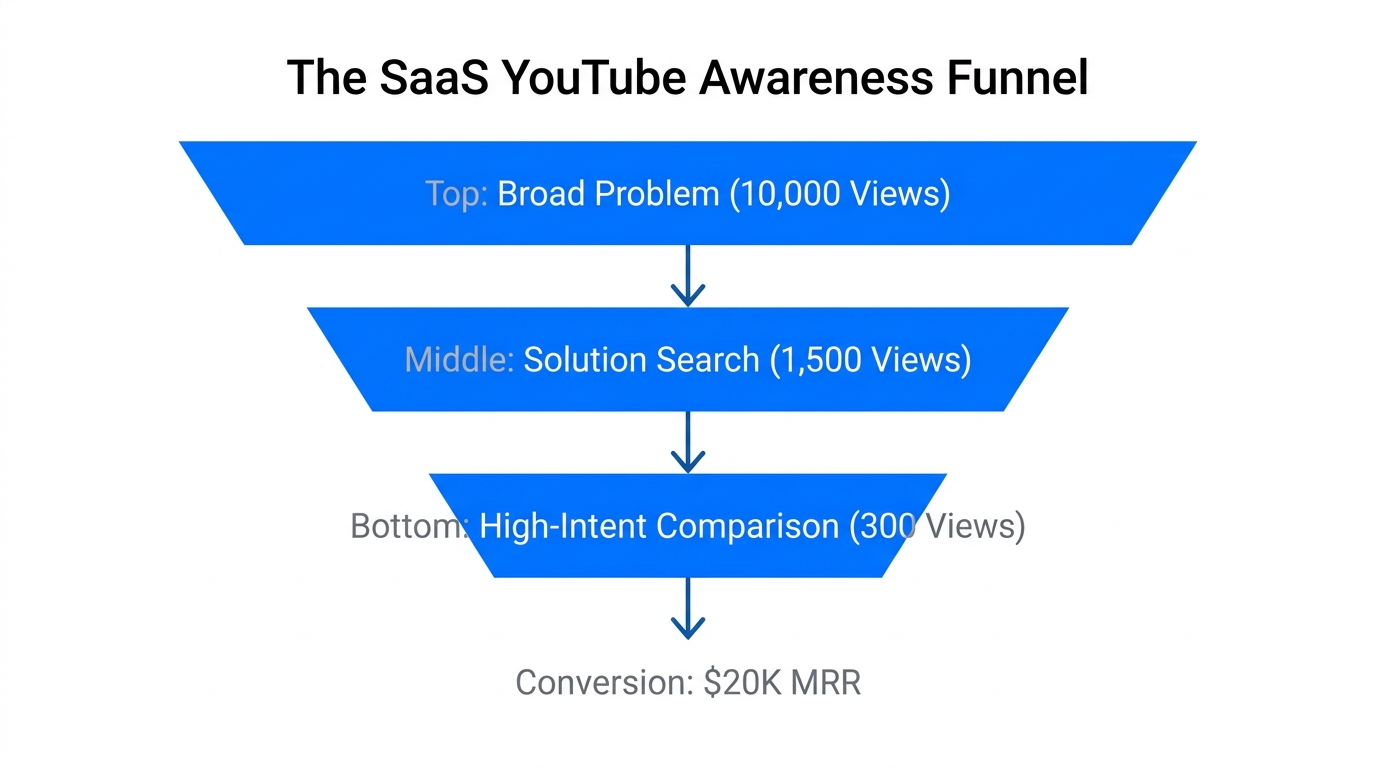
Most marketers start with keyword research tools. Ben starts with the human brain. To dominate organic customer acquisition, you must map your content to the 'Awareness Ladder'. This framework breaks down the user journey into distinct stages of readiness.
- Aware of the Need: The user knows they have a problem (e.g., "Why am I losing followers?").
- Aware of Solutions: The user knows tools exist (e.g., "Best apps to track unfollowers").
- Aware of Specific Solutions: The user is comparing your product to others.
- Convinced and Ready to Buy: The user is looking for a discount or a final walkthrough.
By using tools like ChatGPT to brainstorm the specific questions asked at each stage, you can build a content moat. You aren't just ranking for one keyword; you are appearing at every single touchpoint of their search journey. This method, often called the 'compare lists' strategy, was how Ben originally discovered the market gap for FollowBuddy after seeing millions of views on videos explaining how to safely audit Instagram data.
| Awareness Stage | Example Search Query | Content Goal |
|---|---|---|
| Problem Aware | "Who unfollowed me on Instagram?" | Education & Trust |
| Solution Aware | "Best Instagram unfollower tracker 2026" | Differentiation |
| Product Aware | "FollowBuddy vs. generic apps" | Conversion |
Step 2: Keyword Research and Competitive Gap Analysis
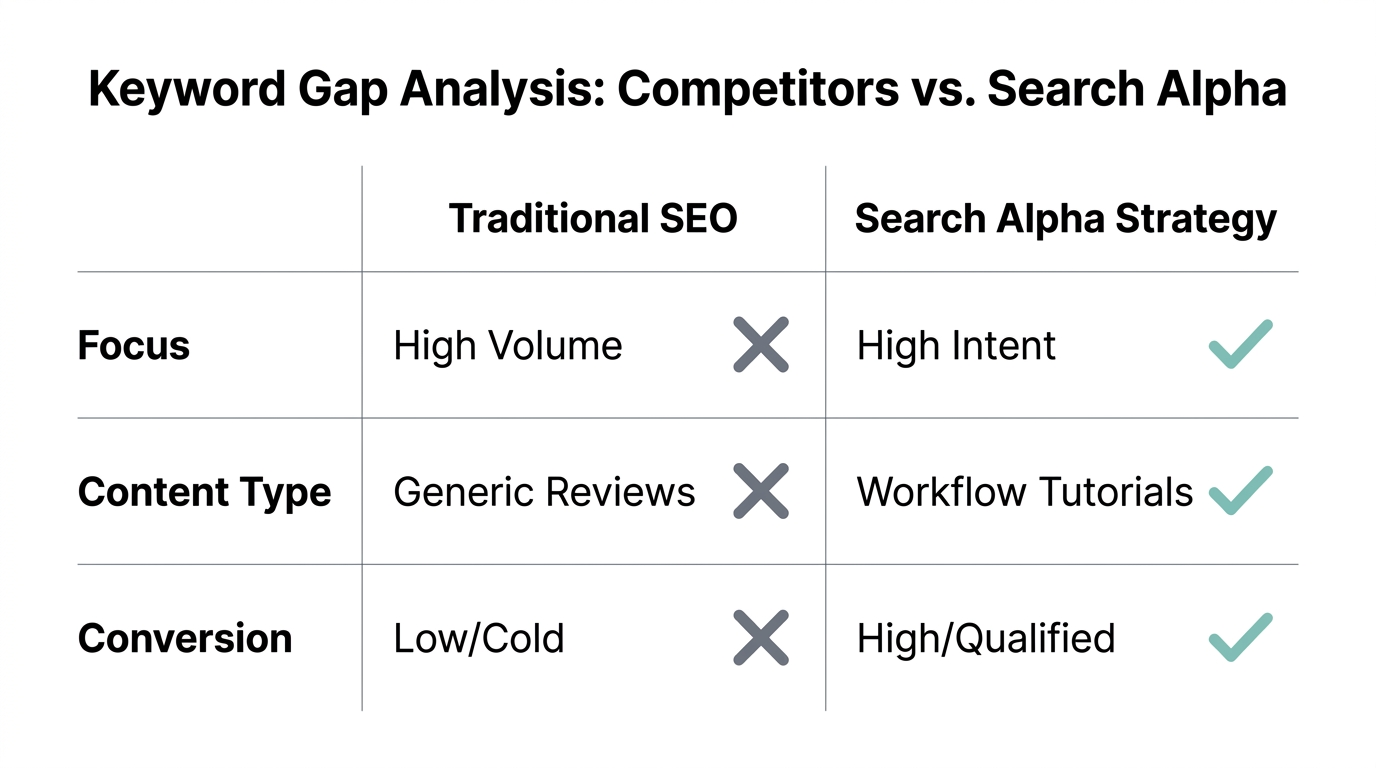
Once you have your awareness stages mapped, it is time to validate them with data. Ben recommends using Keywords Everywhere or VidIQ to see exactly how many people are searching for these terms per month. But the real secret isn't just finding high volume—it's finding low-quality competition.
When you search for your target keyword, look at the top three results. If the top video is 12 minutes long and 10 minutes of it is fluff, there is a massive opportunity. By creating a 4-minute video that gets straight to the point, you provide more value to the viewer. YouTube's algorithm in 2026 prioritizes user satisfaction and retention over video length. If your shorter video solves the problem faster, you will eventually outrank the 'babbling' incumbent.
"You will be shocked that some keywords have no relevant content at all. Even a crappy video can rank number one if you are the only one answering the question."
Step 3: Human-Centric Optimization & Packaging
In the age of AI-fication, users are craving human signals. Your packaging—the title and thumbnail—must confirm to the viewer within a split second that they are in the right place. Ben’s video marketing strategy 2026 focuses on 'front-loading' the primary keyword in the title while keeping the phrasing natural.
The 2026 SEO Checklist for YouTube:
- Title: Place the primary keyword at the very beginning. (e.g., "Instagram Unfollower App: How to use FollowBuddy safely").
- First 2 Sentences: The first two lines of your description appear in search results. Don't waste them on social links. Use them to repeat the keyword and provide a clear CTA to your app.
- The 'Confirm' Hook: Within the first 5 seconds of the video, literally say: "In this video, I'm going to show you [Search Query]." This reduces bounce rates and signals relevance to the algorithm.
- Tags: Use variations of the keyword. If your target is "Instagram unfollower app," include "unfollower app Instagram" and "best unfollow app."
Ben notes that mentioning 'cons' or limitations of your product can actually increase conversion rates. It builds radical transparency in an era where consumers are skeptical of over-polished marketing. If your SaaS handles data via a manual export—as FollowBuddy does to comply with Instagram terms of service—tell them that. Explain why it is safer. That education is what turns a viewer into a paying subscriber.
Step 4: The 'Stacking Bricks' Growth Engine
7:09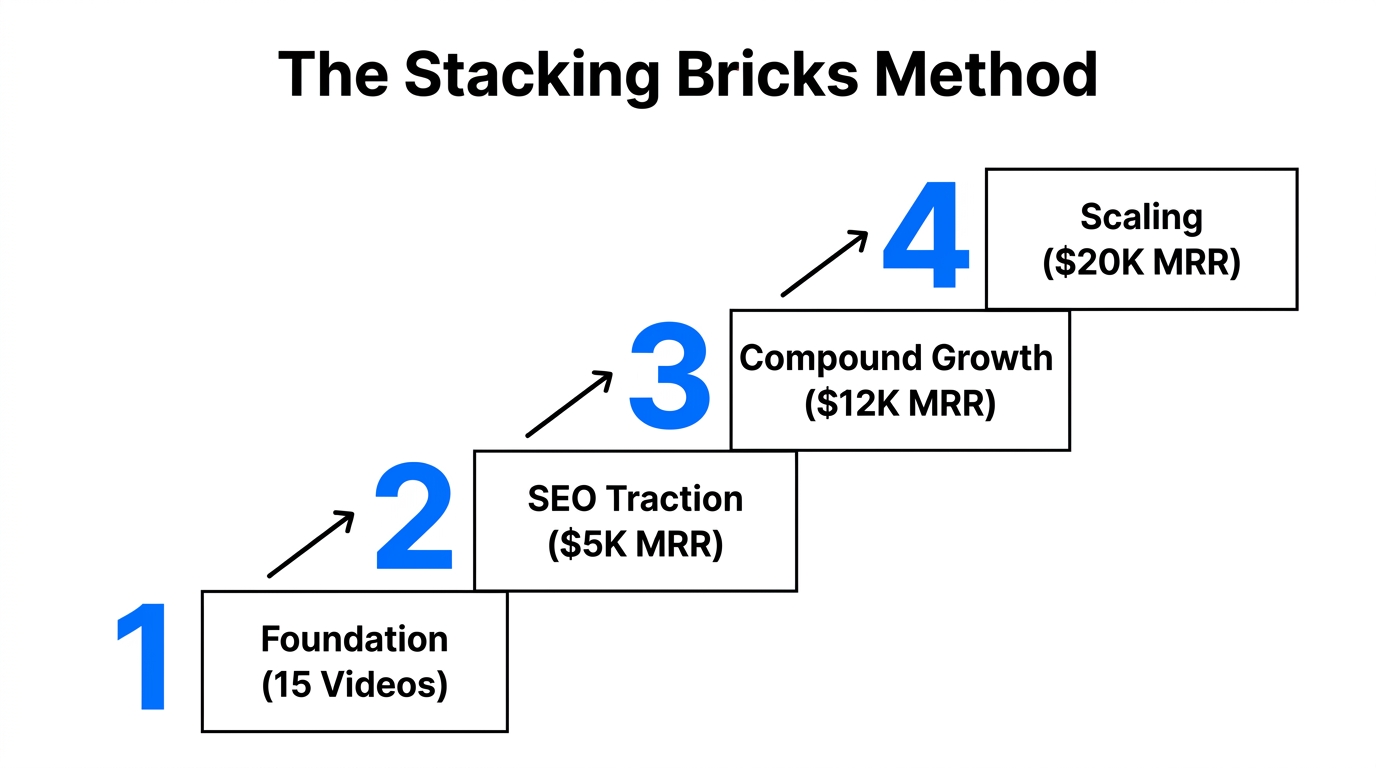
One video is a fluke; ten videos is a business. The 'Stacking Bricks' method involves remaking variations of your top-performing content again and again. If a video about "Best Unfollower Apps" starts ranking, make a version for 2026, a version for small businesses, and a version comparing your tool to a specific competitor.
On YouTube, unlike Google search, it is entirely possible to own the top three spots for a single keyword by having multiple videos from different channels or different angles. This dominance ensures that whenever a high-intent user looks for a solution, they see your face and your product.
"YouTube SEO requires almost no creativity. You're just showing up where people already are and helping them solve their problem."
The Tech Stack: Building for $20K MRR
Scaling to $20,000 a month doesn't require a massive team. FollowBuddy’s lean operation is built on a modern, scalable stack that prioritizes performance and data security. By leveraging the React framework and AWS for cloud computing, Ben ensures the app can handle tens of thousands of data exports simultaneously.
| Component | Tool Used |
|---|---|
| Frontend | React |
| Database | MongoDB |
| Payments | RevenueCat |
| Email Automation | SendGrid |
By using RevenueCat, FollowBuddy manages its 3,128 paying subscribers across weekly, monthly, and yearly plans. The yearly plan, priced at $50, is the primary driver of their $17,000+ 28-day revenue cycles. Because the acquisition cost is essentially $0 (thanks to organic customer acquisition on YouTube), the margins on these subscriptions are incredibly high.
Conclusion: Overcoming the 'Creative' Block
The biggest hurdle for most SaaS founders in 2026 isn't technical—it's the belief that they need to be a 'creator' to succeed on YouTube. As Ben’s FollowBuddy case study proves, you don't need a massive audience or high production values. You need a bias toward action.
If you have a SaaS idea or an existing product, your mission is simple: find the 10 most common questions your potential users are asking on YouTube, record a straight-to-the-point answer, and link to your solution. Don't overcomplicate it. Move now, validate the concept, and start stacking your bricks. The search traffic is there, waiting for someone to finally provide a high-quality answer.