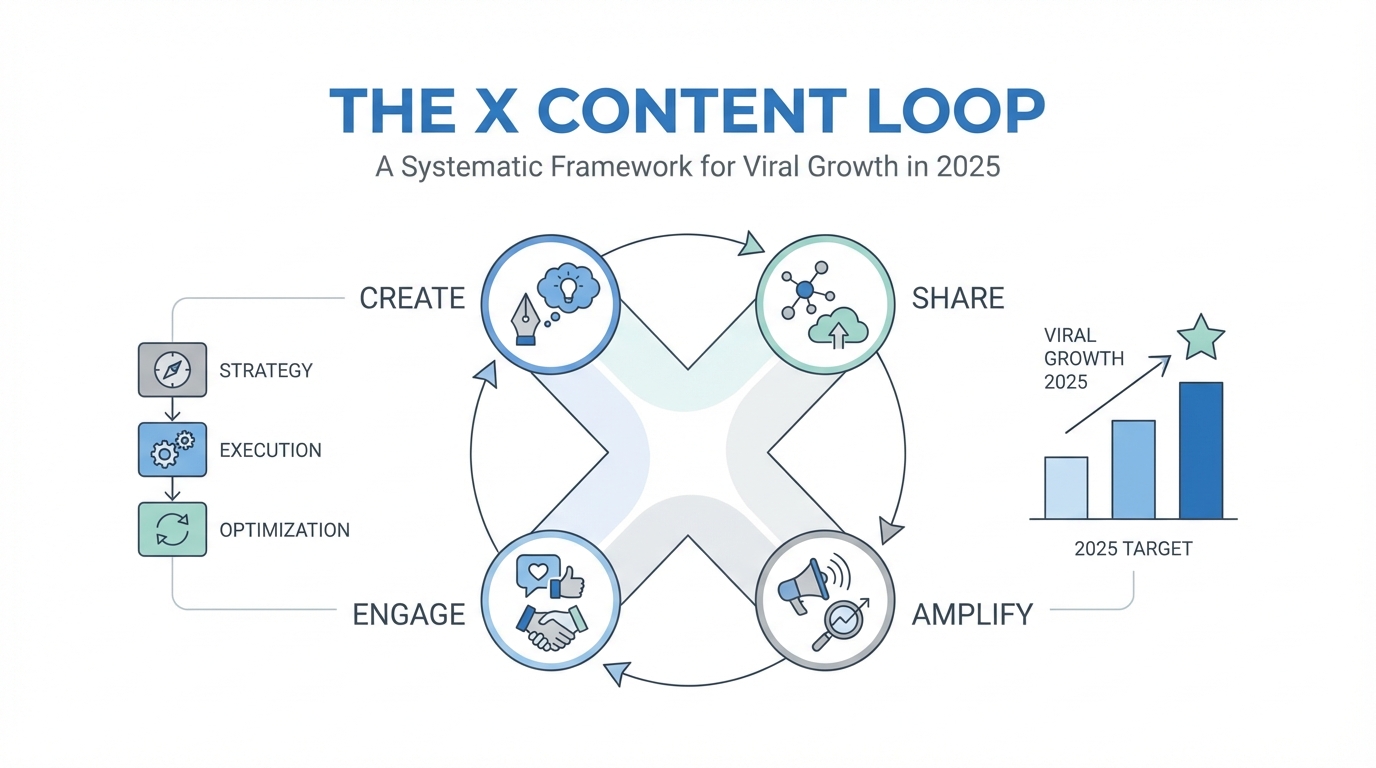
The era of "posting and praying" on social media is officially over. In 2025, the creators and founders dominating the feed aren't just lucky; they are operating with a level of mathematical precision that transforms content creation into a predictable distribution engine. Whether you are a solo developer or a marketing lead, understanding the twitter content strategy 2025 requires a shift from viewing the platform as a megaphone to viewing it as a data-driven laboratory. For those looking to scale, the goal is no longer just high view counts—it is about building a systematic twitter marketing framework that converts fleeting impressions into long-term trust and recurring revenue.
The Death of Luck: Why Data Outperforms Inspiration
For years, the prevailing wisdom for how to go viral on x was to simply be prolific. While consistency is a prerequisite, it is no longer the sole differentiator. Take the case of Rob Hallum, the founder of SuperX. After building five products that generated zero dollars, Hallum realized that his failure wasn't due to poor coding, but a lack of a systematic distribution strategy. He shifted his focus to social media analytics for founders, eventually growing his presence from zero to over 34,000 followers and scaling his revenue to $13,000 in monthly recurring revenue (MRR).
The breakthrough came when he stopped guessing what would resonate and started following the data. By using the Starter Story approach of radical transparency and building in public, he was able to maintain an average of 100,000 impressions per day. This level of growth isn't a result of the algorithm "picking" him; it’s the result of a feedback loop that identifies proven concepts and adapts them to a personal narrative. For brands today, platforms like Stormy AI help bridge this gap by offering deep insights into creator performance and an AI-powered quality report that detects fake followers and engagement fraud automatically before you invest.
The Four-Pillar Content Loop: A 2025 Framework

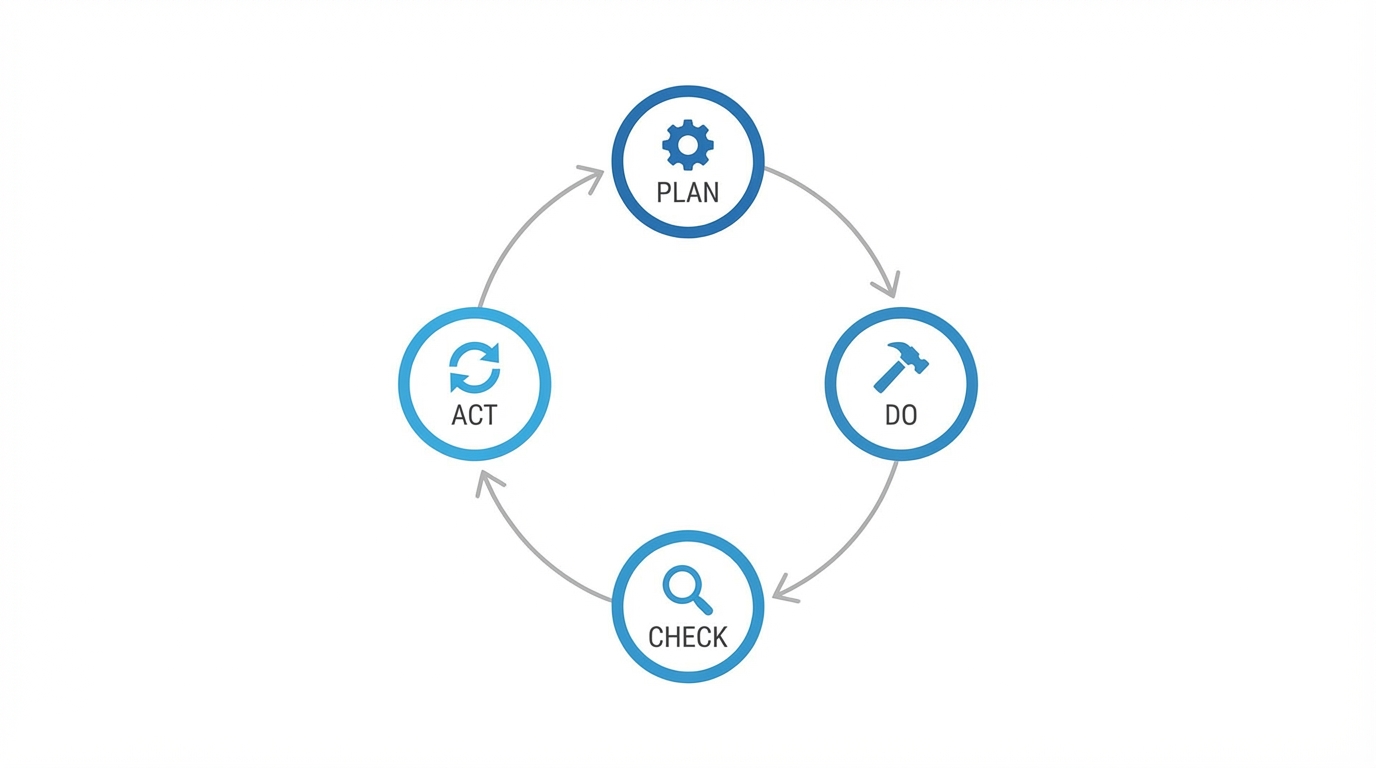
To master the x algorithm for businesses, you must understand that the feed serves different psychological needs at different times. A monolithic content style eventually fatigues your audience. Instead, the most successful accounts utilize a four-pillar loop that moves users through a funnel of awareness, value, and conversion.
Pillar One: Entertaining (The Virality Engine)
This is your top-of-funnel content. Its sole purpose is to get you "warmed up" in the algorithm and capture the attention of users who don't know you yet. This often involves vulnerability, humor, or relatable struggles. In 2025, this often takes the form of high-quality video demos. Hallum found that switching from text to video increased his reach by 10 times. When you see a post that feels "human"—like a founder sharing a mistake or a funny observation about their industry—it is designed to trigger the high engagement signals (likes and retweets) that the algorithm uses to expand your reach.
Pillar Two: Educational (The Value Add)
Once you have the attention, you must justify it. Educational content provides tangible value for free. This is where you share the "how-to" behind your success or break down complex industry trends. By positioning yourself as an authority, you transform a casual viewer into a dedicated follower. This is critical for app developers and SaaS founders who need to prove that their product solves a "painkiller" problem rather than just being a "vitamin."
Pillar Three: Convincing (The Sales Pitch)
The biggest mistake in a twitter marketing framework is being afraid to sell. However, the sell should feel like a natural extension of the value provided in the educational phase. Using tools like Stripe to showcase real growth or demonstrating a specific feature that solves a user's problem are ways to pitch from a place of goodwill. If your product is a mobile app, this is the perfect moment to showcase UGC (User-Generated Content) that highlights real-world utility.
Pillar One: Inspirational (The Connection)
Inspiration is the glue that keeps an audience loyal. It involves sharing the "why" behind your journey. Whether it's a screenshot of your first $1,000 in revenue or a reflection on why you left your 9-to-5 job, these posts humanize the brand. They invite the audience to root for your success, turning them from customers into advocates.
Systemizing Virality: The Technical Playbook
The secret sauce of modern growth is semantic similarity. Instead of staring at a blank screen, successful creators analyze what is already working in their niche. By looking at competitor data, you can identify proven concepts—not to copy them word-for-word, but to adopt the underlying psychological hook. For example, if a specific format of "algorithm simulator" is going viral for others, you can adapt that concept to your own product's unique value proposition.
Modern tech stacks are making this easier. Founders are leveraging vector databases like Zilliz to perform semantic searches on millions of tweets, identifying patterns that the human eye might miss. Combined with AI models from OpenAI or Anthropic, you can now generate content ideas that are pre-validated by data. If you are a mobile app marketer, Stormy AI is an AI-powered search engine for creator discovery that lets you find influencers across TikTok, Instagram, and X using natural-language prompts, helping you find voices already producing viral results.
Killing Your Darlings: Efficiency Over Vanity

A major trap in social media marketing is holding onto viral features or content styles that don't serve your core business goal. Hallum notes that he once had an "algorithm simulator" feature that went viral but eventually removed it because it didn't drive actual product retention. This is a vital lesson for social media analytics for founders: high impressions are a vanity metric if they don't lead to conversions.
You must rigorously audit your content performance using tools like PostHog to see where your traffic is actually coming from. If a specific type of post gets millions of views but zero signups, it is a distraction. Double down on what works and ruthlessly kill what doesn't. In 2025, the algorithm rewards consistency in quality and relevance, not just volume.
Intentional Connections: Quality Over AI Automation
One of the most damaging trends on X is the rise of generic, AI-automated engagement bots. You've seen them: the "Great post!" or "So true!" comments under every major thread. These are not only invisible to the x algorithm for businesses, but they actively destroy your brand's reputation. Real growth comes from intentional engagement.
Instead of replying to 100 posts with a robot, reply to 5 posts with high-value insights. Find the leaders in your niche and provide thoughtful questions, share a personal story related to their thread, or offer a helpful resource. These interactions build actual friendships and professional connections that lead to inbound DMs and high-ticket opportunities. This human-centric approach is especially effective when combined with App Store Optimization (ASO) strategies, as genuine mentions from industry leaders can drive significant organic search volume to your app.
Leveraging the 2025 Video Preference
The platform's current architecture heavily favors short-form video. If you are still relying solely on text-based threads, you are likely leaving 90% of your potential reach on the table. For mobile app developers, this is a massive opportunity to showcase UI/UX through Screen Studio demos or raw UGC clips. Video keeps users on the platform longer, a metric that X values highly.
When creating video content for X, focus on the first three seconds. The "hook" must be visual or controversial enough to stop the scroll. For brands, this might mean partnering with influencers found via Stormy AI who specialize in native-feeling video content; you can then use the platform to monitor views, likes, and engagement for every video in the post tracking section.
The Founder's Tech Stack for Distribution

Scaling a twitter content strategy 2025 requires more than just the X app. A robust tech stack allows you to automate the mundane and focus on the creative. Here is what the top performers are using:
- Development: Next.js and Node.js for rapid shipping of landing pages and tools.
- CRM & Outreach: Stormy AI to manage creator relationships, track negotiations, and send hyper-personalized AI outreach emails.
- Design: Framer for high-converting landing pages that look premium.
- Analytics: PostHog for tracking user behavior from the initial tweet to the final checkout.
- Payments: Stripe to manage global subscriptions and showcase revenue growth.
- AI Assistance: Leveraging the APIs of OpenAI for content ideation and Claude for code generation.
Conclusion: Building a Distribution Moat
The ultimate takeaway for anyone looking to master X in 2025 is that distribution is your greatest moat. In a world where AI can build an app in minutes, the only thing that cannot be easily replicated is a loyal, engaged audience that trusts your voice. By following the Content Loop framework—Entertaining, Educational, Convincing, and Inspirational—you move away from the chaos of random posting and toward a predictable growth engine.
Stop chasing the "viral lottery" and start building your system. Optimize your profile, define your goal, and use data-driven insights to inform your creative decisions. Whether you are using tools like SuperX to analyze your own metrics or Stormy AI to discover the creators who will scale your mobile app through an autonomous AI agent, the path to success is paved with intentionality, vulnerability, and a relentless focus on value. Start documenting your journey today; the connections you build now will be the foundation of your business for years to come.