Winning the Universal Commerce Protocol (UCP): AI Profit Margin Analysis for Shopify Stores
Learn how the Universal Commerce Protocol (UCP) and Agentic Commerce 2026 are transforming Shopify profit margins. Optimize your product feed for AI agents today.
The year 2026 marks the definitive end of the "click-to-buy" era as we once knew it. For over a decade, the merchant's primary goal was to drive human traffic to a storefront, hoping for a conversion. Today, the landscape has shifted toward Agentic Commerce—a world where AI agents, not humans, facilitate transactions via the Universal Commerce Protocol (UCP). This standard, co-pioneered by Shopify and Google, allows digital assistants to browse, negotiate, and complete checkouts directly without a human ever visiting your homepage. For Shopify merchants, winning this year isn't just about traffic; it is about mastering AI profit margin analysis to ensure these automated orders are actually making money.
The Rise of Agentic Commerce: Why 2026 is the Turning Point
As we navigate through 2026, the data is undeniable: 45% of consumer journeys now involve AI agents for at least part of the buying process. Whether it is a user asking ChatGPT to "find the best eco-friendly running shoes under $120" or a Gemini-powered personal assistant restocking a pantry, the gatekeepers of commerce have changed. This shift has led to a staggering 15x rise in AI-driven search orders for Shopify stores since early last year.
Harley Finkelstein, President of Shopify, has described 2026 as the "year of the builders," where AI agents handle the operational complexity of commerce. This allows brand owners to pivot from manual labor to high-level strategy. However, this automation comes with a caveat: automated orders have different margin profiles than traditional social traffic. Without a unified approach to intelligence, scaling in the age of Agentic Commerce 2026 can lead to a "growth trap" where revenue rises but net profit remains stagnant.
"The value in 2026 is not in expert opinions but in repeatable rules that AI can apply at scale to protect margins." — Logan Brown, Product Manager at Triple Whale.
Decoding the Universal Commerce Protocol (UCP) and Storefront SEO
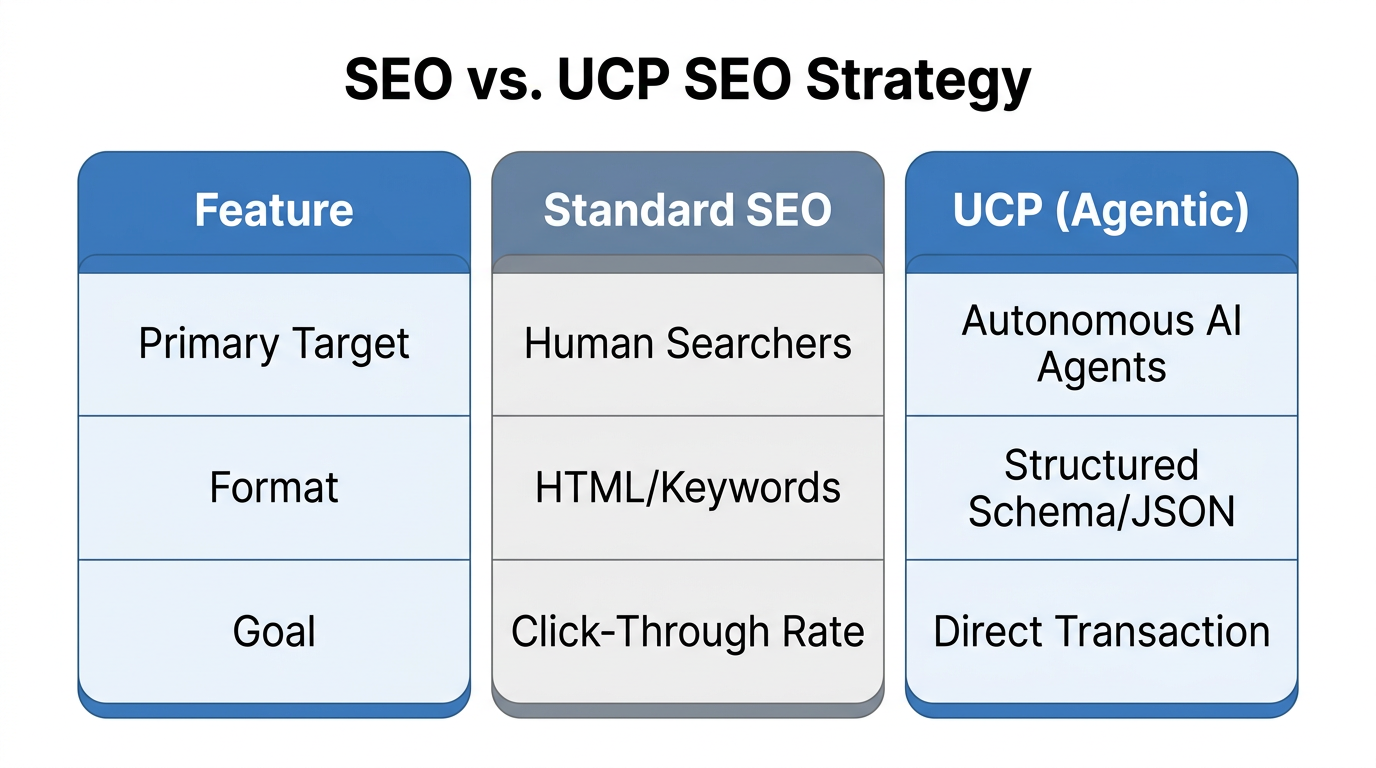
The Universal Commerce Protocol (UCP) is more than just a technical update; it is a fundamental restructuring of how products are discovered. In the old model, SEO was about keywords and backlinks designed to rank on a Search Engine Results Page (SERP). In the UCP era, SEO is about machine readability and direct checkout capabilities. AI agents do not "browse" a site; they ingest structured data and execute API calls.
When a store is UCP-compliant, an AI agent can identify product availability, verify shipping costs, and apply discount codes in milliseconds. This "headless" buying experience means your storefront is no longer a destination—it is a node in a vast commerce network. To thrive, Shopify AI agent optimization must focus on the integrity of your product feed rather than just the aesthetics of your landing page.
The Shift from Search Results to Direct Actions
- Zero-Click Conversions: Users no longer need to click through to your site; the transaction happens within the AI interface.
- Standardized Schema: UCP enforces a rigid data structure that ensures AI agents can compare prices and specs accurately across thousands of vendors.
- Automated Negotiation: Advanced agents are now beginning to negotiate prices based on real-time inventory levels, a process facilitated by Prisync's dynamic pricing algorithms.
Optimizing Your Shopify Product Feed for AI Agent Discovery
If an AI agent cannot interpret your data, your product does not exist. Optimizing for the future of Shopify distribution requires a move away from generic descriptions toward rich, attribute-heavy datasets. This is where Shopify Sidekick and other native AI tools become essential for maintaining data quality.
| Optimization Factor | Old Method (2024) | Agentic Method (2026) |
|---|---|---|
| Product Titles | Keyword stuffing for humans | Attribute-first syntax (Brand + Material + Utility) |
| Pricing | Static or manual updates | Dynamic Floor/Ceiling via Prisync |
| Inventory | Daily syncs | Real-time predictive forecasting via Stocky |
| Checkout | Multi-step human funnel | UCP-enabled direct API checkout |
To prevent "Garbage In, Garbage Out" (GIGO), merchants are increasingly using Luca AI to clean and unify their data before it reaches the UCP network. Feeding an AI agent messy spreadsheet data leads to distorted profit forecasts and missed opportunities. By ensuring your Stocky inventory levels are perfectly synced, you avoid the margin-killing costs of overselling or out-of-stock penalties in the UCP ecosystem.
Predicting Margin Impact: Automated Search vs. Social Traffic
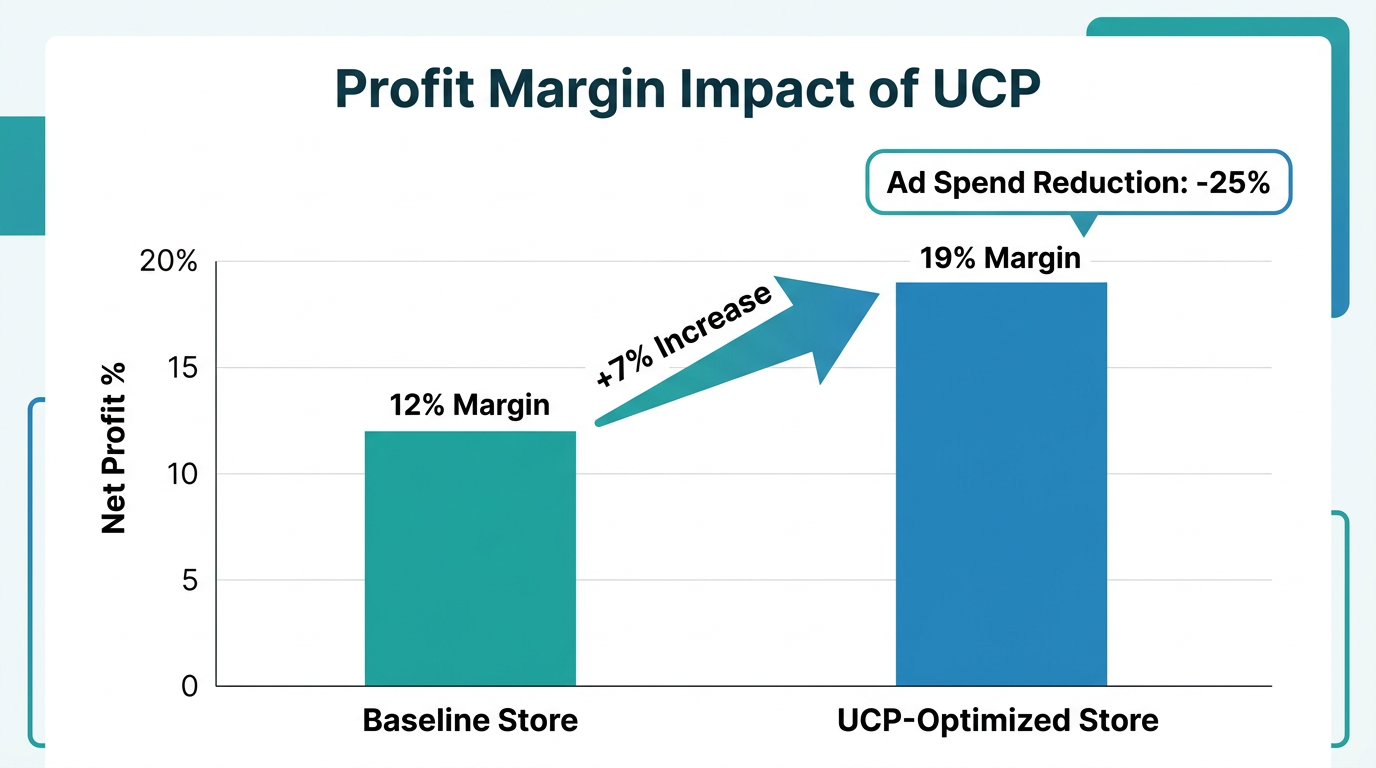
One of the biggest shifts in 2026 is the transition from ROAS (Return on Ad Spend) to POAS (Profit on Ad Spend). Traditional social traffic from platforms like Meta Ads often comes with high customer acquisition costs (CAC) and lower intent. In contrast, AI-driven search orders through the Universal Commerce Protocol typically exhibit higher intent but require razor-sharp pricing to win the "agent's choice."
Healthy margins in 2026 are defined by a 40%+ Gross Margin and a 10%+ Net Margin. Top performers are hitting 20% Net Margins by using AI to reduce operational overhead. However, any net margin below 5% is a danger zone due to rising shipping costs (now 8–15% of revenue) and payment processing fees. Tools like ProfitHelm are now essential for tracking True Contribution Margin—factoring in Stripe fees, returns, and 3PL costs automatically.
"Connected intelligence—where people, data, and digital workers operate together—is the only viable operating model for 2026." — Aruna Ravichandran, CMO at Cisco.
When an AI agent facilitates a sale, the "marketing cost" is often baked into the platform fee or the technological overhead of maintaining a high-quality UCP feed. This shift can actually improve margins by reducing the reliance on expensive, interruptive display ads. For instance, brands like Ekster have improved their Marketing Efficiency Ratio (MER) by 20% year-over-year by leveraging these automated channels.
Maintaining Brand Identity in an Era of Headless AI Buying
The greatest risk of Agentic Commerce is commoditization. If an AI agent is making the decision based on specs and price, how does a brand maintain its soul? The answer lies in influencer-driven discovery. While the AI agent completes the transaction, the human desire for the product is still sparked by content creators and community trust.
This is where platforms like Stormy AI become critical for the modern Shopify stack. By using Stormy AI to discover and manage high-quality creators on TikTok and Instagram, brands can ensure they remain at the top of the "human consideration set." When a user tells their AI agent to "buy that serum I saw on TikTok," the brand identity is preserved even if the user never visits the Shopify store. The agent handles the logistics, but the influencer handles the affinity.
The 2026 Shopify AI Implementation Playbook
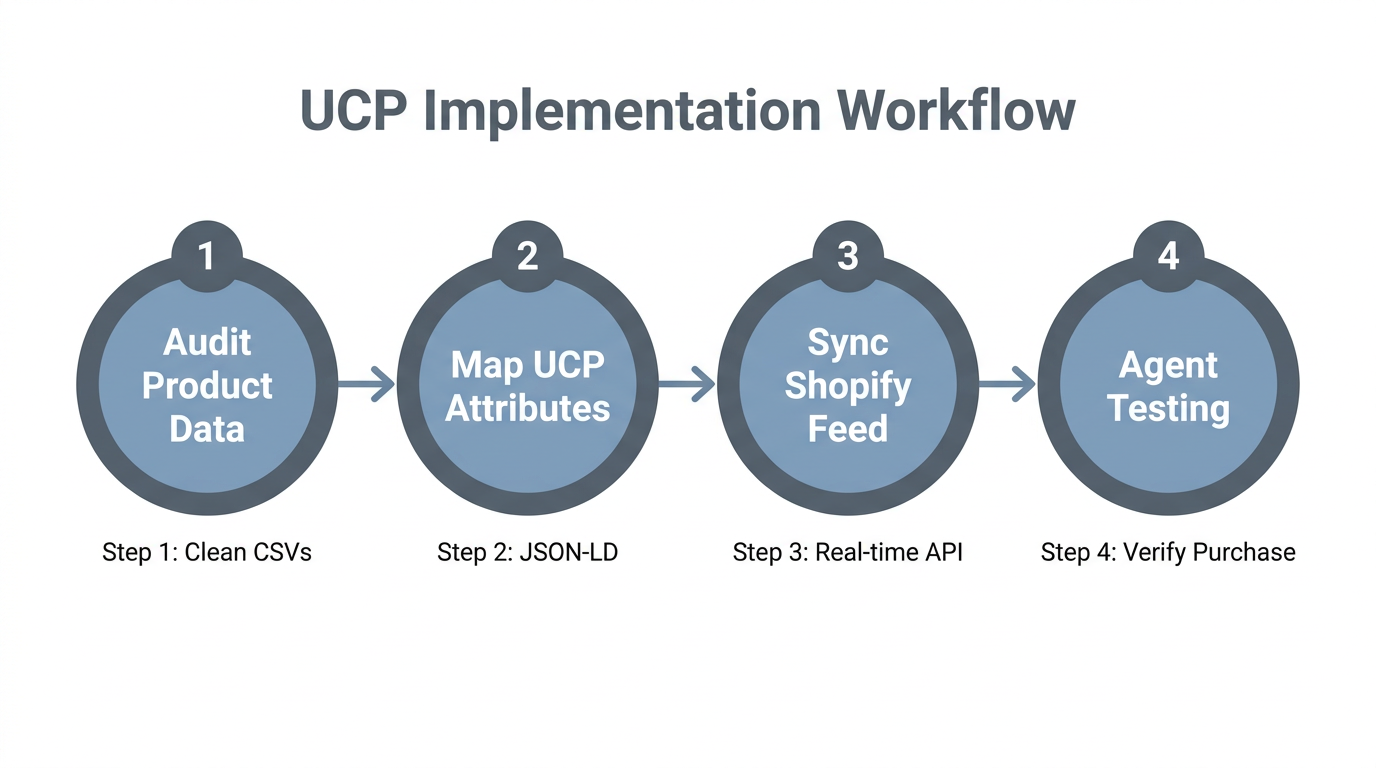
To win the Universal Commerce Protocol battle, follow this sequential strategy to optimize your store for automated commerce:
- Step 1: Audit Your Data Integrity: Use a tool like Luca AI to connect Shopify, Google Ads, and your accounting software like Xero. Ensure your "True Contribution Margin" is calculated at the SKU level.
- Step 2: Enable UCP Compatibility: Ensure your product schema is updated to the latest 2026 standards. This allows AI agents to read your inventory, variants, and shipping rules without friction.
- Step 3: Implement Dynamic Pricing: Set margin "floors" in Prisync. This ensures that even if an AI agent negotiates a price, you never sell at a loss.
- Step 4: Scale Content for Human Demand: Use Stormy AI to automate outreach to UGC creators. This keeps your brand relevant in social feeds, driving the initial intent that AI agents eventually fulfill.
- Step 5: Predictive Restocking: Use Stocky or Inventory Planner by Sage to predict demand 90 days out, reducing the 40% cost overhead associated with overstocking.
Conclusion: The Margin-First Future
Winning in 2026 requires a shift in perspective. The Universal Commerce Protocol UCP is not a hurdle; it is an opportunity to streamline distribution and reach customers through Agentic Commerce. By optimizing your Shopify store for AI agents, you can tap into a market where discovery is automated and intent is high. However, technology alone isn't enough. You must protect your net profit margins by moving from ROAS to POAS and maintaining a strong brand presence through creator partnerships managed on Stormy AI. Those who master the balance between AI efficiency and human brand affinity will be the leaders of the next decade of retail.