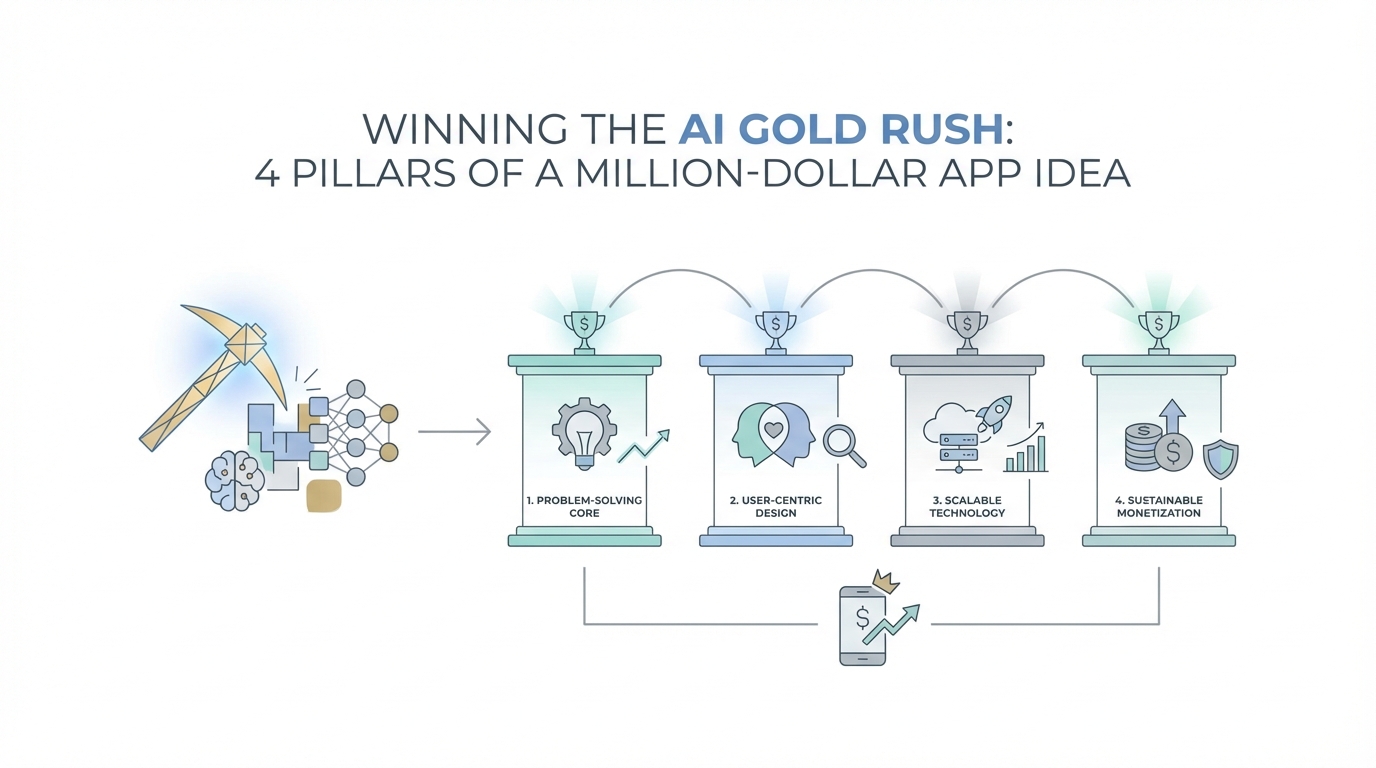
The energy at the recent world-record-breaking hackathon was nothing short of electric. Starting with a celebration led by the Chainsmokers and culminating in over 130,000 participants building more than one million new web apps in just 30 days, we have officially entered a new era. The barriers to entry for software development have been vaporized. As we navigate this AI gold rush, the question is no longer whether you can build an app, but whether you can build one that people actually need. This guide breaks down the four pillars of a million-dollar app idea, using the criteria that governed a $1,000,000 prize pool to help you identify profitable AI niches and master AI entrepreneurship.
The Strategic Pivot: Moving from AI Consumer to AI Creator
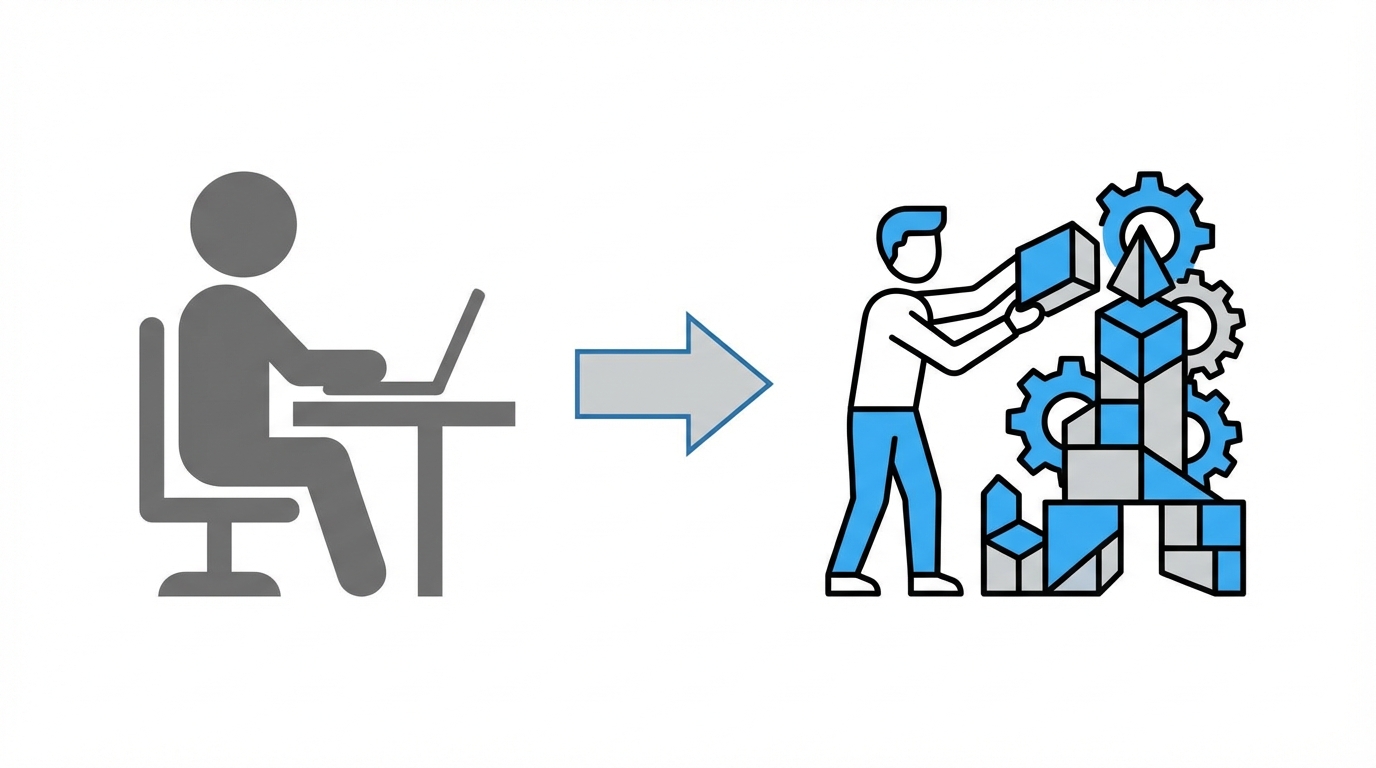
For the past year, most people have been consumers of AI, using tools to summarize emails or generate images. However, the real wealth in 2025 is being generated by those who move from the user seat to the builder seat. The hackathon proved that even those without deep coding backgrounds can now create full-stack applications. Builders on platforms like bolt.new reported that the ability to take an idea from their head to a functional website with a single prompt has changed the game entirely. To succeed in AI entrepreneurship, you must stop asking what AI can do for you and start asking what AI-powered solutions you can build for others.
Pillar 1: Why "Boring" Problems Lead to Profitable AI Niches
Many aspiring founders make the mistake of looking for "sexy" ideas like social networks or gaming platforms. However, the $1M hackathon winners demonstrated that the most profitable AI niches are often found in the most mundane industries. Look at EcoBolt, the fifth-place winner, which developed a comprehensive IoT monitoring system for agricultural environments. Agriculture isn't typically considered a high-tech playground, but the potential impact of monitoring crops via AI is massive. Similarly, QuinBot took fourth place by building a specialized CRM for commercial cleaning companies. By streamlining operations for a traditional service industry, they created a high-value tool that businesses are actually willing to pay for. When considering AI business ideas 2025, look for "boring" problems that are currently managed with messy spreadsheets or manual labor.
Pillar 2: The Judging Quadrant for AI Excellence
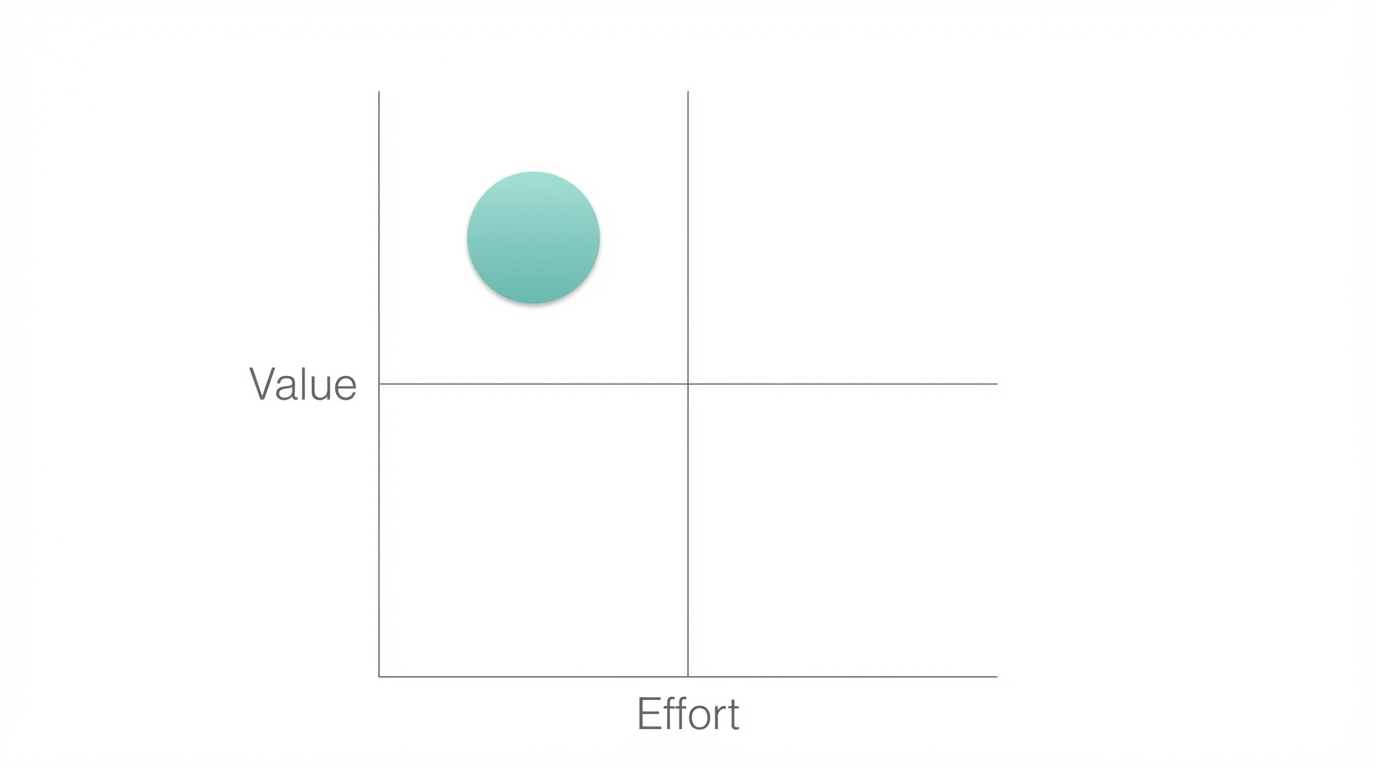
To win the AI gold rush, your product must stand up to the scrutiny of industry leaders. The hackathon's judging panel, featuring experts like Alex Albert from Anthropic and Logan Kilpatrick from Google AI Studio, used a four-part framework that every founder should adopt. First is potential impact: How big is the problem you're solving? Second is the quality of the idea: Is your solution unique or just another wrapper? Third is technical implementation: How well does the app actually work under the hood? Finally, design and user experience (UX): Is the product stunning and intuitive? Wake Coach, the second-place winner, excelled here by allowing users to scan groceries via camera and receive AI-powered meal plans with voice interaction. This seamless blend of high-tech and high-utility is the gold standard for anyone learning how to build an AI app.
Pillar 3: Democratizing Software: Building Without a CS Degree
One of the most inspiring aspects of the AI boom is the diversity of people reaching the finish line. We saw Zhang, a new mother with no prior software experience, build an AI mentor for other new moms because she felt there was no manual for parenting. We also witnessed Alex, a 12-year-old, build an AI therapist that speaks Gen Z slang to help peers dealing with burnout. These stories prove that AI entrepreneurship is no longer reserved for Silicon Valley engineers. By leveraging tools like Devpost to find inspiration and collaborative communities, non-technical founders are launching AI micro-SaaS products in weeks rather than years. The "why" behind your app—the personal struggle or lived experience—is often more important than the code itself.
Pillar 4: The "Build in Public" Strategy

Building a great app is only half the battle; you also need to build an audience. The hackathon saw builders like Serge from Toronto and Nemesh documenting their daily progress on Twitter/X. This "building in public" approach creates transparency, builds trust, and attracts early adopters before the product even launches. It also provides a support network during the "trough of sorrow" where many founders consider quitting. For those moving from MVP to growth, utilizing Stormy AI to find UGC creators can accelerate user acquisition by matching your app with influencers in specific AI or productivity niches, allowing you to scale your AI micro-SaaS guide into a full-scale business.
Playbook: Validating Your AI Business Ideas for 2025

Before writing a single line of code or entering a prompt, follow this 4-step framework to ensure your idea has million-dollar potential.
Step 1: Identify the Friction
Find a process that currently takes a human more than 10 minutes to complete. Whether it is health insurance planning (like HealthPlanAI) or managing API keys (like KeyHaven), friction is where the profit lies.
Step 2: Assess Technical Feasibility
Use platforms like ElevenLabs for voice or VoidZero-based tools to see if the current AI models can handle your specific task. If a model can do it at 80% accuracy today, it will likely be at 99% by next year.
Step 3: Define Your Unique Angle
Ask yourself: Why should this exist as an AI app rather than a simple database? Taylor Labs, the first-place winner, won because it didn't just "assist" with video editing—it aimed to be an end-to-end AI video editor, solving the hardest problem possible in the space.
Step 4: Source Your Initial Audience
Once you have a working prototype, you need users. Tools like Stormy AI can help you discover creators who already have the attention of your target demographic, allowing you to bypass expensive traditional advertising.
Conclusion: Your Place in the Gold Rush
The success of the world's largest hackathon proves that the AI era isn't just coming—it's here. Whether you are building an AI social worker like Ellis or a math-learning tool like Board Opposite, the tools to succeed are more accessible than ever. By focusing on boring problems, adhering to a high standard of design and impact, and building in the open, you can secure your place in the AI business ideas 2025 landscape. The gold rush is on, and for the first time in history, the only thing standing between you and a million-dollar app is the quality of your execution. Start building today.