In 2026, your most valuable customer isn't a human scrolling through a feed; it is an autonomous AI agent. We have officially entered the era of agentic commerce, where tools like Claude Code act as digital proxies for enterprise buyers and high-net-worth consumers. These agents don't browse websites; they scan APIs, parse schema, and make purchasing decisions in milliseconds based on machine-readable data.
The total MarTech market has ballooned to $222.53 billion this year, according to Fortune Business Insights, but the real story is the AI agent sector. Reaching $12.06 billion in 2026 with a staggering 45.5% CAGR, agents are no longer just writing emails—they are orchestrating entire commerce chains. For brands, the mission has shifted: if you aren't visible to the agent, you don't exist to the customer.
The Shift to Agent SEO: Optimizing for the Machine
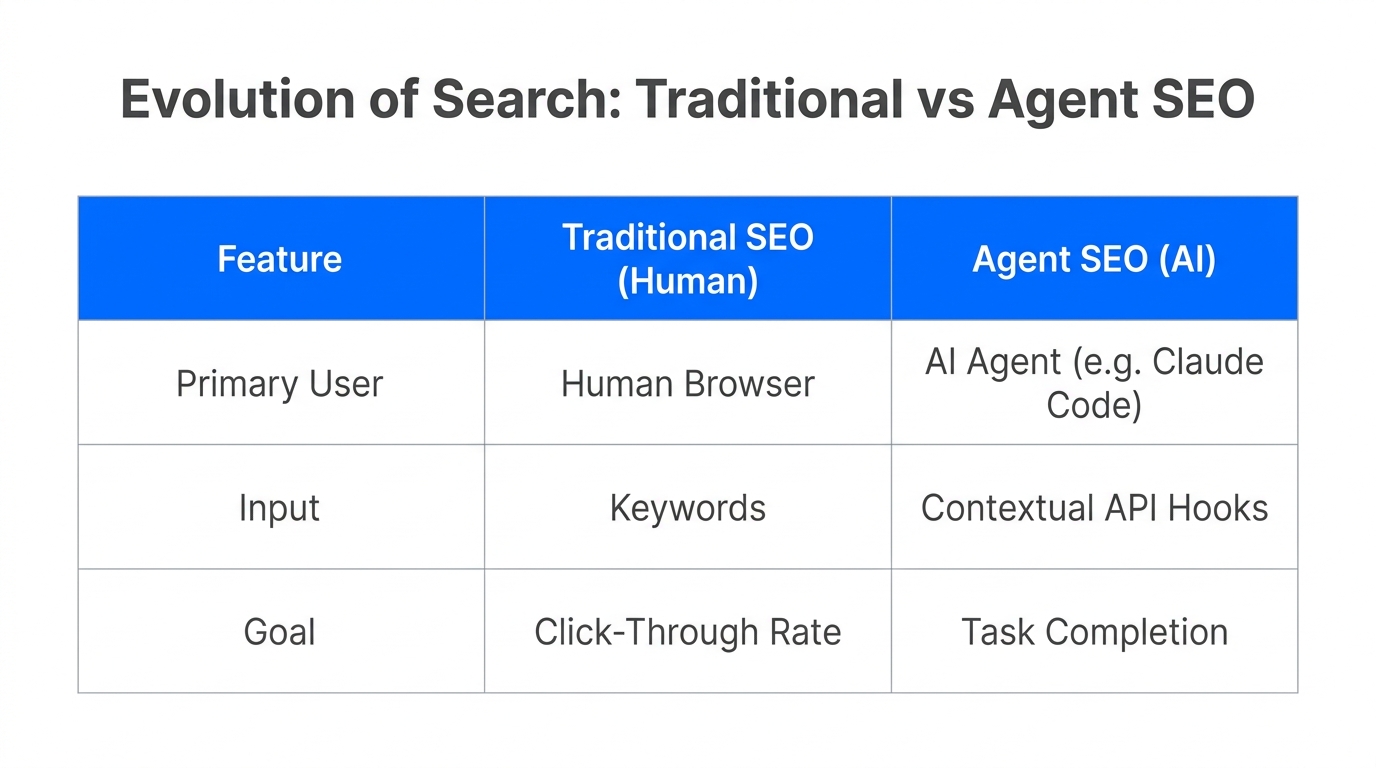
Traditional SEO was built on the premise of human intent—keywords, readability, and dwell time. Agent SEO 2026 focuses on machine-readability and API accessibility. When a user tells Claude Code to "Source the most reliable enterprise CRM with an MCP-compatible API and purchase three licenses," the agent isn't looking at your beautiful hero image. It is looking for structured data.
Currently, 79% of companies have adopted AI agents in some capacity, up from just 19% two years ago, as reported by MightyBot. This adoption is driving a 75% reduction in time spent on repetitive strategic analysis, according to data from Stormy AI. To capture this traffic, brands must provide seamless entry points for these bots.
| Feature | Traditional SEO (Human) | Agent SEO (Machine) |
|---|---|---|
| Primary Target | Human Browsers | AI Agents / LLMs |
| Content Format | HTML / Visuals | JSON-LD / APIs / Markdown |
| Discovery Method | SERP Ranking | Model Training & API Feeds |
| Metric of Success | Click-Through Rate (CTR) | Citation & Action Rate |
The Rise of GEO and AEO: Beyond the Search Bar
While Google still exists, the way information is synthesized has changed. Generative Engine Optimization (GEO) and Answer Engine Optimization (AEO) are the dual pillars of 2026 visibility. GEO focuses on making your brand the "favored choice" when a model like Claude 4.6 Opus synthesizes an answer. AEO focuses on becoming the direct, cited source that the agent pulls into its context window.
"The rigid martech stack is giving way to a composable canvas... where a unified data foundation replaces the integration plumbing." — Scott Brinker, ChiefMartec
To become the cited source, brands are utilizing the Model Context Protocol (MCP). This open standard, as highlighted by modelcontextprotocol.io, allows AI to connect directly to tools like Google Ads or Slack. If your product catalog is exposed via an MCP server, an agent running on Claude Code can query your inventory directly without ever visiting your homepage.
Claude Code: The New Enterprise Shopper
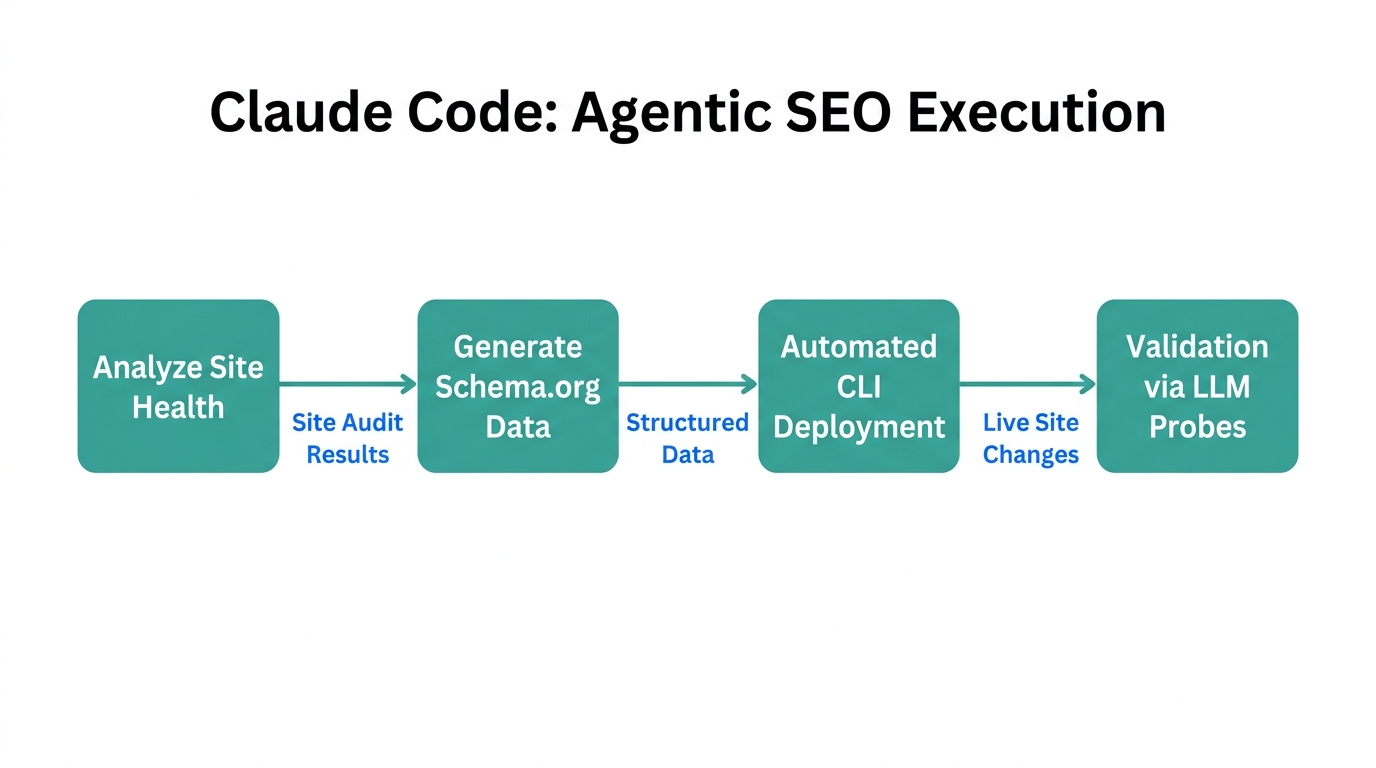
Claude Code has reached an annualized run-rate of $2.5 billion as of Q1 2026, serving over 300,000 business customers according to DemandSage. It is a command-line interface (CLI) that can execute code, manage files, and—crucially—call APIs. For enterprise marketers, Claude Code search optimization means ensuring your technical documentation and API endpoints are "agent-friendly."
Marketing teams are now building a "Marketing Automation Mesh." Unlike the old siloed stacks, this mesh is a decentralized network where agents navigate between tools like RudderStack for data and n8n for workflows. When an agent manages a brand's Google Ads via an MCP server like AdLoop, it makes micro-decisions based on real-time performance data without human intervention.
Case Study: How Verizon Mastered Agentic Triggers
A prime example of agentic success is Verizon. They implemented an agentic AI system to predict the reason for 80% of incoming calls before they were even answered. By analyzing customer data through a mesh architecture, the system routed users to agents with real-time, personalized promotion suggestions already loaded, as detailed by Visme.
This isn't just customer service; it's predictive agentic commerce. By anticipating needs through data triggers, Verizon essentially "optimized" its internal search so the AI agent could find the right solution for the customer before the customer even asked. This led to a significant jump in customer loyalty and conversion rates, similar to the 836% ROI achieved by Nike using similar dynamic messaging agents (The Smarketers).
"The Technical Marketer 2.0 doesn't write code; they orchestrate agents." — Christopher S. Penn, Chief Data Scientist at Trust Insights.
The Playbook: Optimizing for Agentic Commerce
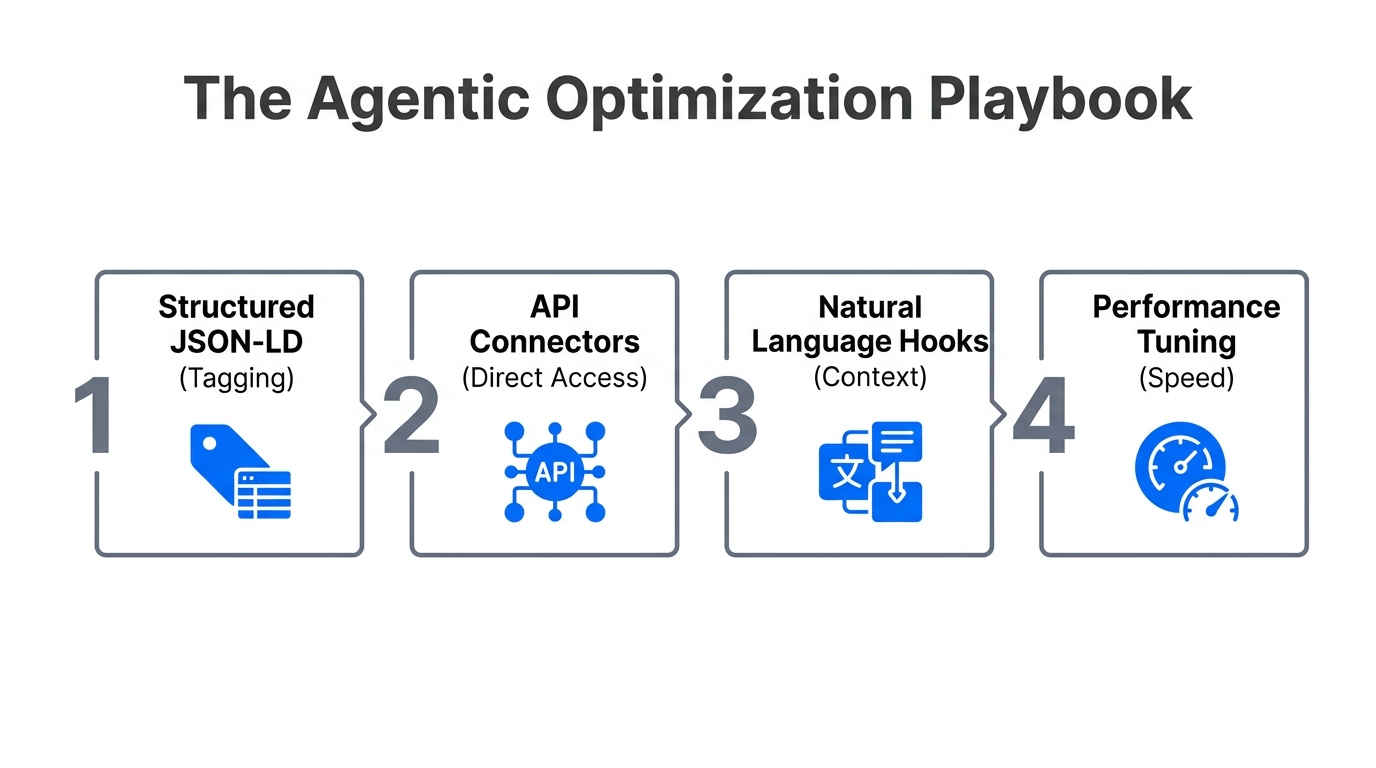
To win in 2026, your brand needs a technical framework that caters specifically to agentic discovery. Follow this 5-step strategy to optimize for Claude Code and other flagship models.
Step 1: Deploy a CLAUDE.md File
Agents like Claude look for a CLAUDE.md file in a project's root directory to understand the "rules of engagement." Brands should host a publicly accessible AGENT.md or CLAUDE.md on their developer portals. This file should contain your brand voice, ICP data, and most importantly, instructions on how the agent should interpret your product tiers (Medium).
Step 2: Optimize for MCP Connectivity
Ensure your product catalog is accessible via the Model Context Protocol. By creating an MCP server for your store, you allow Claude to fetch real-time pricing and availability. This is the 2026 equivalent of having a mobile-responsive website in 2012.
Step 3: Prioritize Machine-Readable Schema
Use advanced JSON-LD schema to mark up your content. Agents rely on structured data to verify facts. According to ALM Corp, agentic SEO tools focusing on structured data are generating 451% more qualified leads than traditional methods.
Step 4: Leverage Agentic Personalization Triggers
Implement behavioral triggers that agents can "see." For example, tools like MoEngage have seen a 405x increase in conversions by using agentic triggers to send personalized offers at the exact millisecond of intent.
Step 5: Monitor Agent Health (AgentOps)
Just as you have SEO audits, you now need AgentOps. Monitor how often agents are "hallucinating" your brand details or failing to parse your API. As Joao Moura, CEO of CrewAI, puts it: "AgentOps will reshape AI operations in 2026."
The Risks of the Agentic Frontier
While the rewards are high, the path is fraught with technical hurdles. Gartner predicts that 40% of agentic AI projects will be canceled by 2027 due to "data unreadiness" and spiraling token costs (RT Insights). Furthermore, only 16% of RevOps professionals currently trust their data accuracy enough to allow agents to execute "write" actions like adjusting ad budgets automatically.
There is also the "Context Trap." A single complex command in Claude Code can consume 150,000 tokens in one turn (SitePoint). Brands that do not provide concise, well-formatted technical documentation will find themselves being ignored by agents looking to save on token costs.
| Plan | Monthly Token Budget | Best For |
|---|---|---|
| Pro ($20/mo) | ~44k tokens / 5hr | Individual marketers |
| Max ($100/mo) | ~88k tokens / 5hr | Power users & growth leads |
| Team ($150/seat) | Centralized Config | Agencies & Enterprise |
Conclusion: Preparing for the Post-Search World
Winning at agentic commerce requires a fundamental rethink of what "content" actually is. In 2026, content is no longer a blog post; it is a high-fidelity data feed optimized for Generative Engine Optimization. By mastering Agent SEO and integrating with the Claude Code ecosystem through MCP servers, brands can ensure they remain the primary choice for the autonomous shoppers of the future.
Start by auditing your technical footprint. Is your data structured for a machine? Are your APIs ready for an orchestrator? The companies that answer "yes" today will be the ones cited as the standard by Claude 4.6 Opus tomorrow. For those looking to scale their influencer and UGC efforts alongside this AI shift, platforms like Stormy AI provide the discovery and outreach automation needed to stay ahead of the curve.