In the fast-moving landscape of 2026, the traditional quarterly market report is no longer just a lagging indicator—it is a liability. While your team spends weeks manually compiling PDFs on competitor pricing and feature releases, market conditions are shifting in hours. The emergence of Auto Research, a concept popularized by AI visionary Andrej Karpathy, has fundamentally altered how Go-To-Market (GTM) leaders gather, analyze, and act on information. We are moving away from static snapshots and toward a world of autonomous, living intelligence.
The Shift to Auto Research: From Manual Reports to 24/7 Dashboards
Discover why Andrej Karpathy's new Auto Research tool is a game-changer for market intelligence.
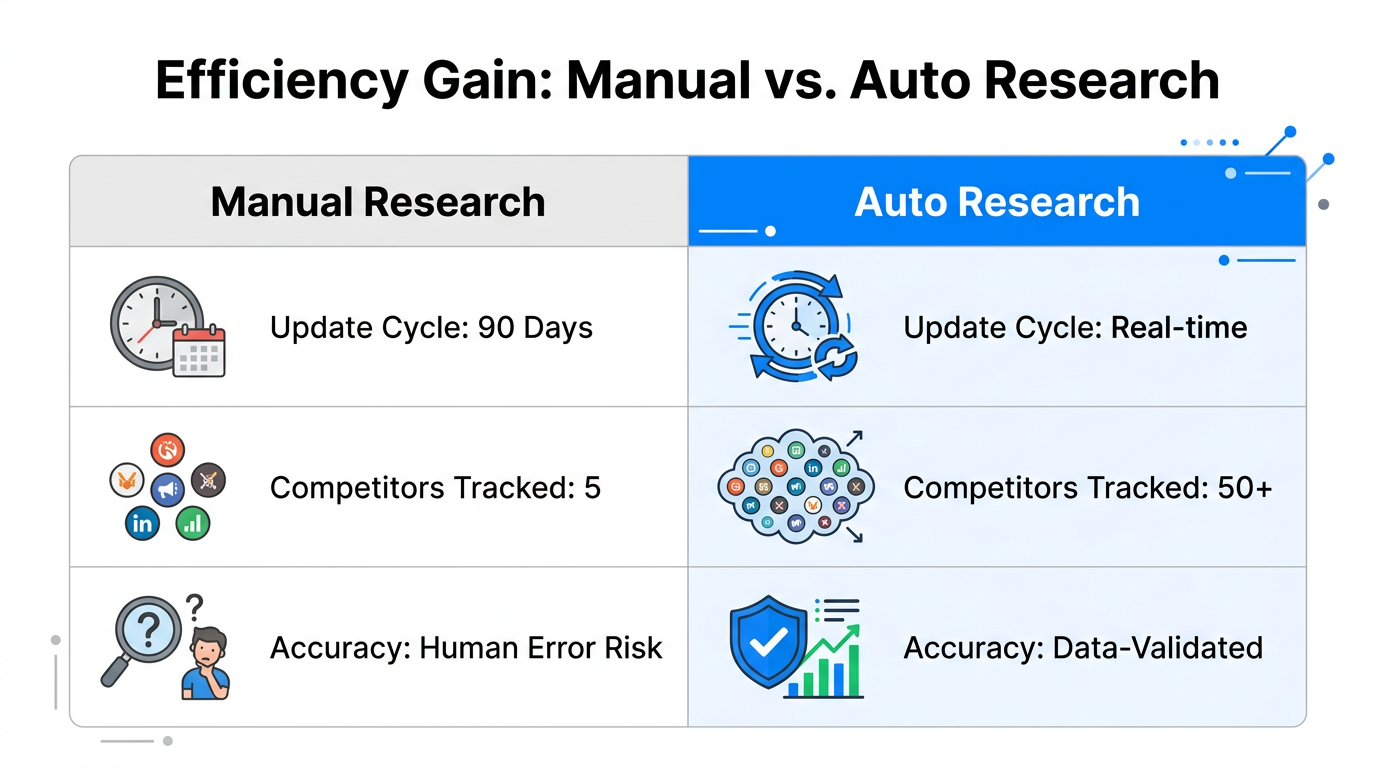
For decades, strategic business intelligence relied on manual human labor: analysts scouring websites, signing up for newsletters, and attending webinars to piece together a competitor’s roadmap. In 2026, this model has been replaced by the 'Auto Research' loop. As Karpathy describes it, Auto Research is like having a "super nerd robot intern" that works through the night, running experiments and gathering data without getting tired.
For a GTM leader, this means your Google Ads strategy or your sales talk tracks are no longer based on month-old data. Instead, an AI agent is constantly browsing LinkedIn, monitoring rival pricing pages, and analyzing GitHub commits to detect shifts in technical direction. This transition from manual to 24/7 automated competitor dashboards is the cornerstone of a modern go-to-market strategy 2026.
"Auto Research is a research bot that runs experiments for you while you sleep, tries lots of ideas fast, and keeps the winners."
Identifying Pricing Gaps and Feature Weaknesses Autonomously
One of the most potent applications of competitor intelligence automation is the ability to find "money problems" in real-time. By pointing an Auto Research loop at your competitors, you can identify precisely where their pricing models are failing or where their feature sets have gaps that your product can exploit. For example, Shopify CEO Toby Lütke has noted that Auto Research works exceptionally well for optimizing software and identifying market opportunities.
Instead of guessing why a prospect chose a rival, an agent can scrape thousands of user reviews on platforms like G2 or Capterra, cross-reference them with the competitor’s latest pricing updates, and deliver a report on exactly where they are vulnerable. This allows GTM teams to pivot their messaging instantly, highlighting your product's strengths against the rival's specific, newly-discovered weaknesses.
| Feature | Traditional Manual Research | 2026 Auto Research GTM |
|---|---|---|
| Frequency | Monthly or Quarterly | Real-time / 24/7 |
| Data Depth | Surface-level summaries | Deep-dive technical & sentiment analysis |
| Actionability | Delayed reaction | Instant pivots and automated alerts |
| Cost | High (Expensive Analyst Hours) | Low (Cloud GPU Credits) |
The 'Living Memo' Framework: Delivering High-Impact Briefs
Learn how to maintain an evolving living memo by automating your competitive research loop.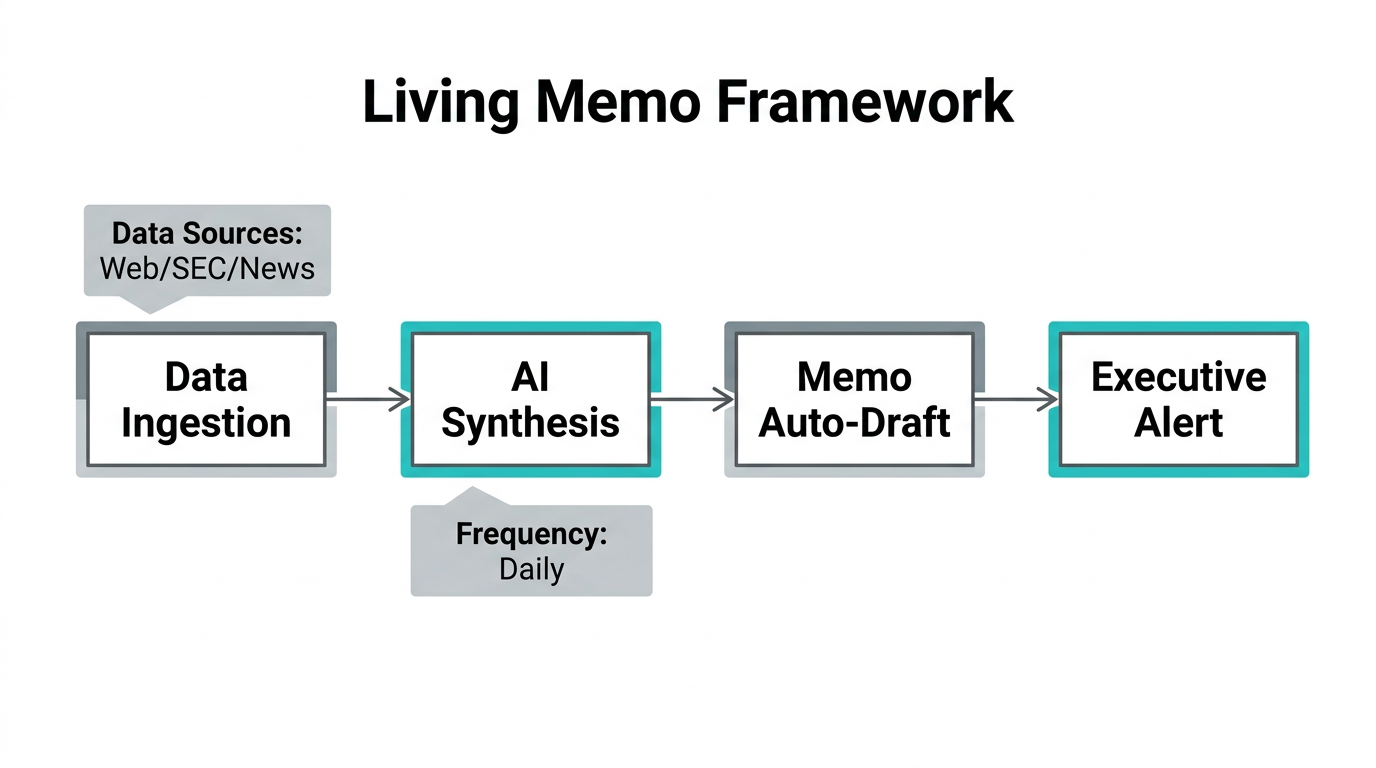
The output of research should not be a document that gathers digital dust. GTM leaders are now adopting the "Living Memo" framework. This is a dynamic, evolving document that updates itself as new information enters the ecosystem. Using tools like Notion or internal dashboards, these memos aggregate data from your Auto Research agents and summarize it into strategic business intelligence that stakeholders can access at any time.
This approach is particularly valuable for executive teams who need the "bottom line" without the fluff. By the time an executive opens their laptop in the morning, the agent has already read through SEC filings, product updates, and social media sentiment from the previous 24 hours, summarizing the three most important things the company needs to do today to maintain its competitive edge.
Leveraging Agent Loops for M&A and Strategic Due Diligence
Use Auto Research to analyze filings and product risks for high-stakes business due diligence.When it comes to mergers, acquisitions, or pivoting your entire product line, the stakes are incredibly high. Traditional due diligence is notoriously slow and often misses technical debt or subtle market shifts. Using agent loops, GTM leaders can run technical and market due diligence at 100x the speed of a human team. This involves pointing agents at a target company's entire digital footprint—documentation, codebase (if accessible via AgentHub), and public customer feedback.
This automated scrutiny can uncover "red flags" in a competitor’s product quality or highlight a hidden segment of loyal users that makes an acquisition target more valuable than it appears on paper. For instance, platforms like Stormy AI enable brands to perform this same level of due diligence on influencers and creators, vetting engagement quality and audience authenticity autonomously before a single dollar is spent on a campaign.
"Clinical trial design is itself kind of like a hyperparameter search... an agent swarm could optimize protocols on small proxy experiments faster and for far less money." — Morgan Linton
The GTM Playbook: Setting Up Your First Auto Research Loop
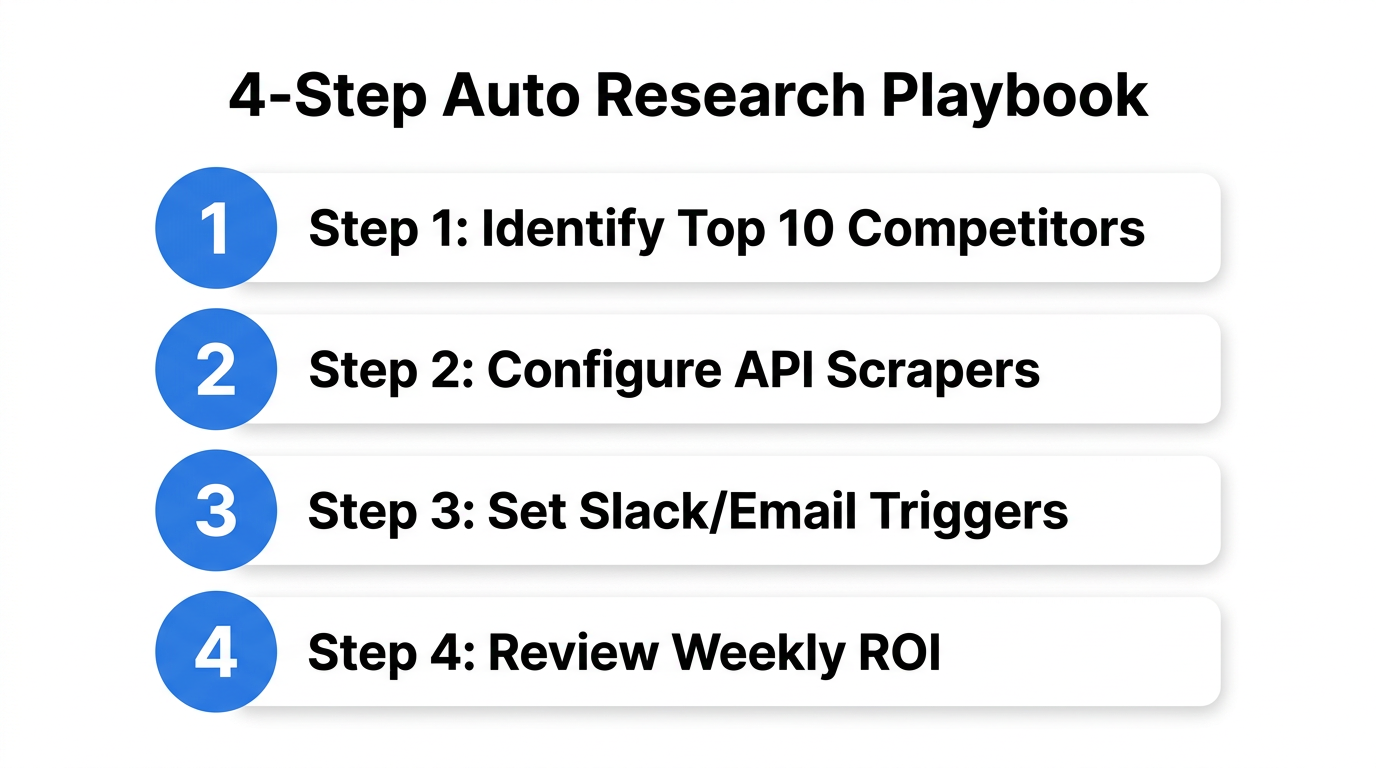
Transitioning to an automated intelligence model doesn't require a massive engineering overhaul. Follow these steps to build your own "Intelligence Lab":
- Define a Clear Task: Start narrow. For example: "Monitor the top 5 competitors for our core product and generate a weekly report on pricing changes and new feature launches."
- Provide Access: Give your agent access to the web, specific industry documents, and relevant HubSpot CRM data to understand who your competitors are winning against.
- Run the Loop: Set the agent to plan its search, act on it (browse, scrape, analyze), read the results, and update its internal model.
- Review and Summarize: Use a tool like Claude Code to help summarize the raw data into a natural-language brief for your team.
- Deploy Results: Turn the best insights into automated alerts for your sales team or new ad creative angles in your TikTok Ads Manager.
Infrastructure: Getting Started with Cloud Intelligence
Get the technical breakdown on hardware requirements and cloud-based setups for running Auto Research.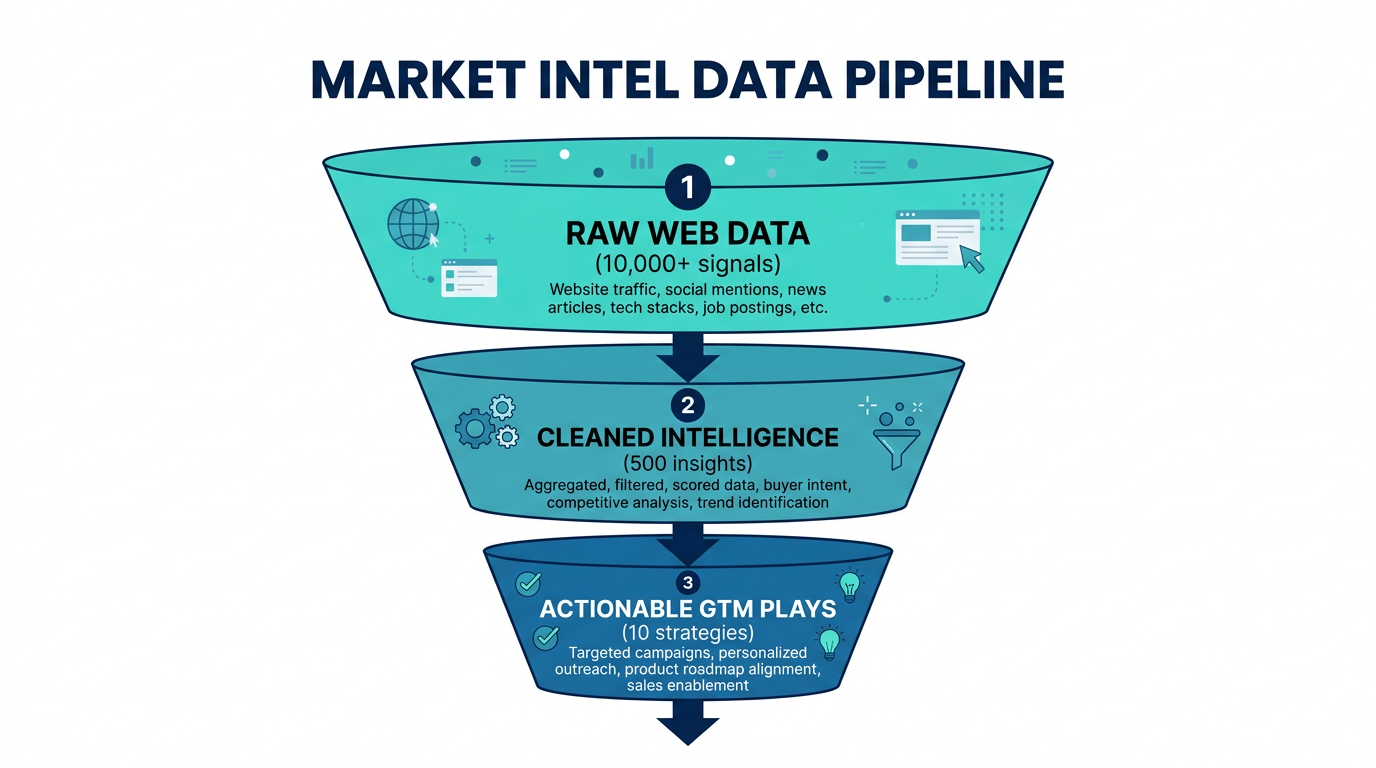
Running high-level Auto Research loops requires specialized compute power. While some engineers use local NVIDIA chips, most GTM organizations find it more scalable to use cloud-based GPU services. Platforms like Lambda Labs, RunPod, and Google Colab allow you to rent the necessary hardware (like the H100) to run these agents without a massive upfront investment in physical hardware.
By leveraging these tools, even a small GTM team can perform the research of an entire enterprise department. As Stormy AI has demonstrated in the creator marketing space, AI-powered discovery and management is no longer a luxury—it is the baseline for efficiency in 2026. Whether you are vetting influencers or monitoring global SaaS competitors, the goal is the same: move faster than the market.
Conclusion: The Always-On Advantage
In 2026, the gap between the leaders and the laggards is defined by intelligence velocity. Those who rely on manual, static research will find themselves perpetually reacting to old news. Those who embrace an Auto Research strategy will benefit from a constant stream of market research trends 2026, allowing them to anticipate competitor moves before they even happen.
The tools are here, the blueprints have been laid by Karpathy and other pioneers, and the cloud infrastructure is ready. The only question for GTM leaders is whether you will continue to build on yesterday's data, or if you will let your agents build your 2026 success story while you sleep.