When founders think about how to launch a consumer app, the standard playbook almost always starts with a landing page and a waitlist. We’ve been told for a decade that a growing list of emails is the ultimate signal of product-market fit. But for Dan, the founder of Massive, a consumer app currently generating $2 million in Annual Recurring Revenue (ARR), that traditional wisdom proved to be a expensive distraction. Massive uses AI to fill out job applications on autopilot, but its path to success didn’t come from a perfectly nurtured email sequence. It came from a contrarian app validation framework that favors immediate paid validation over passive interest.
The False Signal of the Waitlist

The allure of a waitlist is psychological. It feels like progress. You see the numbers tick up in your database and assume you’ve built something people want. However, Dan’s experience reveals a harsh reality: waitlists are useless for predicting actual revenue. When Massive first launched, they successfully built a waitlist of 40,000 to 50,000 people through early buzz. They expected a massive spike in revenue on launch day. Instead, they saw a conversion rate of roughly 0.5%. Most people who signed up for the waitlist had forgotten why they were there, and even fewer were willing to open their wallets when the paywall finally appeared.
The problem with a waitlist is that it only measures curiosity, not commitment. In the world of mobile app user acquisition, the only metric that truly validates an idea is a completed transaction. If you are following a product market fit for startups guide, you should prioritize getting users to pay for even a skeleton version of your product immediately. As Dan notes, it is much harder to get someone to pay than it is to get them to sign up for a list, but that friction is exactly what you need to determine if your solution is a must-have or a nice-to-have. Waiting months to realize your 50,000-person list won't convert is a mistake that can kill a startup before it even begins.
The LinkedIn Smoke Test: Validating via Virality
Before Massive was a $2M ARR company, it was a pivot. Dan and his team had already raised $3 million from VCs for a previous idea that wasn't working. When an engineer suggested using GPT-3 to automate job applications, Dan was skeptical. To prove it was a "dumb idea," he decided to conduct a smoke test on LinkedIn. At the time, he only had about 500 connections. He posted a simple question: "If I built a tool that used AI to fill out job applications, would anyone want it?"
The post didn't just get traction; it exploded. It generated 8 million impressions and over 5,000 comments. This organic reach provided a level of validation that no private waitlist could offer. It showed that the pain point—the absolute misery of the modern job search—was universal. This is a critical component of a modern app growth marketing strategy: use platforms where your target audience already congregates to test hooks before writing a single line of code. If a raw text post can’t get people excited on LinkedIn, a high-production video or a complex app probably won’t either.
Tinder for Jobs: Positioning for Instant Clarity
One of the biggest hurdles in how to launch a consumer app is explaining what it actually does. Founders often get bogged down in technical jargon or high-level value propositions like "optimizing your career trajectory." Massive found success by leaning into a high-clarity hook: "Tinder for Jobs." This simple analogy does the heavy lifting of explaining the user experience. You swipe, you match, and the "boring stuff" happens automatically. When you say "Tinder for Jobs," people get it in three seconds. When you say "AI-powered job search automation platform," you've already lost them.
This clarity is essential for conversion. In Dan’s experience, simplicity in messaging not only helps your audience understand the product but also increases reply rates from creators and influencers. If a creator can’t explain your app in the first five seconds of a video, your mobile app user acquisition costs will skyrocket. Whether you are running ads on Meta Ads Manager or testing organic content, your positioning must be visceral and immediate. If you can’t describe your app as "X for Y," you might need to rethink your core hook.
The Validation Playbook

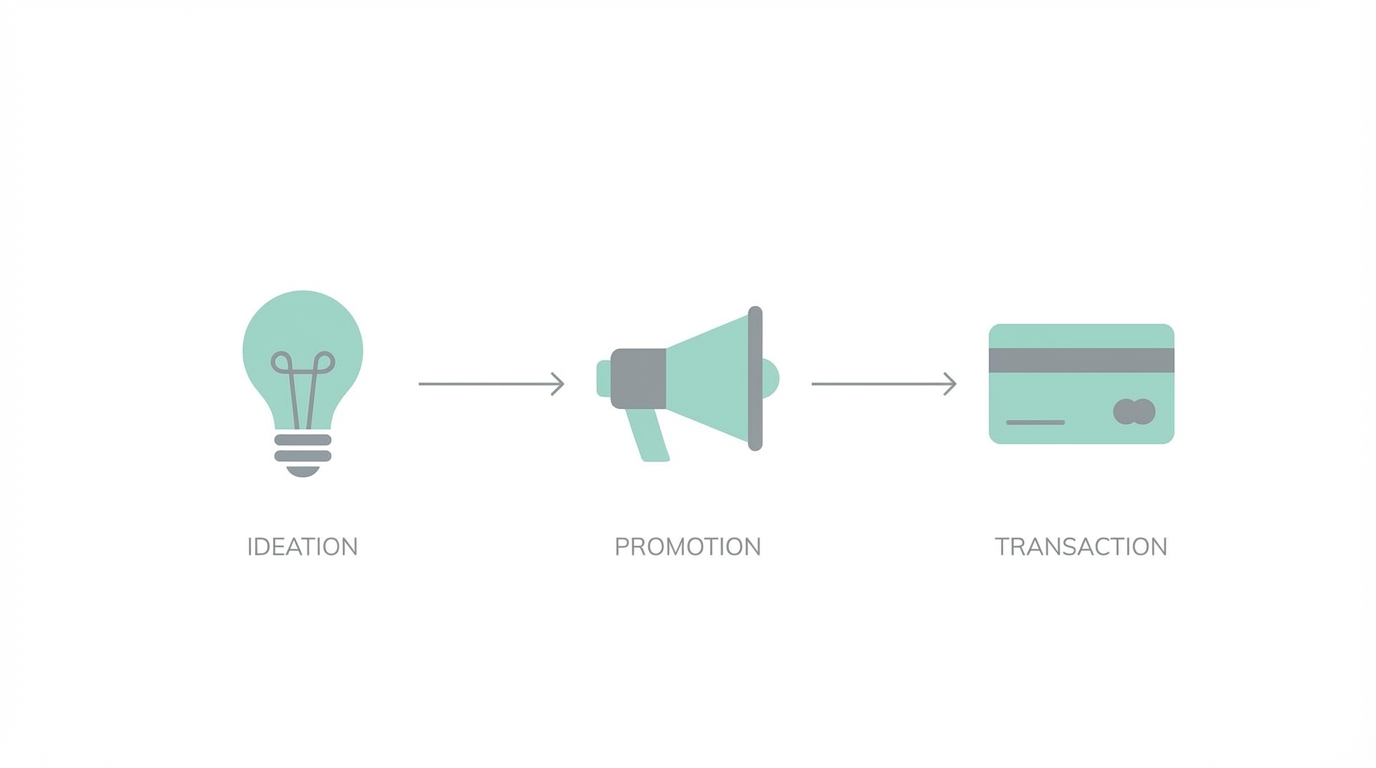
If you have a new app idea, don't spend six months in development. Instead, follow this app validation framework to see if people will actually pay for it. This playbook is designed to test the viability of a consumer subscription app with minimal waste.
Step 1: Define a Super-Tight Value Proposition
Identify the single most painful part of a process. For Massive, it wasn't finding jobs; it was the repetitive task of filling out forms. Your value prop should be a direct answer to a frustrating problem. Use a tool like Stormy AI, an all-in-one AI search engine, to see what kind of content is currently resonating with your target demographic and what problems they are complaining about in the comments.
Step 2: Allocate a $2,000 Influencer Budget
Skip broad User-Generated Content (UGC) campaigns initially. UGC takes too long to iterate. Instead, find a handful of influencers who already have consistent views and a loyal audience using the natural-language search in Stormy AI. Offer them a small fee to test a specific message. You aren't looking for a viral hit yet; you are looking for proven distribution. Does this message convert their followers into paying subscribers? If you spend $2,000 and get zero subscriptions, the problem is likely your product or your hook, not the distribution.
Step 3: Force a Hard Paywall
Do not offer a "free forever" tier during validation. To achieve product market fit for startups, you need to know if the value you provide exceeds the price you're asking. Use Superwall to quickly iterate on your paywalls and test different price points. If people aren't willing to pay $10 or $20 a month for the solution, you haven't solved a big enough problem yet.
Step 4: Analyze the Conversion Data
Watch your revenue metrics in Stripe or your app analytics platform. You can also use Stormy AI to track individual videos and monitor views, likes, and engagement in the Post Tracking section. If you see a spike in subscriptions following an influencer post, you have a signal. If you only see "app installs" with no revenue, you have a hobby, not a business.
Mastering Audience Targeting: LinkedIn vs. Indeed
A fascinating discovery in Massive’s app growth marketing strategy was the impact of platform-specific language on audience quality. They found that a video starting with "Stop using LinkedIn to apply for jobs" converted at a high rate. However, using the exact same video format but changing the hook to "Stop using Indeed" resulted in almost zero conversions. Why? Because LinkedIn users typically represent white-collar workers who are willing to pay for automation to save time. Indeed, in this specific context, skewed toward blue-collar roles where the application volume is lower and the willingness to pay for a subscription is significantly decreased.
This level of nuance is why mobile app user acquisition is as much about psychology as it is about creative. You must call out the characteristics of your audience in the first three seconds. If you are targeting marathon runners with tight hips, your ad should say exactly that. Dan points to the Yoga Body ad account as a gold standard. Their ads are incredibly specific: "If you are running more than 10 miles and have tight hips, here is why." This specificity builds immediate trust. Even if your checkout process is clunky, users will "break down walls" to pay you if they feel you truly understand their specific pain point.
Scaling Beyond Validation


Once you have validated your idea, the transition from five-figure MRR to six-figure MRR is a matter of pure execution. Dan warns against the "research loop" that many indie hackers fall into. They spend 90% of their time spying on competitors or reading about hacks on Hacker News and only 10% of their time actually shipping. To reach millions in revenue, you have to be willing to fail 80% of the time.
For Massive, scaling meant doubling down on what worked: paid ads, UGC, and influencers. When you reach a point where you are generating 3 to 4 million views per week, you need robust systems. Using platforms like Stormy AI allows founders to find and manage creators at scale and track every interaction in a dedicated creator CRM. You can even set up an autonomous AI agent in Stormy AI that discovers, outreaches, and follows up with creators on a daily schedule—fully automated while you sleep. This is where you move from "taking shots on goal" to a repeatable system of acquisition. Scaling also involves aggressive pricing changes. Massive actually doubled its revenue simply by adjusting its subscription tiers—a move many founders are too afraid to make because they fear losing users.
The Ethics of Growth: Avoiding the Grey Hat Trap
As you scale your app growth marketing strategy, there is a temptation to use "grey hat" tactics. Dan highlights a trend where companies use misleading UGC—such as actors pretending to have landed a job using an app when they haven't. Some even rip viral layoff videos and add their own commentary to steal engagement. While these tactics might drive short-term views, they are often illegal under FTC guidelines and ultimately destroy the long-term reputation of a brand. Building a sustainable $2M+ ARR business requires a product that actually works. If you rely on deception to get users into the funnel, your churn will eventually outpace your acquisition.
Instead of copying deceptive tactics, focus on copying successful formats. If a specific "discovery" style video is going viral for a competitor, replicate the format with your own authentic story. Authenticity in micro-expressions and delivery is often the difference between a video getting 300 views and 1.7 million views. High-quality mobile app user acquisition is about finding the intersection of a proven viral format and a genuine solution to a user's problem.
Conclusion: Building for the Long Haul
The journey to $2M ARR isn't about finding a single "hack." It’s about a relentless app validation framework that prioritizes honesty and cash flow over vanity metrics. Ditch the waitlist. Instead, find your "Tinder for X" hook, spend your first $2,000 on influencers with proven distribution, and force a paywall to see who really cares. Whether you're using Google Ads for search intent or Apple Search Ads to capture high-intent users, the goal remains the same: solve a painful problem for an audience that is willing to pay. If you give a sh*t about your product and your users, you will eventually find the distribution channel that works. Now, stop researching, and start executing.