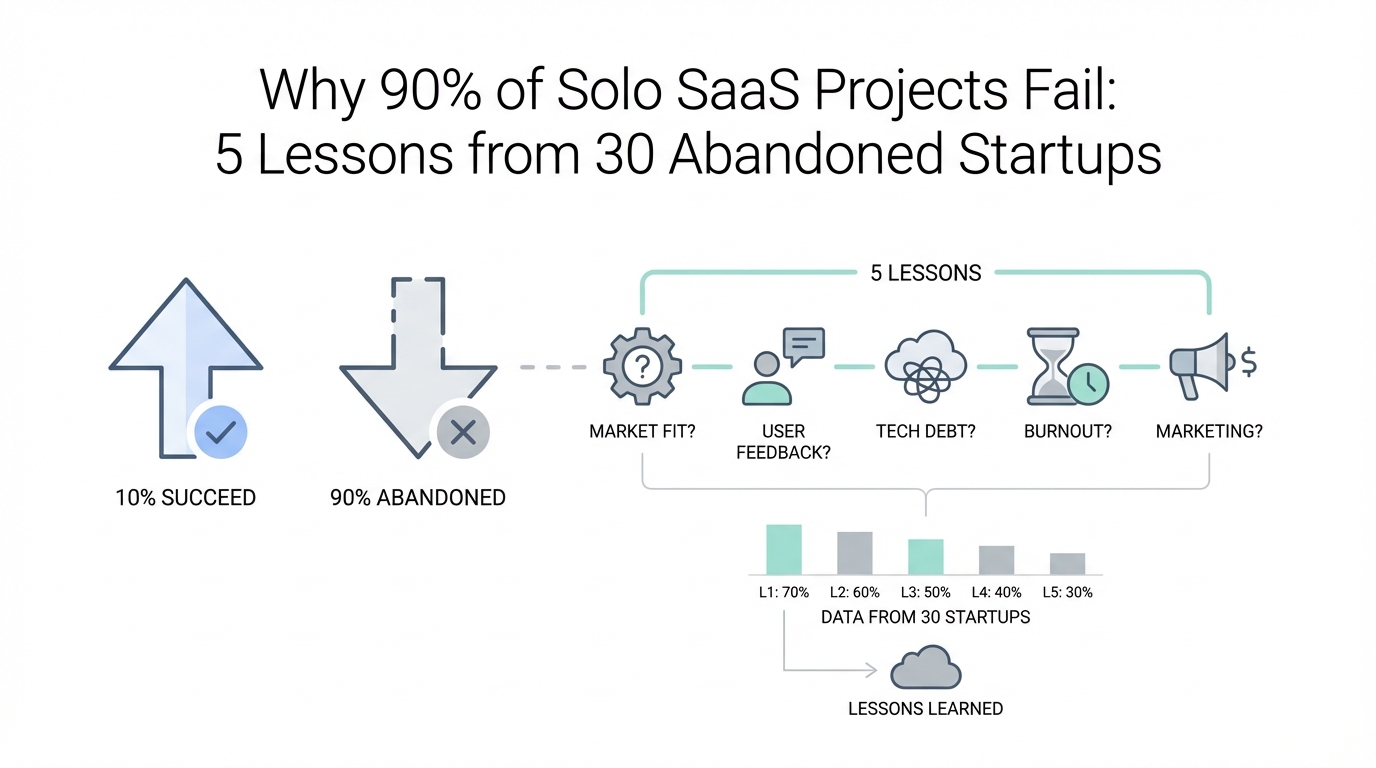
Why 90% of Solo SaaS Projects Fail: 5 Lessons from 30 Abandoned Startups
Success in the world of software-as-a-service (SaaS) is often portrayed as a linear path from a "lightbulb moment" to a multi-million dollar exit. However, data from Failory suggests that roughly 90% of startups fail, with solo founders facing an even steeper uphill battle. After analyzing 30 abandoned projects on platforms like Indie Hackers, several patterns emerge that explain why most developers never see their first $1,000 in monthly recurring revenue (MRR).
1. Building for a Problem That Doesn't Exist
Many developers fall in love with a technical challenge rather than a customer problem. Without validation on Product Hunt or community forums, you might spend six months building a feature-rich platform that nobody wants to pay for. Successful founders use the "lean" approach, often starting with a simple landing page and using Stormy's AI search to find niche influencers across TikTok, Instagram, and YouTube who can provide early feedback on a product concept before a single line of code is written.

2. The Distribution Gap
The "build it and they will come" mentality is the fastest way to join the 90% failure rate. In an era where Google Ads and Meta Ads costs are skyrocketing, solo founders need a repeatable, low-cost growth engine. While legacy tools like Tagger or Julius were built for massive agencies, modern founders need AI-native solutions. Integrating influencer marketing early is key, but it requires thorough influencer vetting and fake follower detection via Stormy AI to ensure you are reaching real customers and not bot farms.
3. Over-Engineering the Technical Stack
It is easy to get distracted by the latest technologies, such as Vercel, Supabase, or complex AWS configurations. While these tools are excellent for scaling, the primary goal of a solo SaaS is to find product-market fit. Spending weeks on a custom dashboard instead of using a ready-made creator CRM to manage your early beta testers and partners is a common mistake that leads to burnout before the product even launches.
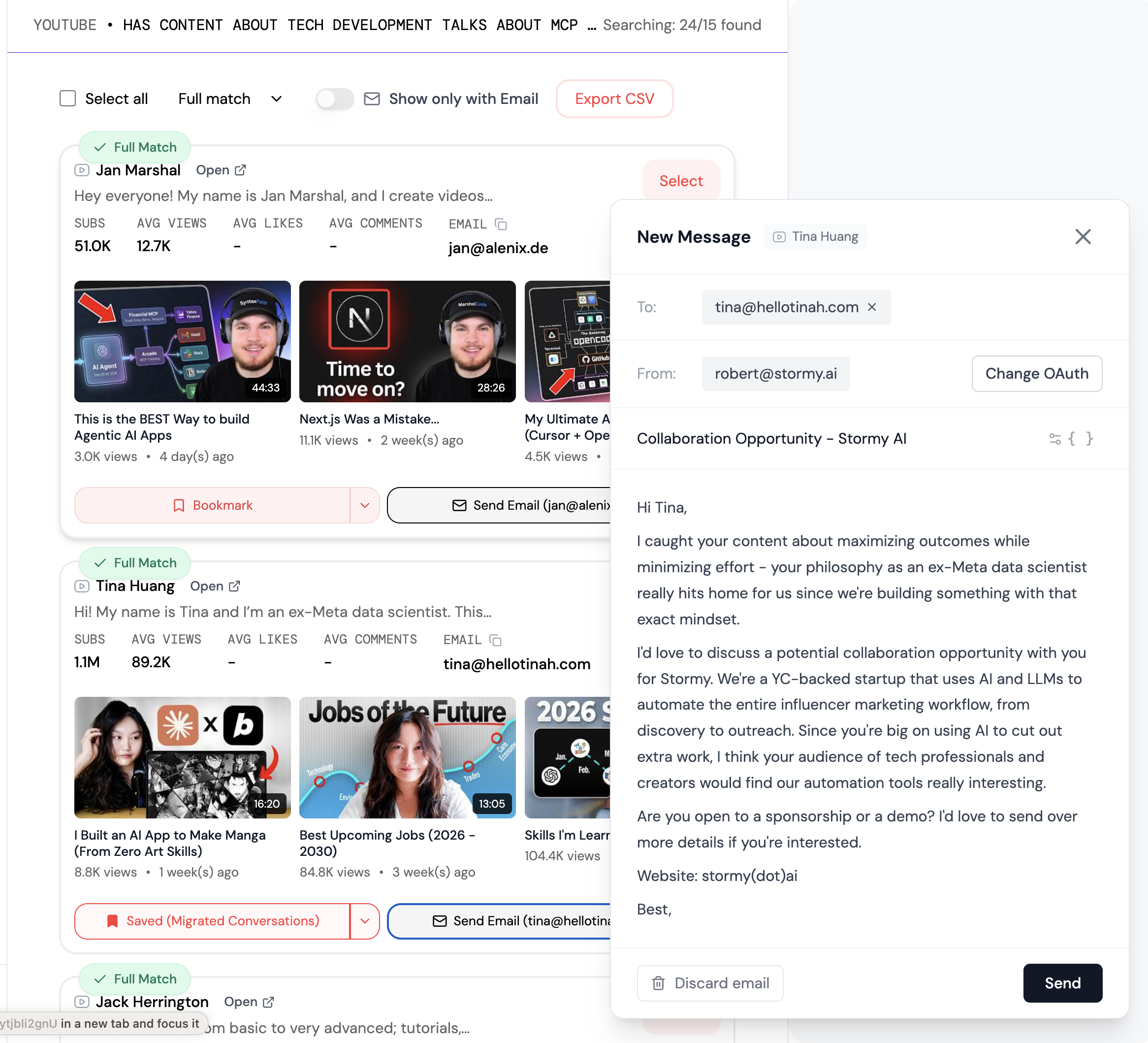
4. Poor Outreach and Manual Follow-Ups
Solo founders have a finite amount of time. Manually searching for potential partners on LinkedIn and sending individual emails is not scalable. Many of the 30 abandoned projects failed because the founders couldn't keep up with the networking required to grow. To solve this, savvy entrepreneurs now set up an autonomous AI agent that discovers, outreaches, and follows up with potential brand advocates on a daily schedule, ensuring the growth engine never stops running.
5. Lack of Data-Driven Iteration
Finally, projects often fail because founders don't know what is working. They might get a spike of traffic from Reddit or a mention on YouTube, but they fail to track the long-term impact. Using Stormy AI for post tracking and analytics allows you to monitor which videos and creators are actually driving engagement, helping you double down on the channels that generate revenue rather than just vanity metrics.
By shifting focus from pure development to automated distribution and data-backed marketing, solo founders can significantly beat the odds and build a sustainable SaaS business.