The traditional marketing landscape is undergoing a seismic shift, moving away from bloated departments toward lean, autonomous systems. If you have spent any time on tech-forward corners of social media lately, you have likely encountered the term "vibe coding"—the act of using natural language and AI tools to build software without deep technical knowledge. But there is a more profound revolution happening in the growth space: vibe marketing. This new paradigm isn't just about using AI to write a caption; it is about deploying AI marketing agents and AI agent swarms to handle the execution of entire campaigns, while a human "orchestrator" focuses on high-level taste and strategy.
Defining Vibe Marketing: The Intersection of Coding and Strategy

To understand vibe marketing, we must first look at its predecessor, vibe coding. Tools like Bolt, Replit, and Lovable have democratized software development, allowing anyone with a clear "vibe" or vision to prompt a functional application into existence. Vibe marketing takes this same philosophy and applies it to growth. It is the combination of vibe coding tools with workflow automation platforms to build, launch, and optimize marketing campaigns at a speed that was previously impossible.
Instead of manual labor, vibe marketing utilizes tools like Gumloop, n8n, and Manus to create autonomous loops. A vibe marketer doesn't just "do" SEO or "do" social media; they build an autonomous marketing system that monitors Reddit, scrapes trending topics, generates content, and outreaches to potential partners while they sleep. It is the shift from being an individual executor to becoming an orchestrator of automated systems.
The Three Pillars of the Vibe Marketing Revolution
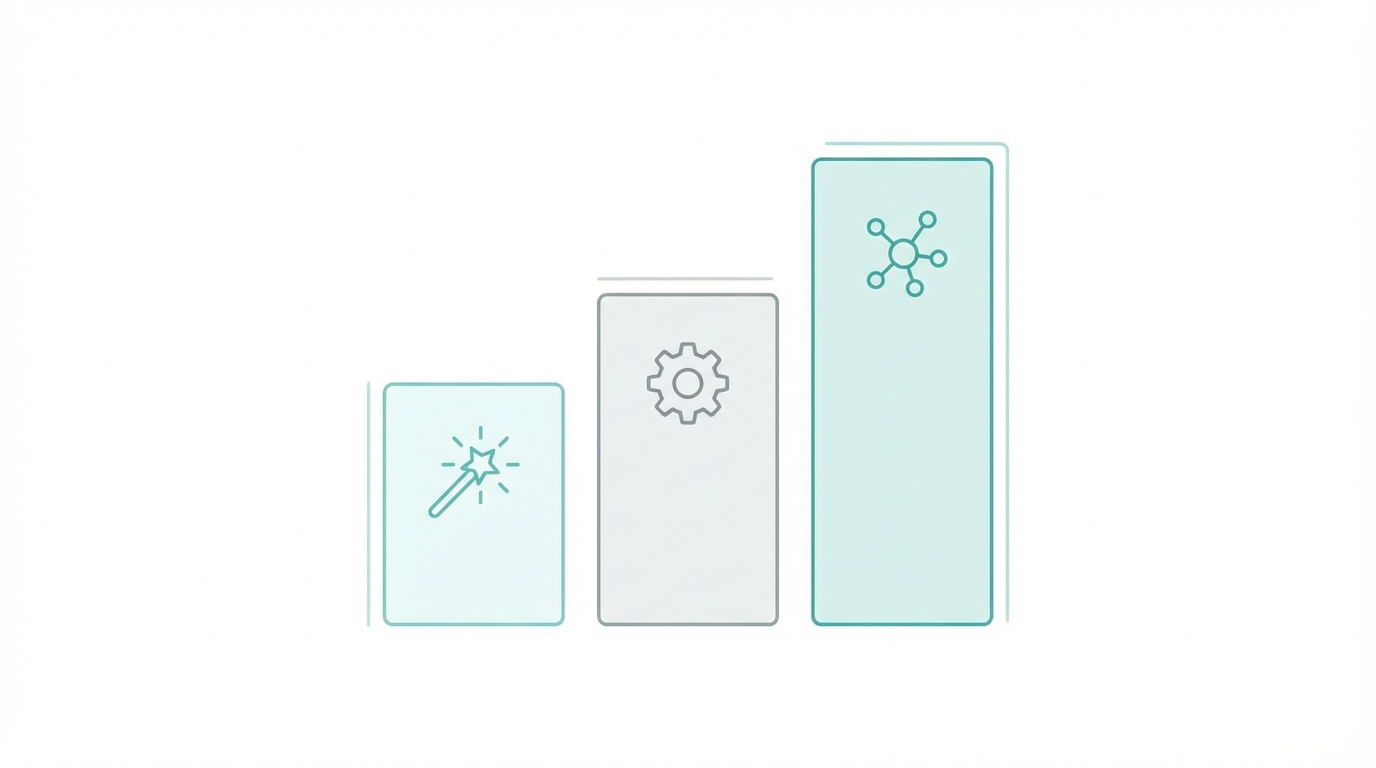
Why is this happening now? We have reached a point where three critical technological advancements have converged, making marketing automation strategy more powerful than ever before. If you are not leveraging these three pillars, your competitors certainly will.
- AI Capability Threshold: AI models have finally become "good enough" to handle complex execution. Whether it is OpenAI or Claude, these models can now handle nuanced brand voice, logical reasoning, and multi-step tasks that were impossible just months ago.
- No-Code Accessibility: Vibe coding tools have made complex automation accessible to non-developers. You no longer need a computer science degree to build a custom marketing tool; you just need to know how to describe the logic to an agent.
- Collapsed Custom Software Costs: The cost of building bespoke tools for specific campaigns has basically collapsed to pennies. According to research on generative AI cost efficiencies, companies are seeing massive reductions in production overhead through agentic workflows.
The High-Frequency Marketing Analogy
In the near future, marketing will look less like a series of monthly meetings and more like high-frequency stock trading. In the financial world, algorithms process millions of data points and execute trades in milliseconds based on market signals. Vibe marketing brings this to the attention economy. Imagine AI agent swarms monitoring social media for specific "vibe" signals—a trending keyword on X, a viral video style on TikTok, or a pain point mentioned in a subreddit—and instantly deploying a micro-campaign to capture that interest.
As a marketer, you will become a "portfolio manager" of these agents. You will adjust risk, deploy budget, and tweak the "vibe" of your automated systems based on real-time market performance. This level of autonomous marketing ensures that you never miss a trending conversation or an opportunity for a personalized interaction, regardless of time zones or human bandwidth.
From 10-Person Teams to a Single Orchestrator
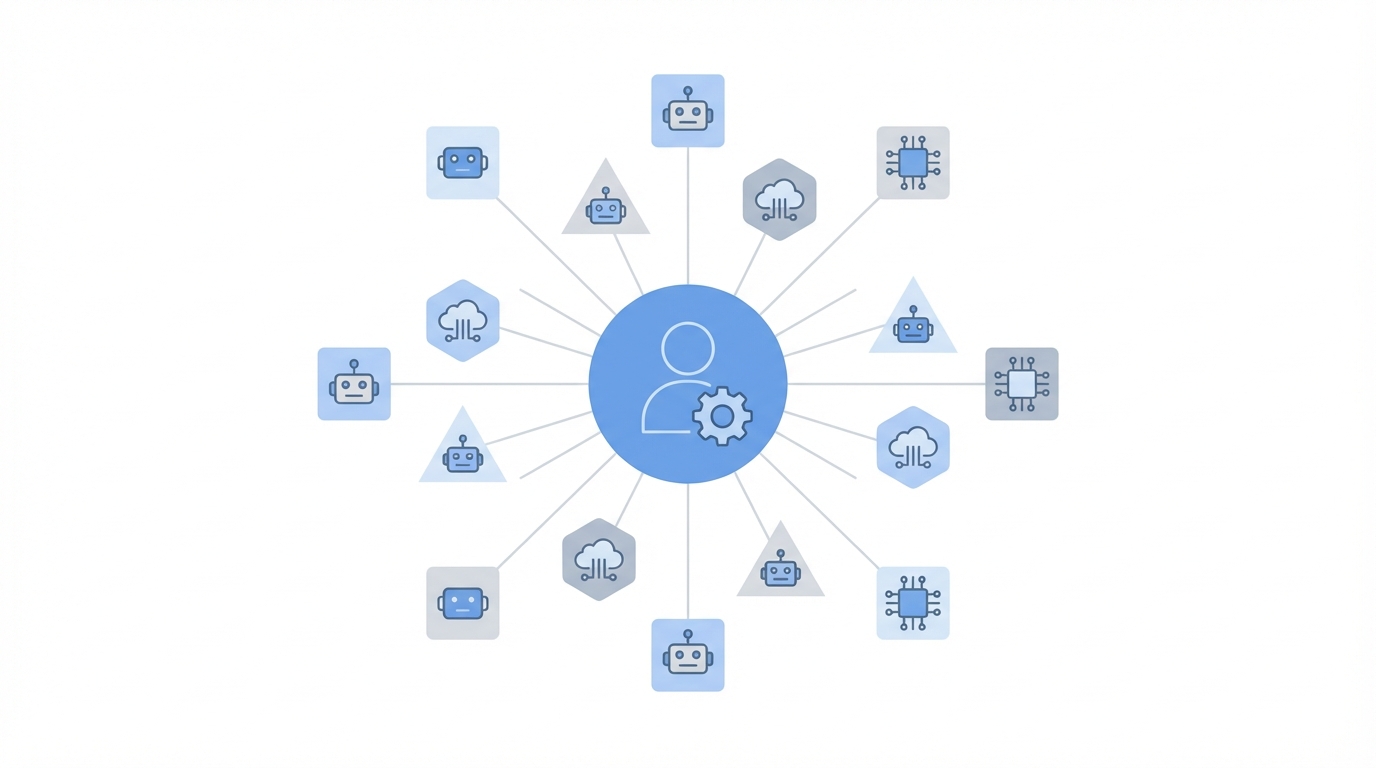
The old world of marketing relied on silos. You had a specialist for SEO, a copywriter, a designer, a media buyer, and an analytics person, all sitting in Slack threads and meetings. This structure is slow and expensive. The new world involves a single smart marketer with taste who manages a fleet of AI agents.
This "Orchestrator" uses AI to handle the tedious execution. Instead of hiring a junior sales rep to find leads, they use tools like Lindy.ai to build a sales prospecting agent. Instead of hiring a content team, they use ElevenLabs and Kling AI to generate Pixar-level video content. When you need to scale to a new channel, you don't hire a new person; you simply deploy another agent. This approach allows a solo founder or a tiny team to achieve the output of a 50-person agency.
The Vibe Marketing Toolkit
To start your journey into vibe marketing, you need a stack that allows for rapid prototyping and automation. Here is the foundational toolkit for 2024 and beyond:
Workflow Automation & Logic
Platforms like n8n and Gumloop are the central nervous system of your operation. They allow you to drag and drop "nodes" to create complex logic. For example, you can set up a workflow that scrapes a website, sends the text to an AI for summarization, and then saves the result into a Google Sheet.
AI Model Management
Because different models excel at different tasks, you should use OpenRouter. It provides a single API key to access multiple LLMs, allowing you to use DeepSeek for reasoning and Claude for creative writing within the same workflow. If you are doing advanced user-generated content (UGC) sourcing or managing massive creator lists, tools like Stormy AI can help source and manage UGC creators at scale, serving as the bridge between your automated discovery and human relationship management.
Execution Agents
For more autonomous tasks, Manus acts as a McKinsey-level analyst and strategist, helping you design campaign structures. For creative assets, ElevenLabs handles voice synthesis, while Sora or Midjourney can generate high-quality visuals for social campaigns.
Playbook: 5 Autonomous Workflows to Build Today
Ready to move from theory to execution? Here are five vibe marketing workflows you can build to automate your growth engine.
Step 1: The One-Click Creator CRM
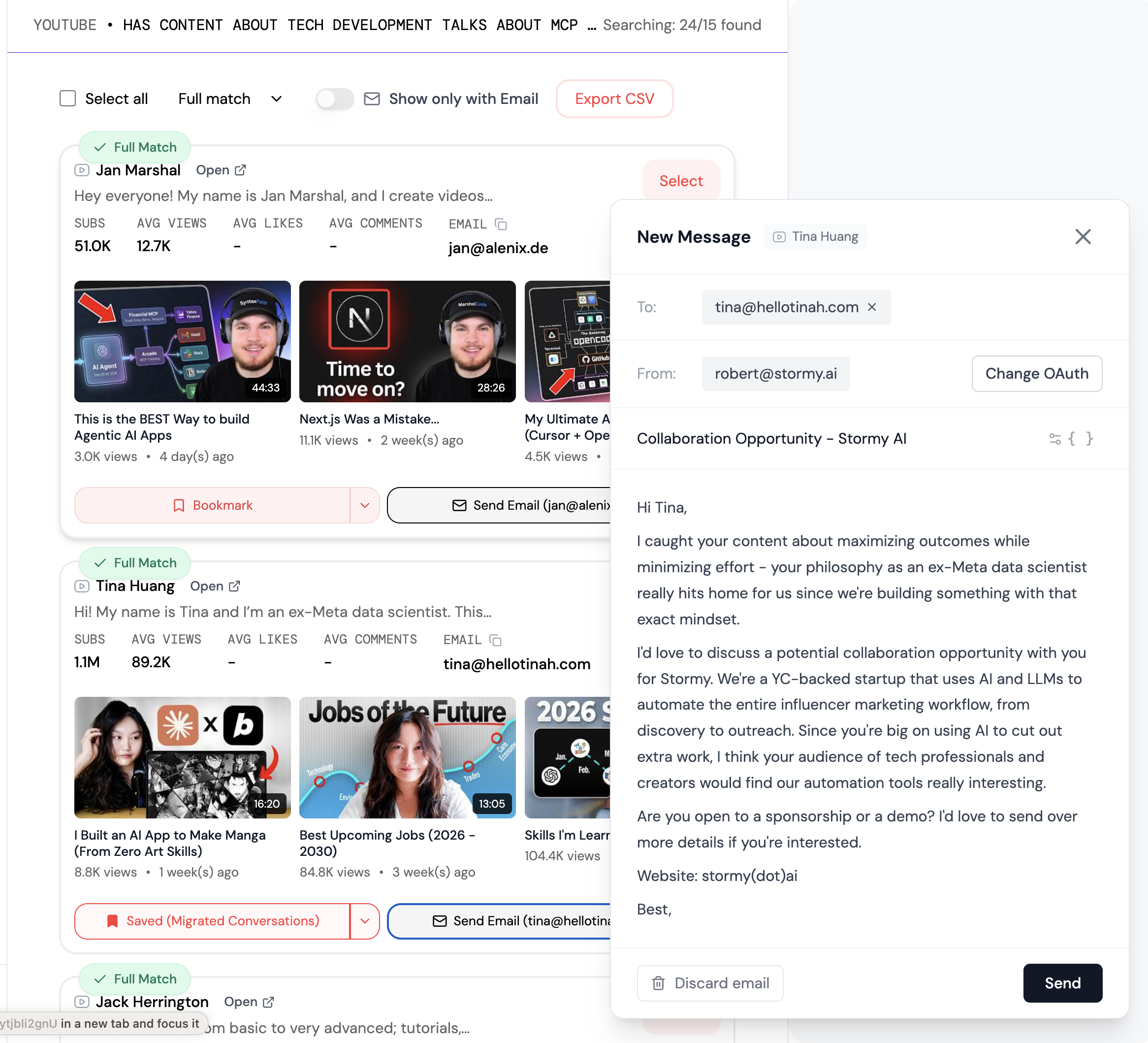
Instead of manual prospecting, use a browser extension to trigger an automation that scrapes a creator's social profile, extracts their email, analyzes their latest 10 videos for brand fit, and drafts a hyper-personalized outreach message. Storing this in an Airtable or a creator CRM ensures you have a vetted list of partners ready for collaboration without spending hours on research.
Step 2: The Reddit Content Monitor
Set up an n8n workflow to monitor specific subreddits for keywords related to your product. When a relevant conversation happens, the agent summarizes the pain points and generates three content ideas (for LinkedIn, X, and YouTube) based on those real-world discussions. This ensures your content always resonates with your audience's current "vibe."
Step 3: The E-commerce SKU Optimizer
For Shopify or Amazon sellers, build a system that takes a product SKU and runs it through multiple AI marketing agents. One agent pulls in customer reviews, another analyzes competitor search behavior, and a third generates full product listings, image overlay copy, and A+ content focused on conversion. This turns a week-long strategy project into a one-click execution.
Step 4: The YouTube Trend Miner
Use the YouTube API to fetch trending videos in your niche. Have an agent extract the titles, descriptions, and view counts to find "outlier" videos that performed significantly better than the channel's average. Another agent then remixes these angles into new video scripts for your own channel, ensuring you are always skating to where the puck is going.
Step 5: The Autonomous Outreach Engine
Combine a list of raw leads with an LLM trained on your brand voice. The system validates the leads, scrapes their website for recent news, and sends a custom email that references their actual business milestones. This "human-in-the-loop" automation allows for massive scale without sacrificing the personal touch required for high-ticket sales.
The Scorecard: Choosing Your LLM Marketing Friends
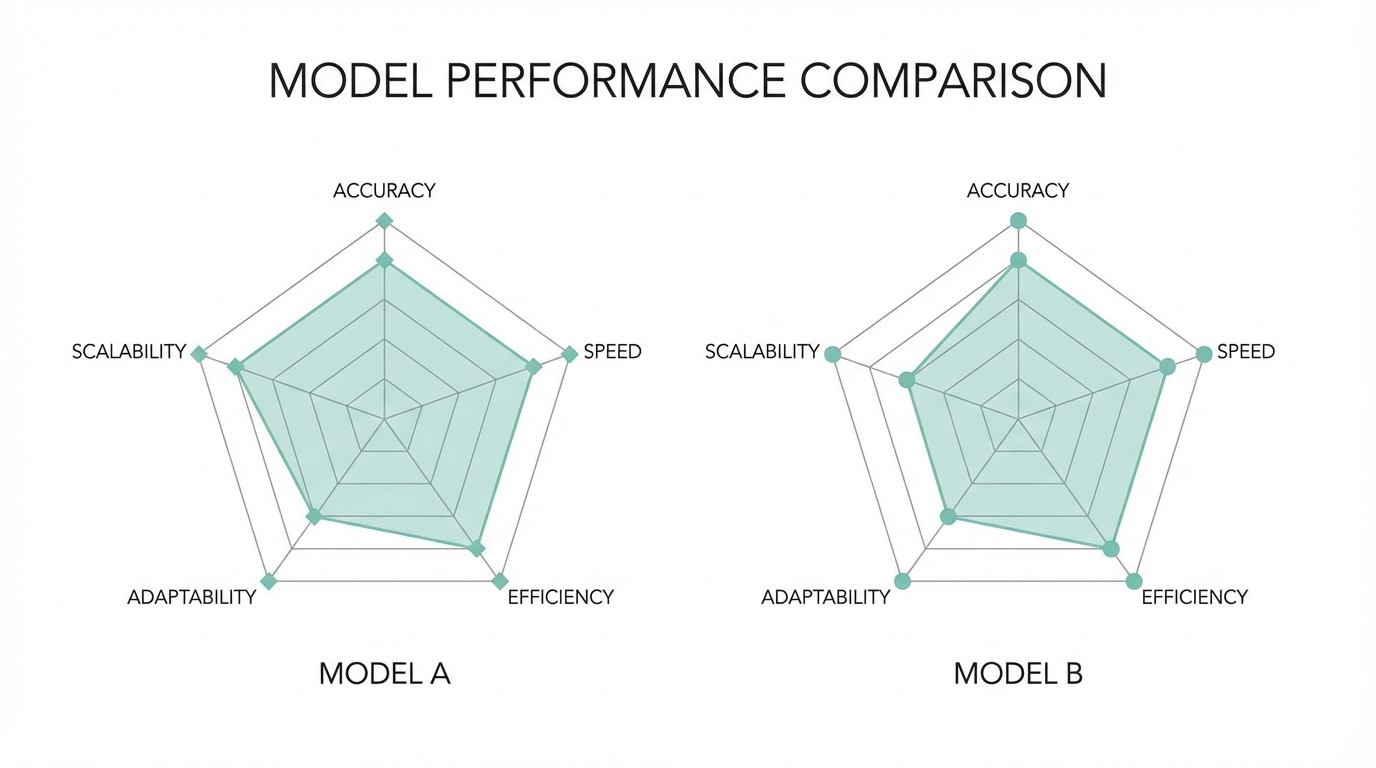
Not all AI models are created equal. To succeed in autonomous marketing, you must maintain a scorecard for which models perform best for specific tasks. For example, Claude 3.7 is widely regarded as superior for long-form content and maintaining a consistent brand voice. Meanwhile, models like DeepSeek or OpenAI's o3-mini might be better for logical reasoning and data analysis tasks within a workflow.
Keep in mind that these models change weekly. A model that was excellent at writing last month might experience "drift" this month. Part of the vibe marketer's job is to continuously update their scorecard and swap out the "engine" of their automations to maintain peak performance.
The Future: Interconnected AI Agent Swarms
In the next 12 to 18 months, we will move away from using AI tools in isolation. We are entering the era of AI agent swarms: interconnected systems with shared context. Your research agent will talk to your content agent, which will then talk to your distribution agent. These will all be overseen by a "manager agent" that you have trained with your specific expertise and taste.
Marketers who fail to adapt to this marketing automation strategy will find themselves unable to compete with the speed and efficiency of AI-powered competitors. However, for those who embrace the role of the orchestrator, the opportunity to scale a business has never been greater. If you are looking to connect with other builders in this space, communities like Startup Empire offer a place to share workflows and learn the latest in vibe marketing tactics.
Conclusion: How to Start Vibe Marketing Today
The best way to learn vibe marketing isn't by reading about it—it is by building. Start by identifying one repetitive, boring task in your current marketing workflow. Whether it is finding influencers, summarizing emails, or drafting social posts, try to automate it using a tool like Gumloop or n8n.
Focus on thinking in systems, not campaigns. Every time you perform a task, ask yourself: "How can I build an agent to do this for me next time?" By slowly replacing your manual execution with AI marketing agents, you will free yourself to focus on what actually matters: strategy, creativity, and the "vibe" that makes your brand unique. The robots are ready to serve you cash; you just have to build the system that lets them.