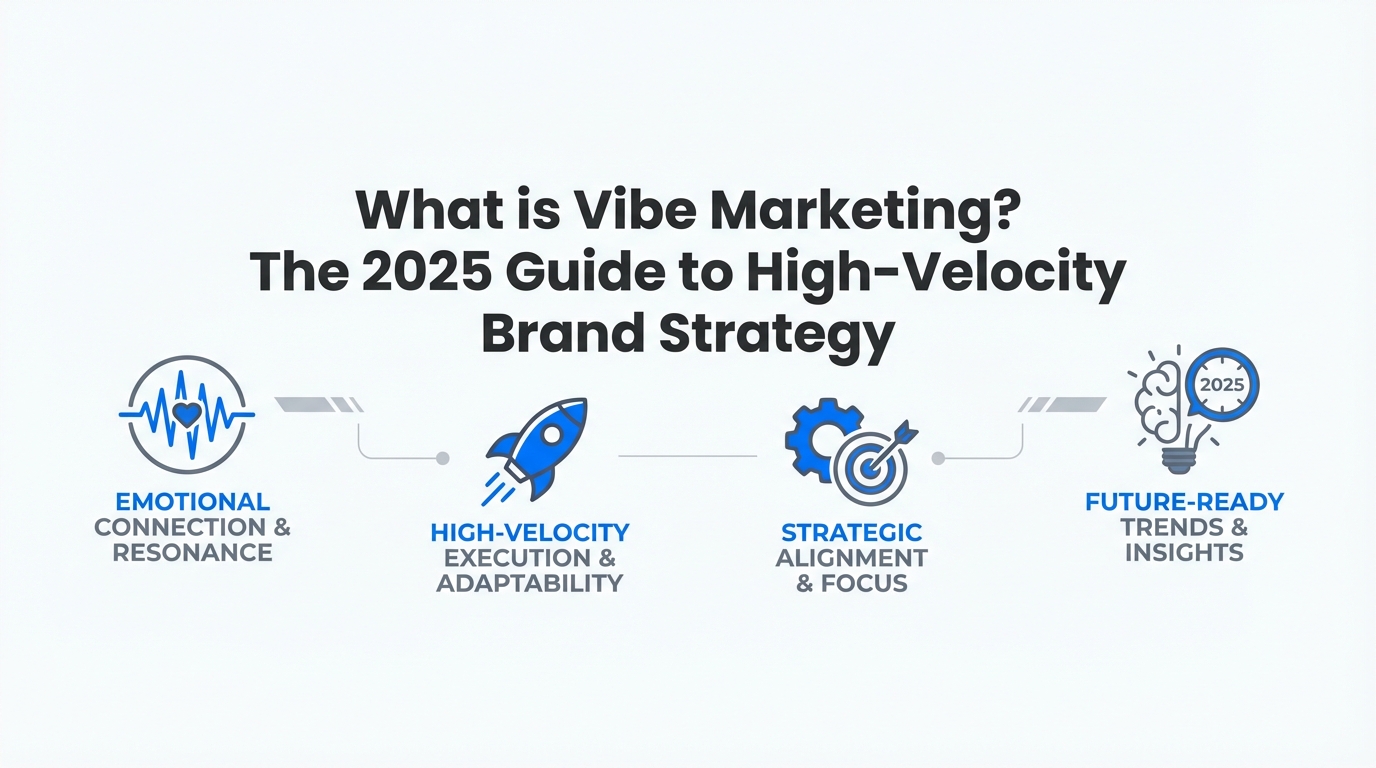
In the rapidly evolving landscape of digital commerce, the traditional playbook of listing product features and technical specifications is no longer enough to move the needle. We are entering the era of vibe marketing—a high-velocity brand strategy that prioritizes emotional resonance, cultural aesthetics, and AI-accelerated execution over old-school promotional tactics. As attention spans shrink on platforms like TikTok and Instagram and the market becomes saturated with "perfect" but sterile content, consumers are looking for something deeper: a feeling. This guide explores how brand strategy in 2025 is shifting from logical persuasion to the orchestration of vibes.
The Rise of Vibe Marketing: Why Now?
The term "vibe marketing" has seen an explosive 686% surge in search interest over the last year, according to data from Exploding Topics. This isn't just a trend; it's a fundamental shift in how businesses communicate. By Q3 2024, nearly 47% of Fortune 500 companies had already integrated vibe-first strategies into their core marketing functions. This shift is driven by the fact that 70% of consumers are significantly more likely to purchase from brands they feel emotionally connected to, as reported by DemandSage.
Traditional marketing often feels like a lecture; vibe marketing feels like a conversation at a party. It leverages the "vibe coding" philosophy—a concept popularized by OpenAI co-founder Andrej Karpathy—which suggests that humans should provide the high-level intent while machines handle the granular, technical implementation. In a world where 88% of consumers prioritize authenticity, the brand that can maintain a consistent, human-feeling "vibe" while moving at the speed of the internet wins.
"The key insight for 2025 is that while consumer behavior is measurable, the emotional 'truth' is what makes content resonate and drives long-term loyalty."Breaking Down the VIBE Framework
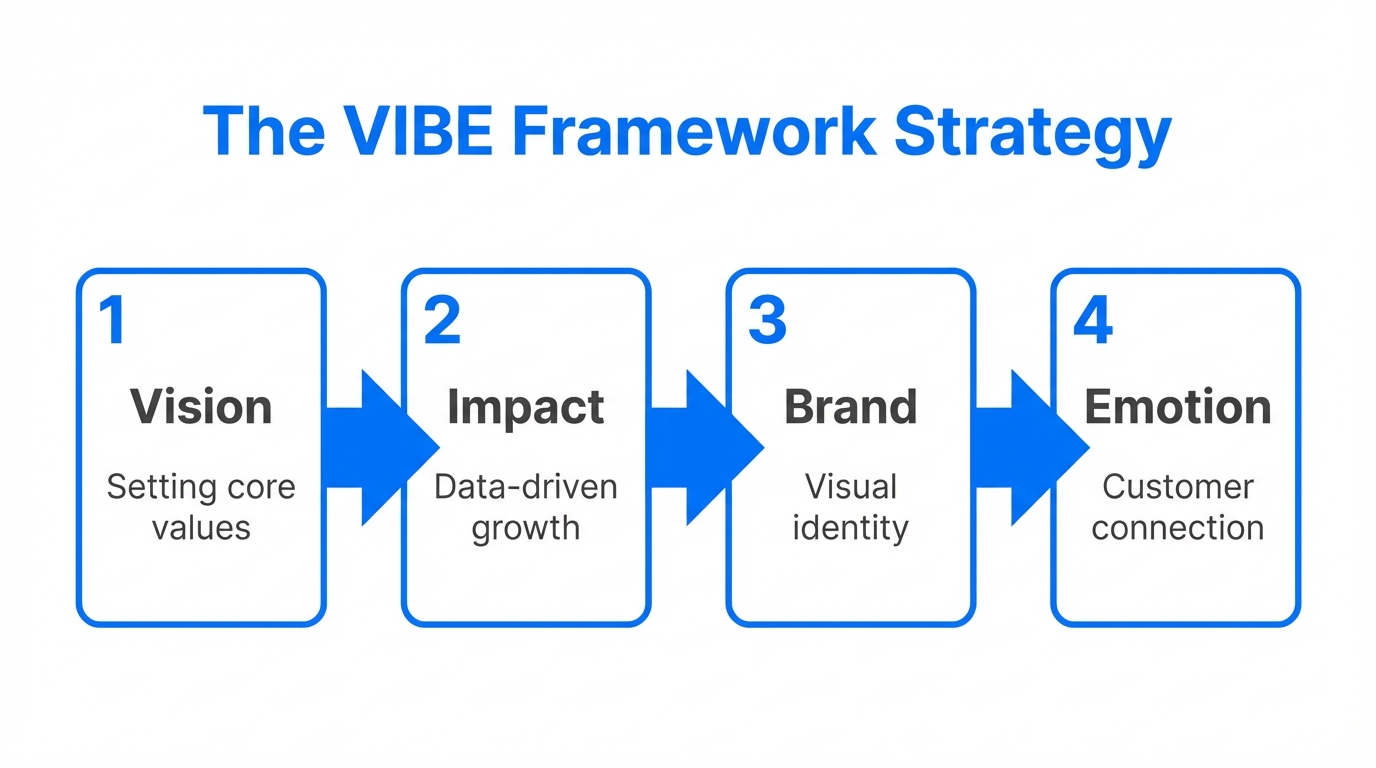
To implement a high-velocity brand strategy, marketing departments are adopting the VIBE acronym. This framework allows teams to move beyond silos and focus on the holistic perception of the brand. According to Averi AI, the four pillars of this strategy are:
- Velocity: The ability to move at the speed of culture. If a meme happens on Tuesday, your brand's take on it must be live by Tuesday afternoon.
- Identity: Aspirational design that goes beyond a logo. It's about a consistent aesthetic that users can recognize without seeing a brand name.
- Boundaryless: Breaking down the walls between departments. Social, creative, and performance teams must operate as one unit.
- Emotions-first: Starting every campaign with the question, "How do we want the user to feel?" rather than "What do we want them to buy?"
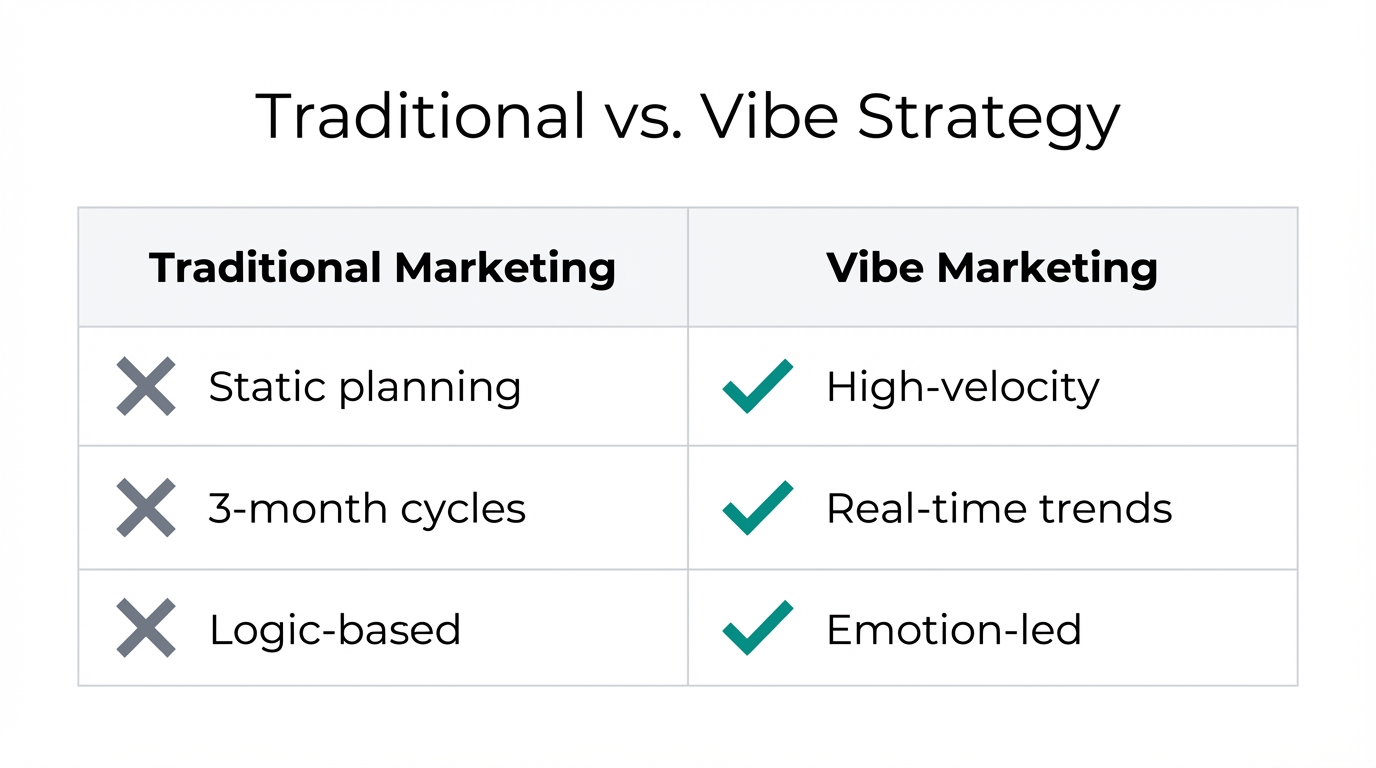
| Element | Traditional Marketing | Vibe Marketing |
|---|---|---|
| Focus | Product Features | Emotional Resonance |
| Speed | Quarterly Planning | High-Velocity (Daily) |
| Process | Manual Execution | AI-Powered Orchestration |
| Metric | Conversion Rate Only | Brand Affinity & Sentiment |
Transitioning from 'Executor' to 'Pilot'
The most significant change in this new era is the evolution of the marketer's role. We are seeing a marketer is shifting from a technical executor (SEO, copywriter, designer) to a Pilot who guides AI agents to handle the messy execution. As noted by MarTech, the pilot provides the "vibe"—the creative direction and strategic intent—while AI tools perform the heavy lifting. This shift has led to an 81% reduction in campaign creation time for early adopters.
Instead of spending weeks drafting copy or editing videos, pilots use tools like ChatGPT for voice definition and Runway for cinematic atmospheric B-roll. For companies looking to scale their creator presence, modern platforms like Stormy AI allow marketing pilots to discover, vet, and outreach to influencers using natural language prompts, effectively automating the "search and discovery" phase of a vibe-led campaign. This allows the human team to stay focused on the creative "truth" that Marc Pritchard of P&G emphasizes as the birthplace of all great brand ideas, as discussed in Zappi.
"People love brands with personality. Too many brands are scared to step out and grab one, but the ones who do it well reap the benefits."The Vibe Marketing Playbook: A Step-by-Step Implementation
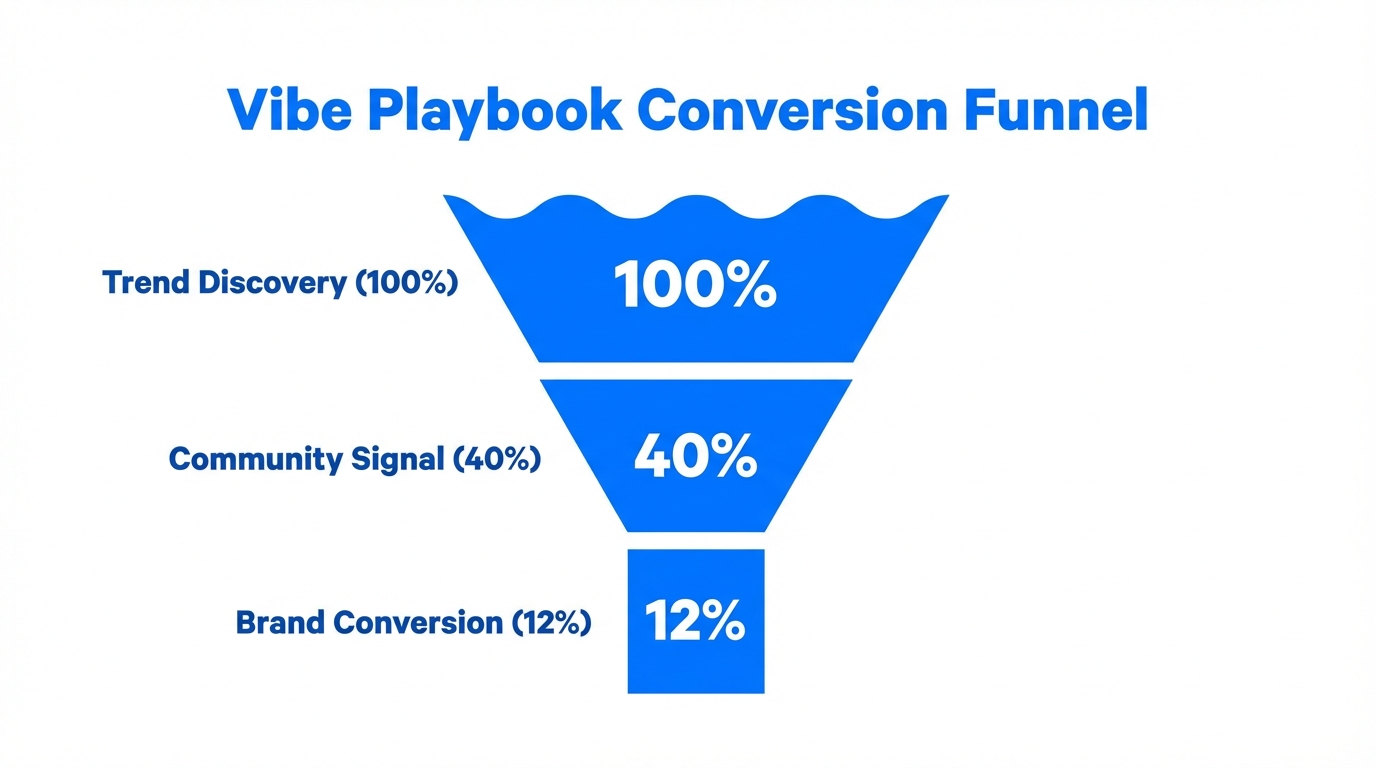
Transitioning to a high-velocity strategy requires a shift from move from static playbooks to adaptive loops. Here is how you can start implementing vibe marketing today:
Step 1: Define Your "Vibe Brief"
Forget the 20-page brand guidelines. Use generative AI to define the *feeling* of your brand. Use Midjourney to create visual mood boards that capture your aesthetic. This becomes your North Star for all content creation.
Step 2: Automate Execution, Not Intent
Set up automated workflows using Zapier or Make to connect social listening to content generation. When a cultural moment strikes, your system should be ready to draft platform-specific variants for your approval. This ensures you maintain velocity without sacrificing the human oversight required to avoid "AI slop."
Step 3: Source Creators with the Right "Aura"
Finding the right faces for your brand is critical. You aren't just looking for followers; you're looking for creators who share your brand's frequency. Platforms like Stormy AI can help source and manage UGC creators at scale by allowing you to search for influencers using descriptive prompts that match your vibe brief.
Step 4: Hyper-Personalized Content Repurposing
Take your "vibe-heavy" long-form content and use tools like Opus Clip to instantly generate dozens of short-form clips for TikTok, Reels, and YouTube Shorts. This ensures your message is everywhere at once, maintaining a consistent sensory presence across the digital ecosystem.
Real-World Success Stories
Several brands have already mastered this approach, proving that vibe marketing is more than just a buzzword—it's a multi-billion dollar business strategy. Liquid Death, for example, reached a $1.4B valuation not by selling the benefits of water, but by treating their brand as an "entertainment machine." According to Jumper Media research, their focus on a rock-and-roll aesthetic and "murder your thirst" messaging doubled their revenue in a single year.
Similarly, Duolingo has achieved a 4.03% average engagement rate on TikTok—a staggering number for a corporate account—by leaning into "unhinged" mascot-led marketing. They don't sell language lessons; they sell a relationship with a chaotic green owl. Meanwhile, Glossier built a $2B empire where 70% of online sales come from community referrals and the distinct "Glossier Pink" aesthetic rather than traditional performance ads.
Common Pitfalls: Why Most Brands Fail
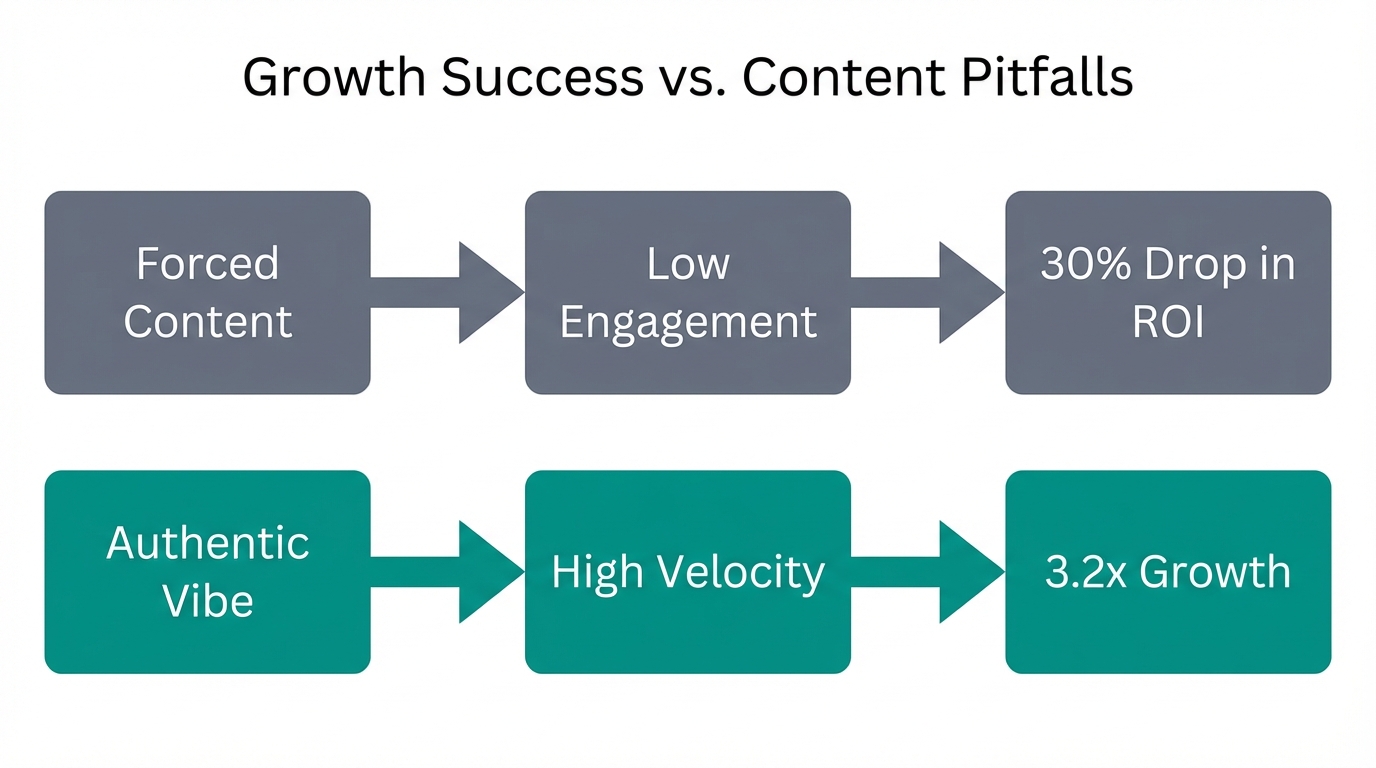
While the rewards of vibe marketing are high, the risks of poor execution are significant. One of the biggest mistakes is "Trend-Chasing Without Identity." Jumping on every viral meme without a brand-aligned filter dilutes your message and confuses your audience. Furthermore, vibe marketing captures attention, but neglecting keyword research... means that attention won't lead to discovery. You still need a solid foundation of Google Ads and ASO to ensure that once people feel the vibe, they can find the product.
- Over-Automation (AI Slop): Never let AI publish without human review. Generic content kills trust instantly.
- Vanity Metrics: Don't just track likes. Focus on sentiment analysis, community growth, and long-term brand affinity.
- Ignoring Basics: Ensure your website is optimized for mobile via tools like Framer or Webflow, so the transition from social media to purchase is seamless.
The Future of Branding is a Vibe
As we head into 2025, the brands that succeed will be those that master the balance between high-level human intuition and high-velocity AI execution. By adopting the VIBE framework—Velocity, Identity, Boundaryless, and Emotions-first—you can transform your marketing department from a group of executors into a fleet of pilots. Whether you're using Stormy AI to find your next viral creator or leveraging sensory branding to create a "sonic logo," remember that the goal is always the same: to create a connection that transcends the product itself.