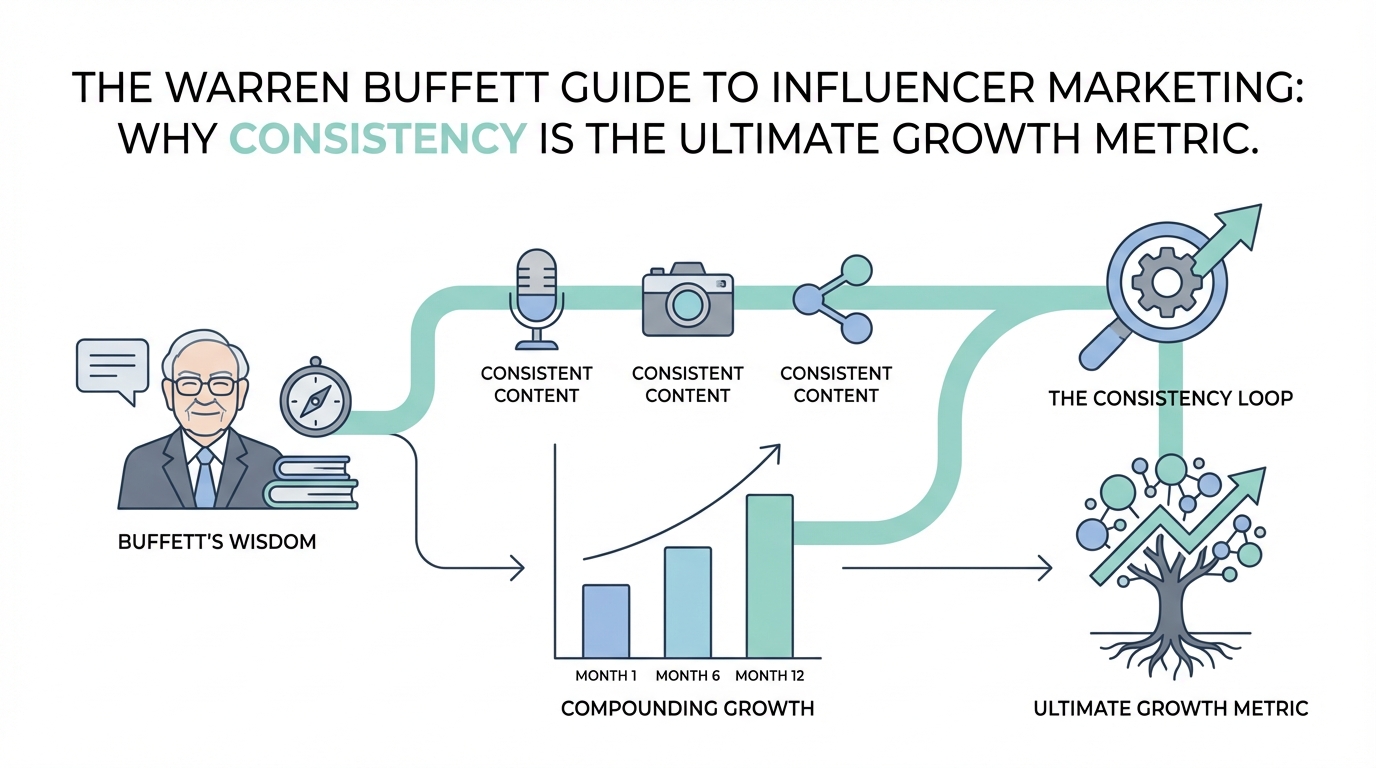
When we talk about the richest investors in history, the name Warren Buffett is usually followed by a discussion of compound interest and picking winning stocks. But if you look closer at the math behind Berkshire Hathaway, you’ll find a secret that has nothing to do with financial spreadsheets and everything to do with a long term marketing strategy. Most creators and brand builders are looking for the next viral hack or the algorithm-shattering post that will put them on the map overnight. They are looking for the quick 'flip.' However, the real wealth in the creator economy isn’t built on the back of a single viral video; it’s built on the boring, repetitive, and relentless power of staying in the market longer than everyone else.
The 99% Stat: Why Longevity is Your Best Content Strategy

There is a mind-blowing statistic mentioned by author Morgan Housel: Warren Buffett’s current net worth is roughly $130 billion, but 99% of that wealth was accumulated after his 60th birthday. If Buffett had retired at age 60 with a couple of hundred million dollars—which would have been a massive success by any standard—the world would likely have never heard of him. The difference between being a forgotten millionaire and a household name was simply the fact that he started at age 11 and was still active at age 95. He didn't just have a good influencer growth strategy; he had a 60-year track record of consistency.
For creators, the lesson is clear: Time-in-market beats timing the market. Most influencers burn out after 18 to 24 months because they haven't seen the explosive returns they expected. They treat their personal brand like a lottery ticket rather than a long term marketing strategy. When you realize that the most significant gains happen at the tail end of the curve, your perspective on daily content shifts from 'Is this going to go viral?' to 'Can I sustain this for the next decade?'
Stewardship vs. Flipping: Building a Brand, Not a Billboard

In the world of private equity, many firms operate by 'flipping' companies. They buy a business, cut costs, maximize short-term returns (IRR), and sell it for a profit as quickly as possible. This is the corporate equivalent of an influencer who takes every shady supplement sponsorship and gambling app deal that hits their inbox. They are 'flipping' their audience's trust for a quick payout. Platforms like Stormy AI see this often—the most successful brand building for creators happens when the influencer acts as a steward of their community rather than a merchant. Beyond simple search, Stormy AI allows brands to vet creators with AI-powered quality reports that detect fake followers and engagement fraud in seconds.
Buffett’s Berkshire Hathaway became the preferred buyer for family-owned businesses because he promised not to rip them apart. He was a steward of goodwill. Because owners trusted him to nurture their 'babies' for generations, they often sold their businesses to him for less money than they could have gotten from aggressive private equity firms. In the creator economy, audience retention is built on this same principle of goodwill. When your audience knows you won't 'sell out' the second a high-paying brand deal comes along, you create a level of trust that lowers your customer acquisition costs (CAC) for decades.
Using an AI-powered discovery tool like Stormy AI can help brands find these exact types of creators—those who have spent years building a moat of trust rather than those who simply have high follower counts. For app developers and mobile marketers, finding a creator who acts as a steward for their niche ensures that a UGC (user-generated content) campaign feels authentic rather than like a forced advertisement.
The Compound Effect of Trust and Lowering CAC
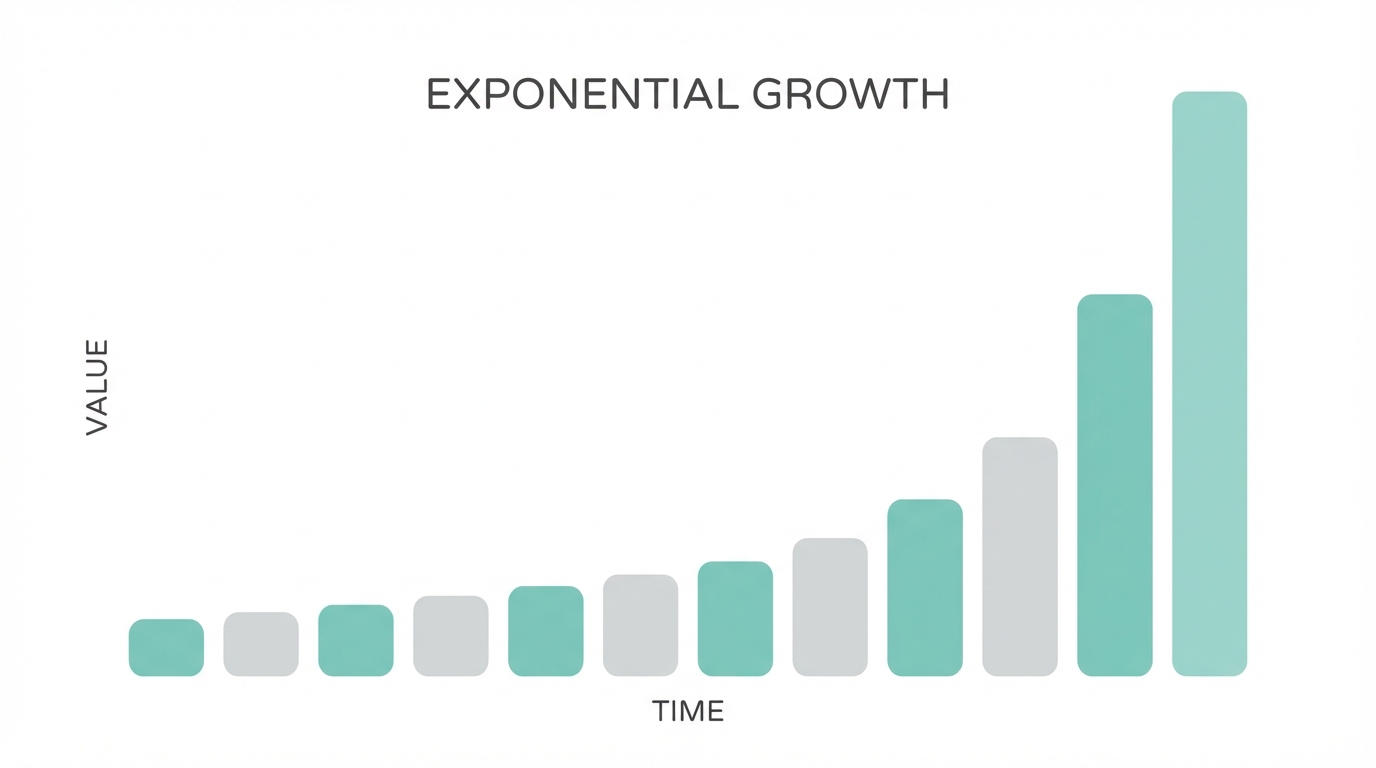
In the financial world, trust is a multiplier. Because regulators, investors, and CEOs trusted Buffett, they left him alone to do his thing. This 'leash' allowed him to make decisions that didn't necessarily look good in a quarterly report but paid off massively over a decade. When you apply this to social media consistency, you see that trust compounds just like money. Every time you provide value without asking for anything in return, you are making a deposit into your audience's 'goodwill bank.'
Over time, this makes everything easier. When a trusted creator recommends a mobile app, the conversion rate is significantly higher than a standard ad run through Meta Ads Manager or Google Ads. This is because the creator has already done the hard work of building trust over years of consistent output. The long term marketing strategy for a creator should be to become so trusted that their recommendation carries more weight than any algorithmic targeting.
The Power Law of Content: Why You Can’t Predict Your Best Post

One of the most humbling statistics from the research on Buffett is that he has purchased over 500 stocks in his career, but the vast majority of his wealth came from just 10 of them. Charlie Munger, his long-time partner, noted that if you removed the top five deals from Berkshire’s history, their returns would be average. This is the Power Law, and it applies perfectly to content creation. Most of your posts will be average. Some will fail. But a tiny minority—maybe 1% of your total output—will drive 99% of your growth.
Morgan Housel mentioned that he wrote over 4,000 blog posts, but only three or four of them were responsible for his massive success. Interestingly, he almost didn't publish some of his biggest hits because he thought they were 'too crazy' or 'weird.' This teaches us two things about influencer growth strategy:
- You must increase your volume: Since you cannot predict which post will be the outlier, you have to stay in the game and keep publishing. You have to 'water your flowers and don't cut them,' as Peter Lynch famously said.
- Don't sell your winners too early: If you find a content niche or a specific format that is working, 'circle the wagons' around it. Don't pivot just because you're bored. Keep doing the thing that works until it stops working.
A Playbook for the 80-Year Creator: Developing a Sustainable Output

If you want to build a brand that lasts, you need a playbook that focuses on sustainable output rather than burnout-inducing sprints. Here is how to structure your brand building for creators for the long haul:
Step 1: Define Your Freedom Number
Before you chase millions of followers, determine the minimum amount of money you need to be independent. Most people chase a 'scorecard' (net worth, likes, views) because it is easy to quantify. Instead, focus on independence. Calculate what it costs to live life on your terms. Once you hit that number, you can create from a place of security rather than desperation. Desperate creators make bad decisions; independent creators make legendary ones.
Step 2: Ignore Social Influence in Spending
Avoid the 'lifestyle creep' that forces you into a high-burn rate. High expenses force you to take bad brand deals just to pay the bills. If you keep your overhead low, you have the 'leash' to say no to sponsorships that don't align with your values. This preserves your audience retention for the long term.
Step 3: Invest in High-ROI Soft Skills
Investing isn't just about spreadsheets; it's about behavior. Focus on patience, empathy, and communication. These soft skills are the foundation of a successful influencer growth strategy. Whether you are running campaigns on Apple Search Ads or building a YouTube channel, your ability to manage your own ego and greed will dictate your success more than any technical skill.
Step 4: Use AI for Discovery and Management
Don't do the heavy lifting manually. Use Stormy AI to find UGC creators and manage the entire relationship through its built-in creator CRM. You can even set up an autonomous AI agent within Stormy AI to handle daily discovery and outreach while you focus on strategy. This helps you identify those 'tail-driven' opportunities that lead to power-law returns without requiring you to spend 80 hours a week on manual research.
Measuring What Matters: Moving Beyond the Vanity Metrics

One of the biggest traps in social media consistency is the obsession with quantifiable metrics. It is easy to track your follower count down to the single digits, but it is impossible to quantify if you are a 'good' creator or if your audience truly trusts you. Buffett succeeded because he ignored the 'measuring stick' of the market's daily fluctuations and focused on the quality of the businesses he owned.
As a creator, you must create your own scoreboard. Once campaigns are live, use Stormy AI to monitor views, likes, and engagement across all platforms automatically. Are you proud of the work you published today? Did you help someone solve a problem? Are you building a legacy that your children would be proud of? These are 'mushy' topics, as Morgan Housel calls them, but they are the only ones that actually lead to long-term fulfillment and sustainable brand building for creators. When you stop performing for strangers and start creating for a specific purpose, the quality of your content—and your life—improves drastically.
Conclusion: The Ultimate Metric is Time
The influencer growth strategy of the future isn't about the newest AI hack or the latest platform feature. It’s about the oldest principle in the book: consistency. If you can stay in the game longer than your peers, you allow the power of compounding to take over. You don't need to be the smartest person in the room; you just need to be the one who didn't quit.
Whether you are a brand looking for the perfect partner through Stormy AI’s post tracking and analytics suite or a creator trying to find your voice, remember that the most significant returns are back-loaded. Your 99% is still ahead of you. Stay consistent, act as a steward of your community, and let time do the heavy lifting. In the end, the person who can endure the boring middle of the curve is the one who gets to enjoy the exponential end of it.