In 2026, the e-commerce battleground has shifted from mere price wars to a high-stakes race for fulfillment speed. While Amazon has long dominated the 24-hour window, Walmart Marketplace has weaponized its physical footprint of 4,700+ stores to offer something even faster: true same-day delivery and local pickup. For Shopify and Amazon sellers looking to diversify, the 2026 landscape offers a unique window. With Walmart’s e-commerce revenue growing at a staggering 27% year-over-year, the platform is no longer just a secondary channel—it is a mandatory pillar for any brand serious about omnichannel scale.
The Walmart Advantage: Why 2026 is the Year to Pivot
While Amazon remains the volume leader with an estimated $830 billion in GMV, Walmart is growing three times faster. The primary driver? A fundamental shift in how they use their stores. Unlike Amazon, which relies on centralized fulfillment centers, Walmart is rolling out its "Store-as-Warehouse" initiative. As of April 2026, this program allows third-party (3P) marketplace items to be staged in physical store backrooms for immediate dispatch or customer pickup.
To sweeten the deal for 2026, Walmart has launched the “New-Seller Savings” package. New accounts can currently secure 50% off storage and 25% off fulfillment fees for their first 90 days. This makes the initial testing phase significantly more capital-efficient than Amazon FBA, which recently implemented a 3.5% increase in base fulfillment fees.
"Marketplace is the vehicle by which we'll grow general merchandise... we've seen 20% growth, with home and fashion growing over 30%." — John David Rainey, Walmart CFO
The WFS Playbook: A Step-by-Step Launch Guide
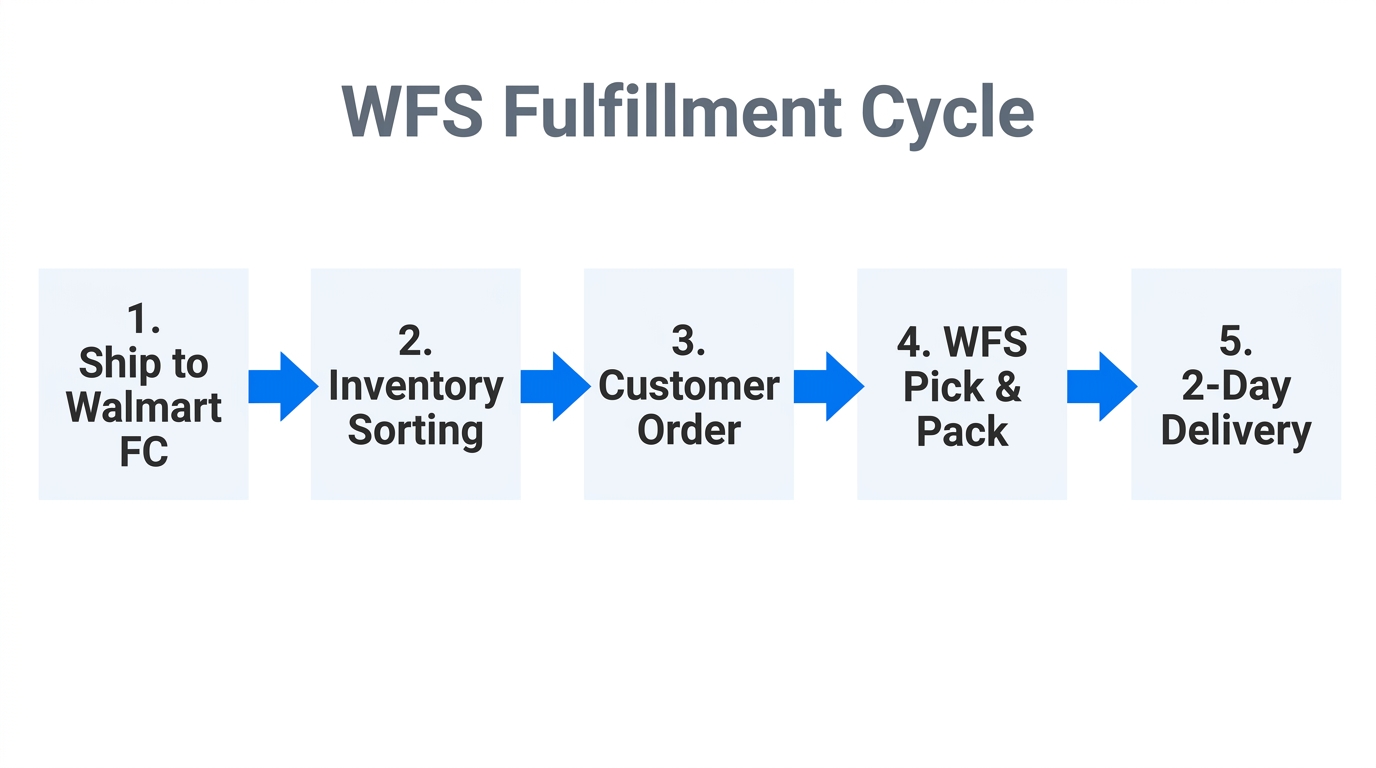
Enrolling in WFS is the single most effective way to improve your Listing Quality Score (LQS). Here is the step-by-step playbook for 2026 to ensure a smooth transition from Shopify or Amazon.
Step 1: Application and Vetting
Registration requires a US tax ID and typically takes about two weeks for approval. Walmart is more selective than Amazon, prioritizing brands that can prove a history of reliable fulfillment. During this phase, an AI ecommerce employee like Stormy AI can help organize your business documentation and past performance reports from Shopify to expedite the vetting process.
Step 2: Listing Optimization (LQS 80+)
Walmart’s new Omnispec 5.0 schema is rigid. You must achieve an LQS of at least 80% to maintain visibility. Unlike Amazon, Walmart rejects listings with HTML formatting on sight. Focus on "Attribute" fields—filling out every technical detail from material to weight is critical for their internal search algorithm.
Step 3: Enrolling in WFS
Once your items are listed, navigate to the WFS tab in Seller Center. Select your top-performing SKUs from other channels. Walmart's WFS system is more predictable than FBA because it lacks complex "Inbound Placement Fees." To manage this, Stormy AI can monitor your inventory levels across all marketplaces, drafting restock POs for WFS shipments before you hit the "Low-Inventory-Level" danger zone.
| Metric | Amazon FBA (2026) | Walmart WFS (2026) |
|---|---|---|
| Avg. Conversion Rate | 13.9% | 17.0% |
| Average CPC | $0.80 – $2.50+ | $0.35 – $0.75 |
| Typical ACOS | 25% – 35% | 15% – 25% |
| Monthly Fee | $39.99 | $0.00 |
Leveraging the 'Store-as-Warehouse' for Same-Day Reach
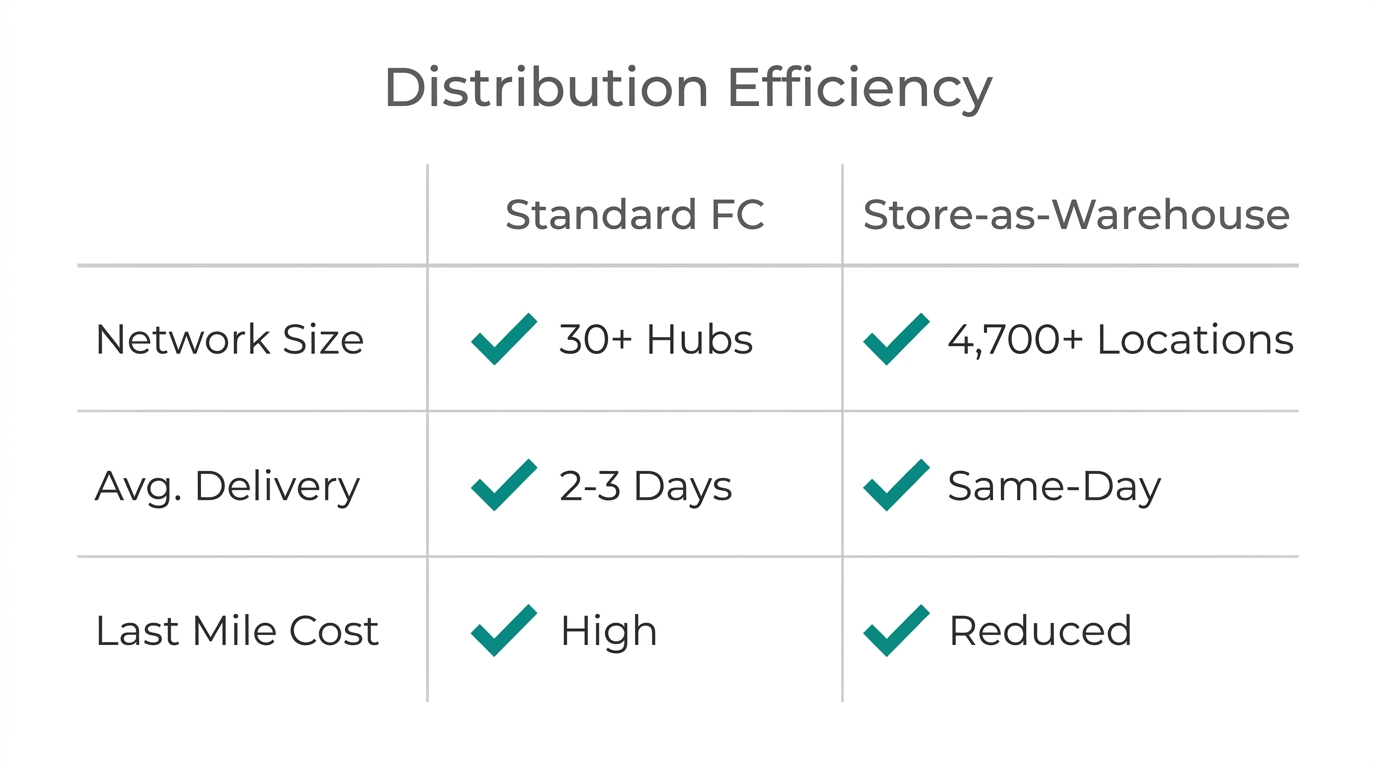
The most disruptive feature of the Walmart Marketplace WFS playbook in 2026 is the ability to tap into 4,700+ stores. While Amazon's fulfillment is world-class, Walmart’s physical proximity to 90% of the US population gives it a structural advantage for Walmart same-day delivery for sellers.
In April 2026, Walmart expanded its "backroom fulfillment" tests. This allows 3P sellers to have their inventory staged in local store hubs. When a customer searches for your product, they will see an "Available Today" or "Pickup Today" tag. According to Nova Analytics, listings with local availability tags see a 30% higher click-through rate compared to standard 2-day shipping items.
"The 4,700 store footprint is Walmart's 'secret weapon' against Amazon's centralized logistics model, enabling same-day speeds that were previously impossible for 3P sellers."
To succeed here, inventory efficiency is paramount. Using Stormy AI, you can track which regions are seeing the highest velocity and ask Stormy to generate a report suggesting which SKUs should be prioritized for the Store-as-Warehouse program. This prevents your capital from being tied up in stagnant inventory across 4,000 locations.
The 'Price Parity Rule' Warning
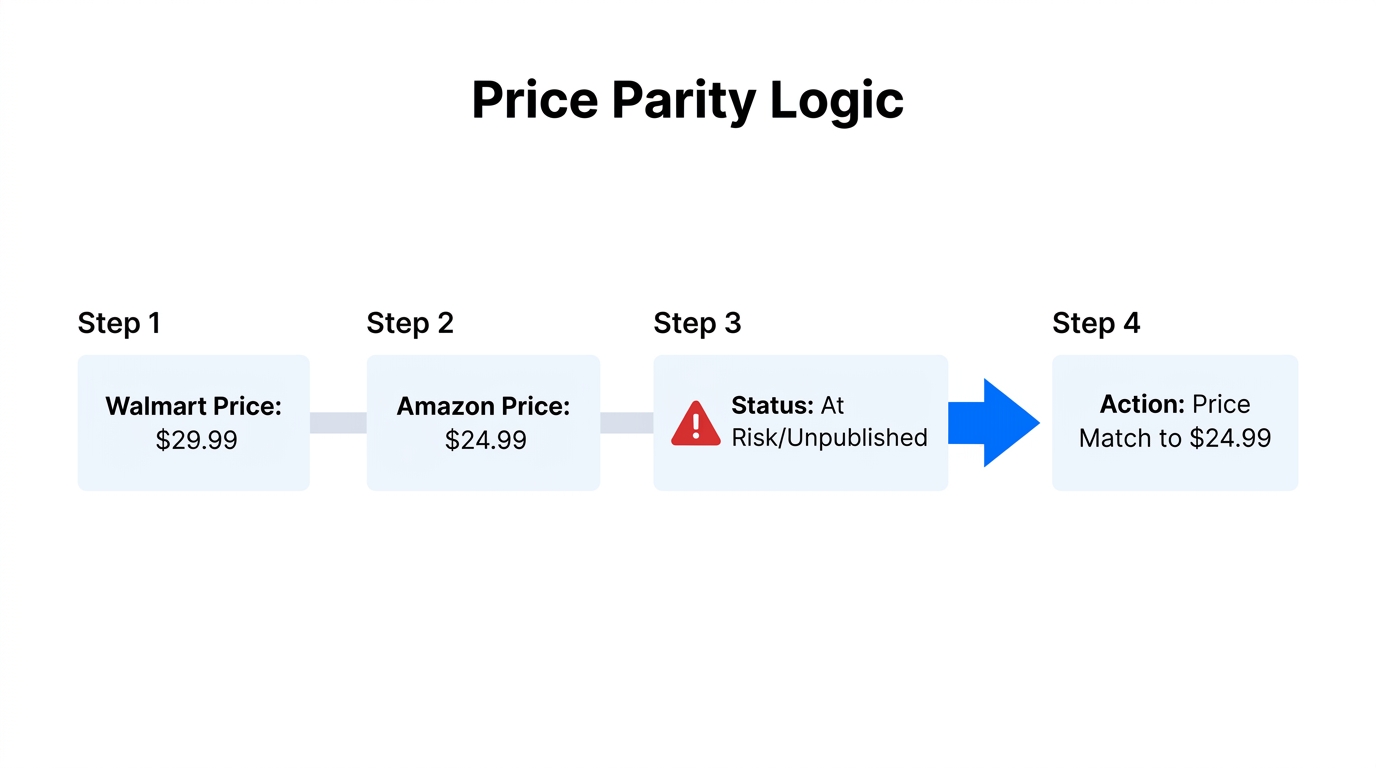
Success on Walmart comes with a significant caveat: the Walmart price parity rule. Walmart’s automated "Price Crawler" constantly scans the web, including your Shopify store and Amazon listings. If it finds your item at a lower price elsewhere (including shipping costs), it will instantly suppress your listing, making it invisible to customers.
Managing this manually is a nightmare. This is where an AI employee becomes essential. Stormy AI can monitor your prices across Meta Ads, Amazon, and Shopify. If it detects a price discrepancy that might trigger a Walmart suppression, it can flag the issue or automatically update your Walmart listing to maintain parity. For advanced users, tools like Aura can provide AI-driven repricing, but Stormy provides the high-level oversight to ensure your overall brand margin stays healthy.
Automating Account Health and Support
Walmart is notoriously rigid regarding account health. Their Negative Feedback Rate (NFR) must remain below 2% over a rolling 60-day period. Unlike Amazon, which has a maturing appeal process, Walmart's "Trust & Safety" deactivations in 2026 are often final. If you dip below their standards, you may have only 5 days to remove your inventory before it is considered abandoned.
Maintaining a 98%+ positive feedback rate requires proactive customer support. Stormy AI acts as your first line of defense in the back office:
- Support Ops: Stormy can connect to your Gorgias or Zendesk, detect refund requests or shipping disputes, and draft on-brand replies for human approval within minutes.
- Review Monitoring: Stormy scans for negative feedback daily. If a customer leaves a 1-star review due to a shipping error, Stormy flags it so you can reach out and resolve the issue before it impacts your NFR.
- Inventory Pulse: To avoid the "Out of Stock" cancellations that kill account health, Stormy runs a daily inventory pulse across WFS and your own warehouse.
"In 2026, the winner isn't the brand with the best product, but the brand with the best AI-driven operations to manage the platform's rigid health metrics."
Shopify to Walmart Integration: Closing the Loop
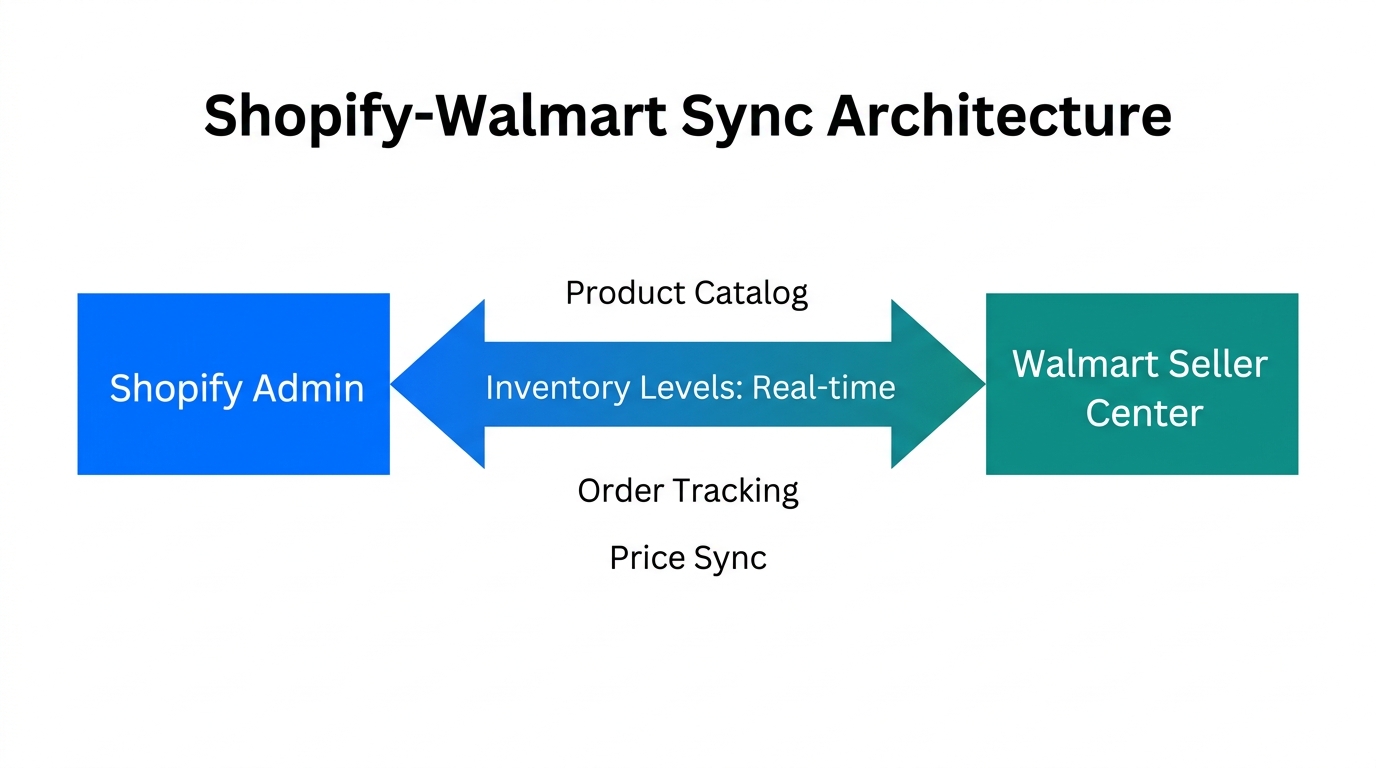
For most brands, Shopify remains the source of truth for brand identity, while marketplaces provide the reach. The Shopify to Walmart integration has become significantly more streamlined in 2026 thanks to connector apps and AI agents. Tools like LitCommerce or Zentail allow for seamless inventory syncing, but they don't "run" the business.
The true 2026 playbook involves using Stormy AI to sit on top of these tools. For example, Stormy can pull campaign performance from Google Ads and TikTok Ads, compare it against your Walmart WFS sales, and determine if your marketing spend is actually driving incremental revenue or just cannibalizing your Shopify store.
The Bottom Line for Sellers
Scaling on Walmart Marketplace in 2026 is no longer about "copy-pasting" your Amazon strategy. Success requires a dedicated Walmart Marketplace WFS playbook that leans into the physical store network for same-day delivery while maintaining a paranoid eye on the price parity rule. By leveraging the 4,700-store footprint, you can offer a level of customer gratification that even Amazon struggles to match in many zip codes.
Don’t let the manual operations of a new channel slow you down. Let an AI ecommerce employee like Stormy AI handle the messy back-office tasks—from tracking WFS shipments to monitoring account health—so you can focus on building your brand. Start by enrolling in WFS today to lock in your 2026 New-Seller Savings.