The ecommerce landscape in 2026 has split into two distinct realities. On one side, we have the "Gladiator Arena" of Amazon Seller Central, where over 2 million active sellers fight for a shrinking piece of the discovery-driven pie. On the other, Walmart Marketplace has emerged as a high-margin "Gated Community," now hosting approximately 200,000 vetted sellers. For brand founders and DTC operators, the primary question is no longer just about volume—it is about the bottom-line profitability and margin preservation in an era where AI-driven efficiency is the only way to survive. Managing these two giants manually is a recipe for burnout, which is why brands are increasingly hiring an AI ecommerce employee like Stormy AI to monitor inventory, track listing health, and follow up with suppliers across both ecosystems.
The Fee Breakdown: $0 Subscriptions vs. The Amazon Tax
In 2026, the cost of entry remains one of the most significant differentiators between the two platforms. Amazon continues to charge its $39.99 monthly professional subscription fee, while Walmart Marketplace maintains a $0 monthly subscription model. For a lean operation, this lower fixed cost is just the beginning of the margin story.
| Feature | Walmart Marketplace | Amazon FBA (3P) |
|---|---|---|
| Monthly Fees | $0.00 | $39.99 |
| Active Sellers | ~200,000 (Low Density) | ~2,000,000+ (High Density) |
| Referral Fees | 6% - 15% (Category dependent) | 8% - 15% (Category dependent) |
| Subscription Type | Referral-only | Monthly + Referral + Storage |
While referral fees are roughly comparable, the inventory storage and fulfillment fees are where the paths diverge. Stormy AI can track these granular fee changes in real-time across your Shopify and Amazon spreadsheets, flagging when a sudden change in FBA dimensions or long-term storage fees eats into your 2026 profit targets.
"Walmart is the vehicle by which we'll grow our general merchandise business. Categories like home and fashion are growing north of 30%." — John David Rainey, CFO, Walmart
Margin Analysis: The $4.00 Profit Advantage
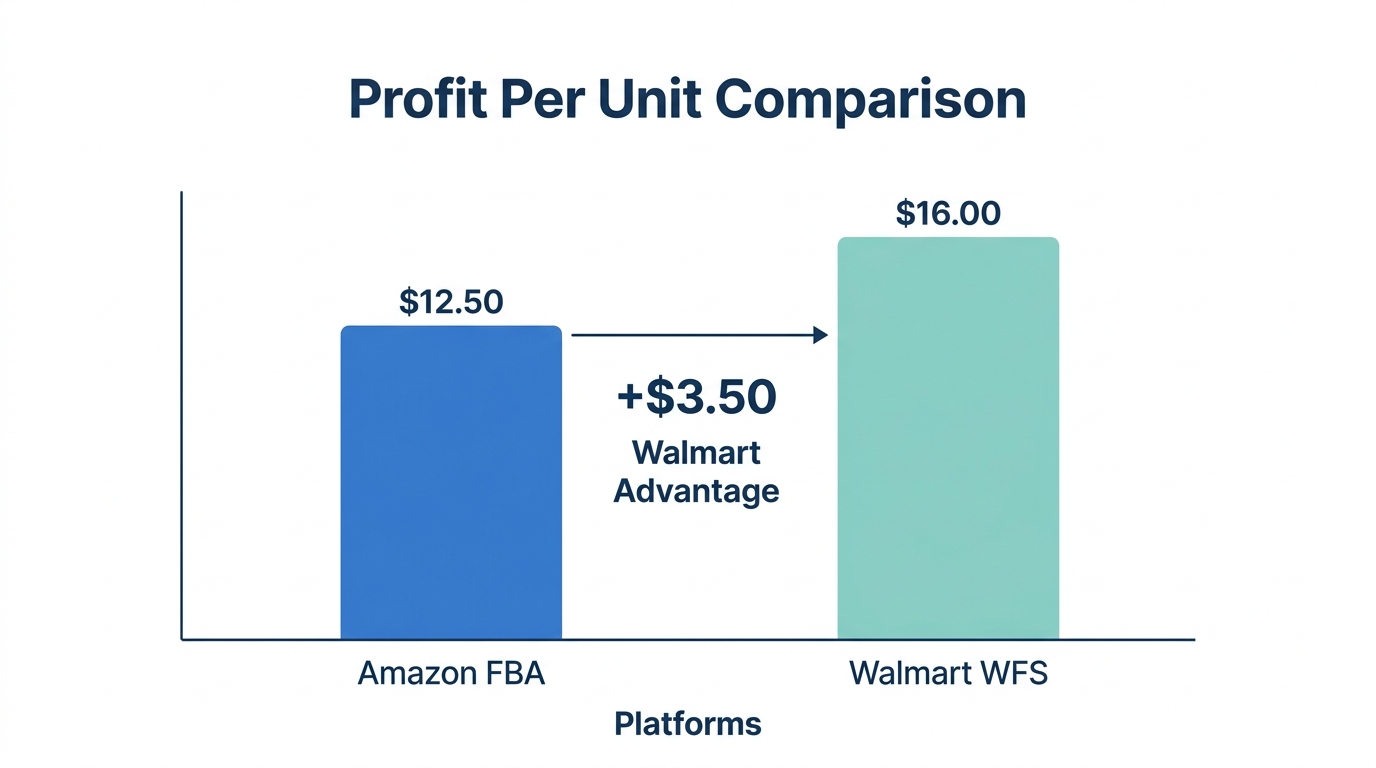
The most compelling data point for sellers in 2026 is the unit-level profitability. According to recent reports on Reddit's r/WalmartSellers, brands are seeing $3.00 to $4.00 more profit per unit on Walmart compared to Amazon. This isn't just because of lower fees; it is primarily driven by lower ad dependency.
On Amazon, high competition density forces sellers to spend 8–15% of their total revenue on ads just to maintain organic ranking. On Walmart, the average Incremental ROAS (iROAS) is reported to be 2.8x higher than social media benchmarks, reaching up to $10.06 for general merchandise. An AI ecommerce employee like Stormy AI can pull these performance metrics from Amazon Ads and Walmart Connect daily, creating a cross-platform performance report that tells you exactly where to shift your budget to maximize 2026 margins.

Competition Density: 2M Sellers vs. 200K Sellers
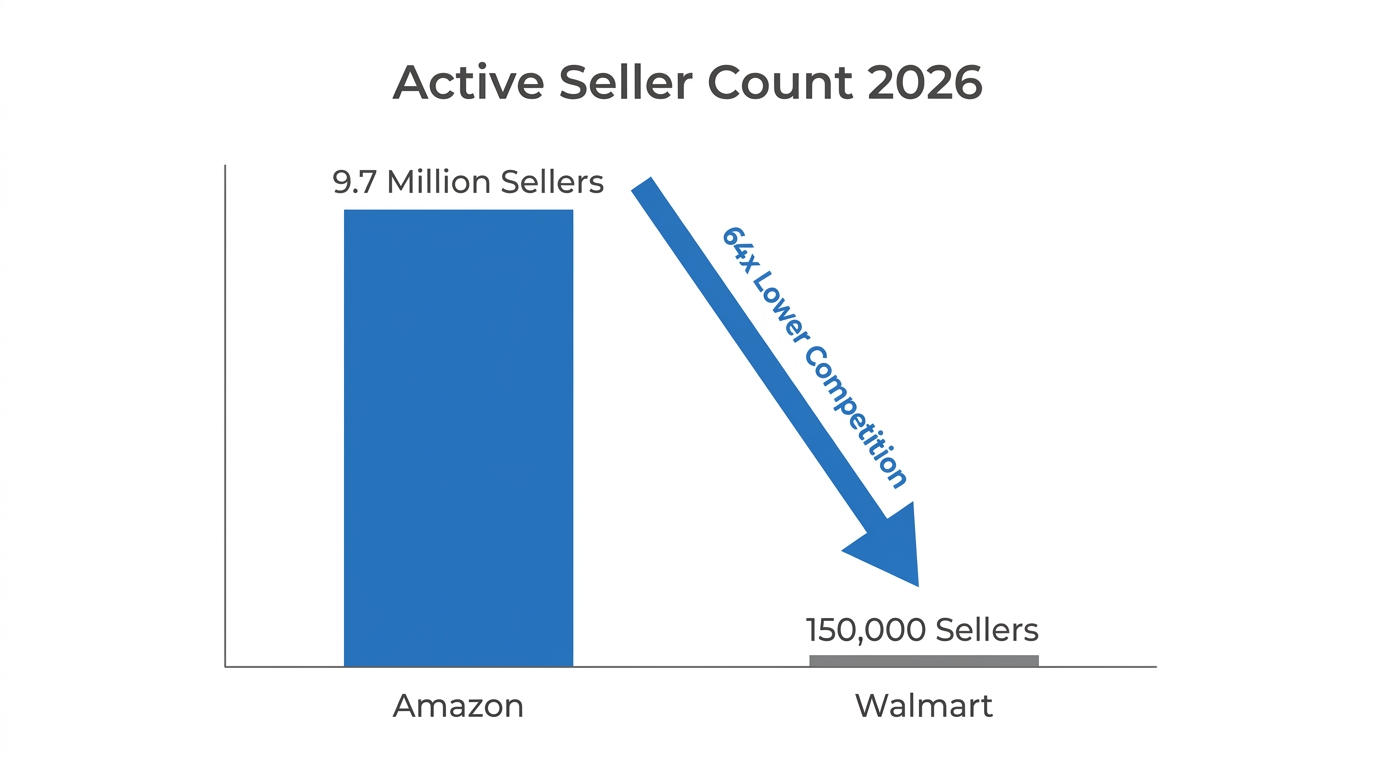
The sheer volume of competition on Amazon has created what experts call a "Gladiator Arena." With over 2 million sellers, the fight for the "Buy Box" is relentless. Walmart, by comparison, remains highly selective. While the marketplace crossed 200,000 active sellers in 2025, it still represents a fraction of the noise found on Amazon. This lower density means your products have a higher chance of organic visibility.
However, Walmart’s selective nature comes with challenges. Listing health is monitored strictly by the Polaris Algorithm, which prioritizes content, offer, and performance. If a product is found cheaper on Amazon, Walmart will unpublish your listing immediately. This is where Stormy AI becomes invaluable—it acts as your 24/7 eyes, monitoring price parity and instantly flagging suppressed listings before they cost you a weekend of sales revenue.
Customer Demographics 2026: Value vs. Discovery
In 2026, the Walmart shopper is focused on value and essentials. With the integration of Shoppable TV via Vizio, Walmart has turned the living room into a point of sale, allowing customers to buy essentials via their remotes. Amazon, meanwhile, remains the king of discovery-driven shopping and gift-giving.
- Walmart: High conversion for household goods, groceries, and staples. Shoppers look for the "Walmart+ Badge" for speed.
- Amazon: High conversion for unique brands, gadgets, and TikTok made me buy it impulse items.
Walmart's generative AI assistant, Sparky, now handles complex natural language queries, meaning your Helium 10 keyword strategy must evolve from keyword-stuffing to natural-language optimization to rank in Sparky’s recommendations.
"The marketplace will increase performance by quadrupling ad revenue in 2026, executing to the high-end customer while maintaining value." — Oliver Chen, Analyst, TD Cowen
Multichannel Fulfillment: WFS vs. FBA
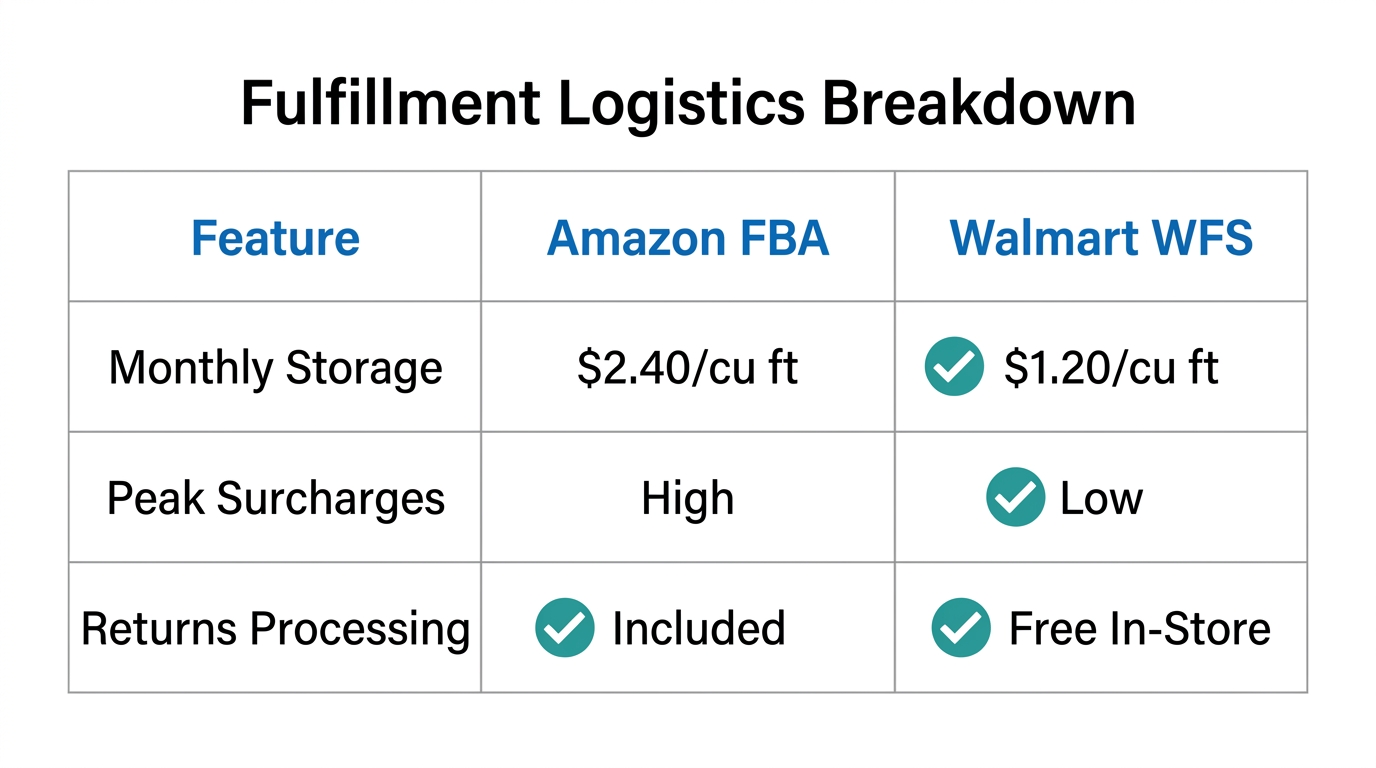
Logistics is the final frontier of the 2026 margin battle. Switching from seller-fulfilled to Walmart Fulfillment Services (WFS) provides an average 50% GMV lift due to the increased search visibility and trust of the Walmart+ badge. Similarly, Amazon FBA remains the gold standard for shipping speed.
For optimal reach, successful brands in 2026 use a dual-fulfillment strategy. However, balancing inventory across two massive fulfillment networks is a logistical nightmare. Stormy AI handles this by connecting to your Shopify, Amazon, and Walmart accounts, monitoring stockout risks and drafting restock POs for your suppliers before you run dry on either platform.
The 2026 Advertising Playbook for Walmart Connect
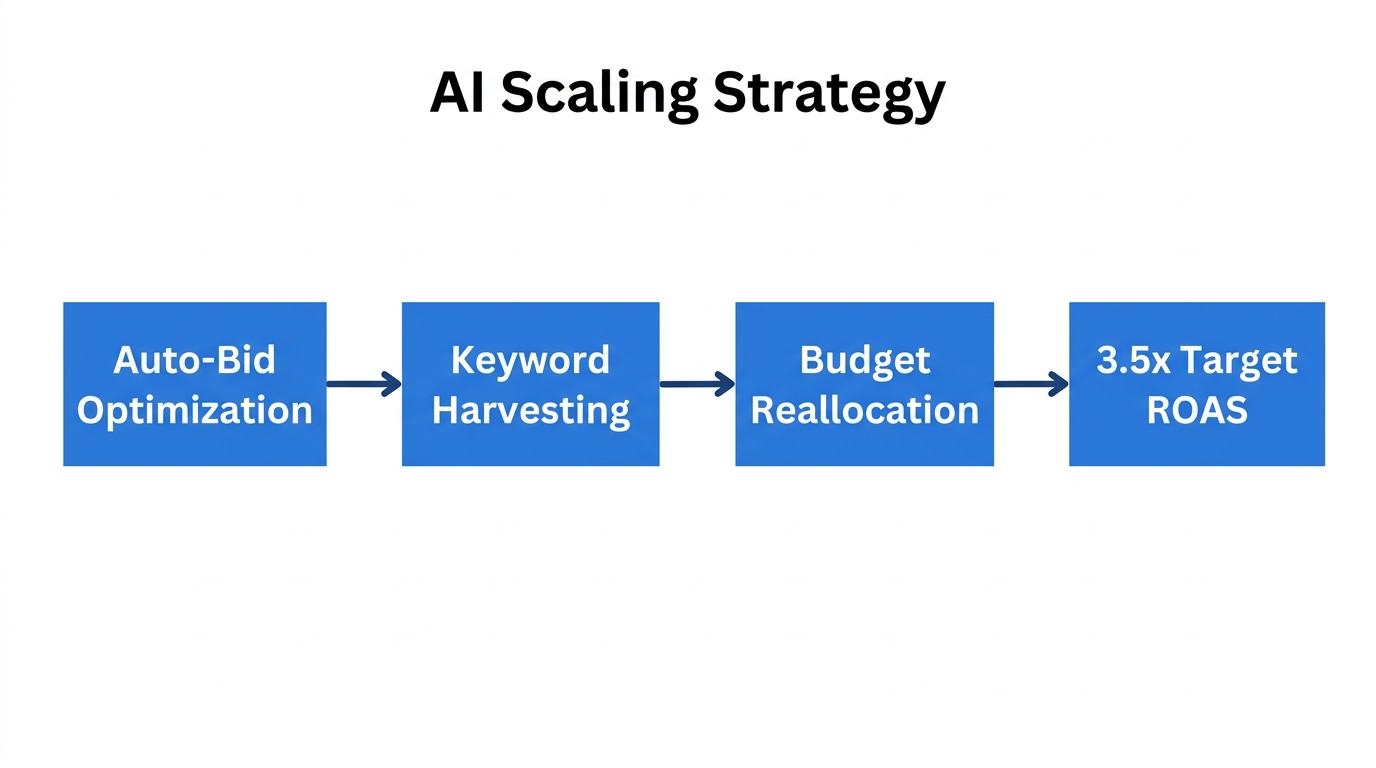
Launching on Walmart requires a specific two-phase strategy to maximize the 3:1 RoAS stability that top sellers are seeing this year.
Step 1: The Harvest Phase (Days 1–15)
Run Automatic Campaigns to protect your branded terms and allow Walmart's algorithm to harvest relevant keywords for your category. During this phase, focus on achieving a high click-through rate (CTR) to signal relevance to the Polaris algorithm.
Step 2: The Manual Scaling Phase (Days 16–30)
Identify the top-performing keywords from your automatic campaigns and move them into Manual Campaigns. Use Teikametrics or Feedonomics to manage bidding at scale, or ask Stormy AI to flag any campaigns where the CPA exceeds your target margin.
Content Authority and the "Support Vacuum"
One major pain point in 2026 is the "Support Vacuum" on Walmart. Sellers report that traditional support is highly automated and often unhelpful. To maintain Content Authority and prevent your listings from being overridden by 1P data or competitors, you must secure "Acting Brand Owner" status via the Walmart Brand Portal. This requires a 7-digit USPTO registration number.
Because Walmart’s backend can be fragmented, fixing catalog errors can take 10 attempts for every one attempt on Amazon. This is the definition of "messy back-office work" that Stormy AI is designed to handle. Instead of a human founder spending hours in support ticket loops, Stormy AI can manage the correspondence and follow-ups until the listing is corrected.
Conclusion: Which Platform Wins in 2026?
While Amazon provides the massive volume and customer base required for brand discovery, Walmart Marketplace is the clear winner for profitability and margins in 2026. The combination of $0 monthly fees, lower CPCs, and less competition density allows sellers to keep more of every dollar earned.
The winning strategy for 2026 is multichannel diversification. Use Amazon for volume, but treat Walmart as your high-margin fortress. And to keep the operations from becoming a full-time job, hire an AI ecommerce employee like Stormy AI to run the spreadsheets, monitor the ads, and keep your operation profitable in the background.