In the high-stakes world of international hostage negotiation, a single misstep can mean the difference between life and death. While the stakes of brand building strategy are rarely that literal, the psychological principles that govern human interaction remain identical. Most marketers spend their entire budget on the "first impression"—the flashy ad, the viral hook, or the sleek landing page. However, according to former lead FBI negotiator Chris Voss, the most critical moment of any interaction isn't the beginning; it is the end. This is where brand equity is truly won or lost.
By applying Chris Voss business lessons to modern marketing, brands can move beyond simple transactions and into the realm of unshakeable customer loyalty. Whether you are managing a global SaaS platform or sourcing UGC creators for a new campaign on TikTok Ads Manager, understanding the psychology of the "Last Impression" is the ultimate competitive advantage in a crowded marketplace.
The Peak-End Rule: The Science of Why We Remember the End
Chris explains why the final moments of an interaction define the entire experience.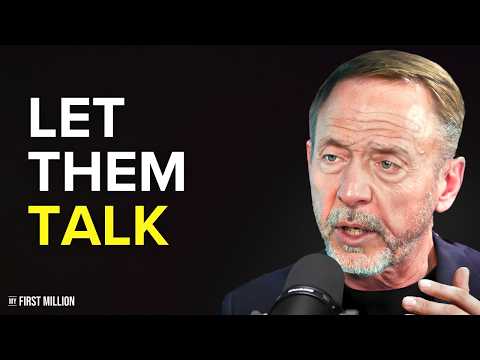
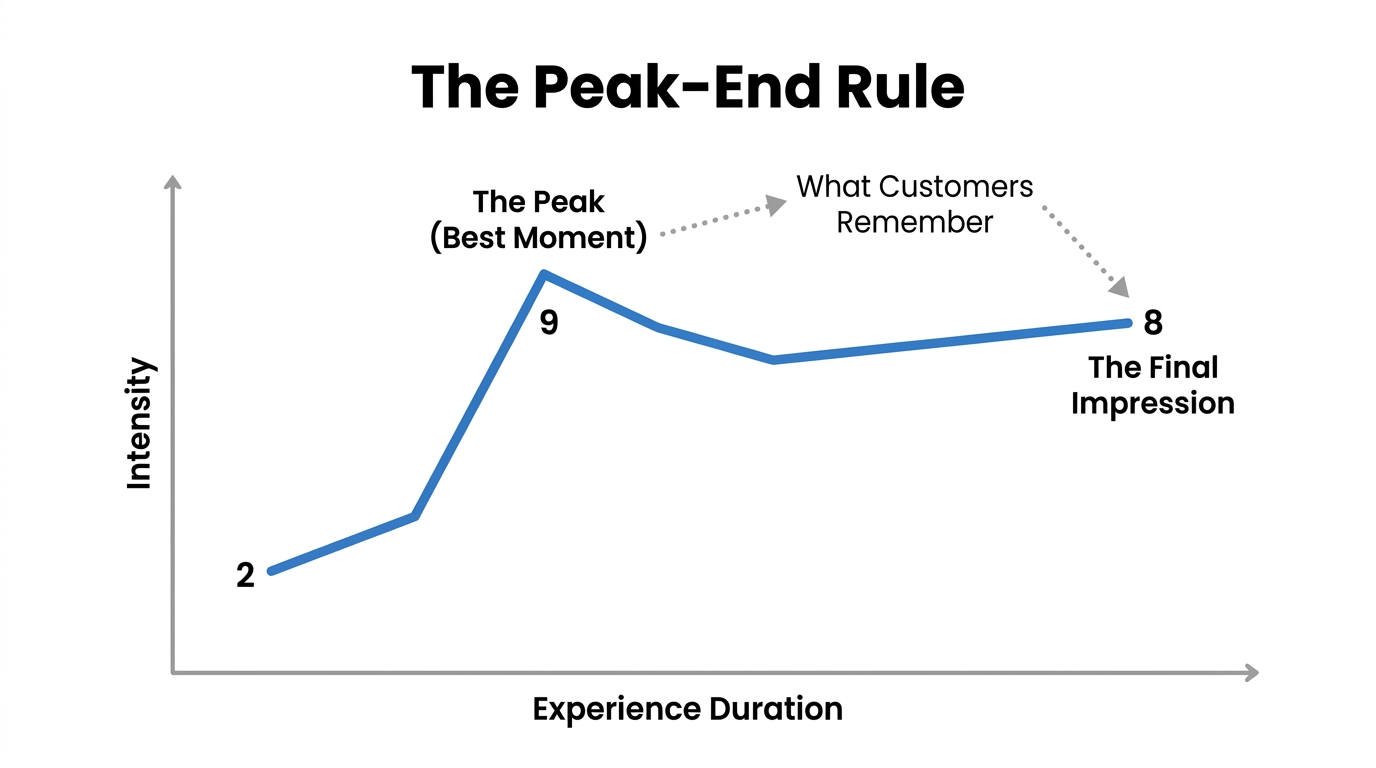
Why do we remember a two-week vacation by the single afternoon it rained, or a three-course meal by the slightly over-salted dessert? The answer lies in the Peak-End Rule. This psychological heuristic, often discussed in customer retention psychology, suggests that humans do not judge an experience based on the average of its entirety. Instead, we judge it based on its most intense point (the peak) and its final moment (the end).
As Voss notes, research from the Gallup organization shows that people don't remember things exactly how they happened. They remember how they felt at the climax and how they felt when the door closed. In branding, this means that even if a customer had a flawless experience with your product, a cold or robotic "offboarding" or a difficult return process can permanently damage your brand equity management efforts. Your customers are effectively "negotiating" their memory of your brand during that final touchpoint.
"The last impression is the lasting impression. You have to make sure they felt respected, heard, and appreciated at the very end."The Oprah Winfrey Model: Limo-In, Limo-Out
Discover how a limo ride with Oprah illustrates the power of lasting impressions.One of the most powerful examples of the Last Impression in action is the "Oprah Winfrey Model." In the entertainment industry, there is a cynical joke: "In a limo, out of a taxi." This refers to the way celebrities are treated—royally while they are useful, and discarded the moment the cameras stop rolling. However, as Voss explains, Oprah operates on a different plane: Limo-In, Limo-Out.
This philosophy ensures that every guest, regardless of how the interview went, leaves feeling loved and supported. This is a masterclass in brand equity management. When you treat your customers like a "taxi" the moment they stop paying or the moment the contract ends, you create a "leaky bucket" in your growth strategy. If you instead ensure that even canceled subscribers or former partners leave with a "limo" experience, you turn them into long-term brand advocates.
For those managing complex workflows in Notion or Asana, it’s easy to get lost in the logistics and forget the human element. But whether you are communicating via Intercom or Slack, the goal should always be to leave the other person feeling better than when the conversation started.
Tactical Empathy: The Ultimate Tool for Crisis and Retention
Explore how tactical empathy allows you to make others feel completely heard and understood.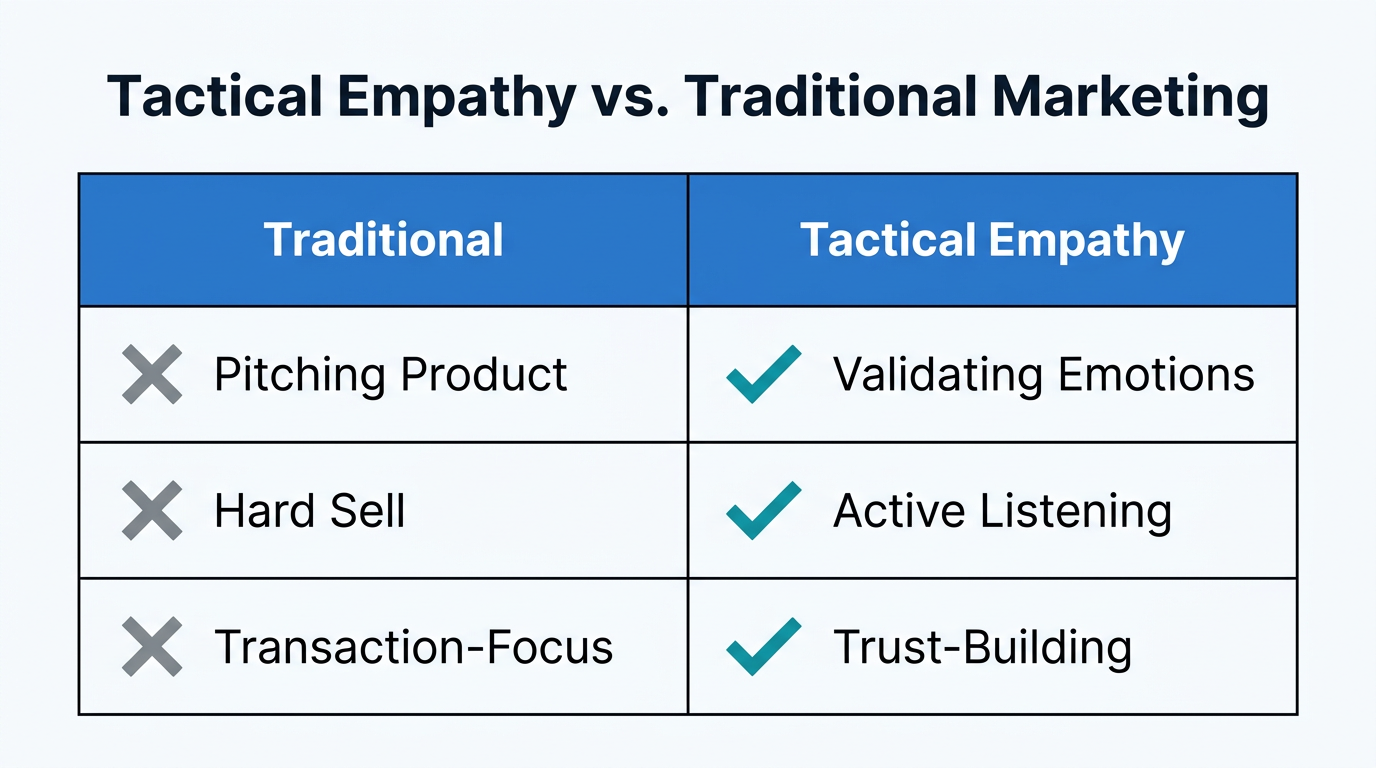
Voss defines Tactical Empathy not as being "nice," but as the act of demonstrating that you understand the other person's perspective. In branding, this is the antidote to the robotic, script-heavy customer service that plagues modern business. When a brand uses tactical empathy, it de-escalates conflict and builds immediate trust.
Think about a typical UGC dispute or a public brand crisis on social media. Most brands react with defensive legalism. Voss suggests a different path: remove yourself as a threat. By using a "late-night FM DJ voice" and acknowledging the customer's frustration before they even voice it, you trigger the release of oxytocin and serotonin in their brain. This bonding chemical makes the customer more honest and, crucially, less demanding.
If you are working with influencers or content creators, tools like Stormy AI can help you source and manage these relationships with the level of personalization that tactical empathy requires. Instead of mass-blasting generic emails, using data-backed insights allows you to approach creators with a genuine understanding of their niche and audience, setting the stage for a collaborative, high-value partnership rather than a cold transaction.
"If I can make you feel heard, you bond with me, you're more honest with me, and you're less demanding. That's a pretty good start for a negotiation."Using 'Positive Labels' to Reinforce Brand Identity
See how labeling someone's hard work creates a positive environment for honest negotiation.One of the most actionable Chris Voss business lessons is the use of "Labels." A label is a verbal observation of the other person's state. In a brand context, labeling your customers' behavior can actually reinforce a positive identity. For example, telling a customer, "You seem like someone who values quality and attention to detail," doesn't just make them feel good—it primes them to act in accordance with that label.
Voss tells a story of meeting a colleague and saying, "You seem centered." This simple label opened up a deep conversation about meditation and martial arts that wouldn't have happened with a generic "How are you?" Brands can use this same technique in their email marketing via platforms like Klaviyo or lemlist. Instead of asking for a review, label the customer's expertise: "You seem like someone who has a keen eye for [product niche]."
| Strategy | Transactional Branding | Negotiation-Based Branding |
|---|---|---|
| Discovery | Cold outreach & generic ads | Tactical Empathy & personalized discovery |
| Conflict | Defensive & Legalistic | Labeling the negative to deactivate it |
| Success Metric | Short-term conversion (ROAS) | Long-term brand equity & trust |
| Final Touchpoint | Automatic "Taxi" offboarding | "Limo" experience (Peak-End Rule) |
A Playbook for High-Retention Brand Building
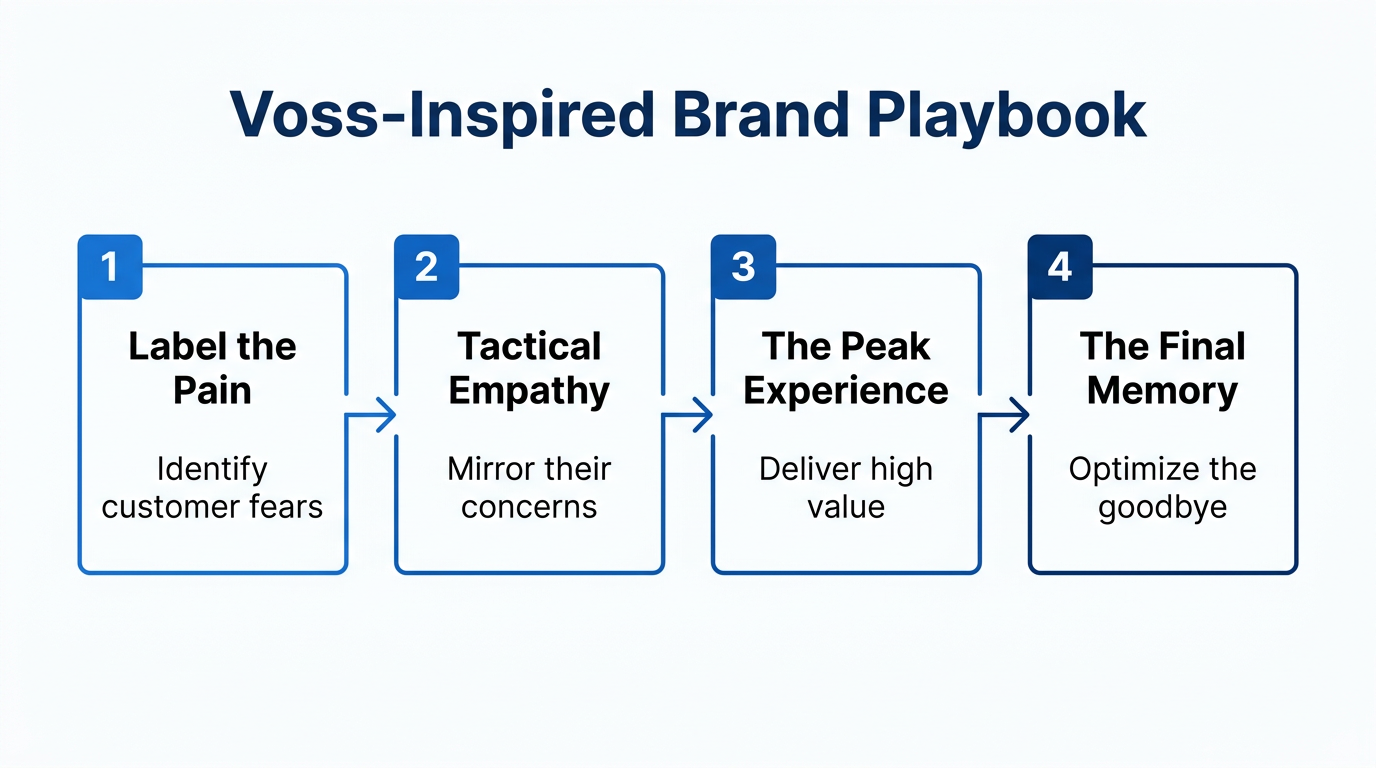
To move from a transactional business to a relationship-driven powerhouse, follow this step-by-step playbook based on Voss's principles.
Step 1: Audit Your 'Last Impressions'
Map out every journey a customer takes—from buying a product to canceling a subscription. Where do you leave them in a "taxi"? Common culprits include generic confirmation emails, difficult cancelation flows, or ignoring mentions on LinkedIn or X. Identify the final 5% of the interaction and redesign it to be the most memorable part.
Step 2: Deactivate the Negatives
Before you pitch your value, acknowledge the negatives the customer is likely harboring. If you are a startup, they might think you are unproven. If you are an enterprise, they might think you are slow. Voss suggests saying: "I’m probably going to seem like another salesperson wasting your time." This "straight shooter" approach immediately builds trust.
Step 3: Ask 'No-Oriented' Questions
Stop driving for "Yes." In customer retention psychology, "Yes" feels like a trap. "No" feels like protection. Instead of asking "Do you want to see our new features?" ask "Would it be ridiculous to take five minutes to look at how we've improved?" This gives the customer a sense of control and safety.
Step 4: Use Labels to Gather Information
Instead of interrogating customers with surveys, use labels to trigger information. "It seems like you've been having some friction with the new interface" will get more honest data than a 1-10 scale rating. Use these insights to refine your brand building strategy.
Conclusion: The Long Game of Brand Equity
In a world of automated funnels and AI-generated content, the human element of negotiation and empathy has become a luxury. Brands that master the "Last Impression" don't just win the sale—they win the customer's mind. By applying the Peak-End Rule, practicing Tactical Empathy, and adopting the Limo-Out philosophy, you can build a brand that is as resilient as it is profitable.
Remember: negotiation isn't about winning a battle; it’s about building a relationship of trust where both sides prosper. Start treating every customer touchpoint as a high-stakes negotiation for their future loyalty, and you'll find that brand equity takes care of itself.