In the crowded landscape of digital marketing, where attention is the most volatile currency, few have managed to build a moat as defensible as Jack Butcher. Through his brand, Visualize Value, Butcher transitioned from a burned-out agency designer to a digital product mogul by mastering visual content marketing and social arbitrage. His strategy isn't just about pretty pictures; it is a clinical approach to personal brand strategy that leverages simple geometry to communicate complex value. By understanding how to 'own a phrase' and execute 'permissionless apprenticeship,' any creator or business can build a content distribution engine that operates while they sleep.
The Power of Naming: Owning a Phrase
One of the most under-indexed skills in modern marketing is naming. Butcher argues that the name 'Visualize Value' was a critical catalyst for his success. Originally, he was operating as a generic graphic design consultant, but that label lacks equity. When he shifted to a specific promise—visualizing intangible value—he created a category of one. Naming acts as a hook that allows an audience to latch onto a concept and repeat it back to the creator. This is the difference between being a commodity and being a brand.
Consider the difference between 'marketing services' and 'Visualize Value.' The former is a description of a task; the latter is a description of an outcome. In the agency world, clients often misdiagnose their own problems. They might ask for a campaign when they really need a strategy. By owning the phrase 'Visualize Value,' Butcher effectively diagnosed the problem for his clients before they even spoke to him. For those looking to build a personal brand strategy, the lesson is clear: find a four-word phrase that acts as a mantra. This is similar to how Shopify uses 'Arm the Rebels' to ground their mission. When you own a phrase, you build compounding equity in an idea that people can easily share across platforms like X (Twitter) and Instagram.
Permissionless Apprenticeship: The Social Arbitrage Playbook
How do you get noticed by high-authority figures when you have zero followers? Butcher’s answer is the 'permissionless apprentice' strategy. Instead of asking for a mentor's time, you provide value to them without their permission. This involves taking the ideas of established thinkers and adding a new layer of context—in Butcher’s case, a visual layer. By visualizing the concepts found in books or tweets from people like David Perell, he tapped into their existing distribution networks. When they retweeted his work, his network grew as a direct function of their authority.
This is a form of social arbitrage. You are taking high-value, intangible ideas and making them tangible for a broader audience. It removes the friction of consumption for the audience while signaling your competence to the original creator. This strategy eventually led to Butcher’s first education product. When David Perell tweeted about wanting to learn design, Butcher’s previous 'permissionless' work had already built enough high-trust distribution that he was the natural choice to fill that gap. This is the ultimate influencer marketing trend: stop asking for favors and start creating assets that influencers are proud to share.
Step-by-Step Permissionless Apprenticeship
- Identify a Mentor: Choose someone 10 steps ahead of you whose ideas resonate with your niche.
- Analyze Their Content: Find their most popular tweets, blog posts, or podcast quotes.
- Add Your Unique Layer: Whether it’s a visual, a summary, or a implementation tool, add something that makes their content more accessible.
- Publish and Tag: Share the work publicly. If the quality is high enough, the 'magnet' effect will take over.
- Iterate Based on Feedback: Use the engagement as real-time market research to see which topics deserve a deeper dive.
The Psychology of Simple Geometry: Minimalist Design in Complex Environments
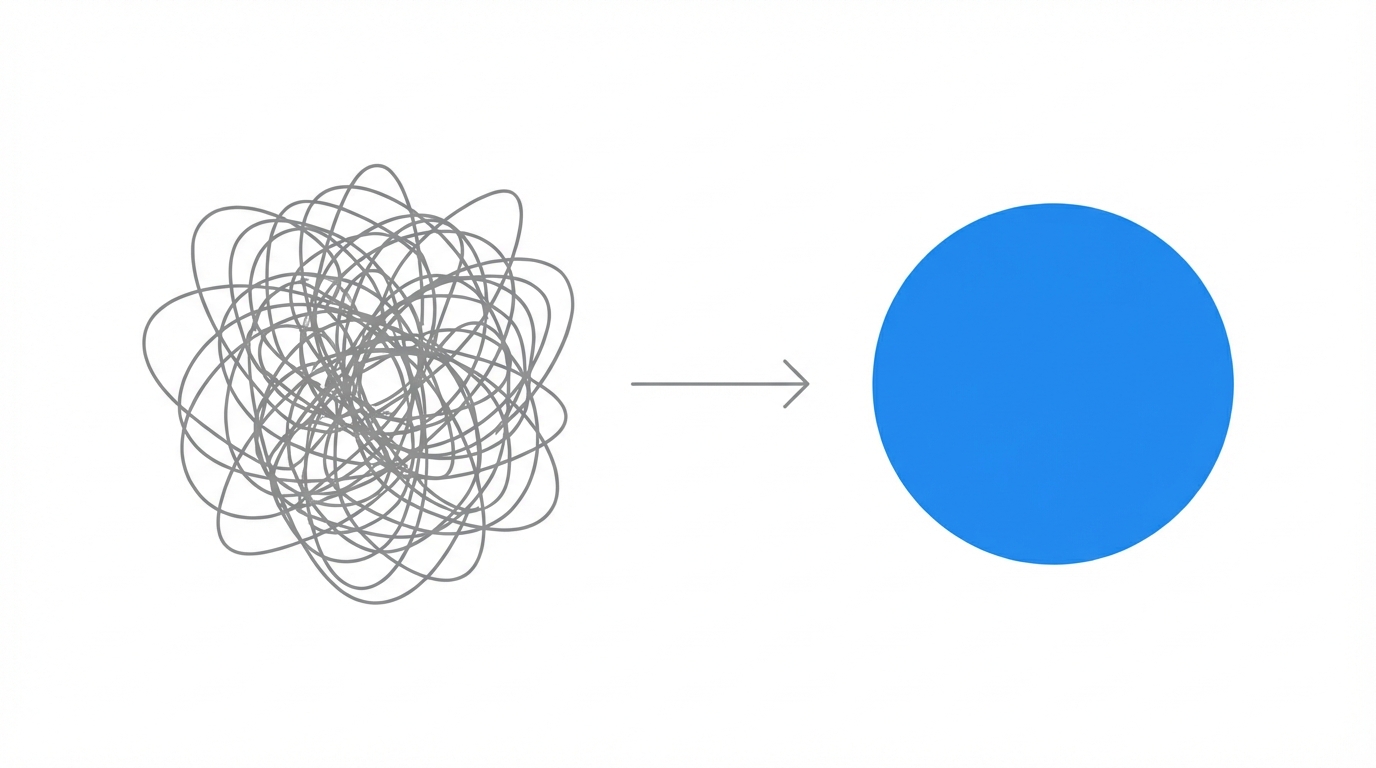
In an era of visual communication for business, the tendency is to over-complicate. Butcher did the opposite. His aesthetic—strictly black and white with simple geometric shapes—stood out because it was an island of simplicity in a sea of high-production noise. This minimalist design isn't just an aesthetic choice; it’s a psychological one. Simple geometry lowers the cognitive load required to understand a complex idea. When you can explain a seven-figure business strategy using two circles and an arrow, you demonstrate a level of mastery that fancy UI/UX patterns cannot match.
This 'aesthetic magnet' attracts a specific type of high-value collaborator. People who value clarity, efficiency, and logic are naturally drawn to the Visualize Value style. This consistency builds brand recognition. Even today, if you see a black-and-white diagram on social media, you immediately think of Jack Butcher. For brands, building this kind of visual moat is essential for long-term content distribution. It allows your content to be identified even without a logo present. This approach is highly effective for software companies and service businesses that sell 'intangible' products—things you can't see, like code or consulting.
Social Media Feedback Loops: Real-Time Market Research
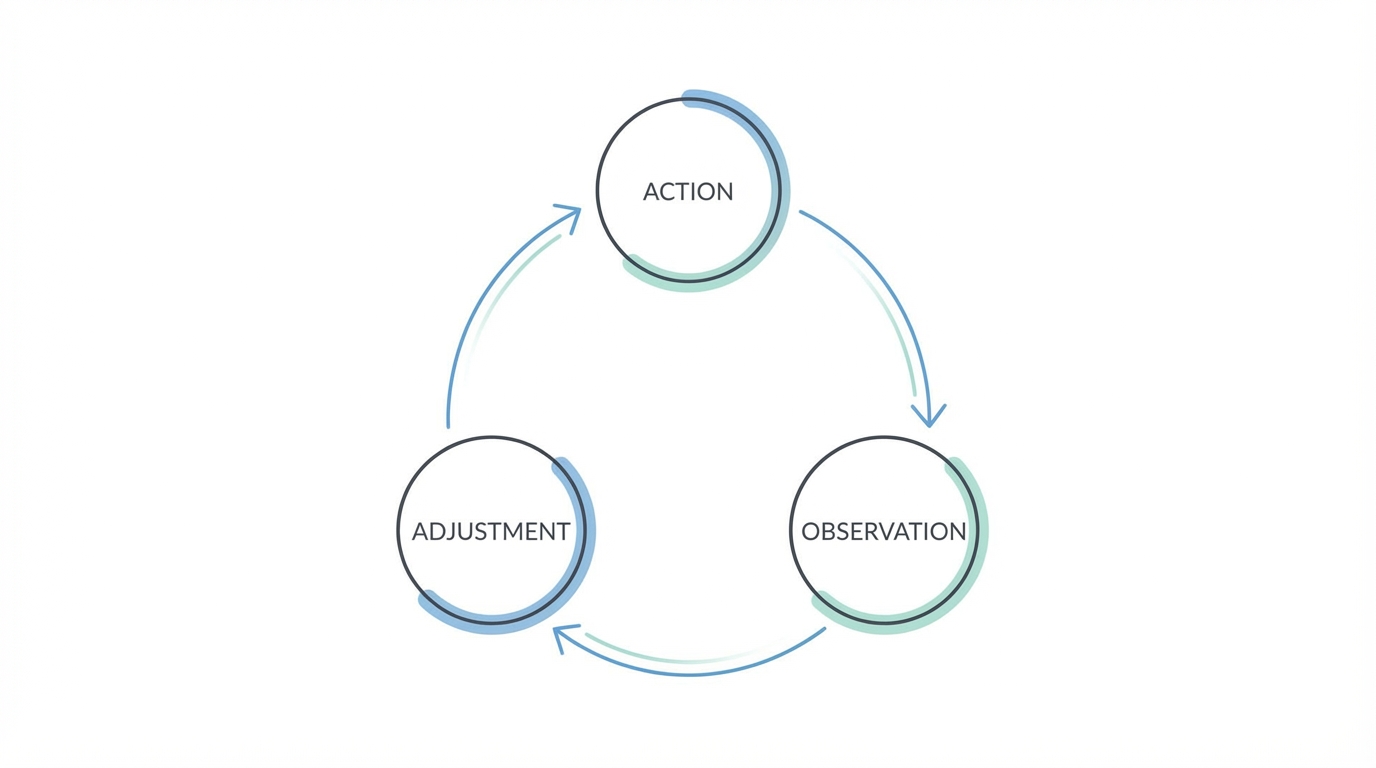
Butcher’s transition from a service agency to a product business was not a 'grand plan'—it was a reaction to real-time feedback loops. He used social media as a laboratory. Each post was an 'idea germ.' If a visual about 'compounding' performed well, he knew there was demand for more content on that topic. This is the Lean Startup methodology applied to content creation. Instead of spending months building a product in a vacuum, he waited for the 'invisible hand' of the market to signal what he should build next.
His first product, the Daily Manifest, started as a simple PDF template he used for his own time management. After seeing consistent feedback about procrastination and lack of focus from his audience, he packaged it for $9. This led to a community of 60 people in a WhatsApp group, providing him with 'co-founders' who helped him refine his next steps. Today, that product has over 20,000 downloads. For those managing creator relationships or sourcing UGC, tools like Stormy AI can help source and manage UGC creators at scale by identifying which influencers are already resonating with these specific high-value niches.
Building the Distribution Engine: From Agency to Product
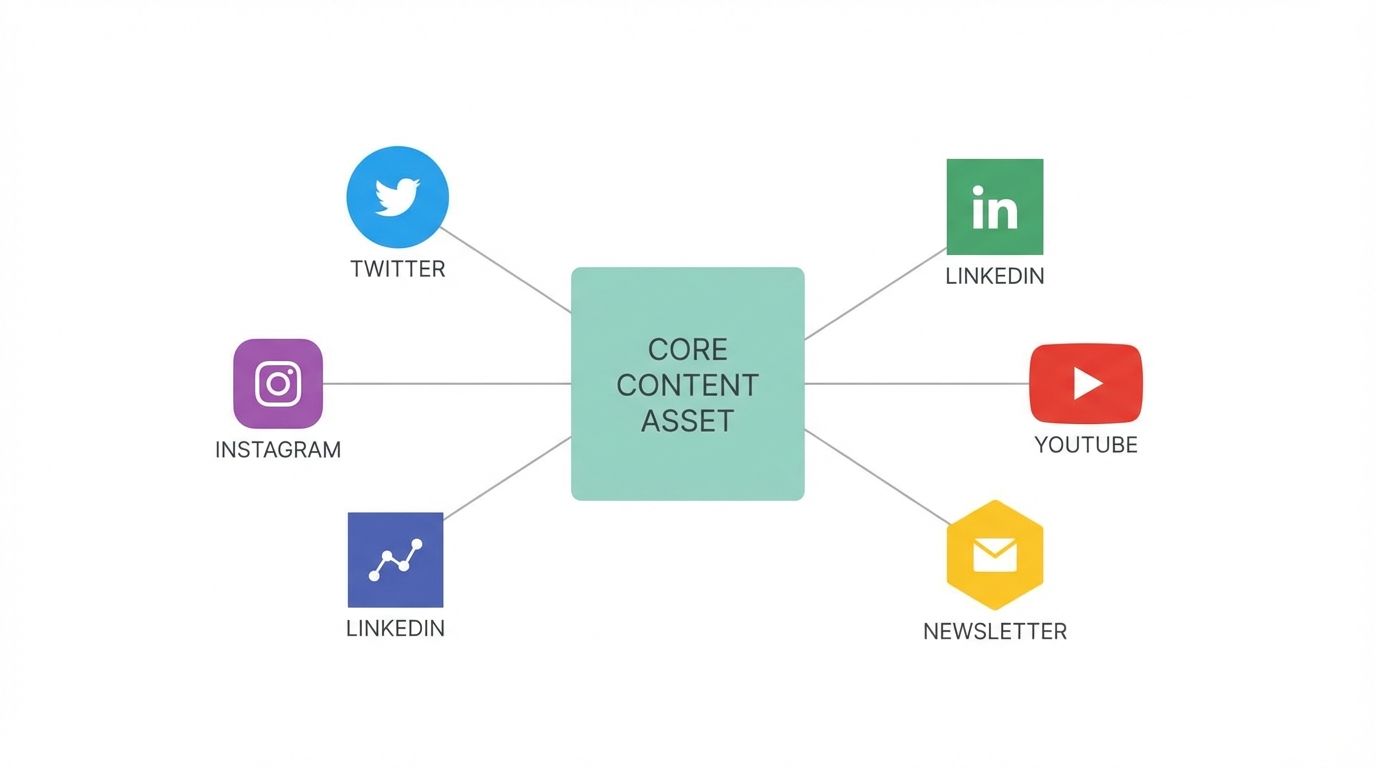

The ultimate goal of the Visualize Value strategy is to build a content distribution engine that decouples time from money. In the agency model, you are constantly fighting for the next client, often with misaligned expectations. In the product model, your distribution (your audience) acts as the top-of-funnel for everything you do. Butcher describes this as the 'Build Once, Sell Twice' philosophy. By productizing his design process into a course, he could sell his expertise to thousands of students simultaneously without increasing his workload.
This engine is fueled by consistency. Even as he moved into the Web3 and NFT space, the core engine remained the same: put out art that people identify with, build a network around that art, and integrate technology as it becomes appropriate. He used platforms like Foundation to sell NFTs, generating significant revenue by leveraging the trust he had already built. For brands, this means your distribution is your most valuable asset. If you have a solved distribution problem, the world is your oyster. You can launch SaaS products, education, or physical goods to an audience that already trusts your 'aesthetic' and 'phrase.'
The Future: Web3, AI, and the Terminal Online
Looking toward 2030, the landscape of visual content marketing will likely shift from broad social networks to fractured, high-affinity communities. Butcher envisions a world where 'Twitter' might be a protocol rather than a platform, and where personal networks are portable across different digital environments. This is where Web3's promise lies: the ability to share upside in a network's growth with the people who actually contribute to it. For example, instead of just consuming content, community members could own pieces of the brand's ecosystem through tokenization.
As AI tools like GPT-4 and DALL-E become mainstream, the role of the 'graphic designer' will evolve. There may be fewer people with that specific job title, but more people doing 'graphic design' through prompt engineering and visual synthesis. The differentiation will come from the talent of the person using the technology and the trust they have built with their audience. To manage these increasingly complex relationships between creators and brands, modern platforms are necessary. Stormy AI helps brands navigate this future by providing AI-powered influencer discovery and vetting, ensuring that the collaborators you find actually align with your brand's minimalist or high-trust aesthetic.
Conclusion: Actionable Takeaways
The Visualize Value strategy is a masterclass in high-trust distribution. By focusing on a narrow niche, owning a unique phrase, and providing 'permissionless' value, Jack Butcher built a lifestyle business that generates millions without the overhead of a traditional agency. Whether you are a solo creator or a marketing lead at a startup, the principles remain the same: simplify the complex, be consistent with your aesthetic, and listen to the 'invisible hand' of your social feedback loops. Start by identifying your 'Daily Manifest'—the small, compounding action you can take every day to build your own distribution engine.