In 2026, the retail landscape has officially transcended the search bar. We are no longer just typing queries; we are pointing cameras. The global visual search market, which was valued at just $41.72 billion a few years ago, is now on a relentless trajectory toward $151.60 billion, according to data from Grand View Research. For e-commerce brands, this isn't just a tech trend—it’s a survival mandate. With over 20 billion monthly searches occurring on Google Lens alone, and 4 billion of those being high-intent shopping queries, the ability to make your products "machine-readable" is the difference between scaling revenue and fading into digital obscurity.
The Multimodal Revolution: Beyond Text-Based Search
The standard for ecommerce growth 2026 is defined by multimodal search. This allows users to combine an image with text—for example, snapping a photo of a mid-century modern chair and typing "available in emerald green?" to find specific inventory. This shift is becoming mainstream through Searchanise and Google’s Multisearch tools, which bridge the gap between inspiration and purchase.
Retailers that have successfully integrated AI-powered visual discovery are already seeing the fruits of their labor. Current benchmarks from industry leaders show that implementing these tools can lead to a 30% increase in conversion rates and a 25% lift in total customer engagement. When users find exactly what they are looking for via an image, the friction of the traditional "search-and-filter" journey disappears.
"The search bar is becoming a backup tool; the camera is now the primary interface for high-intent shopping in 2026."
Google Lens for Business: Capturing 4 Billion Monthly Shopping Searches
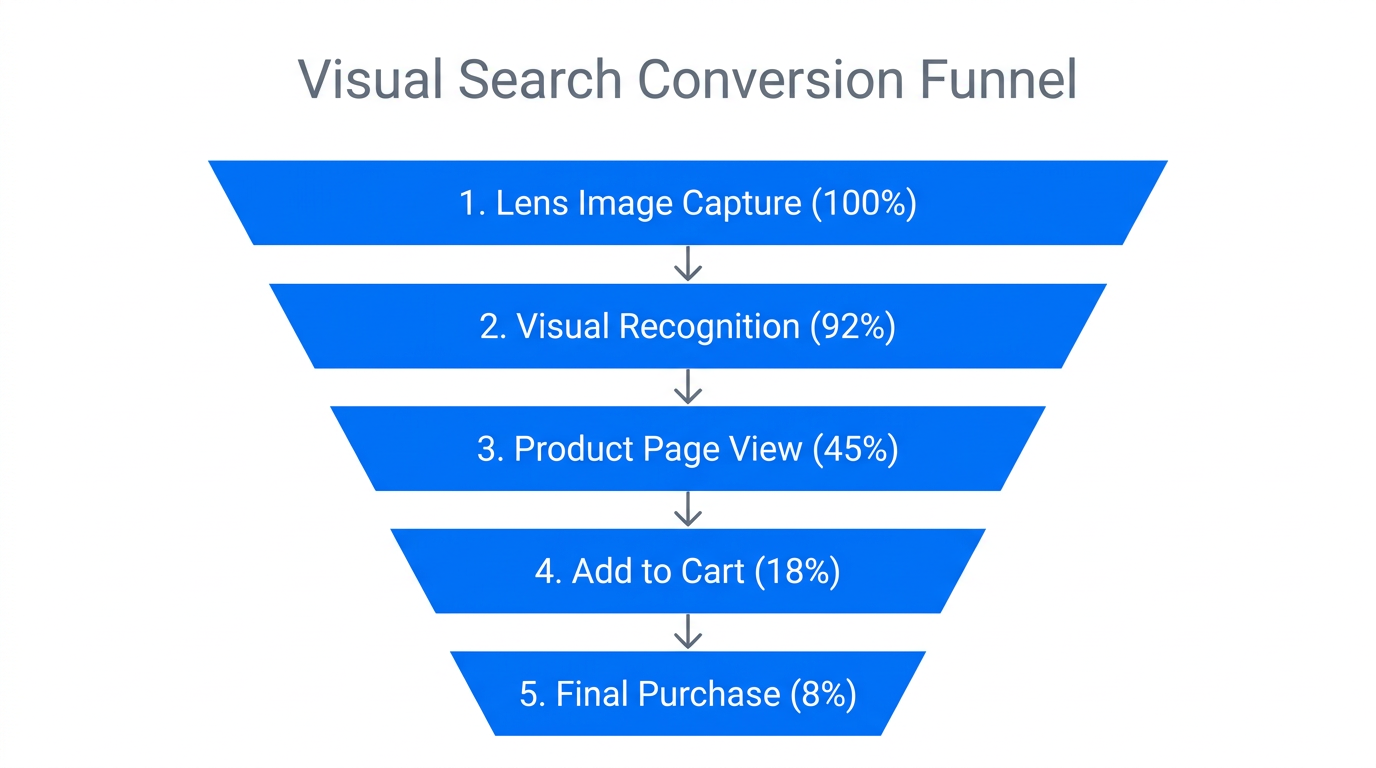
Google Lens has evolved into the world's most powerful shopping discovery engine. To win here, your visual search marketing strategy must focus on "Machine Vision" optimization. Google's algorithms don't just see pixels; they see entities, textures, and context. If your product imagery isn't optimized for the reported 4 billion monthly shopping searches, you are leaving millions in potential GMV on the table.
Optimizing for the Google Vision API
Google interprets your visuals through its Vision AI. To ensure your products rank, you must move beyond basic photography. Use tools like Google Cloud Vision AI to test how the algorithm categorizes your items before they go live. High-resolution images (at least 1080px) from 5–8 different angles are now the industry standard to build the "confidence scores" required for top-tier placement.
| Feature | Traditional Text Search | 2026 Visual Search |
|---|---|---|
| User Intent | Broad / Informational | High-Intent / Transactional |
| Discovery Method | Keywords & Phrases | Images & Multimodal Prompts |
| Conversion Rate | Average (2-3%) | High (Up to 30% Lift) |
| Primary Platform | Desktop/Mobile Web | Mobile App / Camera Overlay |
Amazon StyleSnap Marketing: Frictionless Fashion Discovery
Amazon has perfected the art of the "screenshot-to-cart" pipeline. By leveraging advanced computer vision within its StyleSnap feature, Amazon allows users to upload any fashion inspiration and instantly find matching or similar items within the Amazon ecosystem. For brands selling on the platform, Amazon StyleSnap marketing is no longer optional—it is the primary driver of mobile fashion discovery.
Success on StyleSnap requires impeccable image metadata. Descriptive, hyphenated filenames (e.g., womens-boho-floral-maxi-dress-silk.jpg) and non-spammy alt text are critical. According to resources on Google Search Central, avoiding vague terms like "product image" is essential for AI indexing. If the AI can't identify the fabric, pattern, and silhouette from your metadata, it won't recommend your product to a user looking to "Complete the Look."
"80% of consumers now rely on AI-generated visual answers for their shopping queries, drastically reducing traditional site visits but rewarding discoverable products."
Preparing for Agentic Shopping: The Rise of AI Personal Shoppers
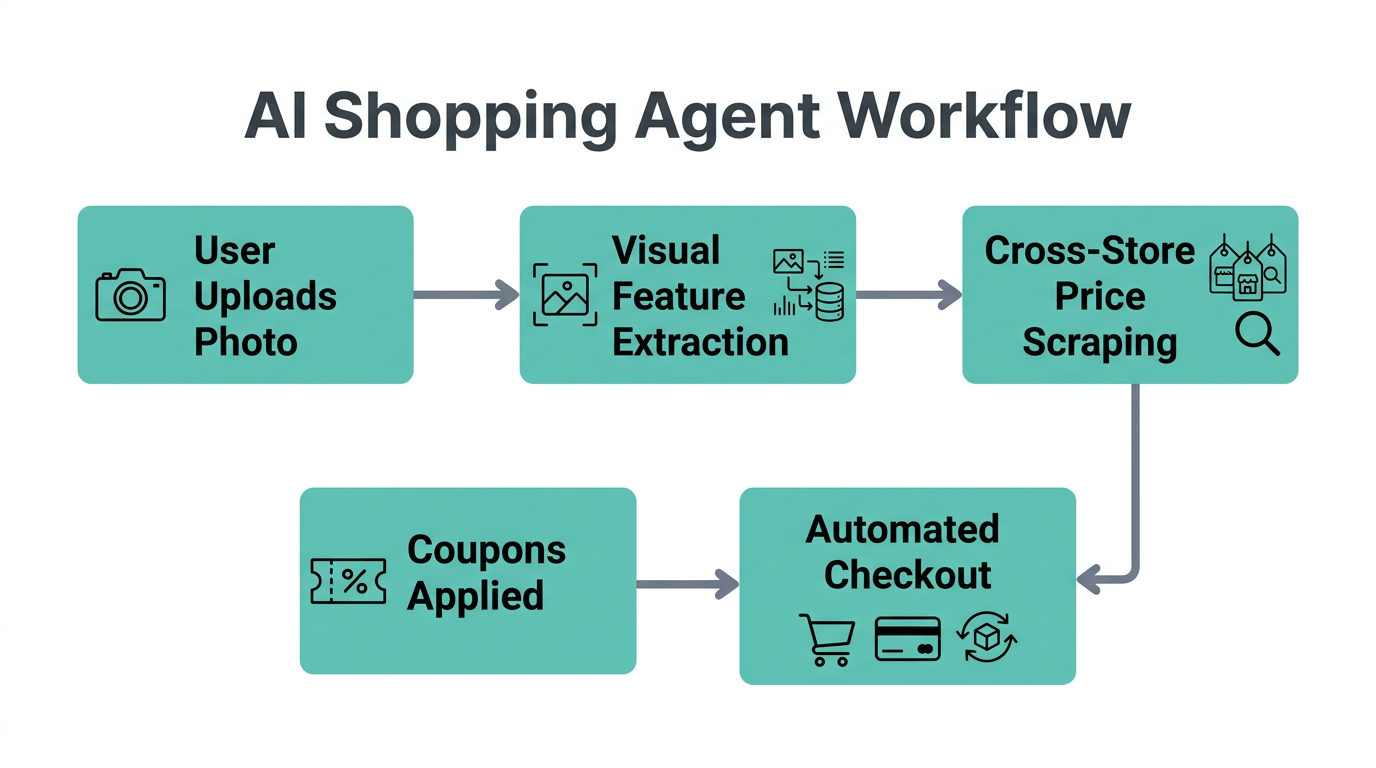
Perhaps the most radical shift in 2026 is the emergence of Agentic Shopping. We are moving toward a world where AI "agents" act as autonomous personal shoppers. These agents, powered by frameworks like OpenAI's latest models, can compare products across millions of images, negotiate prices via API, and complete a purchase without the human user ever clicking "add to cart."
To be "agent-ready," your technical SEO must be flawless. This includes implementing deep structured data (Schema Markup). Brands must use Product, Offer, and ImageObject JSON-LD schemas, as defined by Schema.org, to ensure AI models can accurately parse price, availability, and SKU data in real-time. Without this, your brand becomes invisible to the autonomous agents that are increasingly controlling household budgets.
The 2026 Technical SEO Checklist for Visual Search
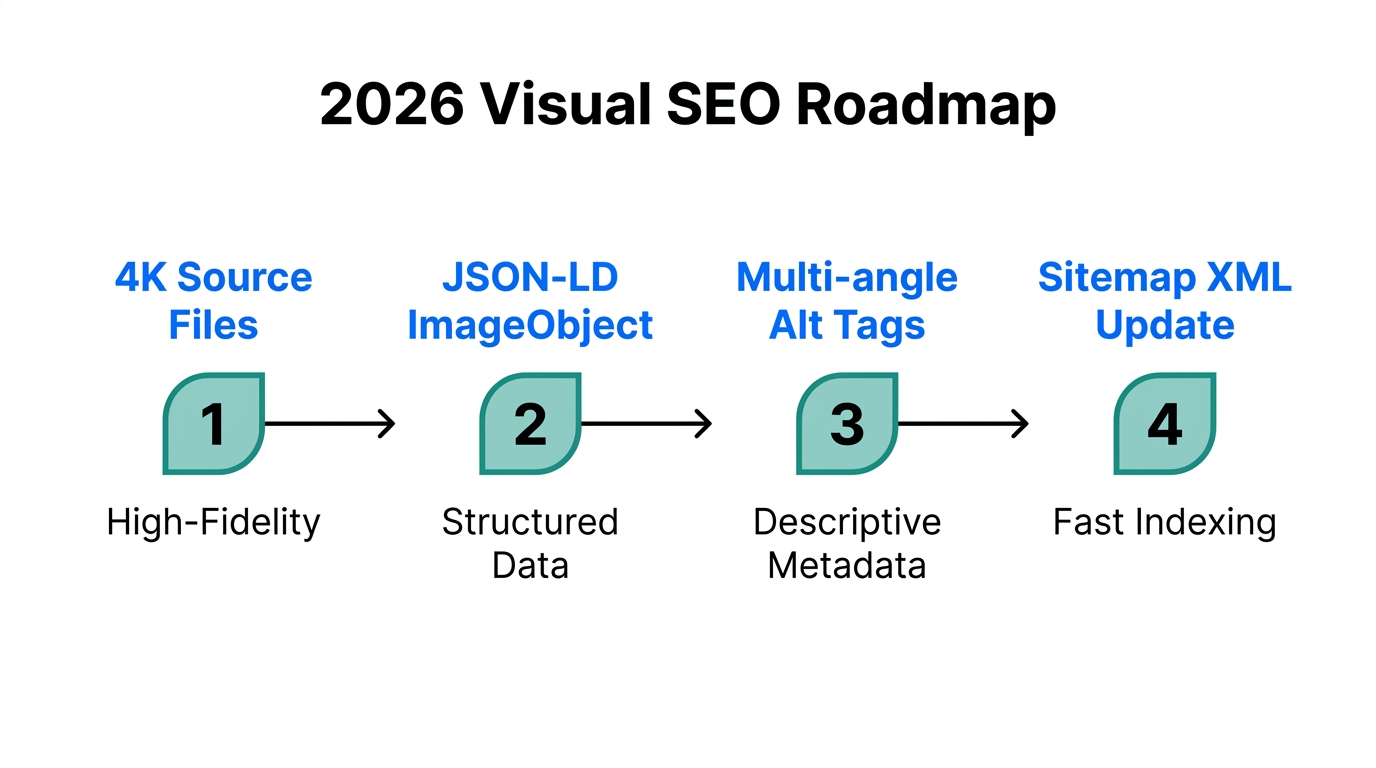
To achieve ecommerce growth 2026, your technical foundation must support high-velocity visual indexing. Follow this playbook to ensure your catalog stays competitive:
- Implement Advanced Schema: Link every image explicitly to a product entity using structured data tools available in Google Search Console.
- Adopt Next-Gen Formats: Switch all product assets to WebP or AVIF to maintain 4K clarity with minimal file size.
- Enable On-Site Visual Search: Integrate tools like Syte or ViSenze to allow users to search your own catalog via their camera roll.
- Optimize for Mobile Performance: Ensure your mobile UX doesn't hide the "camera" icon. If users can't find the tool, they won't use it.
- Human Review of AI Tagging: Avoid "hallucinations" in auto-tagging by having humans review AI-generated tags for texture and material accuracy.
Additionally, sourcing high-quality, authentic imagery is vital. Many brands are now using Stormy AI to discover and collaborate with UGC creators who can produce the diverse, real-world product photos that Google Lens and Pinterest thrive on. Authentic content often outranks sterile studio shots in visual search results because it provides more "real-world" context for the AI to analyze.
"IKEA’s use of IKEA Kreativ led to a 35% reduction in return rates—proving that visual discovery is as much about post-purchase satisfaction as it is about the initial sale."
Conclusion: The Visual-First Future
The transition to a visual-first e-commerce economy is no longer a future projection—it is the current reality of 2026. By optimizing for multimodal search trends and mastering platforms like Google Lens and Amazon StyleSnap, brands can tap into a $151 billion market that rewards clarity, technical precision, and authentic imagery. Start by auditing your current image metadata and implementing structured data today; the AI agents of tomorrow are already looking for your products.
For brands looking to scale their visual content library, using an AI-powered platform like Stormy AI to find and manage creators is the fastest way to generate the volume of high-quality imagery needed to dominate the visual search results pages.