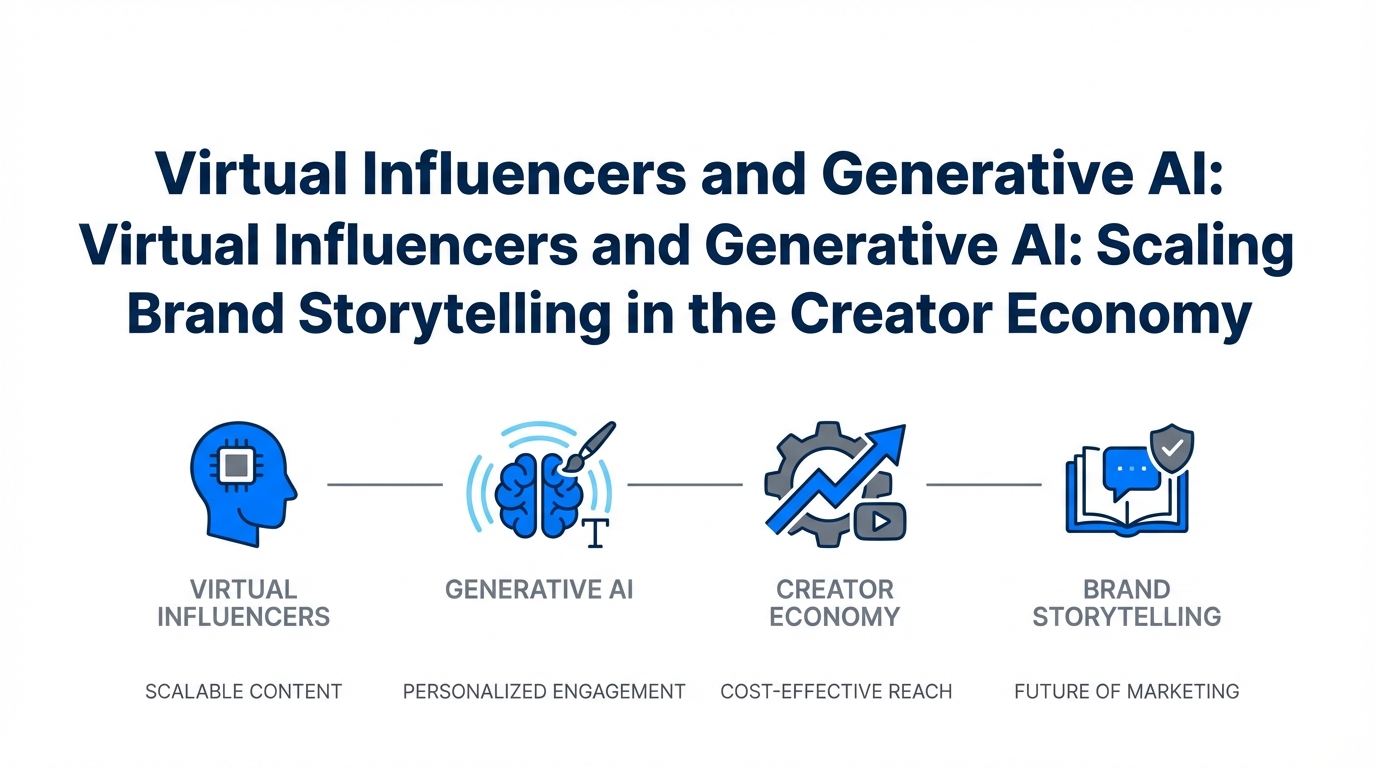
The creator economy is undergoing its most significant transformation since the invention of the smartphone. What started as a landscape of organic, human-centric storytelling is rapidly evolving into a sophisticated ecosystem where digital creators and generative AI in marketing take center stage. As we move into 2025, the lines between the physical and the virtual are blurring, offering brands unprecedented opportunities to scale their narratives without the logistical constraints of traditional production. Influencer marketing is no longer just a checkbox for brand awareness; it is becoming a mission-critical channel projected to reach $47.32 billion by 2025. In this high-stakes environment, the integration of virtual influencers and autonomous AI tools is the new frontier for efficiency and engagement.
The $9.6 Billion Rise of Virtual Influencers
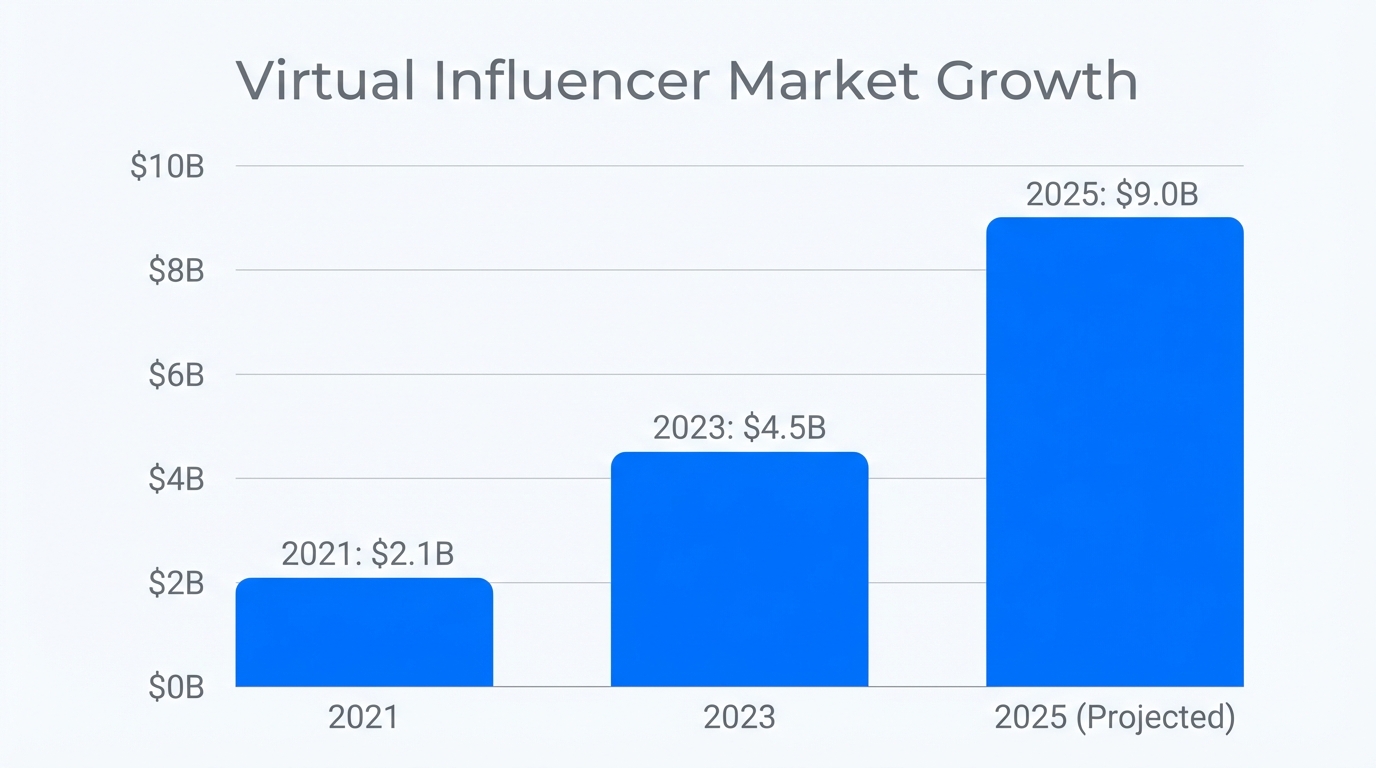
The concept of a non-human entity commanding a following of millions isn't just a science fiction trope anymore—it's a massive industry. The virtual influencer market is expected to skyrocket to $9.6 billion by 2025. These digital assets offer a level of control that human creators simply cannot match. For global brands, the appeal lies in the ability to craft a brand ambassador that never tires, never ages, and—most importantly—is completely immune to real-world scandals. According to the 2024 Benchmark Report, nearly 60.2% of marketers are already leveraging AI to optimize their campaign identification and output.
Unlike human influencers who may have conflicting brand deals or unpredictable personal lives, digital creators are meticulously designed to align with a brand's aesthetic and core values. This reliability allows for long-term storytelling that feels consistent across multiple platforms. Furthermore, AI-driven campaigns are already reporting 37% higher engagement rates and significantly more efficient targeting compared to manual, human-led methods. This shift is particularly visible in how Gen Z interacts with media; they prioritize the quality of the content and the narrative over the biological nature of the creator.
"The future of brand storytelling isn't just about finding the right person; it's about building the perfect persona that can live and breathe the brand's identity 24/7."
| Feature | Human Influencers | Virtual Influencers |
|---|---|---|
| Production Risk | High (Human error, scheduling) | Zero (Fully digital control) |
| Scalability | Limited by physical constraints | Infinite (GenAI can create 1000s of assets) |
| Brand Safety | Variable | Maximum Control |
| Engagement | Personal/Relatable | High Novelty/Aesthetic Appeal |
Case Studies: Lil Miquela and Rae
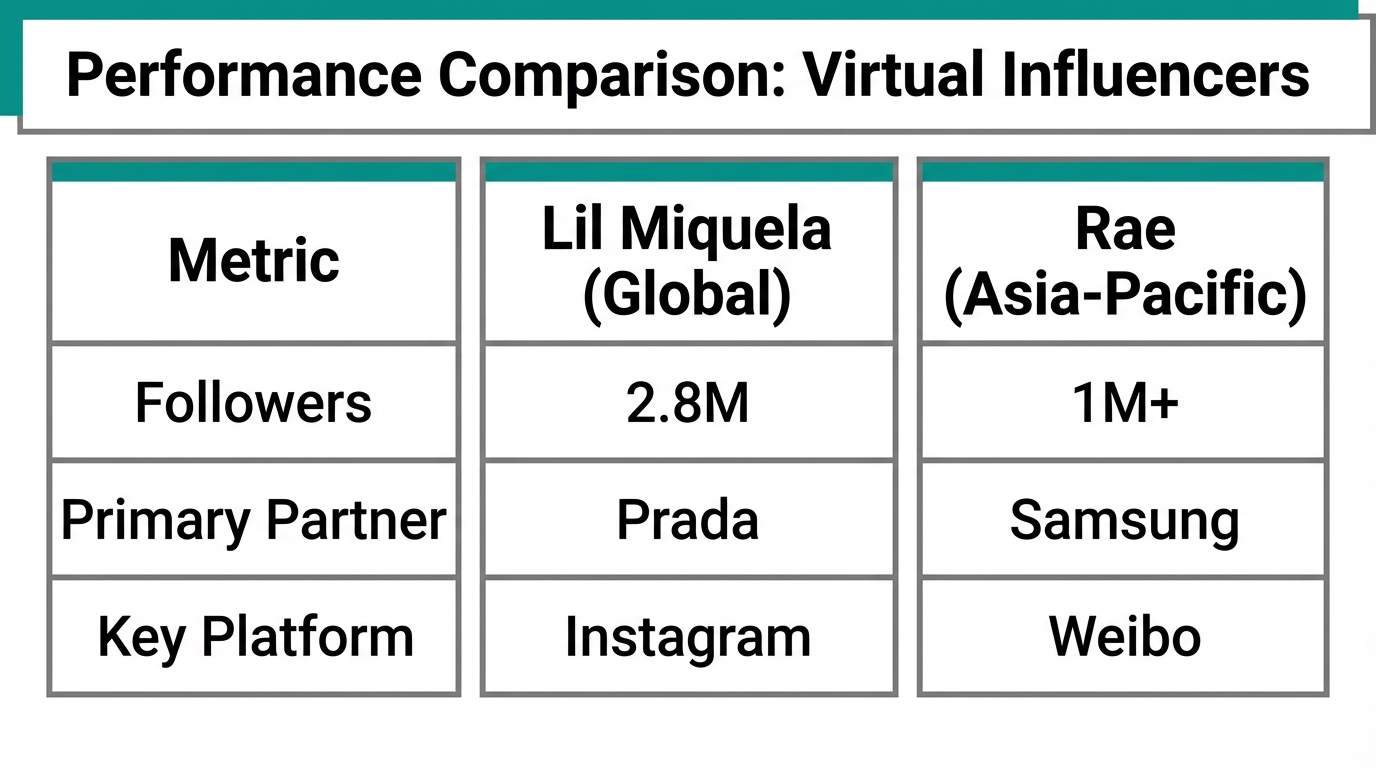
To understand the practical application of this technology, we must look at the pioneers. Lil Miquela, perhaps the most famous AI influencer case study, has collaborated with high-fashion giants like Prada to reach tech-savvy audiences. By using Lil Miquela, Prada bypassed the typical logistical nightmares of international shoots while maintaining a hyper-curated, futuristic image that perfectly targeted younger demographics. These digital creators aren't just images; they are characters with backstories, opinions, and interactive histories.
Similarly, Samsung leveraged Rae, a virtual influencer from Singapore, for the launch of the Galaxy S21. Using Rae allowed Samsung to tap into a high-engagement community without the unpredictability of a human spokesperson. The results were clear: higher-than-average engagement rates and a distinct positioning for the product as being at the cutting edge of tech. This move reflects a broader trend where 92% of brands are now either actively using or open to integrating AI into their marketing workflows to capture attention in a fragmented digital landscape.
Generative AI and Hyper-Personalization at Scale
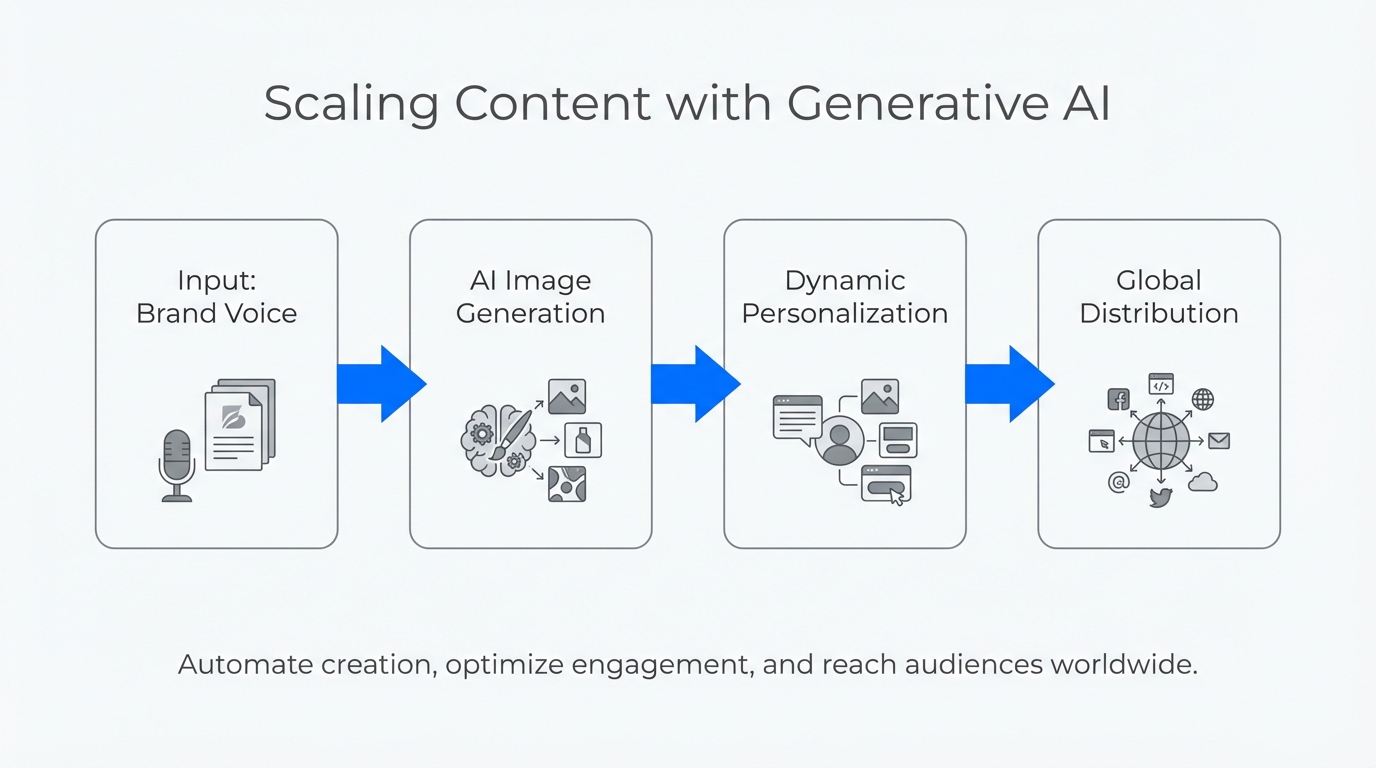
The true power of AI content production lies in its ability to achieve hyper-personalization at scale. Traditionally, a creative team might develop three or four "hooks" for a campaign. With generative AI, brands can now generate 50+ unique campaign hooks in seconds, each tailored to a specific micro-segment of their audience. This allows for rapid A/B testing that would be cost-prohibitive with human production. For example, brands like Fashion Nova have reportedly used AI-driven systems to reduce content production costs to as little as $0.03 per image, a fraction of the price of traditional photography.
Another iconic example is the Heinz "AI Ketchup" campaign. Heinz utilized DALL-E to ask the AI to "draw ketchup." The result? The AI almost exclusively produced images resembling the iconic Heinz bottle, proving that even machine learning models associate the product with the brand. This campaign generated a staggering 800 million impressions, demonstrating that generative AI in marketing can be used for more than just production—it can be a powerful tool for brand validation and viral storytelling.
"AI doesn't just lower the cost of content; it lowers the barrier to creativity, allowing brands to test thousands of ideas for the price of one."
When managing these large-scale campaigns, using an AI-powered platform is essential for organization. Tools like Stormy AI enable brands to discover and vet creators who fit these specific AI-driven niches, ensuring that even as content volume increases, audience quality remains high. Platforms with automated social listening can capture nearly 100% of social content, potentially saving brands over $150,000 annually in manual labor costs.
Vetting and Managing Digital Assets
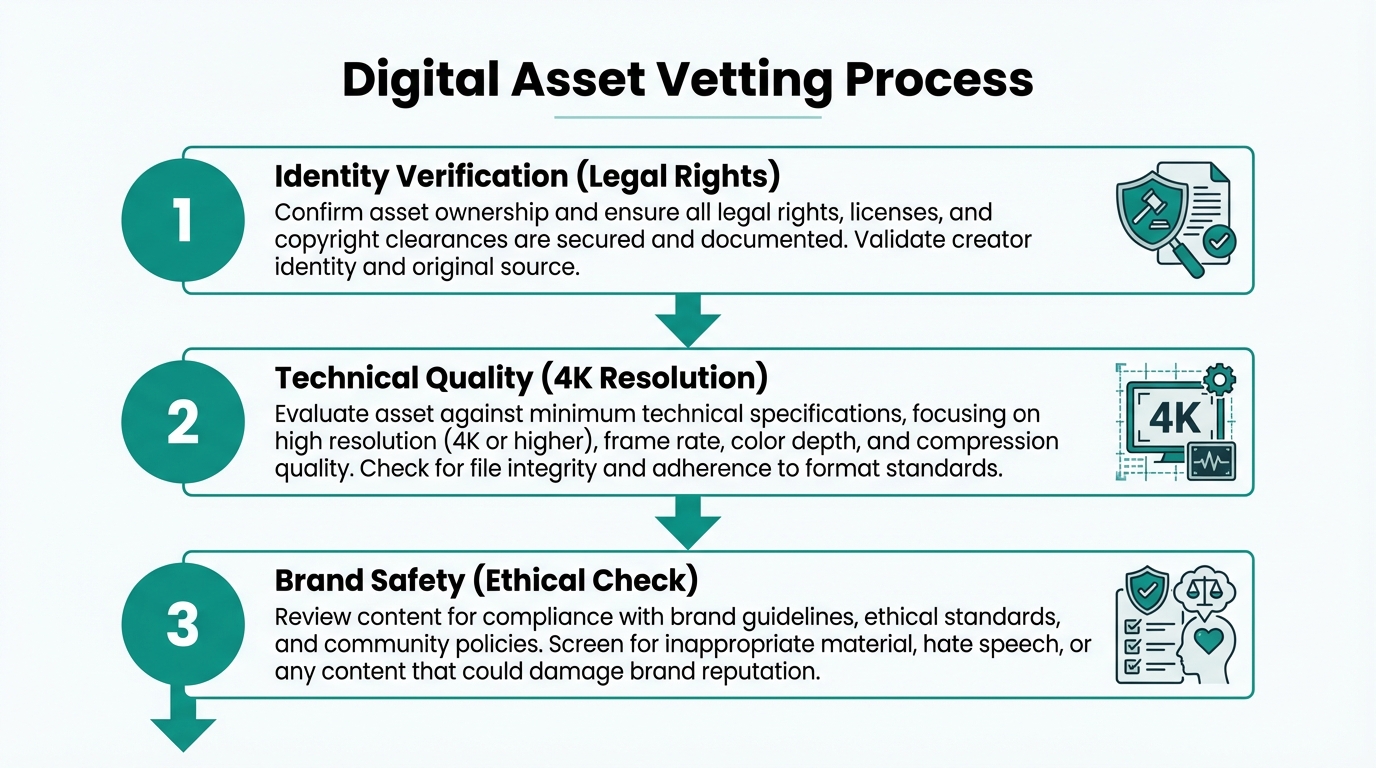
As the number of digital creators grows, the challenge shifts from discovery to vetting. Not every virtual persona has a high-quality audience. Brands must use advanced analytics to detect fake engagement and audience overlap. This is where AI influencer marketing automation becomes vital. Instead of manual vetting, modern platforms use semantic search to find "lookalike" creators based on visual aesthetics rather than just keywords. This ensures that the virtual assets you partner with actually reach the intended demographic.
Effective management also requires a sophisticated CRM. Modern systems can now forecast a creator's potential ROI and conversion rates before a contract is signed. This moves the industry away from "vanity metrics" like follower count and toward predictive performance modeling. For brands looking to scale, an all-in-one AI agent from Stormy AI can handle the discovery, outreach, and daily follow-ups on a schedule, essentially putting your influencer marketing on autopilot while you sleep.
Ethics, Transparency, and the Human Element
With great power comes the need for rigorous ethical standards. The IAB UK has been at the forefront of this, highlighting a growing demand for transparency in AI-generated content. Consumers are becoming more discerning; they want to know if the person they are following is biological or digital. Navigating the IAB UK guidelines is essential for maintaining consumer trust and avoiding legal pitfalls. Transparency isn't just a hurdle; it's an opportunity to build a deeper connection with an audience that values honesty in the digital age.
Industry leaders emphasize a "co-pilot" mindset. While AI excels at the data-heavy tasks of AI content production, vetting, and logistics, it cannot replace the human-to-human trust that defines the core of influencer marketing. The goal of automation should be to "automate the logistics, not the relationship." Authentic engagement still requires a human touch to guide the AI's output and ensure the messaging doesn't become tone-deaf or robotic. Over-automating outreach, for instance, can lead to generic DMs that influencers—virtual or otherwise—will simply ignore.
Conclusion: The Future of Storytelling
The integration of virtual influencers and generative AI in marketing is no longer a futuristic experiment; it is a proven strategy for brands that want to scale efficiently in the creator economy. By leveraging AI influencer case studies from giants like Prada and Samsung, smaller brands and app developers can see the path forward: lower production costs, risk-free brand ambassadors, and hyper-personalized content that resonates with a global audience. The key to success lies in balancing this technological power with ethical transparency and strategic human oversight. As we look toward 2025, the brands that embrace AI as their creative co-pilot will be the ones that define the next era of digital storytelling.