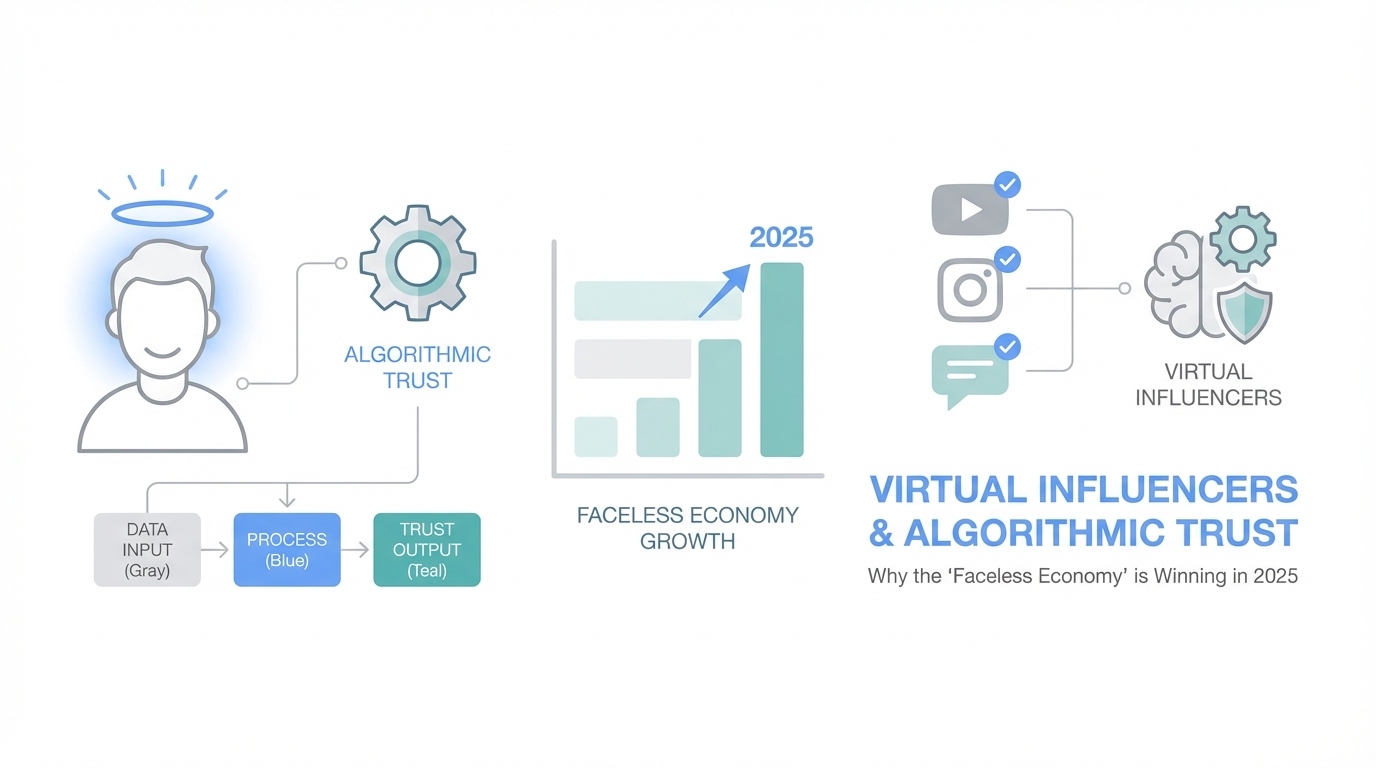
The digital marketing landscape is currently undergoing a tectonic shift, moving away from the era of the human-centric model that defined the 2010s. We are entering the age of the "Faceless Economy," where virtual influencers and AI-generated personas are no longer niche experiments but core components of brand strategy. By 2025, the distinction between "real" and "artificial" has blurred, replaced by a new metric: algorithmic trust.
At the forefront of this movement are icons like Lil Miquela, a digital avatar with millions of followers who has collaborated with luxury houses like Prada and Calvin Klein. While legacy tools like Captiv8 were built to manage human relationships, they often struggle with the data-heavy requirements of digital-first assets. In contrast, the market is seeing massive growth; according to recent data from Statista, the global influencer marketing market has ballooned into a multi-billion dollar industry where virtual entities command higher engagement rates than their human counterparts.
The "Faceless Economy" thrives on platforms like TikTok and Instagram, where the algorithm prioritizes content resonance over biological authenticity. For brands, the appeal is clear: virtual influencers offer 100% brand safety, 24/7 availability, and absolute creative control. To capitalize on this, marketers are leveraging advanced generative tools like Midjourney for visual consistency and OpenAI’s Sora for hyper-realistic video content that keeps audiences captivated.

However, the challenge for modern brands isn't just creating these personas; it’s discovering where they fit within a saturated digital ecosystem. This is where AI-native platforms like Stormy AI have become essential. Unlike older, manual databases, Stormy allows brands to use natural-language prompts to find specific creator niches—whether human or virtual—and instantly analyze their audience quality to ensure they aren't just shouting into a void of bots.
Algorithmic trust is built through consistency and data-driven storytelling. As MIT Technology Review notes, the psychological connection users feel with digital characters—known as parasocial relationships—is surprisingly robust. This has led to the rise of regional stars like Lu do Magalu in Brazil, who currently stands as one of the most followed virtual influencers globally, proving that the faceless economy is a worldwide phenomenon.
As we look further into 2025, the integration of AI doesn't stop at the "face" of the campaign. Brands are now automating the entire lifecycle of influencer management. From using HeyGen for multi-lingual avatar translations to utilizing the automated outreach and tracking capabilities found in Stormy AI, the workflow is becoming increasingly autonomous. This allows lean marketing teams to run global campaigns that would have previously required hundreds of manual hours and dozens of agency partners.
The regulatory environment is also evolving to keep pace. The Federal Trade Commission (FTC) has updated its guidelines to ensure that AI-generated content is clearly disclosed to consumers, maintaining a level of transparency even in a synthetic world. Success in 2025 requires navigating these rules while embracing the efficiency of the faceless economy. Brands that continue to rely on manual, legacy processes will likely find themselves outpaced by those using AI to find, vet, and manage the next generation of digital icons.