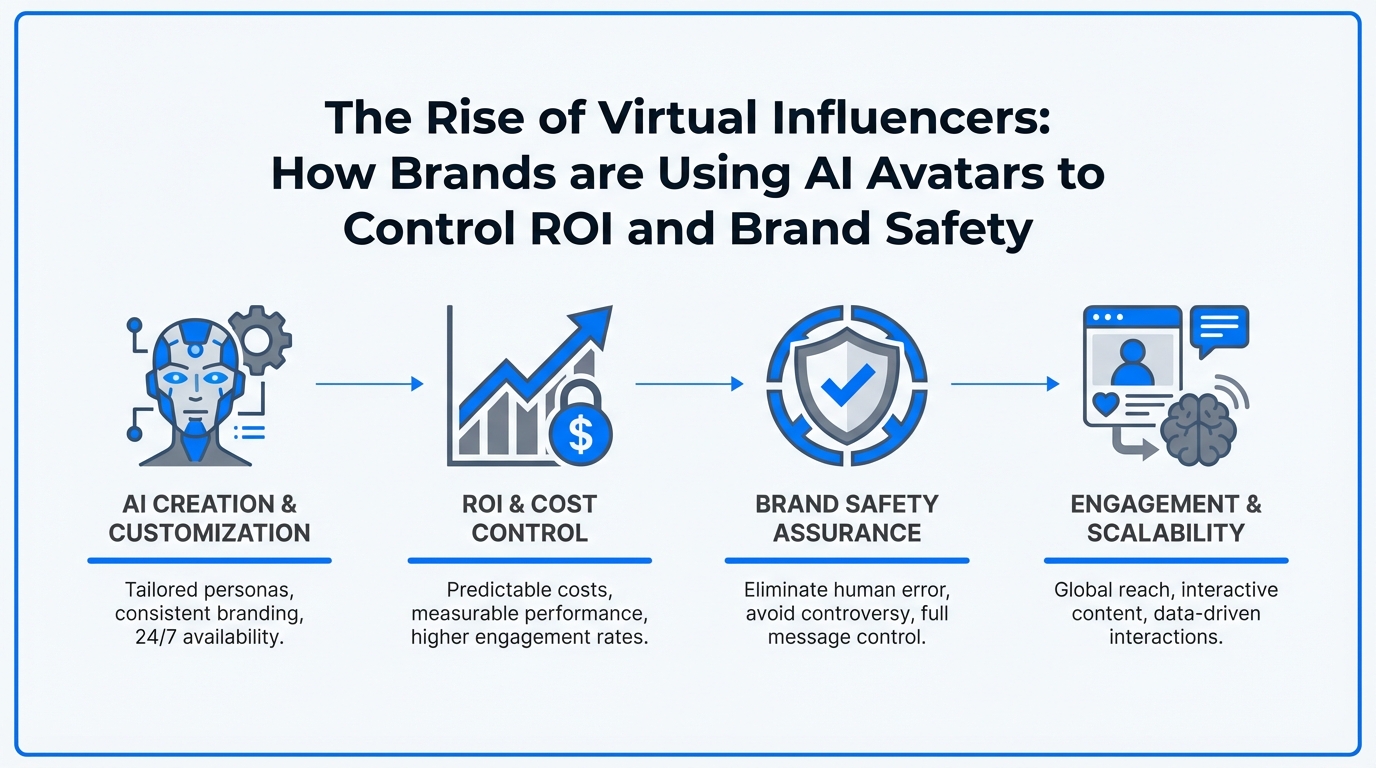
For entrepreneurs and CMOs, the appeal of ai influencer marketing lies in the elimination of "human risk." From PR scandals to fluctuating engagement rates, the traditional creator economy is fraught with variables. AI avatars for business offer a solution that operates 24/7, maintains 100% brand compliance, and scales across global markets with a single click. In this guide, we will explore the economics of this digital revolution, analyze high-stakes case studies, and provide a playbook for building your own proprietary brand ambassador.
The Economics of the $6.95 Billion AI Influencer Market
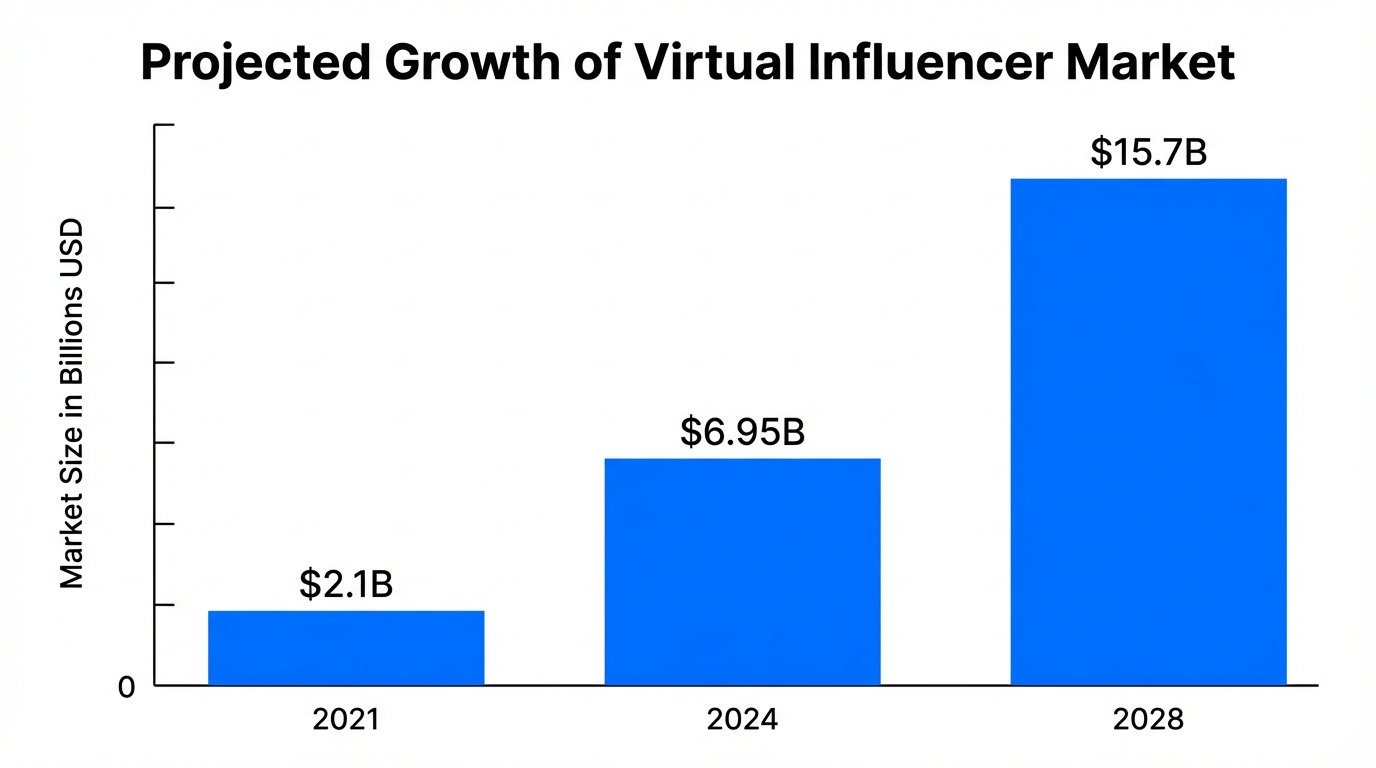
The transition from discovery tools to "execution agents" has accelerated the adoption of virtual personalities. Currently, 63% of marketers plan to integrate AI into their influencer strategies this year, while 59% are already utilizing AI for daily operations like performance prediction, according to research from industry benchmark reports. This isn't just about automation; it's about ROI optimization.
Why is the capital flowing here? Because virtual influencers are perpetual assets. Unlike a human creator who may age out of a demographic or sign a deal with a competitor, a proprietary AI avatar is a piece of intellectual property that grows in equity over time. This shift is part of what Forbes contributor John Koetsier calls the "Oprah era of agentic AI," where every niche task—including brand representation—is handled by a dedicated, tireless agent.
"AI agents act as a tireless, perfectly aligned digital C-suite, liberating human teams from the tyranny of scale and logistics." — Shahrzad Rafati, CEO of RHEI
Case Studies: How Samsung, Prada, and PUMA Mastered the Avatar
The most successful implementations of virtual brand ambassadors demonstrate a blend of technological innovation and high-fashion aesthetics. By using digital avatars, these brands bridge the gap between their heritage and a future-forward audience.
- Samsung & Prada (Lil Miquela): Perhaps the most famous virtual influencer, Lil Miquela has collaborated with luxury giants to drive millions of social impressions. According to Metricool, these partnerships result in a significantly higher "innovation" brand perception among Gen Z consumers.
- PUMA (Laila): PUMA created its own proprietary avatar, Laila, to maintain 24/7 engagement. By owning the character, PUMA ensures that every movement, word, and interaction is perfectly aligned with their digital influencer strategy.
- Coca-Cola: In 2024, Coca-Cola utilized generative AI to create virtual ambassadors for localized holiday campaigns. This allowed them to deploy hyper-relevant content across global markets simultaneously, a feat that would be logistically impossible with human talent.
These brands aren't just buying ads; they are building worlds. When a brand controls the influencer, they control the narrative, the environment, and the frequency of interaction without the friction of contract negotiations or talent availability.
The Playbook: How to Build a Proprietary Brand Avatar
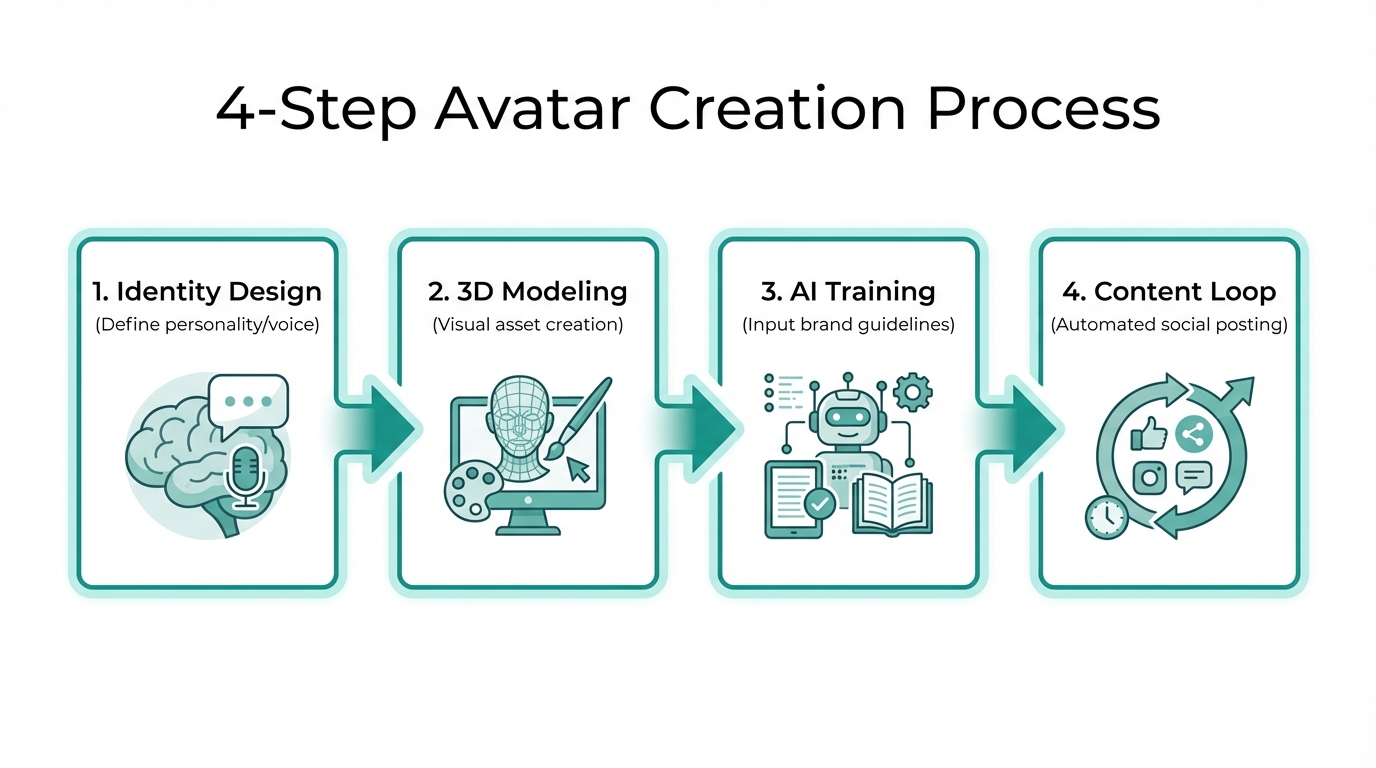
Moving from manual creator sourcing to building a virtual brand ambassador requires a shift in mindset. You are no longer just a marketer; you are a creative director of a digital entity. Follow these steps to establish your proprietary asset:
Step 1: Define the Persona and Utility
A virtual influencer must be more than a 3D model. It needs a backstory, a specific voice, and a purpose. Are they a technical expert, a lifestyle companion, or a customer service agent? Tools like HeyGen allow businesses to generate base models that can be refined into unique brand identities.
Step 2: Deploy Agentic Discovery
To ensure your avatar resonates, you need to know who it should be talking to. Instead of traditional keyword searches, use semantic tools to find where your target audience lives. Platforms like Stormy AI can help identify the performance metrics of existing niches to model your avatar’s personality after successful human creators.
Step 3: Automate the Interaction Loop
The power of an AI avatar is its availability. Use AI agents and automation platforms like Intercom Fin to handle the initial interaction layers. These agents can manage thousands of community comments or direct messages, maintaining the avatar's persona while scaling engagement to levels impossible for humans.
| Feature | Human Influencer | Virtual Avatar (AI) |
|---|---|---|
| Availability | Limited by time/health | 24/7/365 |
| Brand Safety | Subject to human error | 100% Controllable |
| Scalability | One campaign at a time | Infinite Parallel Campaigns |
| Ownership | Rent (Contract-based) | Own (IP Asset) |
Mitigating 'Hallucinated Compliance' and Brand Safety
While the control offered by AI is immense, it introduces a new risk: hallucinated compliance. This occurs when an AI system generates content that appears compliant on the surface but misses subtle cultural nuances, uses copyrighted material, or fails to include necessary FTC disclosures. For example, an AI might generate a stunning image for a supplement brand but forget the legally required health disclaimers.
To prevent this, brands must implement 24/7 safety monitoring. The FTC Endorsement Guides warn that failing to clearly disclose partnerships—even for digital characters—can lead to regulatory fines. The key is to use AI as a "super virtual assistant," as Brian Klais of URLgenius suggests, rather than a total replacement for human editorial judgment.
Managing the hybrid world of real and virtual creators is where modern tools excel. For instance, platforms like Stormy AI streamline creator sourcing and outreach, allowing brands to find the human creators who will amplify the message of their virtual ambassadors through collaborative UGC (User-Generated Content).
"While AI handles the logistics and the scale, it cannot replace the voice, personality, and human soul of a brand—it can only amplify it." — Brian Klais, URLgenius
Cost-Benefit Analysis: Virtual vs. Human Influencers
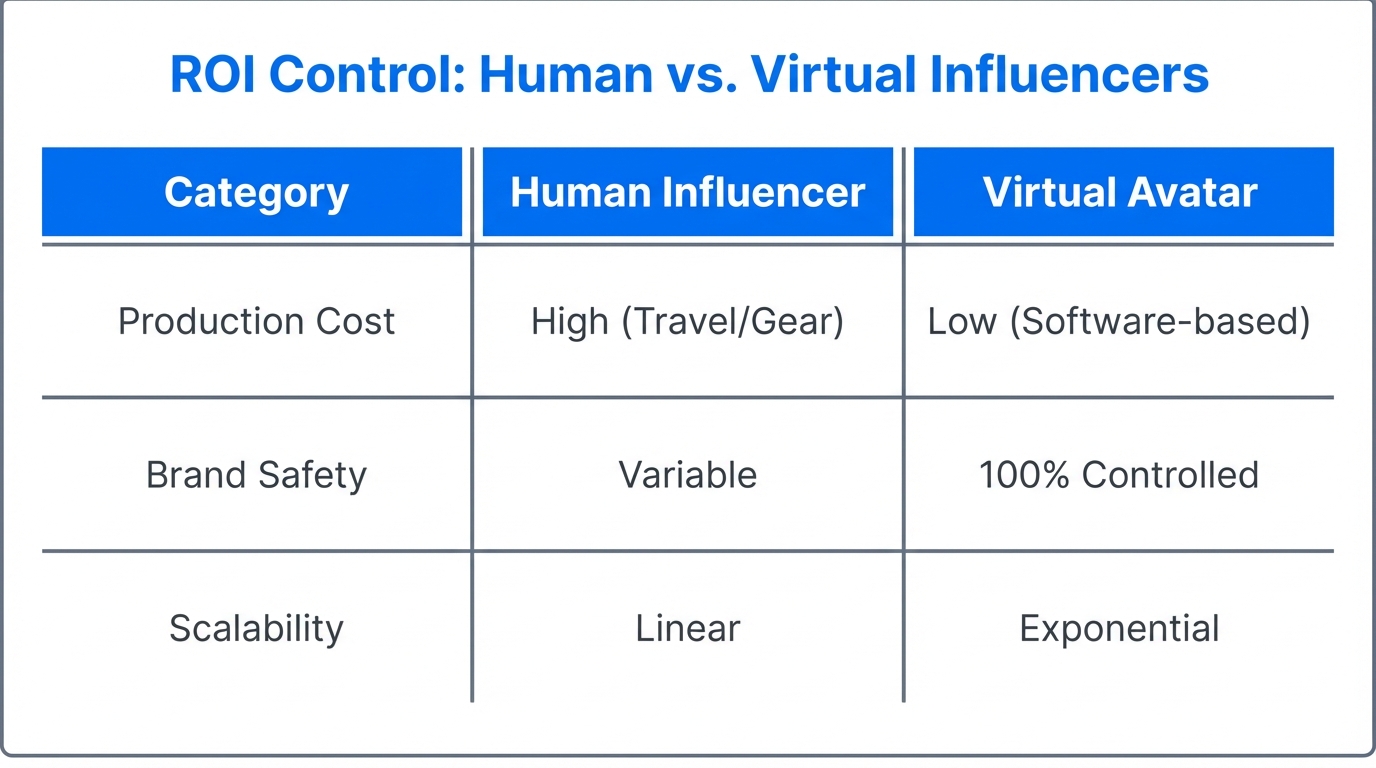
When evaluating ai avatars for business, entrepreneurs must look at long-term brand equity. A human influencer campaign often yields high immediate engagement but has a short shelf life. Conversely, a virtual influencer requires a higher upfront investment in creative development and technical infrastructure but offers a lower marginal cost per post over time.
Consider Shapermint, which utilized AI-driven creative strategies to scale their influencer efforts. By optimizing their scripts and storyboards, brands have reported reducing production time by 70%, as noted in reports on e-commerce growth strategies. This demonstrates that AI doesn't just replace creators; it optimizes the entire creative supply chain.
The Essential AI Influencer Tool Directory
To succeed in the current market, you must avoid tool fragmentation. Using separate platforms for discovery, outreach, and tracking creates data silos that destroy efficiency. Instead, look for integrated solutions that leverage agentic workflows.
| Category | Recommended Tool | Primary Value |
|---|---|---|
| Autonomous Outreach | Stormy AI | AI agents that outreach and follow up daily |
| Database & Discovery | Stormy AI | Natural-language search across TikTok, YT, and IG |
| Payment Processing | Stripe | Global infrastructure for creator payouts |
| Engagement Tracking | Google Analytics | Standardized tracking for conversion metrics |
| Creative Content | Canva Magic Media | AI-enhanced visuals for rapid content iteration |
Conclusion: The Hybrid Future of Digital Influence
The rise of virtual influencers for brands does not signal the end of human creators; rather, it marks the beginning of a hybrid era. By utilizing AI avatars, brands can control their core message and maintain a 24/7 presence, while using real-world influencers to provide the "human soul" and peer-to-peer trust that algorithms cannot yet replicate.
For businesses looking to lead in 2025, the strategy is clear: invest in proprietary AI assets, automate the logistics of outreach with platforms like Stormy AI, and maintain a rigorous standard of brand safety through 24/7 monitoring. The brands that own their influencers will own their ROI in the coming decade.