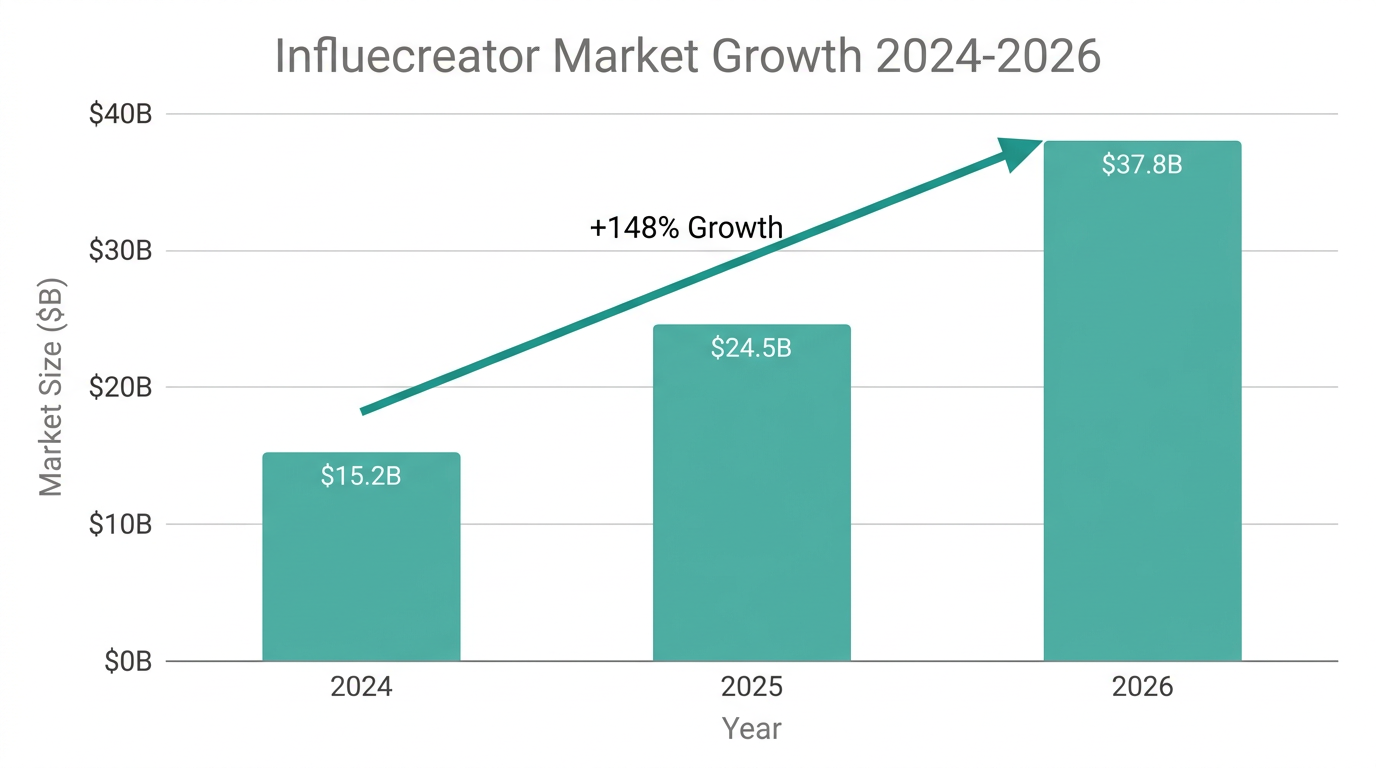
In 2026, the boundary between biological and digital influence has reached a point of total convergence. We have officially entered the age of the 'Influecreator'—a landscape where AI-generated personas command the same level of brand loyalty, engagement, and purchasing power as their human counterparts. With the virtual influencer market forecasted to hit $37.8 billion, brands are no longer asking if they should work with non-human ambassadors, but rather how to scale these partnerships without losing authenticity. In this high-stakes environment, choosing the right tech stack—specifically comparing Stormy AI vs HypeAuditor—is the difference between a viral campaign and a costly compliance nightmare.
As the influencer marketing industry surpassed $32.55 billion by the start of 2026, success now requires a shift from manual vetting to AI-driven agentic workflows. For brands targeting Gen Z and Gen Alpha, virtual influencers offer a 24/7 global presence that never tires, never faces a scandal (unless programmed to), and can be hyper-localized for every market simultaneously. However, managing a roster of digital avatars requires sophisticated tools to verify audience quality and automate the outreach process.
"The virtual influencer market is no longer a gimmick; it is a $37.8 billion pillar of the creator economy that demands professional-grade AI orchestration."The Rise of 'Influecreators': 24/7 Global Brand Presence
The term 'Influecreator' describes a new breed of creator that blends the narrative depth of an influencer with the technical precision of generative AI. Unlike traditional human creators who are limited by physical location and time, virtual personas like Aitana López can participate in a fashion shoot in Milan and a gaming stream in Seoul at the exact same moment. This scalability is why 35–40% of marketers are now experimenting with non-human creators in their 2026 campaigns.
For app developers and mobile marketers, virtual influencers represent a unique opportunity for UGC (User-Generated Content) at scale. By using tools like Stormy AI, brands can identify which digital personas resonate with specific niches, such as fitness enthusiasts in LA or tech-savvy professionals in Tokyo. The ability to control the narrative entirely—while maintaining high engagement—is a powerful tool for driving app installs and brand awareness in a crowded digital marketplace.
Stormy AI vs HypeAuditor: Vetting Virtual Authenticity


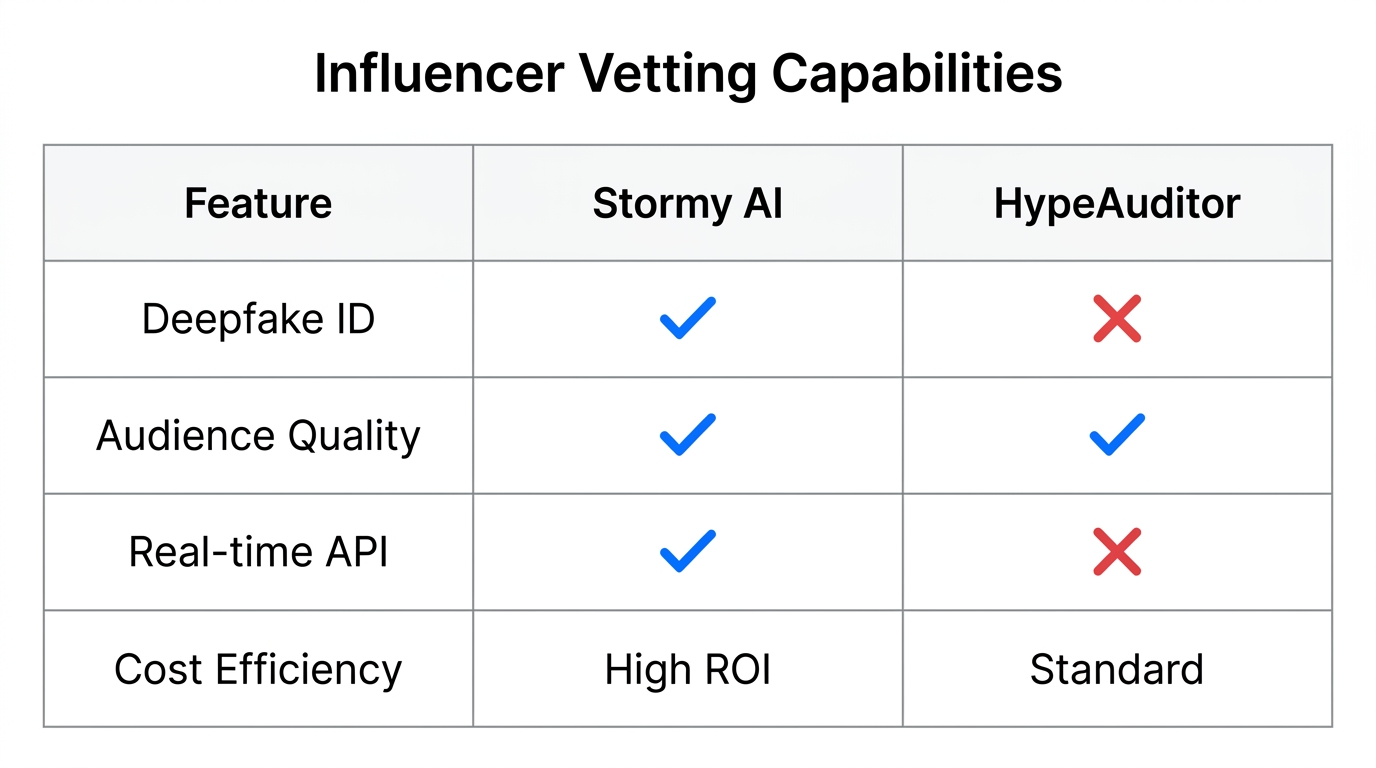
When working with AI-generated influencers, the biggest risk is audience fraud. Just because a creator is digital doesn't mean their followers are real. This is where the comparison between Stormy AI and HypeAuditor becomes critical. Both tools offer vetting capabilities, but they serve different roles in a 2026 marketing stack.
HypeAuditor has long been a standard for fraud detection and audience authenticity analysis. It excels at breaking down the percentage of 'real' vs 'bot' followers. However, Stormy AI takes this further by integrating AI-powered quality reports that analyze content sentiment and engagement quality specifically for the virtual space. While HypeAuditor tells you who the followers are, Stormy AI tells you if those followers actually care about the content being produced.
| Feature | Stormy AI | HypeAuditor |
|---|---|---|
| Discovery Method | Natural Language AI Search | Database Filters |
| Fraud Detection | AI-Powered Quality Scoring | Basic Bot Analysis |
| Outreach | Fully Automated AI Agents | Manual/Templates |
| Platform Coverage | TikTok, YT, IG, LI, Newsletters | IG, YT, TikTok |
| Workflow | End-to-End Creator CRM | Data/Analytics Only |
While HypeAuditor provides solid data, Stormy AI is the clear winner for brands that want to move fast. Stormy doesn't just analyze data; it acts on it. With Stormy's built-in AI agent, you can discovery a virtual persona and initiate contact in seconds, whereas legacy tools often require manual export and external email sequences.

How Stormy AI Identifies High-Value Virtual Personas
Finding a virtual influencer isn't just about finding a 3D model; it's about finding a community. Traditional search engines struggle with this because virtual creators often use different hashtags and metadata than humans. Stormy AI solves this through its natural-language search engine across TikTok, Instagram, and YouTube. Instead of clicking boxes, a marketer can type: "Find me virtual influencers in the sustainable fashion space with a high Gen Z following in the UK."
This is vital because, in 2026, over 60% of marketers are using AI for influencer identification. Using an AI search engine like Stormy allows you to bypass the noise of human creators and focus on the digital avatars that are currently trending in specific subcultures. Once found, Stormy’s Engagement Rate Analysis ensures the virtual creator isn't just a pretty image, but a high-performing marketing asset. Brands using Stormy’s AI-driven analytics have reported up to a 2.3x higher conversion rate compared to manual discovery methods.
"The ability to search for influencers using natural language is the 'God Mode' of the creator economy. It turns weeks of research into seconds of execution."Automated Outreach: Scaling the 'Influecreator' Roster
One of the biggest bottlenecks in the 2026 creator economy is the outreach phase. Even if you're working with a digital persona managed by an agency, the negotiation and contracting process can be tedious. This is where Stormy AI outperforms traditional platforms like Modash or HypeAuditor.
Stormy AI features an AI-personalized outreach system. It can automatically generate hyper-personalized emails for every virtual creator you want to work with, referencing their recent posts or specific aesthetic choices. Furthermore, you can set up an autonomous AI agent that discovers, outreaches, and follows up with creators every day while you sleep. This level of automation can reduce manual vetting and outreach time by up to 80%.
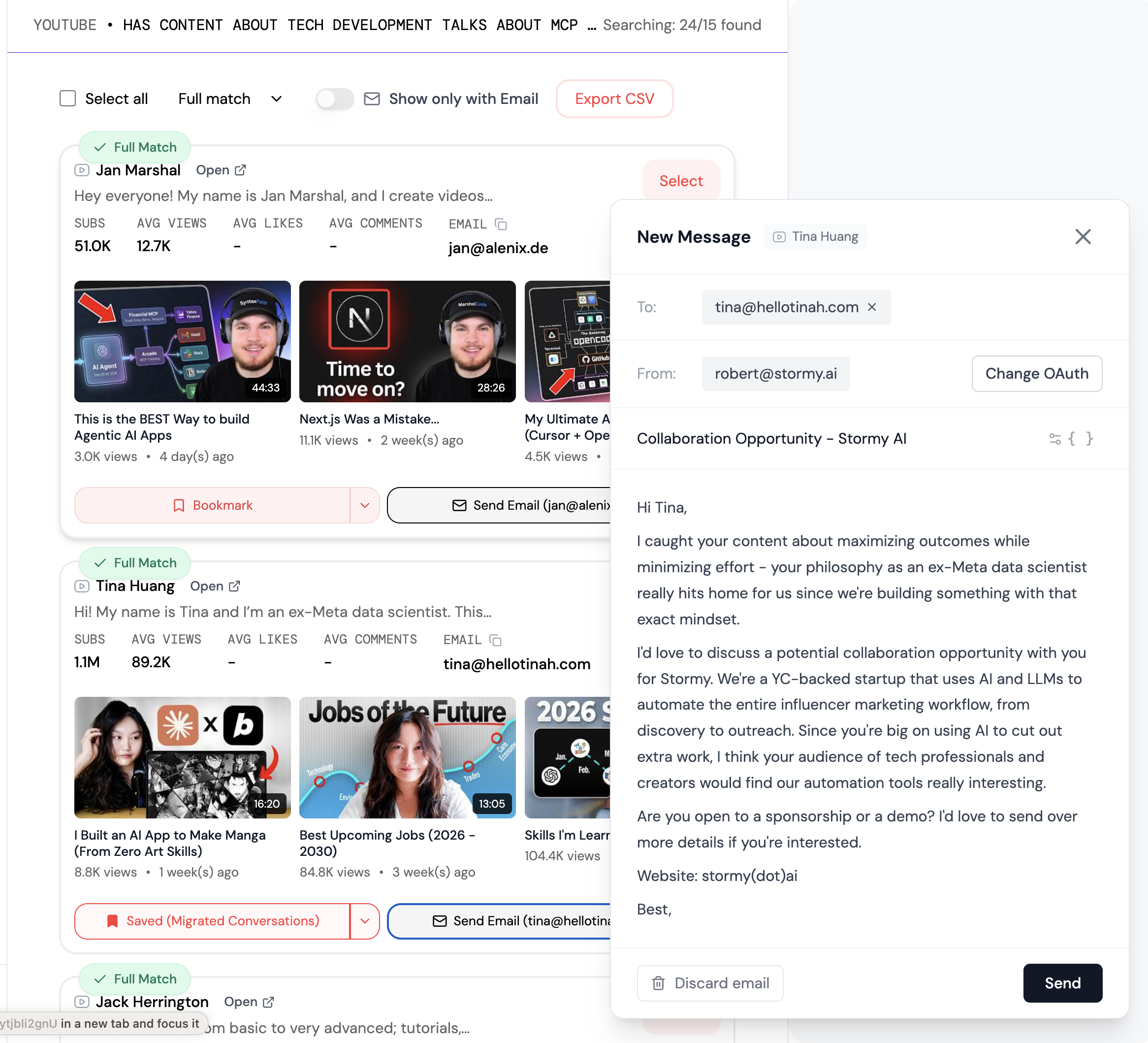
Compare this to the old-school manual approach. In the past, a team would spend days drafting emails to agencies. In 2026, a growth lead uses Stormy AI to connect multiple Gmail accounts and let the AI handle the top-of-funnel conversation. This allows the human team to focus on the creative strategy and final contract approval rather than the repetitive tasks of tracking replies.
Compliance and Disclosure: Automating FTC 'AI-Generated' Labels
As the use of AI-generated influencers grows, so does the scrutiny from regulatory bodies like the FTC. In 2026, failure to properly label content as "AI-Generated" or "Paid Partnership" can lead to massive fines and platform shadowbans. One of the common mistakes to avoid is compliance neglect.
Advanced platforms like Stormy AI and enterprise tools like CreatorIQ now include automated compliance tracking. When you manage a campaign through Stormy’s Creator CRM, the system can automatically flag if a creator’s post lacks the required disclosure labels per FTC guidelines. This is essential when managing dozens of virtual influencers across multiple regions with varying laws.
Lessons from Aitana López: Securing Global Sponsorships
Aitana López, the pink-haired AI model from Barcelona, has become the blueprint for virtual influencer success in 2026. She has secured sponsorships with global brands by maintaining a consistent lifestyle narrative that feels "real" to her followers. The lesson for brands is that authenticity is a vibe, not a biological status.
To replicate this success, brands are using generative AI to create hyper-local variants of their campaigns. For example, L’Oréal used its "CREAITECH" lab to turn campaign turnaround times from weeks into hours by automating localized visual assets. Similarly, Cadbury used generative AI to create thousands of hyper-local video ads featuring celebrities, resulting in a significant engagement spike via personalized storytelling.
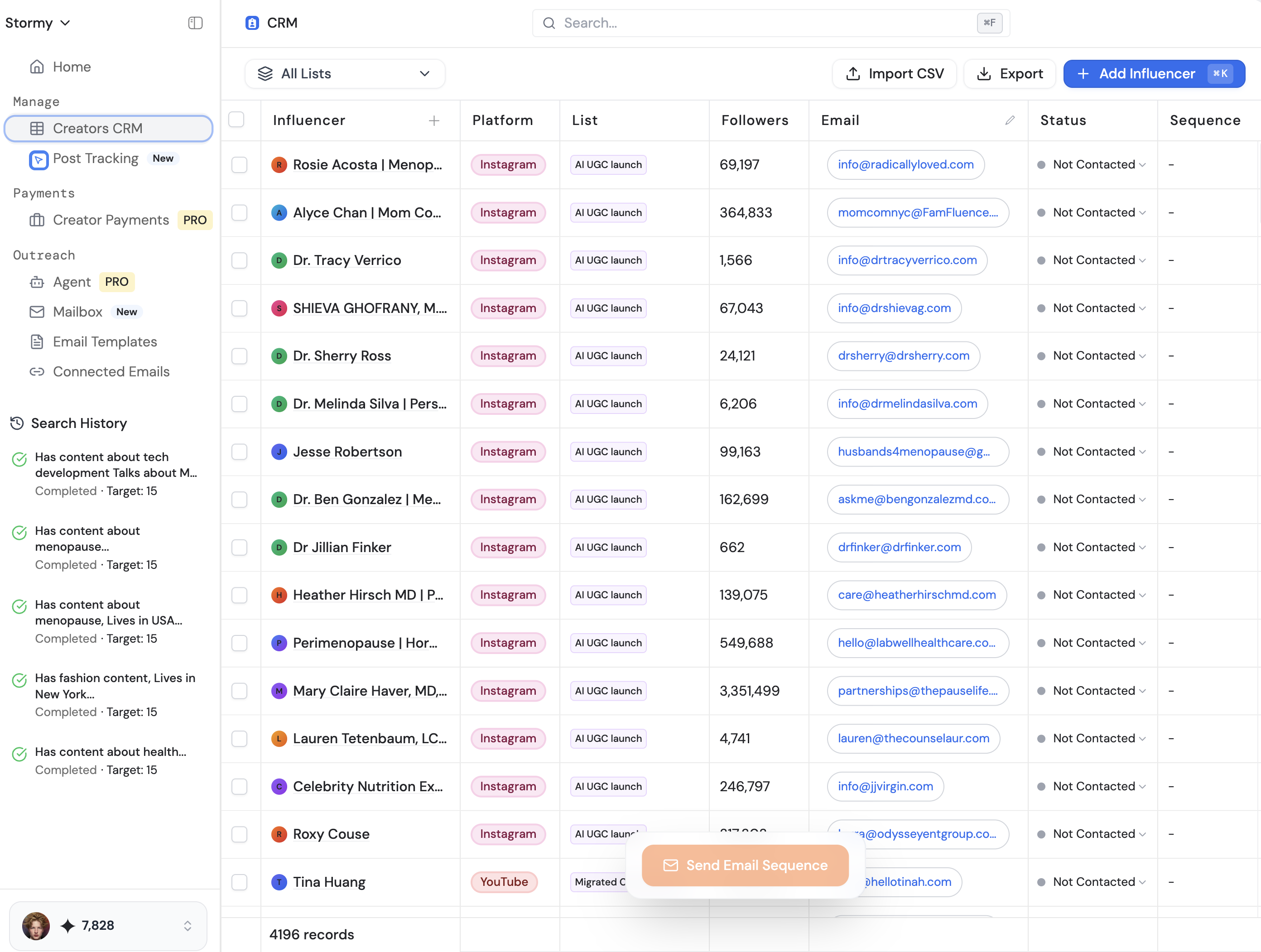
By managing these complex, asset-heavy campaigns in the Stormy AI Post Tracking section, brands can monitor the performance of every AI-generated variant in real-time. This allows for rapid iteration—if a specific virtual persona is performing 2x better in Germany than in France, the AI agent can shift budget and outreach efforts accordingly.
The 2026 Playbook for Virtual Influencer Strategy
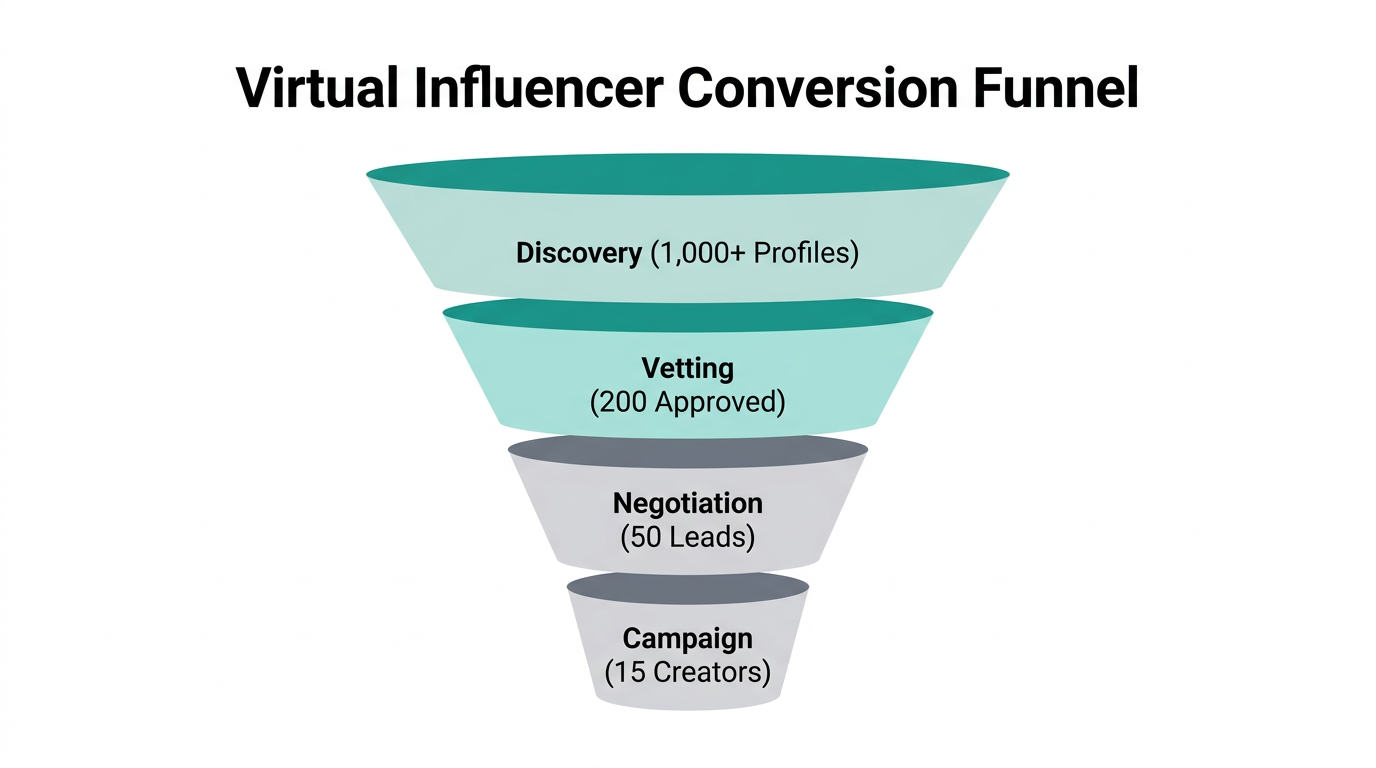
Ready to launch your first virtual influencer campaign? Follow this Stormy AI-powered playbook to maximize ROI and minimize manual labor.
Step 1: Define Your Persona Profile
Use Stormy AI’s natural language search to find existing virtual influencers or identify the aesthetic markers of high-performing digital avatars in your niche. Look for creators who share your brand's values and have a high sentiment score among your target demographic.
Step 2: Vet for Audience Authenticity
Run every potential partner through an AI quality report. Use HypeAuditor for a deep dive into bot detection, but use Stormy AI to analyze the actual engagement quality and content relevance. If the "followers" aren't commenting or sharing, move on.
Step 3: Deploy AI Outreach Agents
Don't waste time on manual emails. Connect your Instantly or Stormy AI account and set up an automated sequence. Personalize the first touchpoint by having the AI reference a specific digital asset the influencer recently shared.
Step 4: Centralize Management in a Creator CRM
Manage the entire lifecycle—from contract negotiation to payment—in a centralized CRM. This ensures that your legal, creative, and marketing teams are all looking at the same post-tracking analytics.
"The future of marketing isn't just about who is in front of the camera, but about the AI agents managing the entire ecosystem behind it."Conclusion: The Future of Influence is Hybrid
As we navigate 2026, the brands that win won't be those that choose between human or virtual influencers, but those that master the hybrid model. By leveraging Stormy AI for discovery and outreach and HypeAuditor for niche fraud detection, marketers can build a scalable, 24/7 brand presence that is both safe and highly effective.
Virtual influencers offer a level of control and scalability that was previously impossible. However, this power must be managed with advanced AI tools that can keep up with the speed of the digital-first economy. Whether you are a startup looking to drive app installs via UGC or a global brand scaling a multi-region campaign, the 'Influecreator' era is here—and Stormy AI is the engine that drives it.