Social media is often dismissed as a vacuum of fleeting attention, but for the modern entrepreneur, it is the world’s most sophisticated real-time focus group. When a specific prompt or behavior goes viral, it isn’t just entertainment—it’s a signal of unmet emotional demand. By identifying these 'recently ubiquitous' trends and wrapping them in a subscription-based mobile app, founders are building $25K MRR businesses with remarkably low overhead. The key lies in moving beyond the 'info-product' mindset and leveraging AI app growth strategies to turn a viral moment into a retentive consumer product.
The 'Open Therapy' Framework: Spotting Viral Demand


To find winning viral app ideas, you have to look for what Phoenix, a successful app developer in the manifesting space, calls 'Open Therapy.' This occurs when a social media trend triggers a deep emotional response from users, often leading to thousands of comments asking, 'How can I do this too?' A prime example occurred on TikTok, where users began asking ChatGPT to describe a 'day in my dream life' based on their current struggles. The results were startling: videos of people crying as they read AI-generated visions of their future selves garnered over 20 million views.
This trend signaled a massive market for visualization and self-help tools that felt personal and immediate. While the trend existed on a general-purpose tool like ChatGPT, the opportunity for a specialized app was clear. By productizing that specific prompt into a dedicated interface, you remove the friction of 'prompt engineering' for the average user. Platforms like Stormy AI can help identify which creators are driving these emotional trends, allowing you to see the demand before it becomes saturated. When you see a format where people are posting their emotional reactions rather than just the content itself, you have found a 'magic moment' that can be turned into a mobile app business model.
From Info-Products to Recurring Subscription Apps
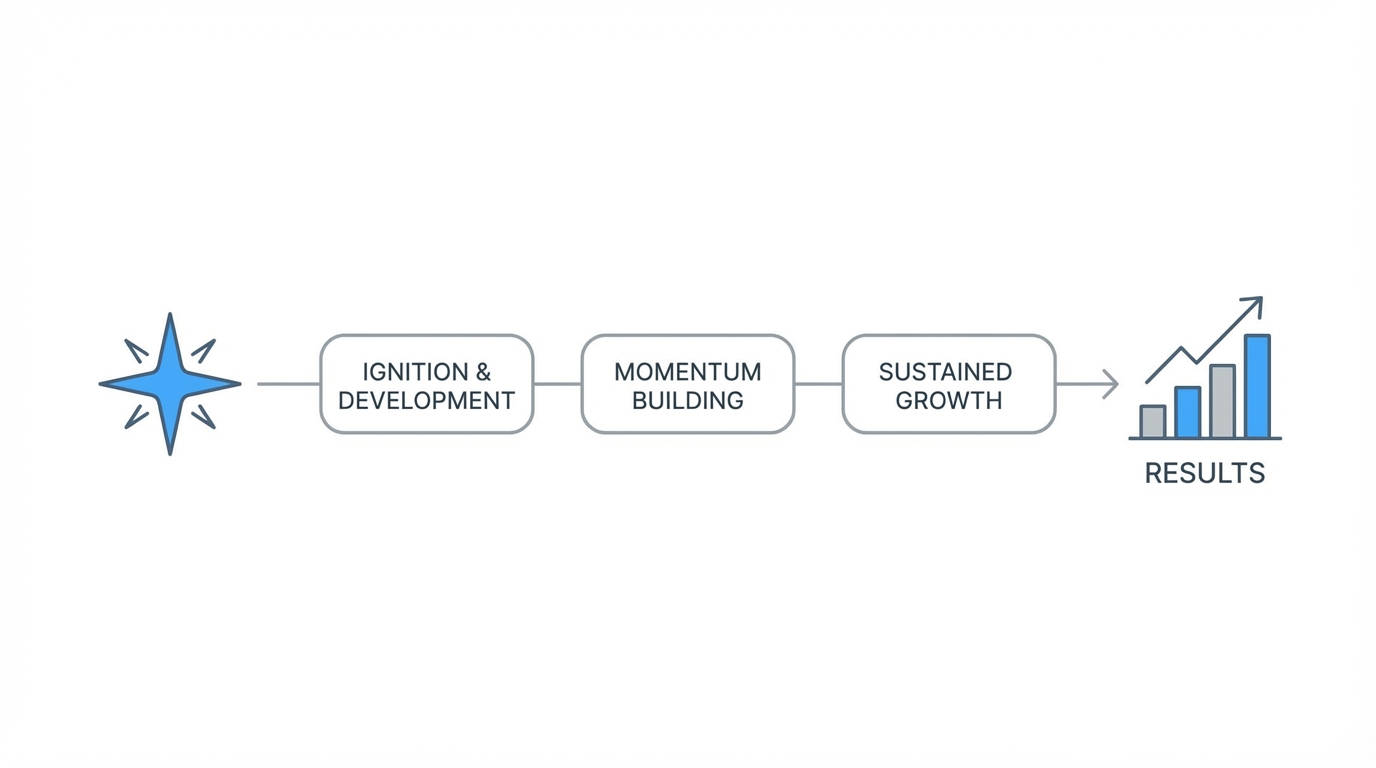
Many creators realize the value of their insights but stop at selling one-off products like e-books or courses. For instance, creator Sarah Pearl sold over 100,000 copies of her book by posting daily affirmation content. However, the unit economics of a book are limited: a customer buys once, and the relationship ends. Transitioning that value into a mobile app allows for recurring revenue and much higher Life-Time Value (LTV). An app like Copia, which hit 25K MRR and 100K downloads, provides the same affirmations and visualization tools as a book but delivers them as a daily utility.
The shift from an info-product to a SaaS (Software as a Service) model is what separates a temporary windfall from a sustainable business. Instead of a one-time $20 purchase, you move users into a subscription where they pay for continuous access to new features and personalized insights. To scale this, many founders are moving away from mega-influencers and instead targeting creators in the 50k to 250k follower range. These creators often have highly engaged communities but haven't been flooded with brand deals yet, making them ideal partners for a saas trend spotting strategy. Stormy AI is an all-in-one AI-powered platform for creator discovery, especially for mobile app marketing and UGC campaigns. By using Stormy AI to find and manage these partnerships, you can maintain a high volume of content without the astronomical costs of celebrity endorsements.
The Hooked Model: Building for Retention
Getting a download is only the first step. To build a valuable company, you must implement the Trigger-Action-Variable Reward-Investment model, as popularized by Nir Eyal. In the context of a manifestation or AI-journaling app, the External Trigger is often a Instagram or TikTok video showing a transformation. The Action is the simplest thing a user can do, such as clicking a button or typing a single sentence about their day. The Variable Reward is the 'magic moment'—an AI-generated affirmation or a personalized story that makes the user feel understood.
However, the most critical part is the Investment. This is where the user puts something back into the app—like their personal goals, historical data, or a daily streak—that makes the product more valuable over time. Without investment, the app is just a 'slot machine' that users will eventually grow tired of. A high-retention ai app growth strategy focuses on making the app smarter the more it's used. When a user has logged 30 days of data, the cost of switching to a competitor becomes too high, which is the cornerstone of mobile app business models that actually scale to an exit.
Viral Features: The 'Crash Out' Button and Emotional Triggers
Virality in 2024 is rarely accidental; it is engineered through 'viral features' that are designed specifically to be shared. Phoenix discovered this when he noticed the 'crashing out' trend (humorous rants about being stressed or fed up) was dominating social media. He introduced a 'Crash Out' button in the app—a big red button that, when pressed, would lead the user through a guided breathing exercise. This single feature, showcased in a simple slideshow format, generated a 12 million view video and drove 15,000 downloads almost overnight.
Humor-based features work because they meet the market where it is. While the core utility of the app might be 'stress management,' the top-of-funnel hook is the humor and relatability of 'crashing out.' When developing features, ask yourself: What is recently ubiquitous in the cultural zeitgeist? By taking a viral meme and turning it into a functional utility, you create an evergreen marketing asset. This approach is much more effective than running generic ads via Meta Ads Manager because the content feels like a natural part of the user's feed rather than an interruption.
Leveraging LLMs for Personalized Insights
The real 'edge' in modern app development is using Large Language Models (LLMs) to provide insights that were previously impossible to automate. Before LLMs, providing a personalized 'dream life' story would require a human coach. Now, you can take raw user input and transform it into a highly emotional, personalized narrative in seconds. This is the 'newly possible' element that allows founders to disrupt traditional self-help industries. By feeding user data—like heart rate, stress levels, or journal entries—into an LLM, you can offer a 'Strava for mental health' experience.
This personalization is what drives high conversion on paywalls. If a user spends five minutes in an onboarding process answering deep questions about their life, they have made an emotional investment. When they finally reach the paywall, they aren't just buying an app; they are buying the solution to the specific problems they just articulated. This is why ai app growth strategy focuses so heavily on the interaction between the user and the model. High-growth apps often use Superwall to A/B test different paywall placements and messaging to see which 'magic moments' lead to the highest conversion from trial to paid subscriber.
The Creator Marketing Playbook: Scaling to 40+ Partners

Once you have a winning 'hook and demo' format, the goal is horizontal expansion. This means taking that winning format and distributing it through dozens of different creators simultaneously. Phoenix successfully scaled to 40 creators by providing strict guidelines on the first 10 seconds of the video (the hook) while allowing them freedom in the delivery. For those looking to replicate this, finding and managing UGC creators is the most significant bottleneck. Using an AI-powered discovery tool like Stormy AI allows you to identify creators whose audience demographics match your target market—in this case, women aged 18 to 25.
The goal is to achieve a $1.00 CPM (cost per thousand impressions) or better through organic distribution. This is significantly cheaper than the costs typically found on Apple Search Ads or Google Ads. By utilizing a 'college ambassador' or micro-influencer model, you can flood the algorithm with your 'hook and demo' content, creating a sense of ubiquity that reinforces your brand's authority. Monetize TikTok trends by staying in the trenches and observing which formats are being repeated by successful creators, then adapt those formats for your own app.
Optimizing the Funnel: Doubling Your Conversion

A common mistake for new founders is focusing entirely on traffic while ignoring the 'leaks' in their onboarding funnel. Phoenix noted that initially, only 50% of users even reached his paywall because the onboarding process was too abrupt. By adding social proof, progressive questions, and a video explanation, he increased that rate to 85-90%. People don't want to enter a new app and immediately type a paragraph; they want to click buttons and feel a sense of progress. This 'gamified' onboarding mimics the success of platforms like Duolingo, where the user is rewarded with dopamine hits just for navigating the interface.
Your onboarding should feel like a 'PowerPoint'—minimal words, one clear action per screen, and a rapid pace. This accommodates the 'TikTok brain' of the modern consumer who has a low tolerance for friction. If your app is truly useful, you don't need a hard paywall to force payment. Instead, follow the model of apps like Strava: give users a taste of the 'magic moment' for free, get them entrenched in the data and the community, and then offer a premium version for those who want to go deeper. This build-up of trust is essential for long-term mobile app business models.
Conclusion: The Blueprint for Modern App Growth
Turning a social media trend into a $25K MRR business isn't about luck; it's about systematic saas trend spotting and rapid execution. By using the 'Open Therapy' framework to identify emotional demand, wrapping that demand in a high-retention 'Hooked' model, and scaling through a fleet of micro-influencers, you can build a product that stands the test of time. The tools are more accessible than ever—from LLMs for personalization to platforms like Stormy AI for creator discovery and Superwall for revenue optimization.
Key Takeaways:
- Watch for emotional reactions to AI prompts on TikTok to find your next app idea.
- Move from one-off sales to subscriptions by productizing info-products into utility apps.
- Engineer 'viral features' that are designed to be shared as memes or relatable content.
- Focus on the 'Investment' phase of the user journey to ensure long-term retention.
- Optimize your onboarding to reach an 85%+ paywall view rate before scaling your ad spend.