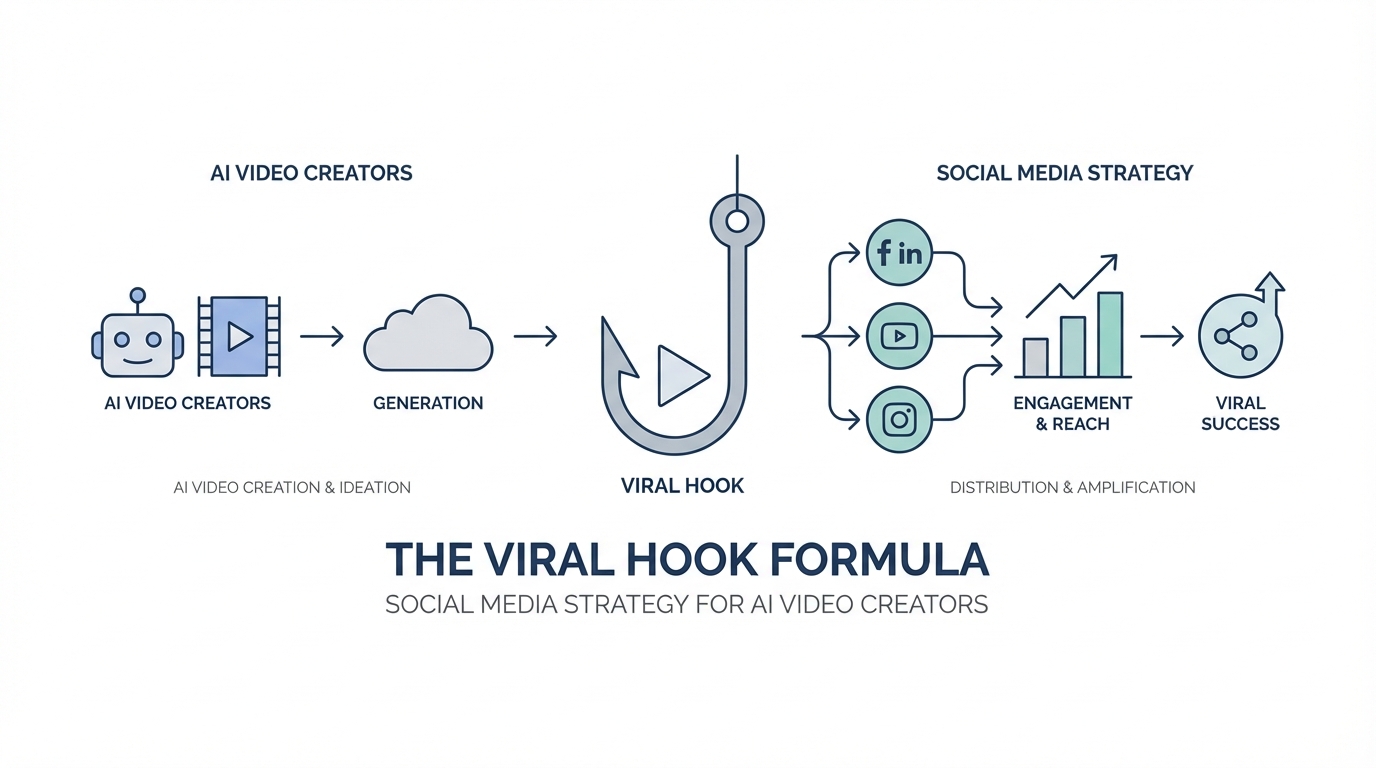
We are currently entering a period of absolute content abundance. With the release of high-fidelity generative models like Google VEO3, the barrier to entry for creating cinematic visuals has effectively collapsed to near zero. However, as the volume of content increases 10x or 100x, the value of the technical ability to generate a video decreases proportionally. In this new economy, the winners aren't those who can simply prompt a cool-looking shot; they are the strategists who understand the psychology of virality, the mechanics of X algorithm optimization, and the art of the scroll-stop.
Creating a viral AI video is no longer about showing off what the technology can do—users are already fatigued by "Hollywood is cooked" clichés. Instead, success lies in building a viral content strategy that leverages specific psychological triggers, symmetrical framing, and narrative satire. This article breaks down the exact formula used by top AI creators to generate millions of views and build sustainable businesses around generative media.
The 0.2-Second Rule: Dominating the X Feed


On platforms like X (Twitter), your video content doesn't actually have a few seconds to win over an audience. You have approximately 0.2 seconds. This is the window in which a user decides whether to stop their thumb or keep scrolling. On X specifically, the video doesn't hook the user—the headline does. If your headline fails, your high-fidelity AI video will never be seen, regardless of how much you spent on compute credits.
As legendary creators like MrBeast have frequently noted, the title and thumbnail are more important than the content itself because they act as the gatekeeper to the experience. For AI video creators, this means your social media hooks for video must be provocative and high-stakes. A generic caption like "Look at this AI video I made" is a death sentence. Instead, you need a hook that forces an emotional or intellectual reaction immediately according to user behavior research.
The '500k vs 500 Dollars' Framing: Symmetry and Controversy
One of the most effective ways to trigger influencer marketing analytics in your favor is to use symmetrical framing. This involves contrasting a traditional, high-cost industry standard with a disruptive, low-cost AI alternative. A perfect example of this is the frame: "I used to shoot $500,000 pharmaceutical commercials. I made this for $500 in VEO3 credits in less than a day."
Why does this work? First, it establishes authority. By mentioning the $500k budget, the creator signals they are a professional who knows the industry. Second, it creates symmetry (500k vs 500), which is aesthetically pleasing and easy for the brain to process in a split second. Third, it invites controversy. It poses a threat to the traditional production model, which naturally generates replies, quote-tweets, and debates—all of which are high-value signals for the X algorithm.
By using this AI video distribution strategy, you aren't just posting a video; you are posting a narrative of disruption. Questions included in the post, such as "What is the argument for spending 500k now?", further drive engagement by forcing the audience to take a side in the comments, pushing the content further into the global feed, similar to tactics tracked in the 2024 Influencer Marketing Benchmark Report.
Why 'Hollywood is Cooked' is Dead: Finding a Unique Voice
The honeymoon phase of AI video is over. Users are tired of seeing the same hyper-realistic, slow-motion shots of people walking through neon streets. In fact, using phrases like "Hollywood is cooked" or "AI just changed forever" is becoming a marker of low-effort content. To build long-term brand equity, you must move beyond the tech demo and into original IP and satire.
Successful AI creators are now looking toward established comedic structures like those found on Saturday Night Live or the Tim and Eric Show. By using tools like ChatGPT to generate scripts in the style of these masters of satire, you can create content that has "soul"—something that feels intentional rather than randomly generated. For instance, creating a "Pupprimin" pharmaceutical ad where a pill secretes pheromones to attract puppies is funny because it follows a recognizable format (the pharma ad) but adds an unhinged, satirical twist.
Trend Jacking vs. Original IP
While trend jacking (e.g., "What if Studio Ghibli directed Lord of the Rings?") is great for a quick burst of millions of views, it doesn't necessarily build a loyal following. The goal should be to use trend jacking as a top-of-funnel discovery tool and then transition your audience into your own original universe. Creators like Neural Viz have mastered this by creating a "Mona-verse"—a consistent world of aliens and weird lore—that allows them to monetize through Patreon, merch, and eventually, high-ticket brand integrations.
The AI Video Workflow: From Prompt to Post


Step 1: The Script and Satire
Start with an LLM like ChatGPT, Claude, or Grok. Do not just ask for a script; ask for 10 variations of a specific satirical twist. Use prompts like "Write an SNL-style pharmaceutical commercial where the side effect is X." Narrow down the 5% of jokes that are actually funny. If you lack the "taste" for humor, prompt the AI to think like a specific comedian, such as Bill Burr or Seth Rogen, to help refine the voice.
Step 2: Shot-by-Shot Prompting
Break your final script into individual shots. Use the LLM to extrapolate detailed visual descriptions for each line. While VEO3 is incredibly powerful, it often requires multiple iterations (sometimes a 5:1 ratio) to get a usable shot. Avoid quotes in your prompts to prevent the model from generating gibberish subtitles, and focus on camera movement (e.g., "dolly in" or "handheld") to make the AI footage feel like traditional cinematography.
Step 3: Editing and Sound
Stitch your clips together in Final Cut Pro, CapCut, or DaVinci Resolve. While VEO3 can generate audio, it is often thin. For more consistency, many creators use Eleven Labs for voiceovers. Ensure your edit is fast-paced; the average watch time for AI videos is highly dependent on the first 3 seconds of visual movement.
10 Ways to Monetize AI Video Content
Once you've mastered the social media hooks for video and built an audience, the next step is monetization. The "new economy" of AI video allows for multiple revenue streams that traditional filmmakers couldn't access.
- Direct Brand Deals: Pitching CPG (Consumer Packaged Goods) brands on "unhinged" or hyper-cinematic ads.
- Portfolio Building: Using AI to show what you could do for a $100k budget, then landing traditional directing gigs.
- BookTok Promos: Reaching out to authors in niches like "Romantasy" to create high-end cinematic trailers for their books.
- Product Integrations: Placing real products (like Tabasco or Rolex) inside your original AI narrative universe.
- Selling Info Products: Creating PDFs or courses that teach your specific AI video distribution strategy.
- Fortune 500 Consulting: Helping large companies navigate AI compliance and generative content creation.
- Episodic Social Content: Building a weekly series that relies on high engagement rather than one-off viral hits.
- Faith-Based Media: Tapping into high-demand, low-supply niches like Bible stories or historical reenactments.
- UGC for Apps: Creating user-generated style content for mobile app install campaigns using AI characters.
- Technical Training: Hosting paid workshops on prompt engineering for creative agencies.
Scaling these monetization efforts often requires a robust influencer marketing analytics approach. Tools like Stormy AI can help you discover which creators are already dominating these niches, allowing you to benchmark your performance or find collaborators for larger campaigns. By using an AI-powered search engine to find creators in specific locales (like "creators in LA with high engagement"), you can build a network that supports your original IP growth.
The Future: Community and Consistency
The final pillar of the viral hook formula is consistency. The algorithm rewards those who post frequently, but the audience rewards those who maintain a distinct point of view. Whether you are using Meta Ads Manager to boost your AI commercials or relying on organic reach on TikTok, the goal remains the same: stop the scroll, deliver value (or humor), and build a world that people want to revisit.
As tools like Stormy AI continue to evolve, managing these creator relationships and tracking the performance of your viral experiments in a unified CRM will become the backbone of any successful media business. The technology is just the paint; you are the architect. Focus on the hook, the symmetry, and the satire, and the views will follow.