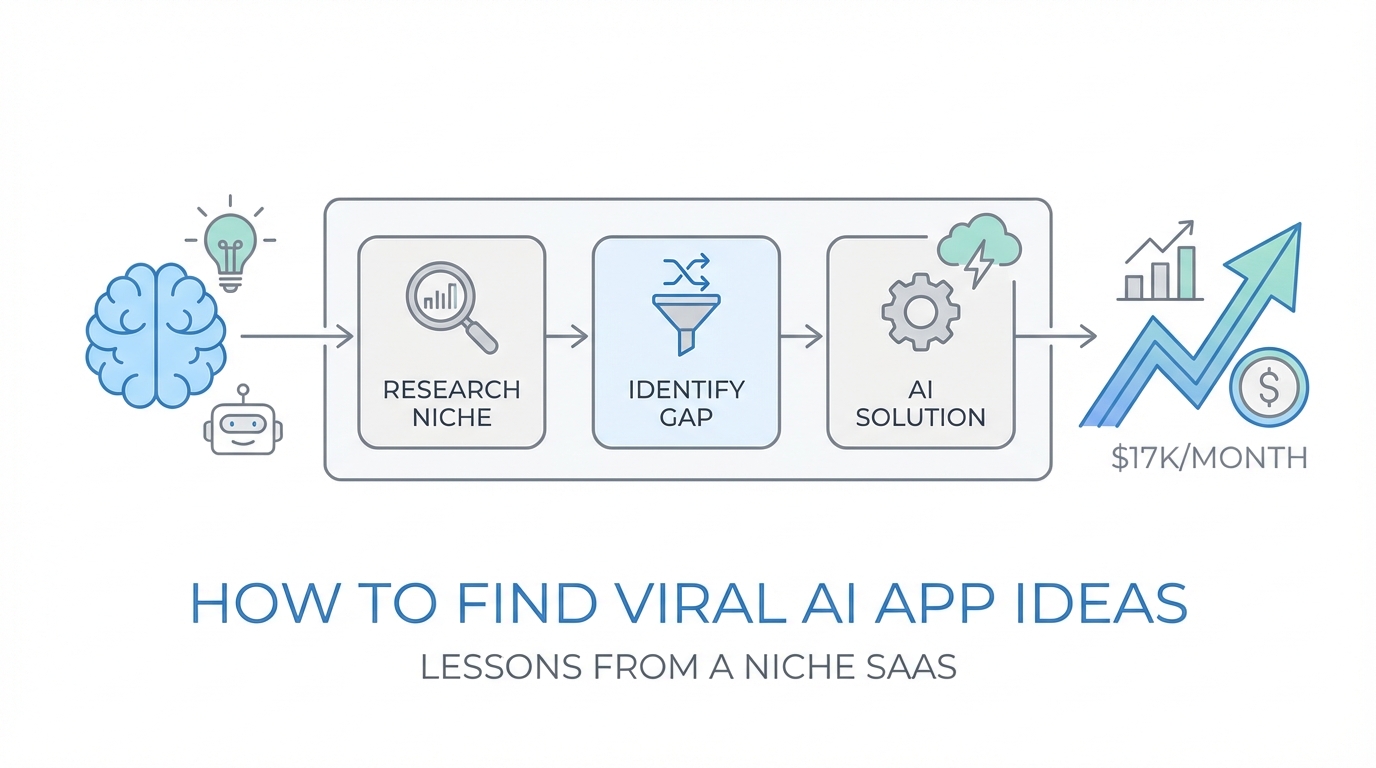
In the rapidly evolving landscape of 2025, the barrier to entry for building a software business has effectively collapsed. While traditional development cycles used to take eighteen months and cost hundreds of thousands of dollars, a new generation of entrepreneurs is launching profitable AI startups in under thirty days. The secret isn't found in mastering complex syntax, but in a process known as "vibe coding"—leveraging AI to bridge the gap between a vision and a functional product. This approach recently allowed an eighteen-year-old college freshman to build Wrestle AI, a specialized coaching app that scaled to $17,000 in monthly recurring revenue (MRR) within half a year. By focusing on a hyper-specific community and mastering viral app marketing, he proved that niche market research is far more valuable than broad technical expertise.
The Three Pillars of a Viral Idea: Uniqueness, Helpfulness, and the 'Gotcha' Moment
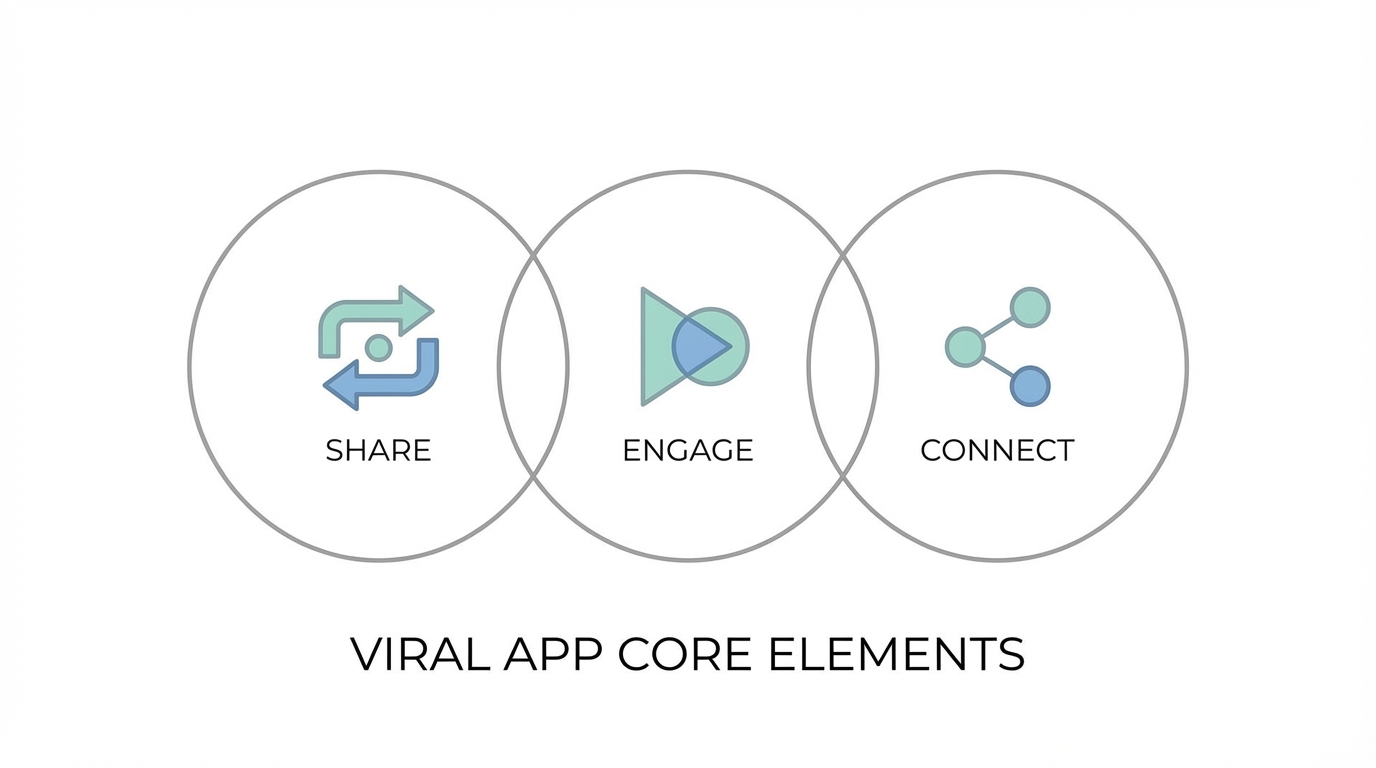
When searching for saas business ideas 2025, most founders make the mistake of going too broad. They build generic "AI assistants" or "PDF readers" that compete with giants like OpenAI. To stand out, your idea must satisfy three core pillars: uniqueness, helpfulness, and the "Gotcha" moment. Uniqueness ensures your app catches the eye in a crowded feed, while helpfulness provides the "stickiness" required to keep users from churning. However, the most critical element for viral growth is the Gotcha Moment.
The Gotcha Moment is a built-in feature that can be seamlessly demonstrated in a 5-second TikTok or Instagram Reel. It is the visual or functional hook that stops someone from scrolling. For Wrestle AI, this moment occurs when a user uploads a video of a match and the AI instantly maps out their movements, providing a performance breakdown out of ten. This immediate feedback loop is inherently shareable. Without a viral nature in the idea itself, even the most expensive viral app marketing campaigns will struggle to convert impressions into downloads.
Niche Dominance: Why Specificity Beats Genericity

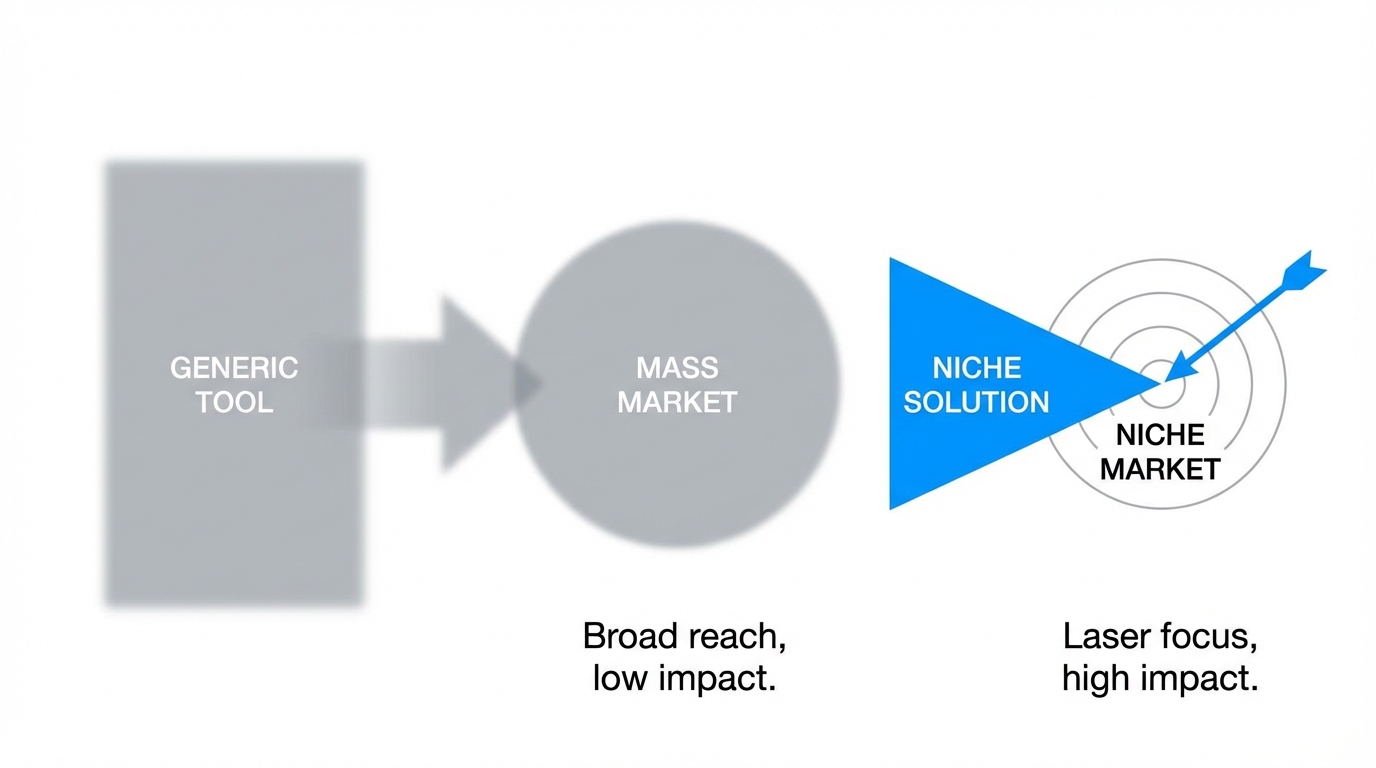
Many aspiring founders believe that a larger total addressable market (TAM) equals more revenue. In reality, the ai startup niche model is often more profitable because it allows for higher pricing and lower customer acquisition costs. By building for a specific community—like wrestlers, quilters, or specialized technicians—you become the "big fish" in a small pond. Stormy AI is an AI-powered platform for creator discovery, especially for mobile app marketing and UGC campaigns, and helps brands and developers identify these specific creator communities who hold high trust within their niches. You can also paste any creator profile URL into Stormy AI to get an instant AI-powered quality report, detecting fake followers and engagement fraud before you start a partnership.
Consider the "Purple Cow" philosophy: in a field of brown cows, a purple one is impossible to ignore. A generic AI productivity tool is a brown cow. An AI-powered wrestling coach that analyzes match footage is a purple cow. When George launched a generic AI app alongside Wrestle AI, the generic tool received 1.8 million impressions but only 100 downloads. In contrast, Wrestle AI converted its traffic at a significantly higher rate because the product was novel and abstract enough to pique genuine interest. Niche market research should focus on finding communities with high emotional investment and low technological support.
The Vibe Coding Playbook: How to Validate an App Idea Quickly
Validation used to be about landing pages and waitlists. Today, validation is about building a functional MVP (Minimum Viable Product) in a week to see if users will actually pay. This is where how to validate an app idea becomes a practical exercise in AI prompting. Using tools like Rore (a popular vibe coding platform) or Replit, you can generate the core framework of an iOS or Android app without writing a single line of manual code.
Step 1: Framework and UI Prompting
Start by defining who the app is for and what UI would fit their needs. Feed these parameters into an AI builder. For example, a wrestling app needs a rugged, performance-focused aesthetic, not a soft, corporate look. Prompt the AI to build the layout first before worrying about complex logic.
Step 2: Integrating Public APIs
You don't need to build a custom AI model from scratch. Most successful AI startups leverage existing infrastructure. Use OpenAI's API for intelligence, Supabase for backend data storage, and specialized APIs for niche needs (like nutrition databases or sports statistics). For technical hurdles like payment integration or authentication, you can hire specialized talent for small tasks on Fiverr to bridge the gap between your "vibe" and a production-ready app.
Step 3: Solving the Error Log
Vibe coding involves a lot of trial and error. When your code breaks during the export to tools like Apple's TestFlight, copy the error logs directly into ChatGPT. Treat the AI as your senior technical advisor, guiding you through the deployment process.
The Influencer Playbook: Securing 4,000+ Pre-orders
Building the app is only half the battle; the other half is viral app marketing. The most effective way to launch in 2025 is through influencer partnerships that drive App Store pre-orders. By setting up a pre-order campaign, you can accumulate downloads before the app is even live, which signals to the App Store algorithm that your product is trending. This strategy helped Wrestle AI hit #19 on the App Store charts on its very first day.
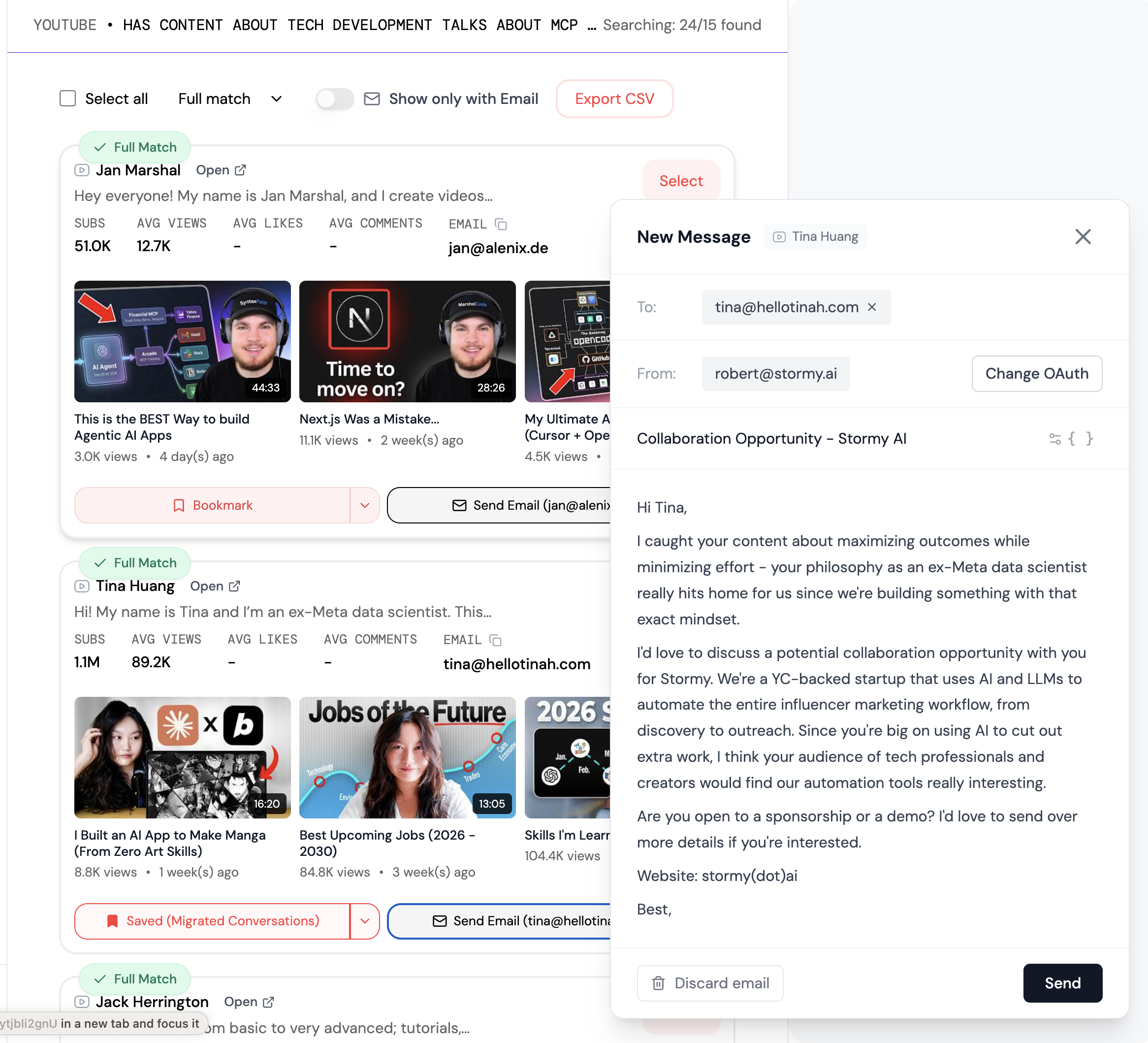
To land these deals, you need a high-volume outreach strategy. Rather than sending DMs manually, you can use Stormy AI to send hyper-personalized emails and automate follow-ups through a dedicated AI agent that works while you sleep. When negotiating, aim for a "View Guarantee" model. For instance, pay a base fee (e.g., $100-$200) for a series of videos with a guarantee of reaching 100,000 views. Finding the right creators for these campaigns can be streamlined using Stormy AI for finding UGC creators and influencers specifically suited for mobile app marketing and high-conversion ad content.
Building a High-Converting Onboarding Flow
Even the best marketing won't save an app with a poor onboarding experience. The goal of onboarding is to move the user toward the "Gotcha Moment" while establishing the sunken cost fallacy. If a user spends three minutes answering personalized questions about their goals and challenges, they are statistically much more likely to start a free trial because they've already invested effort into the setup.
A winning onboarding formula for a saas business ideas 2025 project looks like this:
- Educate: Briefly explain the unique value proposition.
- Personalize: Ask 5-10 guiding questions that make the user feel seen.
- FOMO: Highlight what they will miss out on (e.g., "Your peers are already improving 20% faster").
- The Tease: Show them the result of their "Gotcha Moment" (like an analysis score) but blur the details behind a Meta Ads style paywall.
The Ecosystem Approach: Moving Beyond a Single Feature
To scale an ai startup niche to $17,000/month and beyond, you must transition from a "utility" to an "ecosystem." A utility app does one thing (like analyzing a video). An ecosystem app becomes the central hub for the user's lifestyle. Wrestle AI achieved this by integrating a calorie tracker, a weight journal, a training calendar, and a library of move tutorials.
This "all-in-one" strategy makes your app indispensable. Users are less likely to cancel a subscription if your app holds their historical weight data, their upcoming match schedule, and their personalized coaching drills. This approach also allows you to compete with giants. A wrestler might use MyFitnessPal for calories, but they would prefer a tool that understands the specific weight-cutting requirements of their sport. Always ask: "What else does my target user do ten minutes before or after using my core feature?"
Post-Validation Growth: From Vibe Coding to Professional Product
Once your app passes the $5,000 MRR milestone, the strategy shifts from "move fast and break things" to "invest in quality." Vibe coding is perfect for validation, but at scale, technical debt and UI polish become roadblocks. This is the stage where you should reinvest your profits into professional designers and dedicated developers to refine the user experience.
Growth at this stage often requires diversifying your traffic sources. While influencer marketing is great for a burst of initial traction, you should begin layering in App Store Optimization (ASO) and paid acquisition through Apple Search Ads. By combining the organic trust of UGC creators found on Stormy AI with the precision of paid search, you create a sustainable growth engine that doesn't rely solely on the next viral video.
Final Takeaways for 2025 Founders
The story of Wrestle AI is a blueprint for the modern entrepreneur. Success in the ai startup niche requires a blend of relentless determination and strategic focus. Start by identifying an underserved community through niche market research. Build quickly using vibe coding tools to find your "Gotcha Moment," and then leverage influencer relationships to drive viral growth. Remember, in the age of AI, the "hard part" isn't the code—it's the courage to launch, the discipline to iterate, and the insight to see the niche that everyone else is ignoring. Start building today, and you might find yourself on the top charts by next month.