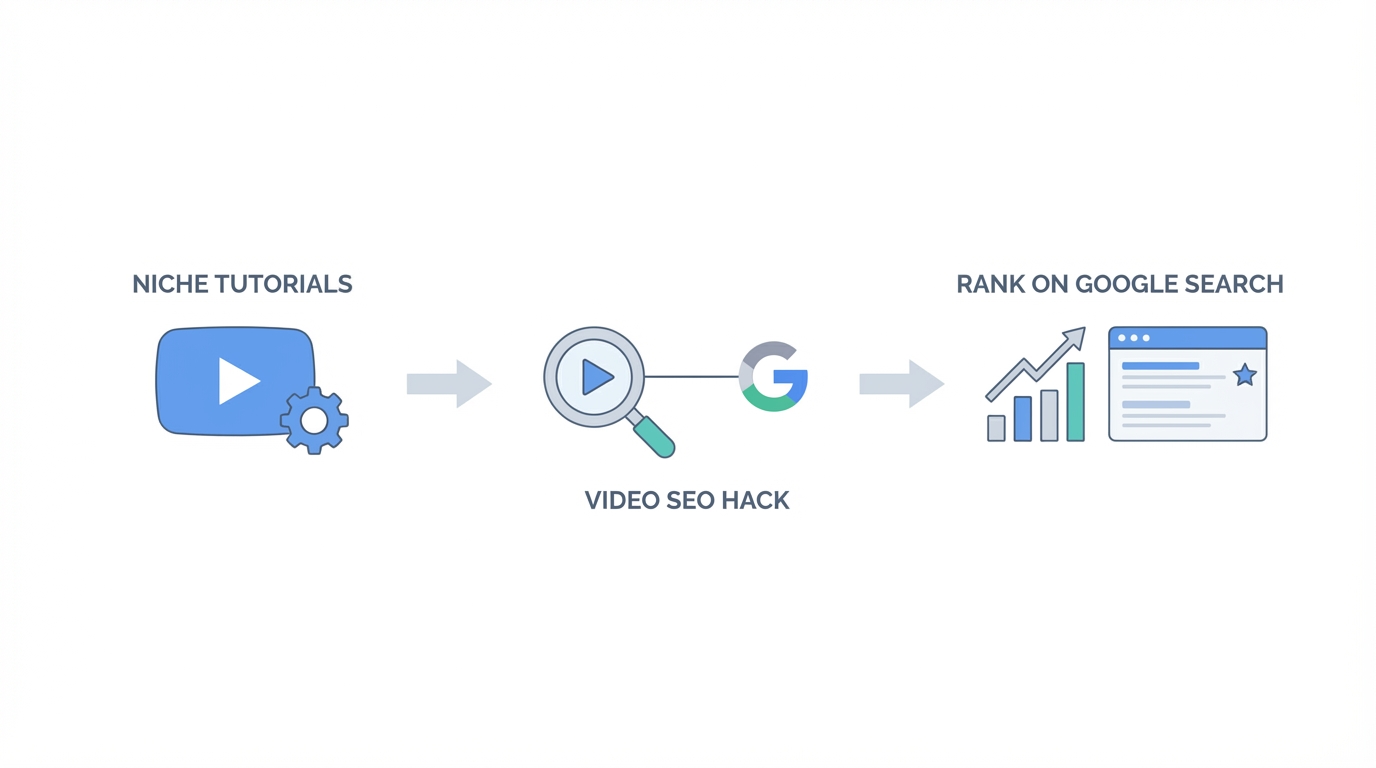
For years, the standard advice for ranking on the first page of search results was simple: write a 2,000-word blog post, build a dozen backlinks, and hope for the best. But the landscape of the search engine results page (SERP) has shifted. Today, Google increasingly prioritizes rich media and direct answers, often placing google search video snippets above even the most authoritative written guides. This shift has created a massive opportunity for founders and marketers to bypass the traditional SEO grind and go straight to the top of the rankings using a highly specific video SEO strategy.
The Death of the "How-To" Blog Post and the Rise of Video
Google’s algorithm is designed to provide the most helpful response to a user's query. For "how-to" or problem-solving queries, text often falls short. Imagine trying to explain how to automate a complex task in Adobe Photoshop using only text. A user has to read, visualize, and then hunt for the correct menu items. A niche YouTube tutorial, however, allows the user to follow along in real-time. This is why Google is aggressively ranking YouTube videos on Google search results, often displaying them as large, clickable thumbnails with timestamps for key moments.
According to data shared by successful founders like Vikash of Bulk Mockup, this isn't just about getting views—it's about capturing high-intent traffic. In many cases, these videos don't need to go viral to be profitable. To ensure the creators you partner with have genuine reach, you can use Stormy AI to vet creators and analyze deep audience demographics to detect fake followers or engagement fraud instantly.
Harvesting Customer Pain: The Fuel for Video SEO
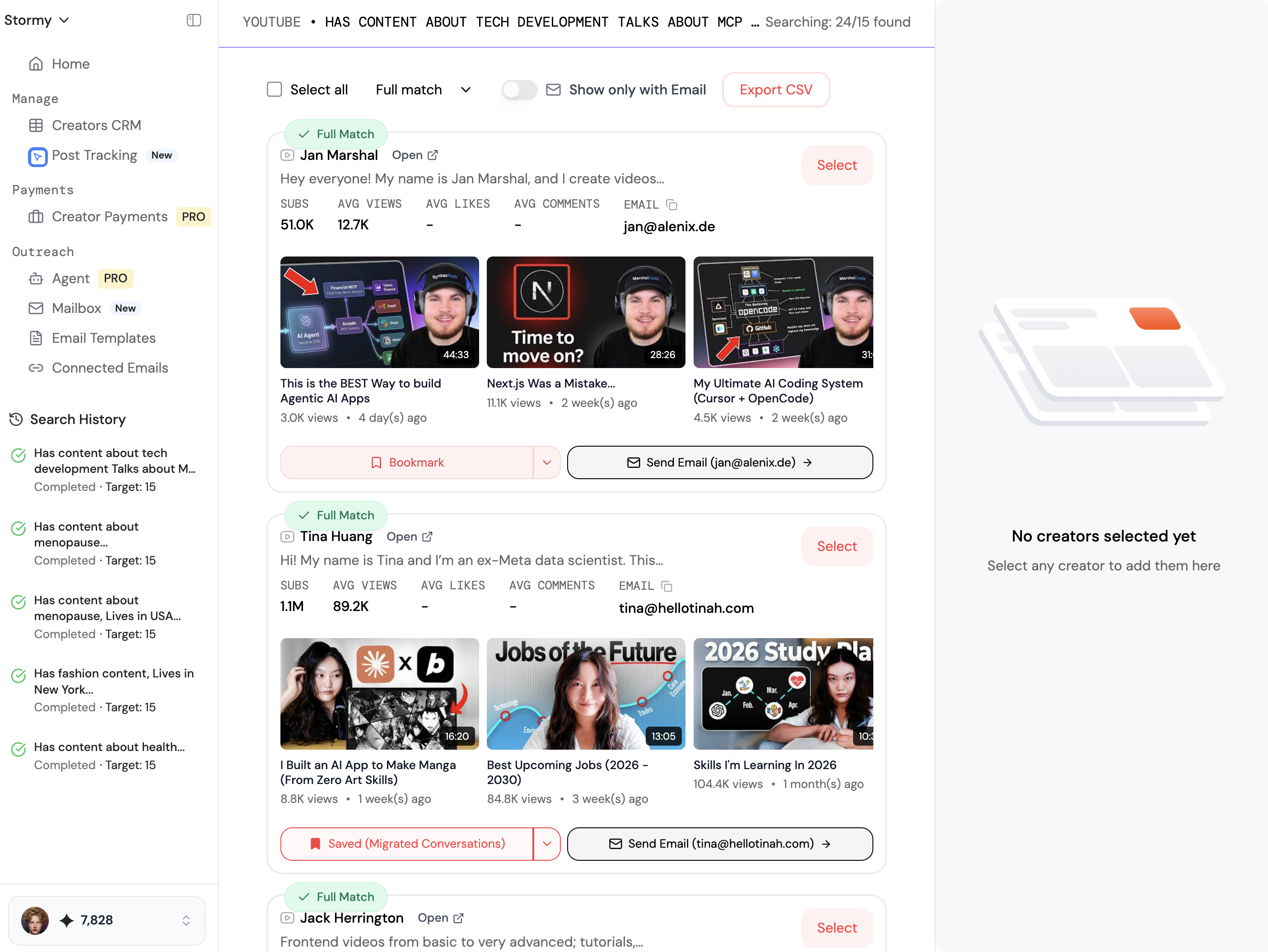
The most common mistake in video marketing for SaaS is creating content based on what the brand wants to say rather than what the customer is struggling to do. To dominate search results, you must move away from "lifestyle" content and toward pointy-feature content. This starts by identifying "customer pain." Platforms like Stormy AI provide an AI search engine across TikTok, YouTube, and Instagram, helping you find influencers by typing natural-language prompts like "creators who make Photoshop tutorials" to see who is already addressing these specific user struggles.
Vikash’s $12,000 per month business, documented on Starter Story, was built entirely on this principle. He didn't brainstorm "cool video ideas"; he harvested them from four specific touchpoints:
- Niche Communities: Scouring forums and subreddits where users are complaining about a lack of features or a slow workflow.
- Onboarding Emails: Asking new users, "What custom tutorial do you need today?" and then filming exactly that.
- Customer Support: Using tools like Loom or Komodo to record custom solutions for users, then turning those solutions into public tutorials.
- Competitor YouTube Comments: Looking for high-view videos in your niche and reading the comments to find unresolved questions.
By focusing on these "longtail" problems, you create assets that have zero competition. While everyone else is trying to rank for "How to use Photoshop," you are ranking for "How to automate 1,800 mockups in 30 minutes." The latter may have lower search volume, but the conversion rate is exponentially higher.
The 3-Step Playbook for YouTube Search Engine Optimization
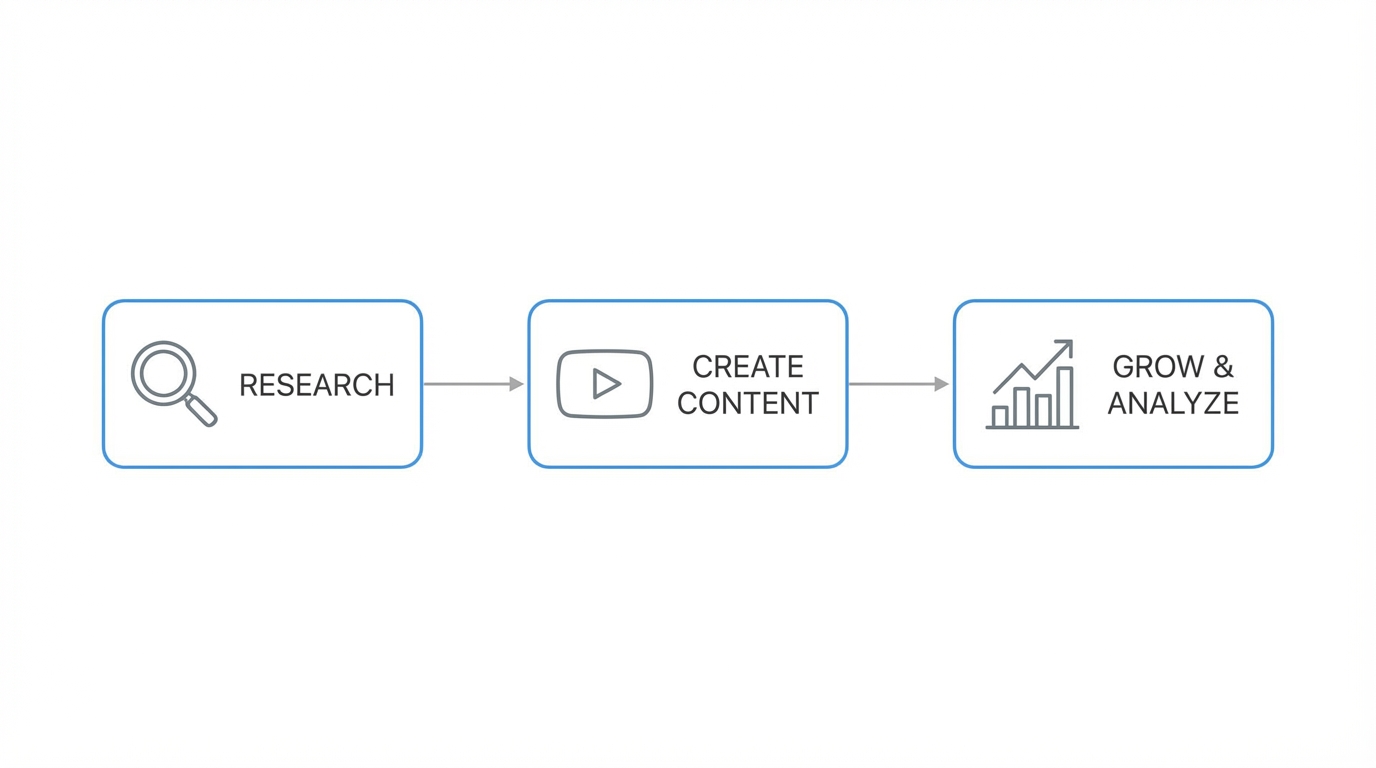
Once you have identified a specific pain point, you need to ensure Google can find and index your video properly. YouTube search engine optimization is not a mystery; it follows a predictable set of rules that prioritize clarity and relevance over production value.
Step 1: On-Page Keyword Integration
Google’s crawlers are highly sophisticated, but they still rely on text signals. Your primary keyword—the exact phrase a user would type into Google—must appear in the title, the first two lines of the description, and the video tags. For example, if you are helping users with Gumroad sales data automation, your title should reflect that exact intent. This tells Google precisely which google search video snippets your content is eligible for.
Step 2: The Critical First 30 Seconds
Google doesn't just look at your metadata; it "listens" to your transcript. If you spend the first minute of your video with a fancy intro or asking people to subscribe, you are wasting your video SEO strategy. You must state the problem and the solution within the first 30 seconds. Use the exact keywords naturally in your speech. If your video is about "How to automate Photoshop scripts," you should say those exact words at the very beginning. This provides a strong signal to the indexing algorithm that the content matches the search query.
Step 3: Intent-Based Timestamps
Timestamps (or "Chapters") are a cheat code for ranking YouTube video on Google. When you add timestamps to your description, Google often displays them directly in the search results. This allows users to jump to the specific part of the video that answers their question. This increases your click-through rate (CTR) and signals to Google that your video is a comprehensive resource, making it more likely to be featured as a "Suggested Clip."
Minimum Viable Tutorials: Why Production Value is Overrated
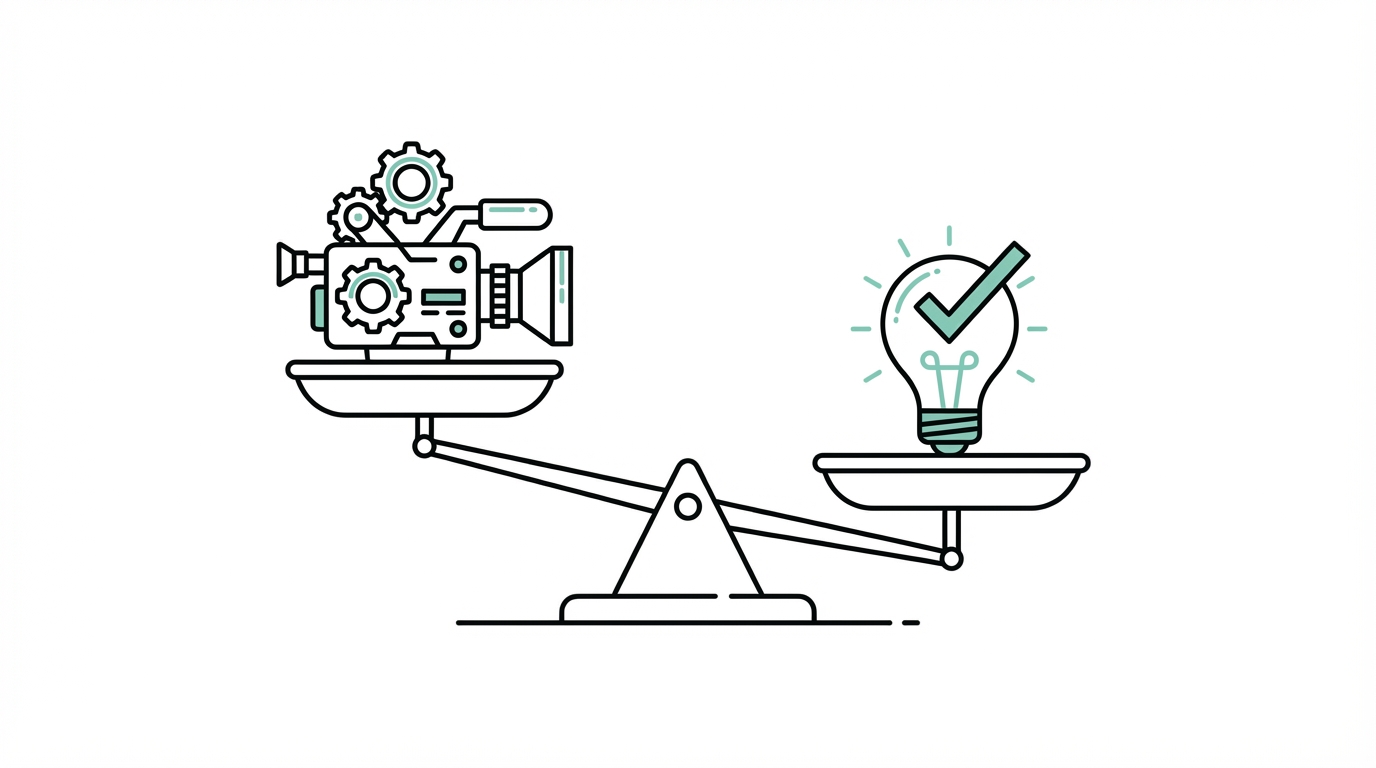
Many founders avoid video marketing for SaaS because they believe they need a studio, a professional editor, and high-end equipment. The data suggests the opposite. In the world of niche tutorials, authenticity and speed trump polish. A screen recording with clear audio is often more trusted than a highly produced corporate video because it feels like a real solution from a real person.
Vikash, the founder of Bulk Mockup, demonstrates this perfectly. He built his $12k MRR business using simple tools like a screen recorder and Notion to organize his content. He didn't spend weeks on a script. Instead, he simply recorded the solution to a problem he had already solved on Stack Overflow or for a client on Upwork. When a user is frustrated and looking for a fix, they don't care about your lighting—they care that your software saves them the 30-40 minutes of manual labor they were about to perform.
Distributing Your Video Assets for Maximum ROI
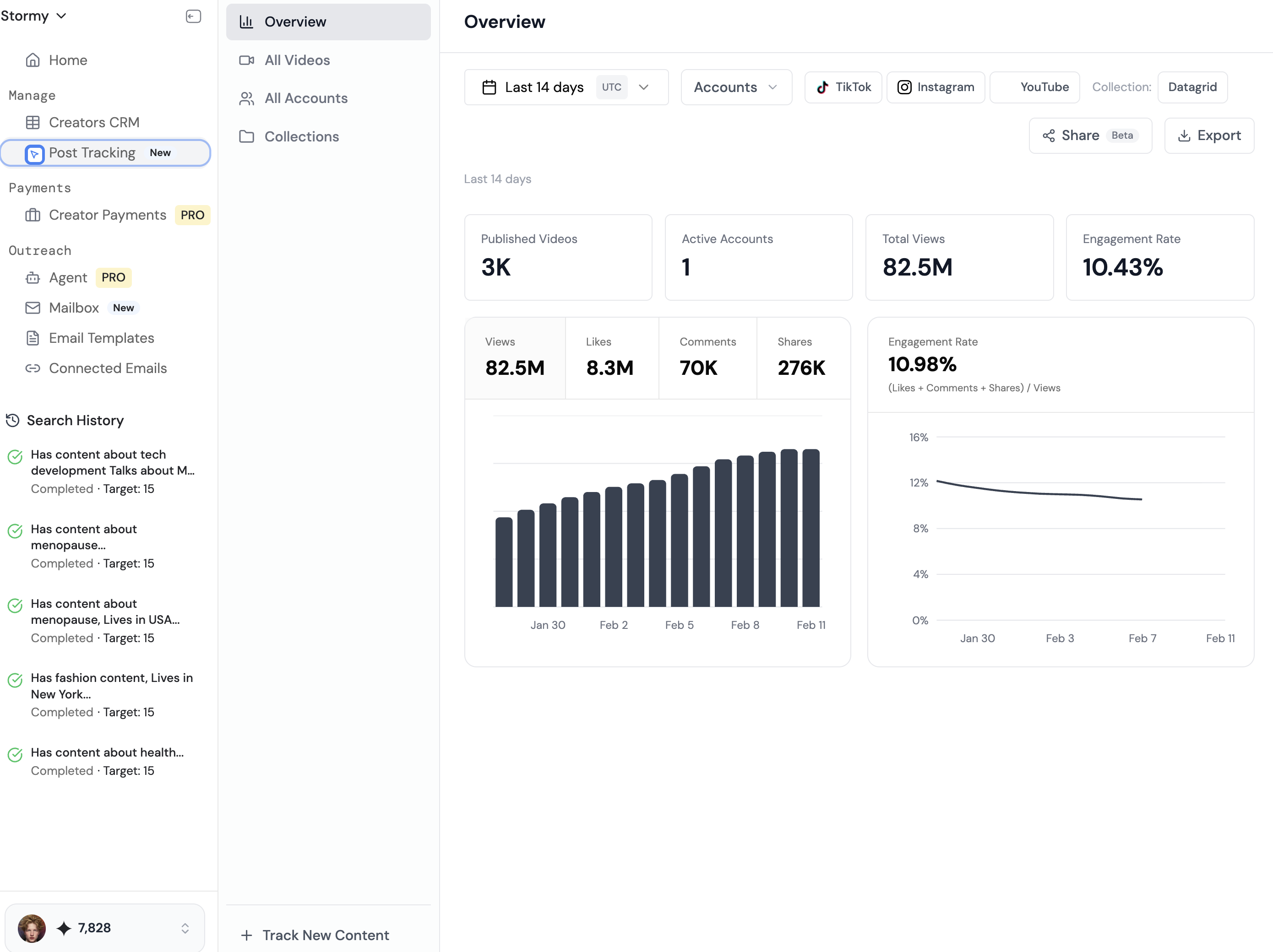
Uploading to YouTube is only half the battle. To truly leverage your video SEO strategy, you need to distribute these assets where your customers already live. This creates a multi-channel presence that reinforces your authority. For large-scale campaigns, you can use Stormy AI to track individual videos, monitor views, and analyze performance across all platforms to see which tutorials are driving the most engagement.
Your distribution checklist should include:
- Embed in Documentation: Every support article or documentation page should have a corresponding video. This keeps users on your site longer, which is a positive SEO signal.
- Post in Relevant Forums: If you find a question on Reddit that your video answers, post a helpful summary and include the link. Use tools like Cal.com to offer follow-up calls for users who need more help.
- Newsletter Integration: Feature your "Solution of the Week" in your onboarding sequence. This reduces churn and educates your users on the deeper features of your product.
- Social Snippets: Take the most important 60 seconds of your tutorial and post it as a YouTube Short or a LinkedIn video.
Monetizing the Longtail: From Views to MRR
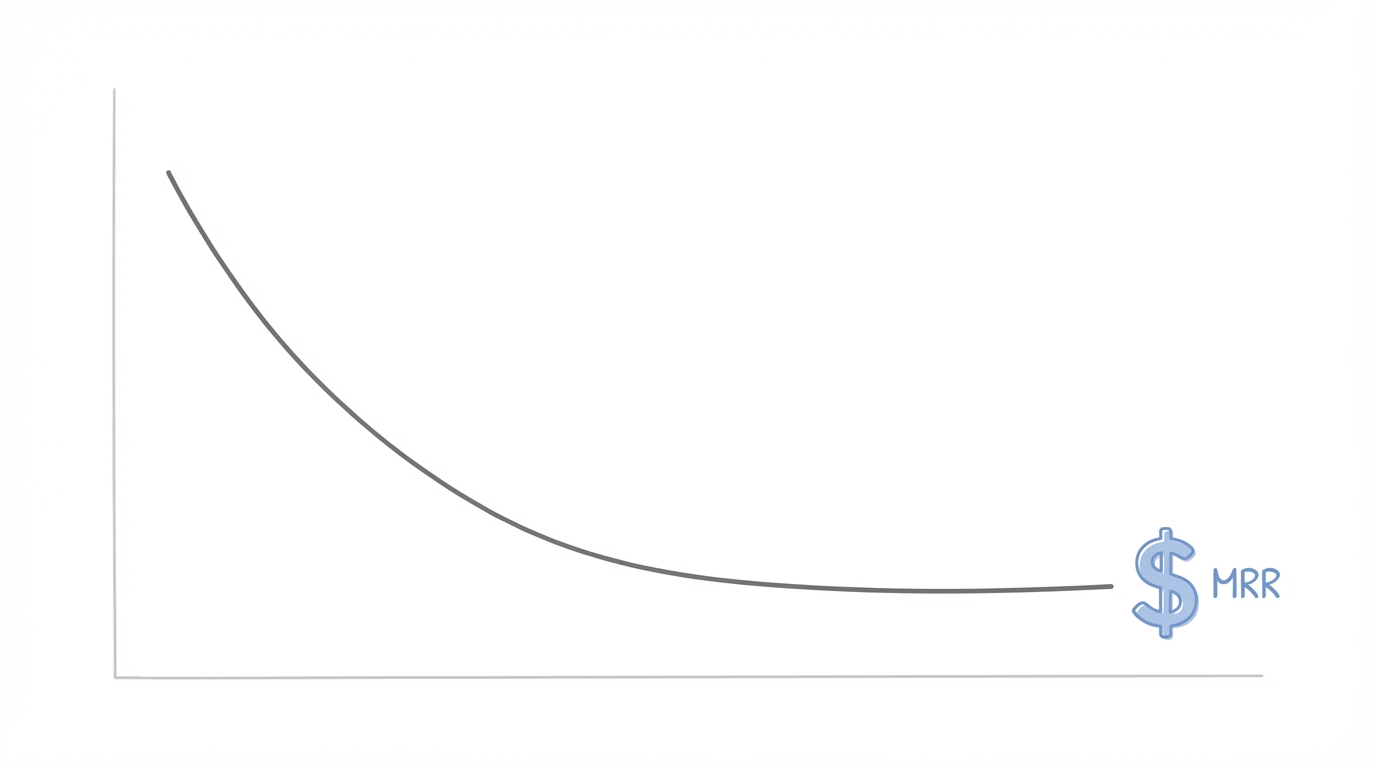
The beauty of the niche YouTube tutorial is that it creates a permanent asset. Unlike a paid ad on Google Ads, which stops delivering traffic the moment you stop paying, a well-optimized video continues to rank on Google Search for years. To scale this production, you can use Stormy AI to manage all your creator relationships and deal stages in a built-in CRM, turning content creation into a repeatable growth engine.
Consider the math: If you create one video per week that addresses a specific customer pain point, by the end of the year, you have 52 assets. If each video only brings in 2 customers per month, and your SaaS or plugin costs $15/month, you are looking at an additional $1,560 in new MRR every single month. This is the power of compounding youtube search engine optimization. You are building a library of solutions that prove your product's value before the customer even signs up for a trial.
Conclusion: Your Video SEO Action Plan
Ranking on the first page of Google doesn't require a massive budget or a team of writers. It requires an obsession with your customer's problems and the willingness to record a simple solution. By focusing on video marketing for SaaS through niche tutorials, you can bypass the competition and capture high-intent users who are ready to buy.
To start your video SEO strategy today, follow these steps: identify one recurring question from your support tickets, record a 3-minute Loom video explaining the fix, upload it to YouTube with a keyword-rich title, and add it to your AppSumo or product listing. If you are looking to scale this process, you can use Stormy AI to set up an autonomous AI agent that discovers, outreaches, and follows up with creators on a daily schedule to produce these tutorials for you. Stop chasing viral trends and start solving real problems—the rankings (and the revenue) will follow.