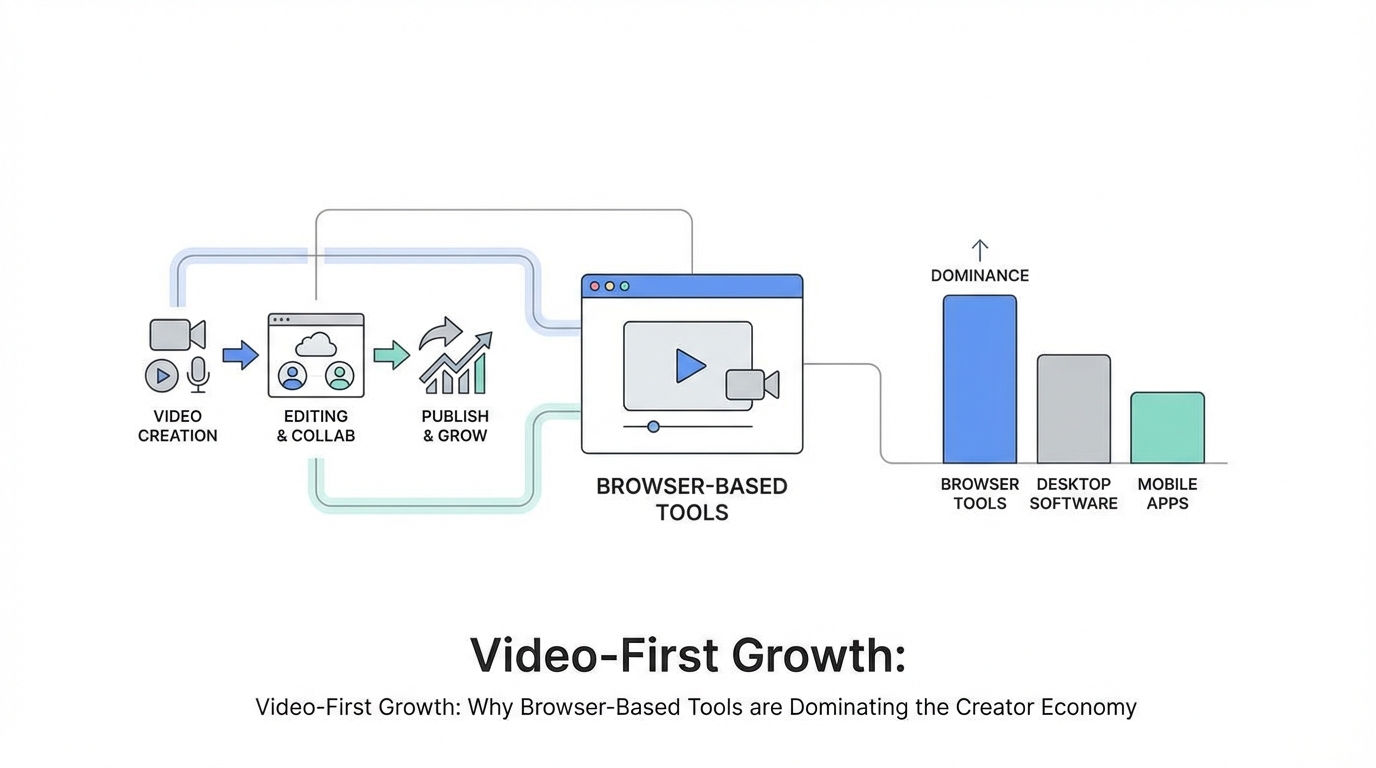
For decades, the barriers to professional video production were insurmountable for the average marketer. You needed a high-end workstation, expensive software licenses, and years of technical training to master the complex timelines and keyframes of legacy editors. However, a seismic shift is occurring in creator economy trends. The rise of the "prosumer" has led to the dominance of browser-based utility tools that prioritize speed, accessibility, and high-velocity output over traditional feature-rich complexity. As social media platforms like TikTok and Instagram Reels prioritize raw, authentic content, brands that can move the fastest—not necessarily those with the biggest production budget—are the ones winning the attention war.
The Evolution of Video Editing: From Complexity to One-Click Utility

The transition from desktop-heavy software to browser-based solutions is one of the most significant SaaS product trends of the last five years. In the early days of digital media, creators were forced to use professional-grade tools like Adobe Premiere Pro or Final Cut. While powerful, these tools were never designed for the rapid-fire requirements of social media video marketing. The learning curve was a cliff, and the rendering times alone could kill the momentum of a trending topic.
Enter the era of "brute force" utility tools. A prime example is Veed.io, a platform founded on the simple premise that video editing should be as easy as editing a document. As highlighted in a recent feature on Starter Story, Veed's founder Saba Cannajad realized that while he was a technical designer, even he found traditional editing hard. He envisioned a tool modeled after the simplicity of Giphy’s GIF editor: upload, add text, trim, and you are done. This focus on "super basic" functionality allowed them to scale from zero to millions in revenue by solving a universal pain point: the need for speed in content creation.
This shift isn't just about the software; it's about a fundamental change in how we perceive quality. In the current landscape, authenticity outweighs high production value. A video shot on an iPhone and edited in a browser in ten minutes often outperforms a polished $10,000 commercial because it feels native to the platform's ecosystem.
Why Simple and Fast Beats Feature-Rich in Social Media
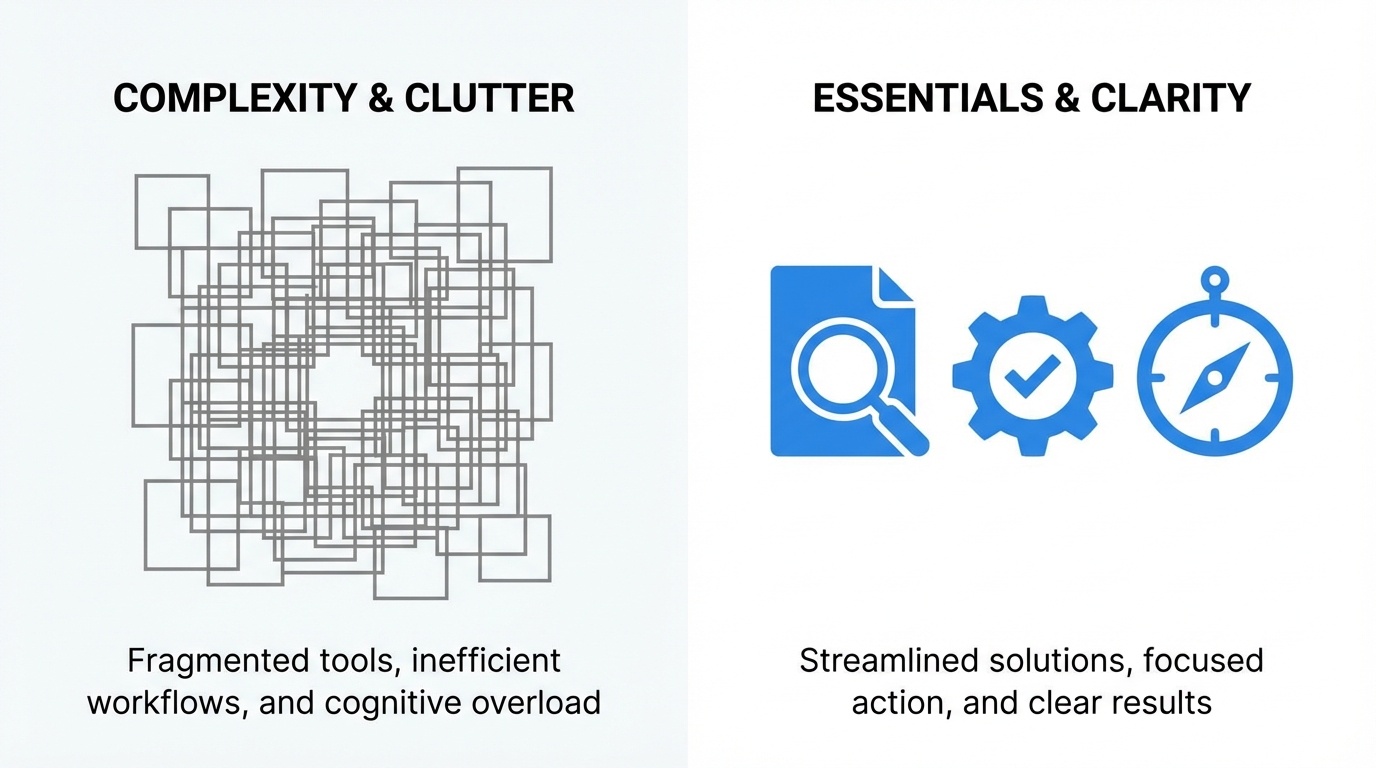
In social media video marketing, the half-life of a trend is measured in hours, not weeks. If a brand takes three days to approve a creative brief and another four days to edit a video, the opportunity has already passed. The winners in today's market are those who embrace a video content strategy focused on agility. By using lightweight tools, teams can produce 10 variations of a single concept, test them in real-time, and double down on what works.
To execute this at scale, brands are moving away from centralized creative departments and toward decentralized influencer networks. This is where Stormy's AI search becomes indispensable. Instead of manually searching through hashtags, marketers can use natural language prompts to find thousands of creators who are already experts in these lightweight tools. Whether you need fitness creators in Los Angeles or tech reviewers on YouTube, AI discovery allows you to build a roster of agile content partners in seconds.
The "brute force" approach to growth—as seen in the early days of Veed when they built hundreds of specific landing pages for terms like "trim video" or "crop video"—is now being applied to influencer outreach. Brands are no longer looking for one "perfect" influencer; they are looking to flood the market with high-quality, authentic content from hundreds of micro-influencers who can turn around content overnight using these browser-based editors.
Integrating Video Creation into Your Influencer Marketing Workflow
Once you've identified the right creators, the challenge shifts to management and quality control. Successful brands treat their influencer partnerships like a high-performance engine. This requires more than just a spreadsheet; it requires a dedicated influencer marketing tools stack that handles everything from vetting to payment.
Before sending a contract, savvy marketers use Stormy AI for influencer vetting and fake follower detection to vet creators for audience quality. In an era where engagement can be bought, detecting fake followers and bot-driven comments is critical. Once vetted, the workflow moves into the collaboration phase. This is where the "simple and fast" philosophy of browser tools meets the "automated and scalable" power of AI.
Playbook: A 4-Step Video-First Growth Strategy
- Discovery & Vetting: Use AI to identify creators with high engagement rates and authentic audiences. Don't just look for follower counts; look for creators whose style matches the fast-paced, raw aesthetic of modern social media.
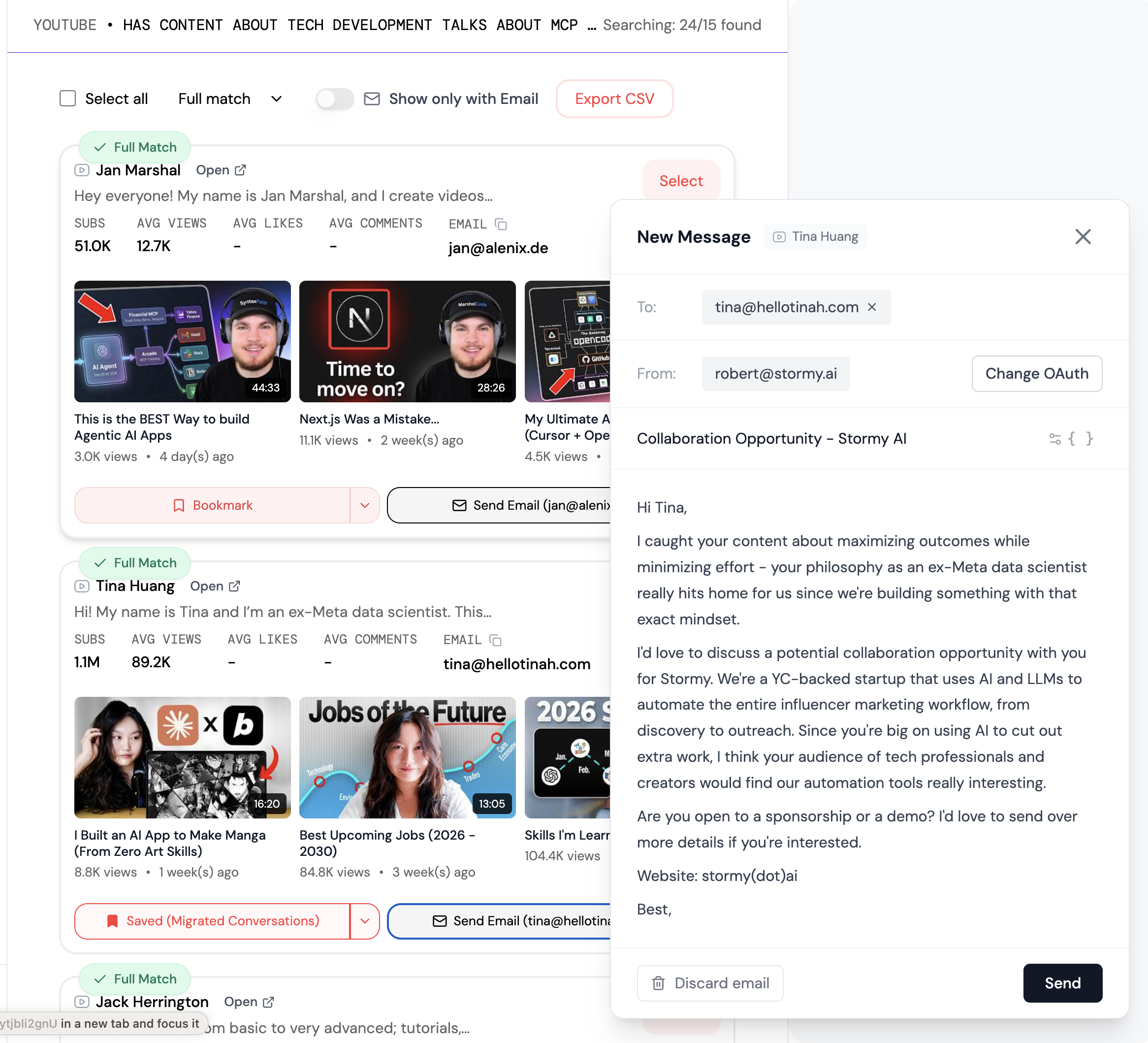
- Hyper-Personalized Outreach: Use Stormy's AI outreach with auto follow-ups to contact hundreds of creators simultaneously. The AI generates personalized emails for each creator, increasing reply rates and reducing the manual labor of managing an inbox.
- Agile Content Creation: Encourage your creators to use browser-based tools that allow for quick iterations. Provide them with brand assets through a central Notion workspace or a similar collaborative environment.
- Automated Follow-up: Set up an AI agent to handle the back-and-forth of negotiations and content reminders. This ensures that no partnership falls through the cracks while you sleep.
Using Analytics to Identify Winning Video Formats

Data is the fuel for any successful video content strategy. Without granular insights into what is driving views and conversions, you are essentially flying blind. Successful startups often point to product analytics as the key to their rapid growth. For instance, the team at PostHog provides deep session replays and A/B testing capabilities that allow companies to see exactly how users interact with their products.
For influencer campaigns, this means tracking more than just vanity metrics. You need to know which specific creator, which specific video format, and which specific call-to-action (CTA) led to the highest ROI. Using Stormy's post tracking dashboard, marketers can monitor campaign performance across TikTok, Instagram, and YouTube in one place. By identifying the top-performing 10% of your creators, you can re-allocate budget from underperforming posts to the formats that are actually moving the needle.
This data-driven approach allows you to scale your social media video marketing without increasing your risk. You can test new creative directions with a small budget on platforms like Meta Ads Manager or Google Ads, and then use your organic influencer results to inform your paid spend.
Predicting the Next Wave: The AI-Powered Utility Era

If the first wave of the creator economy was defined by complex software, and the second wave by simple browser-based tools, the third wave will be defined by autonomous AI agents. We are moving toward a future where the "brute force" of human labor is replaced by the "brute force" of generative intelligence.
We are already seeing this in SaaS product trends where AI doesn't just help you do the work—it does the work for you. In the context of influencer marketing, this means AI agents that not only find the creators but also analyze their previous content to predict future performance, draft the creative briefs, and even handle the final creator payments via secure platforms like Stripe.
The brands that will dominate the next decade are those that view social media video marketing as a volume game supported by intelligent automation. By combining the ease of use of browser editors with the scale of an AI-driven creator CRM and outreach platform, businesses can achieve a level of market saturation that was previously reserved for Fortune 500 companies with massive agencies.
Conclusion: The Endurance Sport of Content Growth
As Saba Cannajad noted, building a successful company in this space is an "endurance sport." It requires persistence, a willingness to be rejected, and the grit to keep building when others quit. The creator economy trends we see today all point toward a single conclusion: simplicity wins. Whether you are a solo creator or a global brand, your goal should be to reduce friction at every stage of the content lifecycle.
By leveraging browser-based tools for creation and Stormy AI for discovery, vetting, and automated outreach, you can build a high-velocity marketing engine that outpaces the competition. Stop worrying about making the "perfect" video and start focusing on making more videos, more efficiently. In the fast-moving world of social media, the most powerful tool in your arsenal is the ability to hit 'publish' faster than anyone else.