In the rapidly evolving landscape of 2025, a fundamental shift is occurring in how brands communicate with their audiences. We have officially moved past the era of feature-dumping and functional benefits into a territory defined by emotional resonance, aesthetic moods, and cultural intuition. This shift—coined as "Vibe Marketing"—is no longer just a niche trend for Gen Z startups; it has become a central pillar of the marketing strategy 2025 playbook for global leaders. According to recent data from Google Trends, searches for "vibe marketing" have skyrocketed by a staggering 686% in the last 12 months, signaling a massive departure from traditional methodologies.
For CMOs and growth leads, the challenge is no longer about proving that a product works—it’s about proving that the product feels right. In an age where only 8% of consumers trust marketers, the cold, clinical precision of traditional marketing is being replaced by the unpolished, authentic, and hyper-fast world of vibes. This article explores the critical differences between vibe marketing vs traditional marketing and provides a practical playbook for leading your brand through this transition.
The Great Decoupling: Defining the Vibe Shift
To understand the future of digital marketing, we must first define the parameters of this transition. Traditional marketing is built on the foundation of logic. It asks: "What does the product do? What is the price point? Who is the demographic?" It is a linear, structured process that often involves 3- to 6-month planning cycles and massive creative teams. In contrast, vibe marketing is emotion-first. It prioritizes cultural intuition and aesthetic "moods" over technical specifications. It asks: "How does this brand make the user feel? What subculture do we belong to?"
This shift isn't just about pretty pictures; it’s about business efficiency. Research suggests that companies adopting a vibe-led approach report a 30% faster time-to-market and 45% lower development costs. By leveraging real-time cultural moments and AI tools like ChatGPT, these brands bypass the bureaucratic slowness of traditional agencies.
The Strategic Breakdown: Traditional vs. Vibe
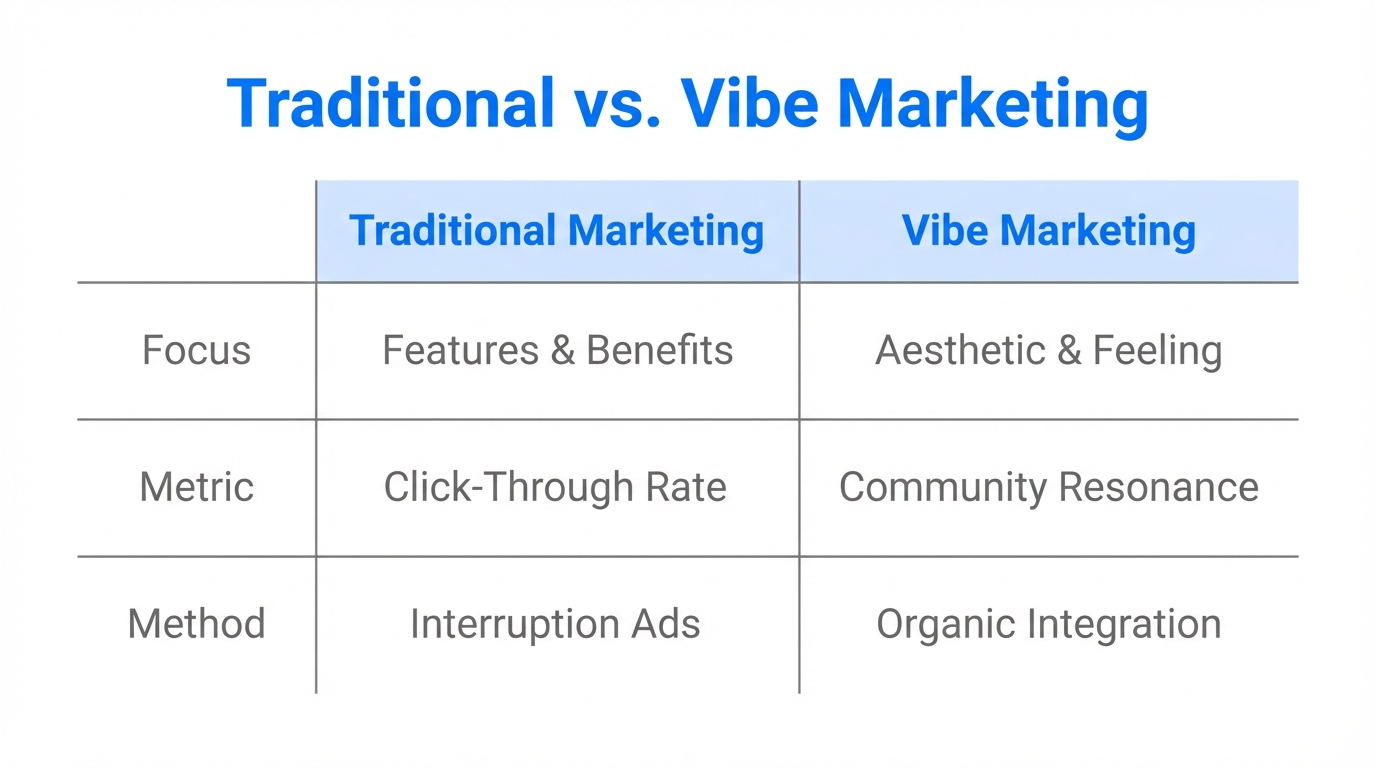
When comparing these two paradigms, the differences in speed, team structure, and measurement are stark. While traditional campaigns focus on broad-reach channels like TV and print, vibe marketing thrives on platforms like TikTok and Spotify, where the "vibe" is the currency of exchange.
| Feature | Traditional Marketing | Vibe Marketing |
|---|---|---|
| Core Focus | Functional benefits & Price | Emotional resonance & Aesthetics |
| Speed | 4–12 weeks from concept | Hours or days (Real-time) |
| Team Size | Large (12–18 specialists) | Lean (2–4 AI-augmented creators) |
| Success Metric | ROI, CPA, Conversion Rate | Sentiment, Community Growth, "Vibe" |
This transition is also fueled by a massive shift in emotional marketing ROI. According to video marketing research from Wyzowl, AI-driven video campaigns—a staple of the vibe aesthetic—show significantly higher engagement compared to traditional high-budget video production. While a traditional video might cost $20,000 and take three weeks to produce, a vibe-led campaign can launch in 24 hours for a fraction of the cost.
"The competitive edge in 2025 is no longer what you say, but the velocity at which you can respond to culture."
The 'Centaur Marketer' Model: Doing More with Less
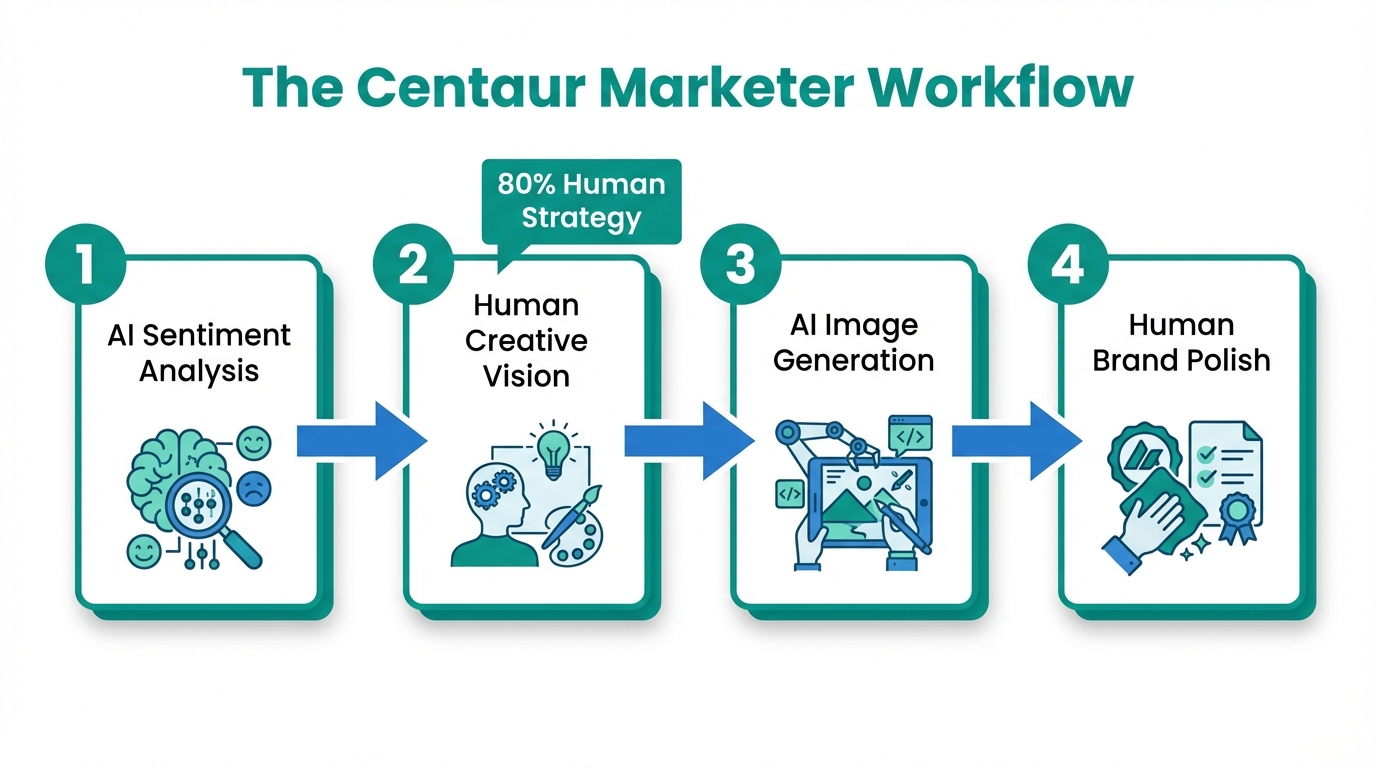
One of the most revolutionary aspects of the marketing strategy 2025 is the rise of the "Centaur Marketer." This concept, inspired by Andrej Karpathy’s insights on AI interaction, suggests that the modern marketer provides the "vibe" (the intent and creative direction) while an AI execution layer handles the technical heavy lifting. This allows lean teams of 2-4 people to outperform traditional 18-person departments.
By using tools like Midjourney for brand aesthetic strategy or Runway Gen-3 for professional motion content, these small teams can produce a volume of content that was previously impossible. This "execution layer" allows for a hyper-personalized approach at scale, where landing pages and ads are tailored not just to a name, but to a user's current "mood."
For brands looking to source high-quality user-generated content (UGC) that matches this aesthetic, platforms like Stormy AI can help find and manage creators who already embody the specific "vibe" you are targeting, allowing your internal team to remain lean while scaling output.
From Storytelling to 'Brand as Mosaic'
Traditional marketing relies on a single, linear brand story—a 50-page brand book that dictates exactly how every logo and word should appear. In 2025, that model is dead. Instead, brands are functioning as a "mosaic"—a collection of aesthetic moments, memes, and interactions that collectively create a feeling. This is often referred to as "Chaos Marketing."
Take Duolingo, for example. Their mascot, Duo, often ignores product features entirely to participate in unhinged TikTok trends. This "vibe" creates a human connection that a traditional language-learning ad never could. Similarly, Liquid Death doesn't market water minerals or pH levels; they market a rebellious, punk-rock vibe. They aren't selling water; they are selling an identity. This approach is supported by modern thought leaders who now prefer a hybrid model: traditional strategy for the brand foundation and vibe marketing for tactical execution.
"In 2025, you don't build a brand book; you build a mood board that evolves in real-time with your community."
Step-by-Step: Replacing Your Brand Book with a 'Vibe Sheet'
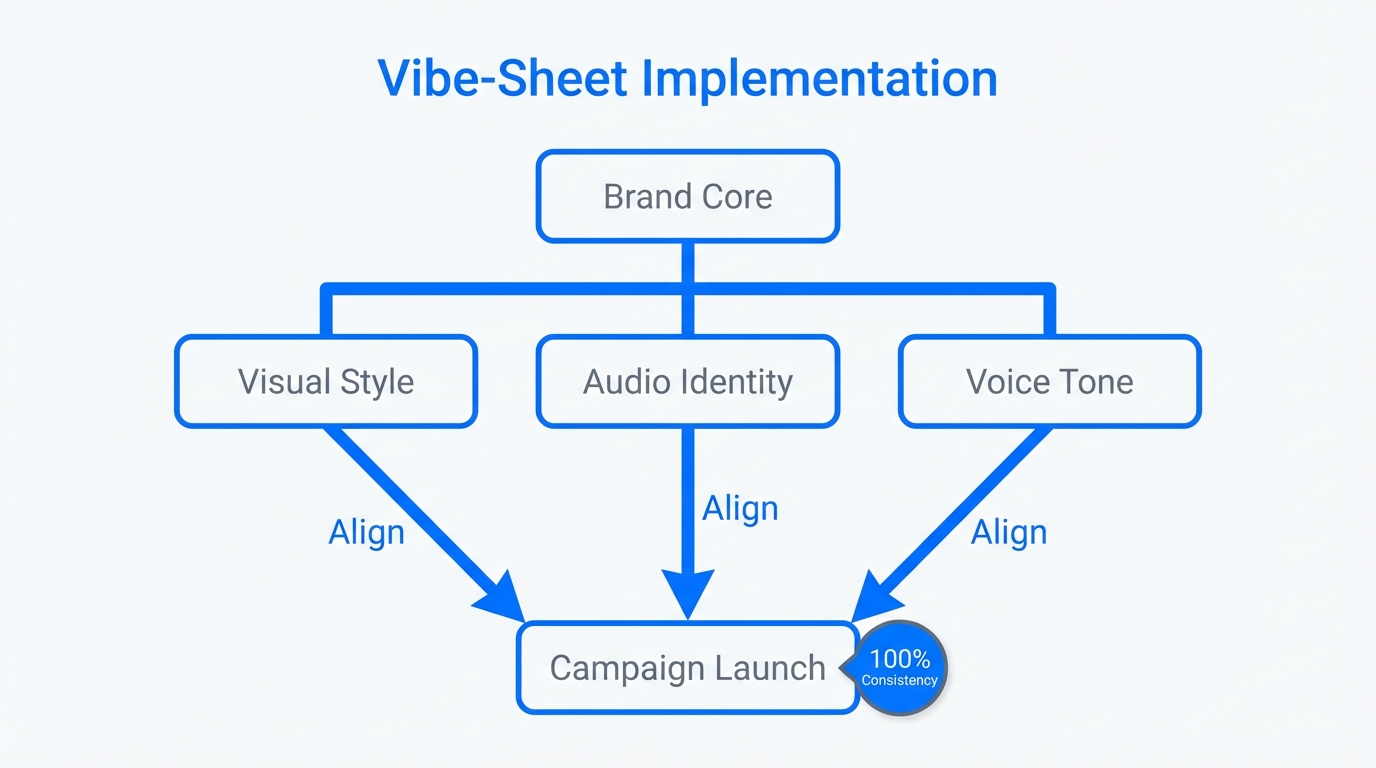
If you want to transition your team to a vibe-first approach, you need to simplify. The 50-page brand book is a bottleneck. Replace it with a Vibe Sheet—a living document that prioritizes aesthetic intuition over rigid rules.
Step 1: Define the Dominant Mood
Choose one primary emotion you want your brand to trigger. Is it "Intellectual Surprise"? "Nostalgic Comfort"? "Irreverent Chaos"? This mood should be the filter for every piece of content you produce. Use tools like Canva or Figma to create a visual representation of this mood.
Step 2: Apply the VIBE Framework
Evaluate every campaign using the VIBE Framework to ensure it aligns with the future of digital marketing:
- Velocity: Can we launch this in under 48 hours to catch a cultural moment?
- Identity: Is the aesthetic "unfakeable" and unique to our brand?
- Boundaryless: Does the content work natively across Meta Ads, TikTok, and Discord without looking like a "re-purposed" TV ad?
- Emotions First: Does this trigger a feeling before it delivers information?
Step 3: Source the 'Aesthetic' through UGC
Authenticity is the cornerstone of vibe marketing. Instead of hiring a production studio, work with creators who already live the vibe. Modern tools like Stormy AI allow you to search for creators by niche and audience quality, ensuring that the people representing your brand actually resonate with your target community.
Success Metrics: Shifting from CPA to Sentiment
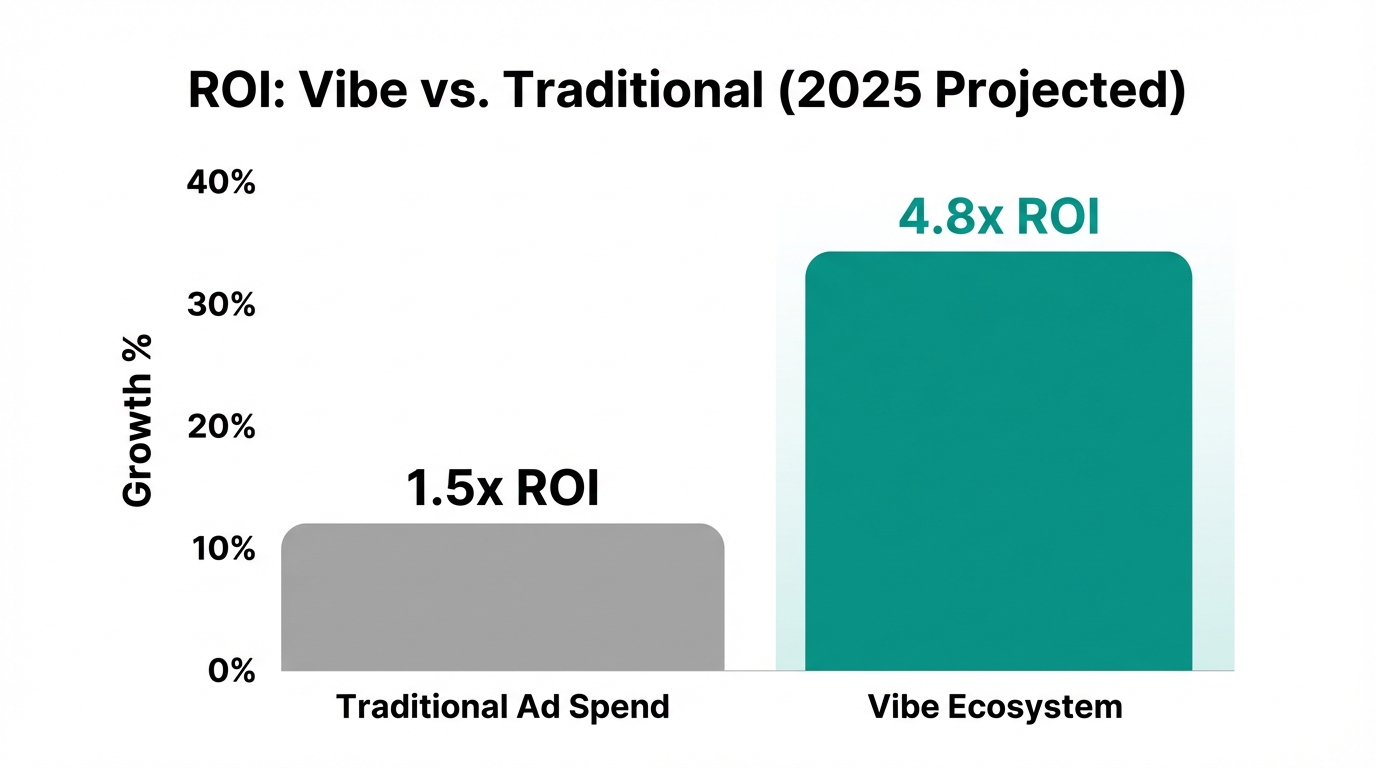
One of the hardest parts of the vibe marketing vs traditional marketing transition is changing how we measure success. Traditional marketing lives and dies by Cost Per Acquisition (CPA) and ROI. While these are still important, vibe marketing introduces more qualitative metrics that predict long-term brand health.
In 2025, leading brands are tracking Sentiment and Community Growth as leading indicators of future sales. For example, the Spotify AI DJ increased user engagement not by lowering prices, but by creating a conversational vibe that felt personal. Similarly, Heinz used their "AI Ketchup" campaign to prove that even algorithms associate "Ketchup" with "Heinz," resulting in a significant sales boost driven by a viral, aesthetic-led moment.
To track these cross-platform vibes effectively, growth leads use automation stacks. You might pair Make or n8n to connect sentiment data from social media to your general CRM systems like Pipedrive, allowing for a holistic view of how the "vibe" is impacting the bottom line.
Common Pitfalls: Avoiding 'Vibe-Washing'
While the allure of vibe marketing is strong, many brands fall into common traps that can destroy consumer trust. The first is the "Wasteland Effect"—flooding platforms with generic, unchecked AI content that lacks a human soul. As noted by cultural researchers, automation without human "taste" results in a hollow brand experience.
Another danger is Vibe-Washing: adopting a cool or trendy aesthetic that fundamentally contradicts your product experience. If your marketing feels like a boutique hotel but your product feels like a DMV office, the dissonance will drive customers away. Finally, don't ignore the traditional foundations. You still need a solid logistics backend and a functional product to support the hype generated by your vibe-led campaigns.
Conclusion: The Vibe is the Strategy
As we navigate the future of digital marketing, it is clear that vibe marketing vs traditional marketing is not an "either-or" debate—it is a evolution. Traditional marketing provides the sturdy bones of a brand, but vibe marketing provides the heart, soul, and cultural velocity required to survive in 2025. By embracing the "Centaur Marketer" model, focusing on emotional marketing ROI, and replacing rigid brand books with fluid Vibe Sheets, brands can rebuild the trust that traditional advertising has lost.
For growth leads, the instruction is clear: Stop selling features and start curating moods. Use AI to collapse your production timelines and platforms like Stormy AI to find the creators who can authentically voice your brand's unique energy. In the age of 2025 marketing, the brand with the best vibe doesn't just win the attention—they win the community.