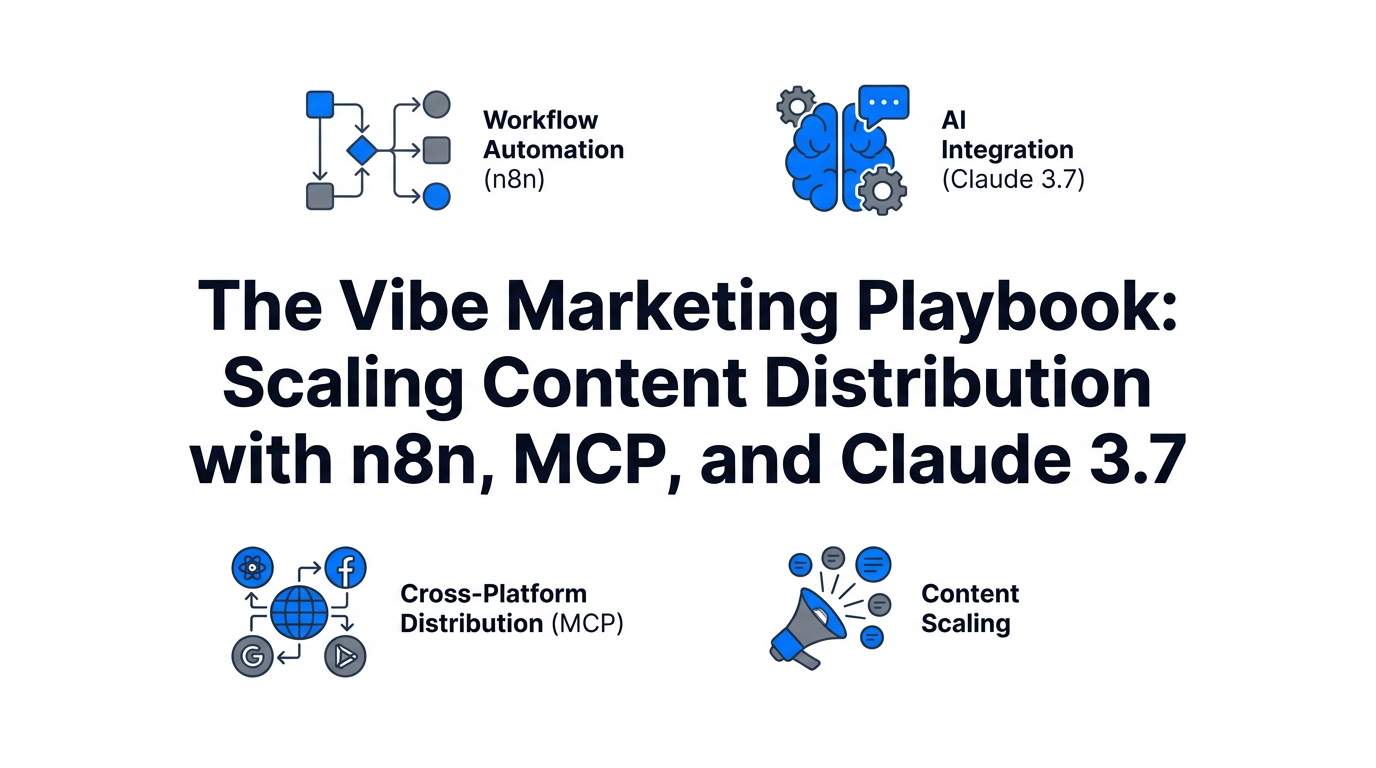
Marketing has historically been a game of brute force. If you wanted to dominate a niche, you needed a small army of copywriters, SEO specialists, and social media managers to grind out content for weeks. But the landscape has shifted toward AI-native strategies, according to recent Gartner research. We have entered the era of the vibe marketing strategy, where high-output distribution is no longer tied to headcount, but to the elegance of your AI-powered systems. By leveraging tools like n8n, the Model Context Protocol (MCP), and the reasoning capabilities of Claude 3.7, a single founder can now execute a 30-day multi-channel marketing plan in under 30 minutes.
Defining Vibe Marketing: Distribution at the Speed of Thought
Vibe marketing is the practice of using autonomous AI content engines to achieve maximum distribution with minimal manual effort. It’s about moving away from the "boring" manual tasks—the keyword tagging, the draft editing, the meta-description writing—and moving into a strategic oversight role. Instead of spending 40 hours a week writing, you spend 40 minutes architecting the workflow that writes for you.
"The most powerful workflow you can build is often the simplest one. Vibe marketing isn't about complexity; it's about siphoning demand from the internet and automating the response."
At its core, this approach solves the "cold start problem." Many marketers log into tools like Ahrefs or Semrush and feel instantly overwhelmed by the sea of data. A vibe marketer doesn't manually sort through thousands of keywords. They build a "two-way radio"—an MCP integration—between their research tools and their LLM, allowing the AI to identify high-intent opportunities and draft the strategy instantly.
The 30-Day Content Engine: A Step-by-Step Playbook
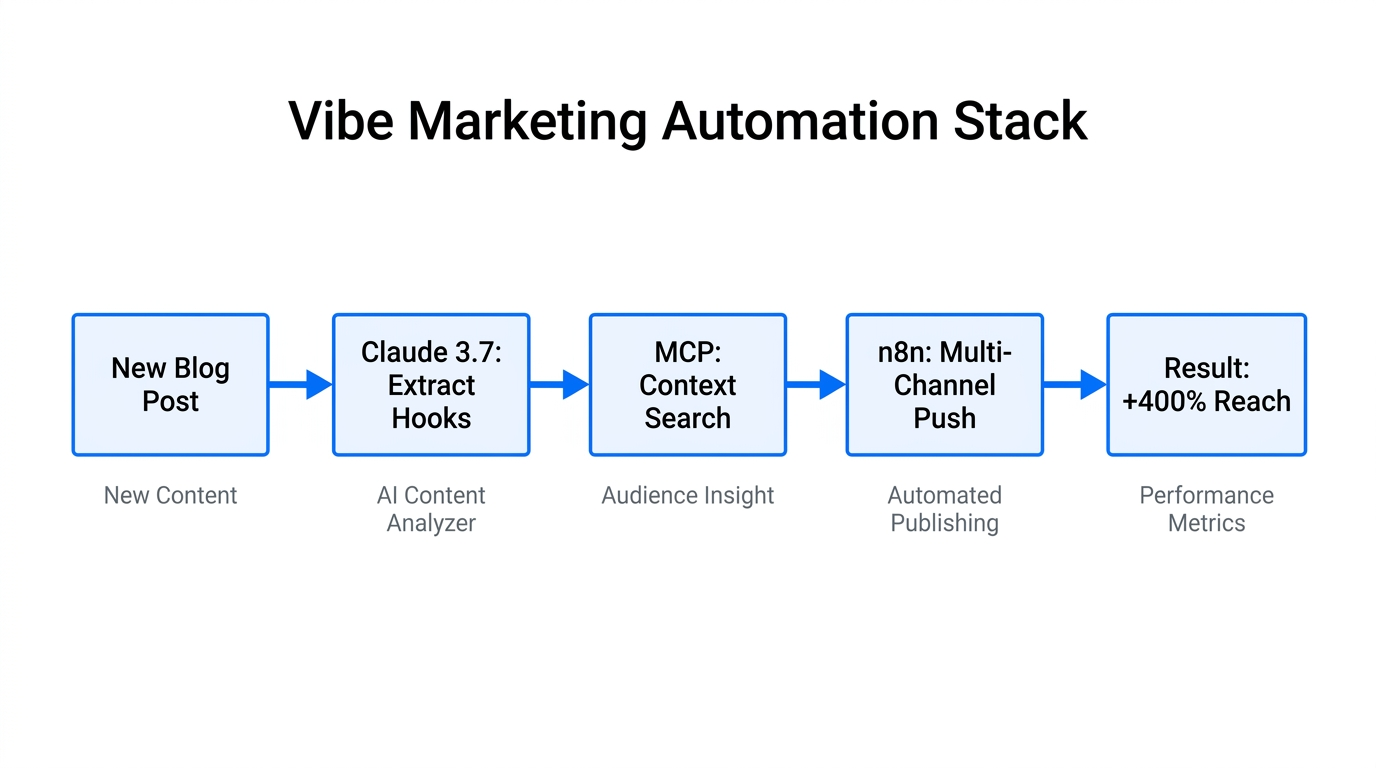
To build a successful multi-channel marketing AI engine, you must follow a logical sequence that moves from data validation to creative execution. Here is the playbook for transforming a single keyword into a month-long content calendar.
Step 1: Validating Search Demand via MCP
The first step is identifying where the demand actually lives. Instead of manual exports, use an MCP (Model Context Protocol) to connect Claude 3.7 directly to your keyword database. For example, by connecting to Ahrefs, you can prompt the AI to "Find 20 long-tail, non-branded keywords with high conversion intent." This pulls real-time search volume and difficulty metrics directly into your chat interface.
Step 2: Competitive Gap Analysis
Once you have your keywords, the engine must analyze the current ranking content. The goal is to find what the competition is missing. By using n8n workflows for growth, you can scrape the first two pages of Google results and feed that text into Claude. The AI identifies technical gaps—like a lack of datadriven benchmarks or retention strategies—which become your unique value proposition. Using tools like ScrapingBee within your workflow helps bypass bot detection during this phase.
Step 3: Generating the 30-Day Calendar
With the gaps identified, the AI generates a full 30-day vibe marketing strategy dashboard. This isn't just a list of titles; it’s a comprehensive map including content briefs, primary audiences, and specific distribution goals for each day. For a platform like Beehiiv, this might include everything from "newsletter growth roadmaps" to "monetization case studies."
| Phase | Action | Tool Stack |
|---|---|---|
| Discovery | Keyword Research & Volume Validation | Ahrefs + MCP + Claude |
| Analysis | Scraping Competitor Gaps | n8n + ScrapingBee |
| Creation | 30-Day Content Dashboard | Claude 3.7 Artifacts |
| Distribution | Multi-channel Repurposing | n8n + Slack + Webflow |
Maintaining Consistent Brand Voice Across Channels
The biggest fear in content distribution automation is "AI slop"—generic, soulless content that damages brand equity. To combat this, vibe marketers use a "Voice Foundation." This is a saved prompt or document that defines your tone, vocabulary, and perspective. When Claude 3.7 writes a blog post, it applies this foundation to the competitive gaps identified earlier.
This ensures that a technical guide on Webflow feels identical in personality to a punchy thread on X (formerly Twitter). The system doesn't just write; it adapts. It takes the deep insights from a 2,000-word blog and distills them into a 10-post X thread with a hook that stops the scroll—all while maintaining the same "vibe."
"AI content only fails when it lacks context. By pumping real-time search data and a pre-defined brand voice into the LLM, you eliminate hallucinations and generic fluff."
For brands looking to scale even faster, platforms like Stormy AI streamline creator sourcing and outreach to bridge the gap between automated brand content and authentic human distribution. While your AI engine handles the blog and social threads, you can use Stormy AI to find and vet UGC creators who can talk about your product in their own unique voices, adding another layer of social proof to your distribution engine.
Integrating AI Image and Video into the n8n Pipeline
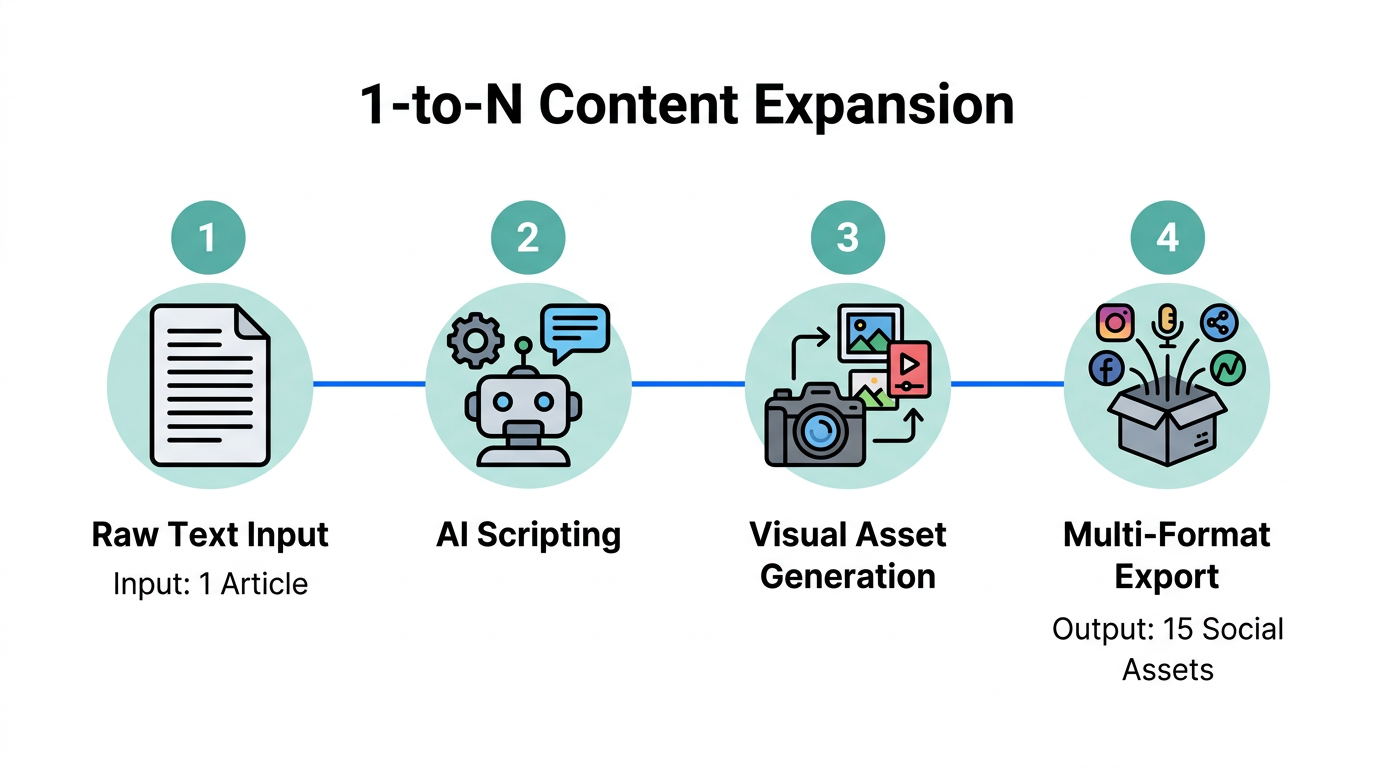
A pure text strategy is no longer enough to dominate search or social. Modern growth requires a multi-format approach. Within your n8n pipeline, you can trigger API calls to OpenAI's DALL-E 3 for hero images or even short-form video generation tools to create social-ready clips.
- Hero Images: Automatically generate featured images for blog posts based on the article's core theme.
- Social Clips: Transform key takeaways into visual assets for Instagram or TikTok.
- Contextual Visuals: Use Canva templates triggered by Zapier or n8n to maintain a professional design aesthetic.
By treating images and videos as data outputs rather than manual design tasks, you ensure that every piece of content is optimized for the specific platform it lives on. This multi-channel presence allows a startup to siphon traffic from established players who are often too "one-track minded" to maintain presence across every social signal.
Human-in-the-Loop: Slack Approvals and Brand Safety
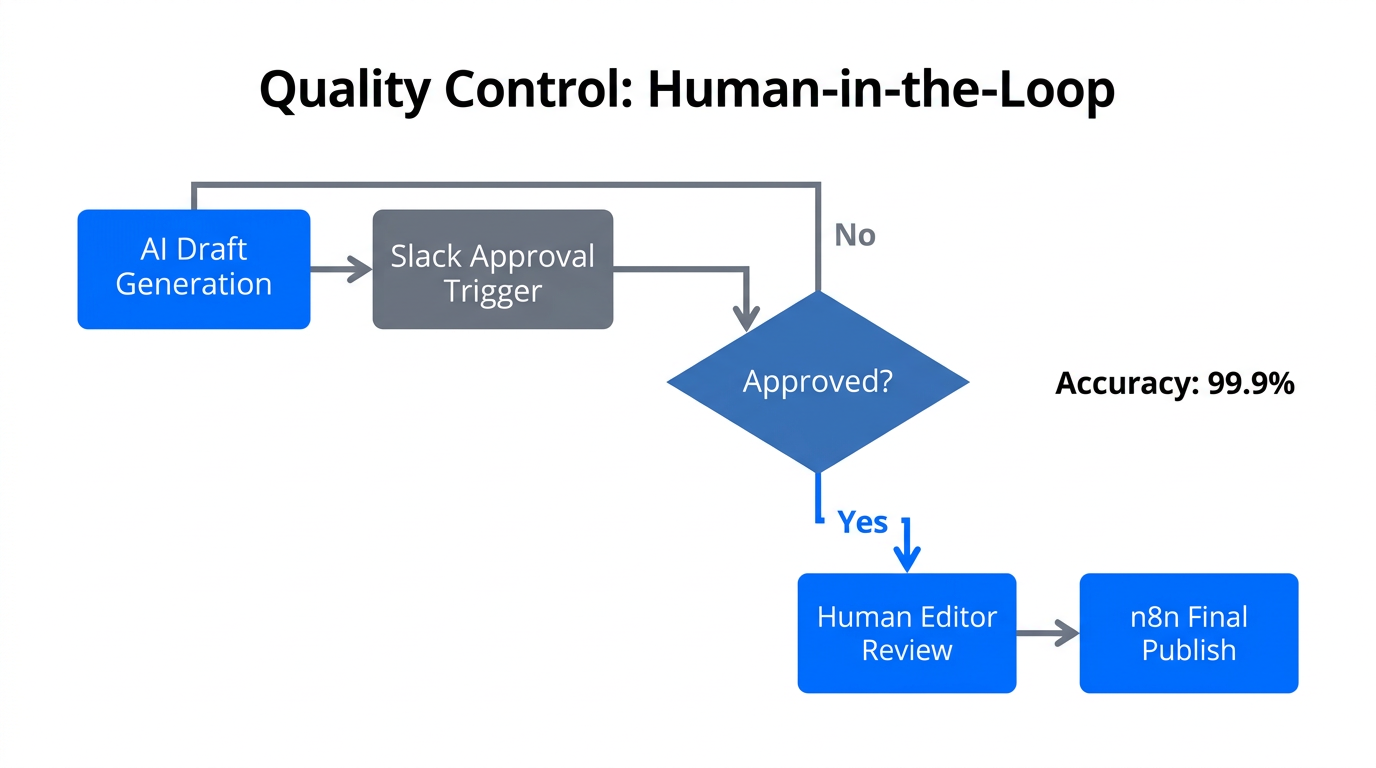
Autonomous doesn't mean unsupervised. The most successful AI content engines include a human-in-the-loop (HITL) step to ensure brand safety. The simplest way to implement this is via Slack. Once the n8n workflow generates a draft, it sends a notification to a dedicated channel.
A marketing manager can review the draft, click an "Approve" button, and trigger the final publication to Webflow or Buffer. This prevents the risk of "damaging the brand" while still maintaining 95% of the speed gains provided by the automation. This stage is also the perfect time to cross-reference your creator campaigns. If you are using Stormy AI to manage creator outreach, you can align your automated blog launches with the dates your influencers are posting to create a massive "vibe" spike in the market.
The Future of Distribution: Beyond the Blog Post
We are rapidly moving toward a future where marketing is fully end-to-end. You enter a URL, the system finds the keywords, it creates the cross-platform content, and it publishes. While we are not yet at "100% autonomous," the combination of n8n and Claude 3.7 gets us remarkably close. The winners in the next five years won't be the brands with the biggest teams, but the brands with the most efficient vibes.
If you're ready to start, don't build a complex 20-node workflow on day one. Start with a simple 4-node keyword-to-content engine. Use your LLM as a "two-way radio" to talk to your software. Focus on the high-intent keywords that actually convert, and let the AI handle the heavy lifting of distribution. The sauce is in the system, and the system is finally simple enough for everyone to use.