In 2026, the landscape of digital growth has undergone a fundamental transformation. We have moved past the era of technical optimization—where success was measured by the precision of a pixel or the granularity of a keyword—into the age of vibe orchestration. As generative AI commoditizes content production, brands no longer compete on the sheer volume of assets they can churn out. Instead, the new battlefield is emotional resonance, cultural timing, and sensory texture. Modern CMOs are realizing that in a world of infinite content, the only way to capture attention is to cultivate a specific identity-driven brand experience that feels human, even when powered by machines.
The 2026 Vibe Shift: Why Performance Marketing is Evolving
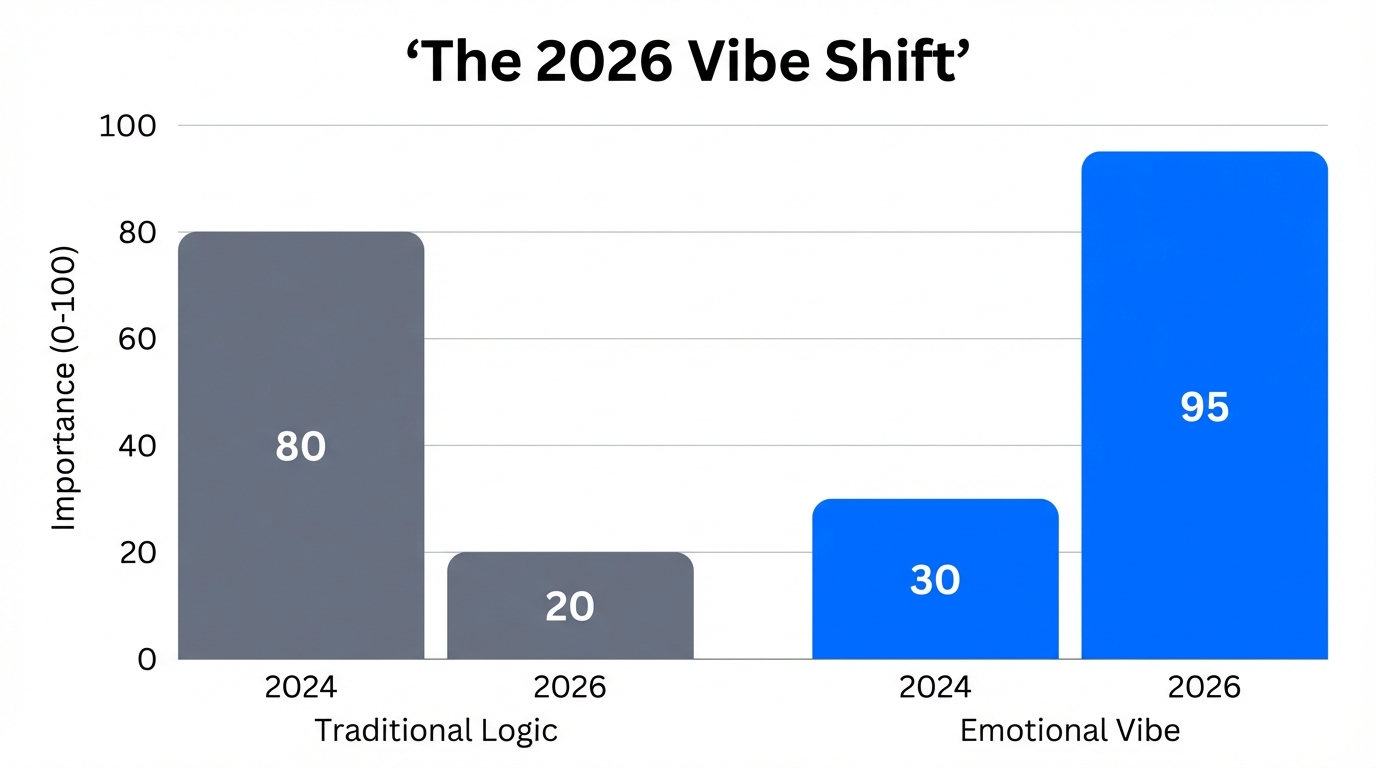
The data supporting this shift is undeniable. Search interest for vibe marketing strategy has seen a staggering 686% surge since 2024, as documented by recent market analysis from leading research firms. This isn't just a trend among niche D2C brands; approximately 47% of Fortune 500 companies have already integrated vibe-first AI tools into their core creative workflows. These organizations have realized that 88% of consumers now prioritize "authenticity" over high-gloss polish according to consumer sentiment studies, and 70% are significantly more likely to purchase from brands they feel an emotional connection to.
"The 686% surge in vibe marketing reflects a permanent shift from data-cold funnels to identity-driven branding that values sensory texture over sterile optimization."
Step 1: Drafting the 'Vibe Brief'—Beyond the 20-Page Strategy
For decades, marketing strategy was dictated by dense, 20-page documents filled with demographic data and rigid brand guidelines. In 2026, these are being replaced by the Vibe Brief. This is a lean, one-page document that serves as the emotional North Star for your AI marketing orchestration. Rather than focusing on who the customer is, the Vibe Brief focuses on how the user should feel the moment they interact with your brand.
A successful Vibe Brief consists of three pillars:
- Emotional North Star: A concise description of the intended emotional impact (e.g., "Anxious but hopeful" or "Aggressively cozy").
- Aesthetic Constraints: Specific textures, color palettes, and grain levels. Think "1970s film stock" rather than just "Warm colors."
- Cultural Anchor: The specific subculture or community the content is designed to resonate with, such as "Urban gardeners" or "Retro-tech enthusiasts."
| Traditional Strategy Doc | 2026 Vibe Brief |
|---|---|
| Demographic: Males 18-34 | Cultural Anchor: Indie game developers who miss the 90s |
| Goal: Increase CTR by 15% | Emotional Goal: Nostalgic longing for the future |
| Format: 20-page PDF | Format: 1-page aesthetic North Star |
Step 2: Leveraging Vibelets AI and Atria Creative Intelligence
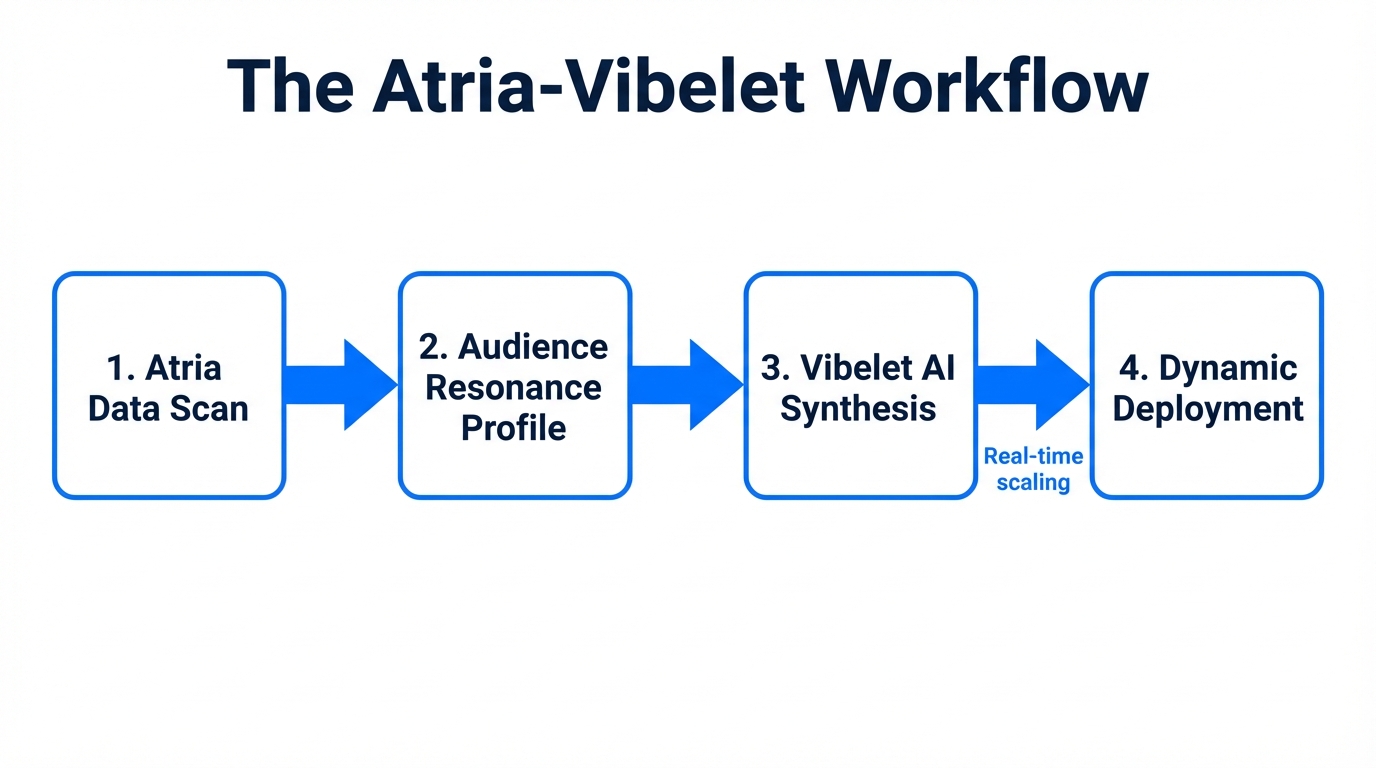
Once the Vibe Brief is established, the next step is execution through high-performance AI brains. Vibelets AI has emerged as the premier performance brain for generating campaign ideas and scripts that maintain brand authenticity at scale. By feeding your Vibe Brief into Vibelets, the platform generates creative variations that aren't just optimized for a keyword, but for a specific "vibe."
Simultaneously, tools like Atria creative intelligence provide the necessary oversight. Atria maintains a library of over 25 million winning ads and uses its proprietary Radar AI to suggest real-time iterative improvements. Instead of looking at CTR in a vacuum, Atria analyzes aesthetic performance—checking if the lighting, pacing, or sound design is actually driving the emotional response intended in your brief.
"Atria's Radar AI allows teams to move from blind A/B testing to intelligent aesthetic iteration, ensuring every pixel aligns with the brand's emotional frequency."
Step 3: The 2026 Vibe-First Tech Stack
Small marketing teams of 1 to 3 people are now outperforming massive agencies by utilizing a vibe-first tech stack. According to industry reports, these lean teams are reporting an 80% reduction in production costs and saving 13-14 hours per week on manual campaign management. The stack focuses on generative tools that prioritize sensory detail.
For visual storytelling, Runway is used to create cinematic brand worlds, while Midjourney allows for hyper-stylized image creation that leans into intentional imperfection. To ensure the content reaches the right audience without the technical debt of traditional data platforms, growth leads use GrowthLoop to bridge the gap between customer data and vibe-consistent segments. When it comes to executing these vibes through human faces, platforms like Stormy AI enable brands to discover and vet creators whose personal aesthetic aligns perfectly with the brand’s Vibe Brief, ensuring that the UGC feels organic rather than manufactured.
Step 4: Sensory Branding and Real-Time Context
Emotional branding in 2026 isn't just about what people see—it's about what they hear and feel. Sonic Branding has become a vital component of the playbook, with tools like Amp helping brands create sonic identities that trigger immediate emotional recall. This is further enhanced by haptic technology from Immersion, allowing mobile users to literally feel the texture of a brand's product through their screen during an ad.
Finally, the most advanced teams are using Real-Time Context Engineering. By integrating Make.com with their creative platforms, marketers can trigger ad variations based on live events—weather changes, trending news, or cultural moments. This ensures the brand vibe is always "in the room" and relevant to the user's current state of mind.
Real-World Examples of Vibe Mastery
Several brands have already set the blueprint for vibe marketing strategy. The Spotify AI DJ is a masterclass in personalized vibe discovery, leading to a 40% increase in weekly engagement by prioritizing the user's mood over just their past listening history. Similarly, Duolingo abandoned polished corporate messaging in favor of mascot-led "unhinged" social content on TikTok, proving that a consistent, even chaotic, personality drives more loyalty than a list of product features.
Even heritage brands like Heinz have leaned into this, using DALL-E to generate images for their "AI Ketchup" campaign. They leaned into the cultural vibe that "ketchup = Heinz," reinforcing their market dominance through playful, AI-driven experimentation. These brands aren't just selling products; they are curating a specific feeling that makes their brand synonymous with a lifestyle or an emotion.
"Authenticity in 2026 is found in the 'messy' and the 'raw.' Over-optimized content is often perceived as 'AI slop' by discerning consumers."
Common Mistakes to Avoid
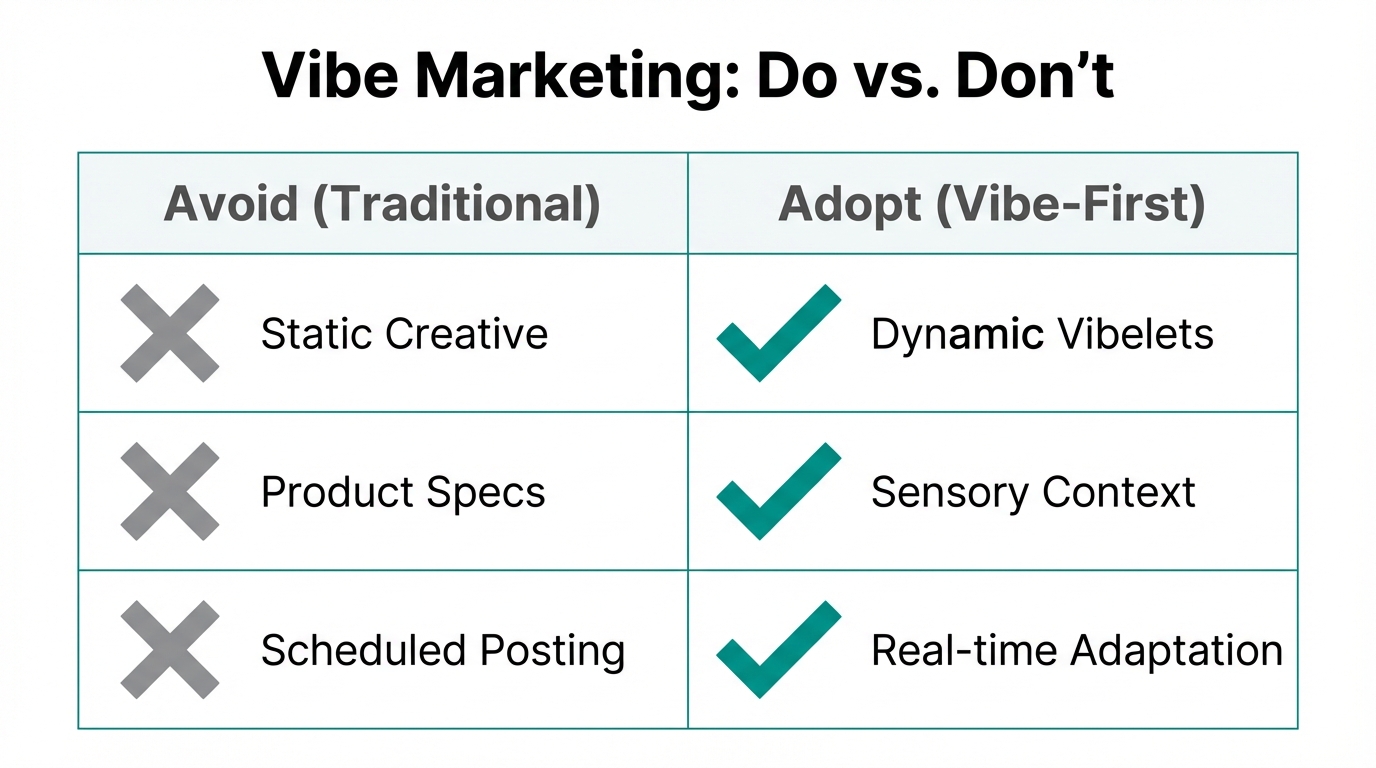
As you transition to a vibe-orchestration model, beware of these common pitfalls:
- AI Slop: Publishing generic, robot-sounding content without human strategic oversight. AI should be the assistant that executes the vibe, not the author of it.
- Ignoring Cultural Context: Running high-energy "hype" campaigns during sensitive cultural moments or in markets that value subtlety.
- Vanity Metric Obsession: Focusing on clicks when 60% of searches in 2026 are zero-click according to search trend analysis. Focus on Trust Signals and your share of the "brand conversation" within AI search results.
- Tech-Led vs. Strategy-Led: Buying a haptic tool or a generative video platform just because it's "cool." Every tool in your stack must serve the Emotional North Star of your Vibe Brief.
Conclusion: The Vibe Orchestrator Mandate
The role of the marketer in 2026 is no longer about managing spreadsheets; it is about managing energy. By moving from technical performance marketing to vibe orchestration, brands can navigate the noise of an AI-saturated world. Start by drafting your Vibe Brief, implementing AI marketing orchestration tools like Vibelets and Atria, and sourcing the right creators through platforms like Stormy AI to bring that vibe to life. Emotional branding 2026 is not a luxury—it is the only way to remain relevant in a future where the strongest vibe wins.