The era of the hyper-polished, airbrushed corporate aesthetic is officially over. For Gen Z, a generation that prizes authenticity and raw emotional resonance over curated perfection, the traditional marketing funnel has been replaced by something far more fluid: the vibe. This isn't just a linguistic trend; it's a measurable shift in commerce. Interest in vibe marketing surged by a staggering 686% in recent years, as brands transition from transactional to emotional storytelling, according to industry reports on the rise of vibe-led commerce. Today, building a brand means moving away from listing product features and toward curating moods, sensory signals, and what marketers are now calling the 'Beautifully Unhinged' aesthetic.
The 'Beautifully Unhinged' Playbook: Lessons from Duolingo and Marc Jacobs
The unhinged marketing aesthetic is defined by content that feels lo-fi, chaotic, and native to platforms like TikTok and Reels. It’s the antithesis of a high-budget commercial. Take Duolingo, which grew to over 17 million followers by leaning into a chaotic mascot vibe that often prioritizes humor and personality over the actual service of language learning. Similarly, luxury brands like Marc Jacobs have abandoned the runway's cold distance for self-aware, meme-driven social content that resonates with the Gen Z brand building ethos.
This shift represents a move toward Identity over Utility. Brands are no longer just tools; they are extensions of the consumer's curated life. Expert thinkers like Greg Isenberg at gregisenberg.com argue that modern brands must design for who the customer aspires to be, prioritizing Emotions First in their content strategy. By ditching the airbrush, brands lower the barrier to entry, making the consumer feel like they are part of an inside joke rather than a target audience.
"The 'unhinged' vibe isn't about lack of control; it is about the radical transparency of human chaos in a digital world of AI-generated perfection."The Claude AI Content Strategy: Engineering 'Chaotic' Scripts
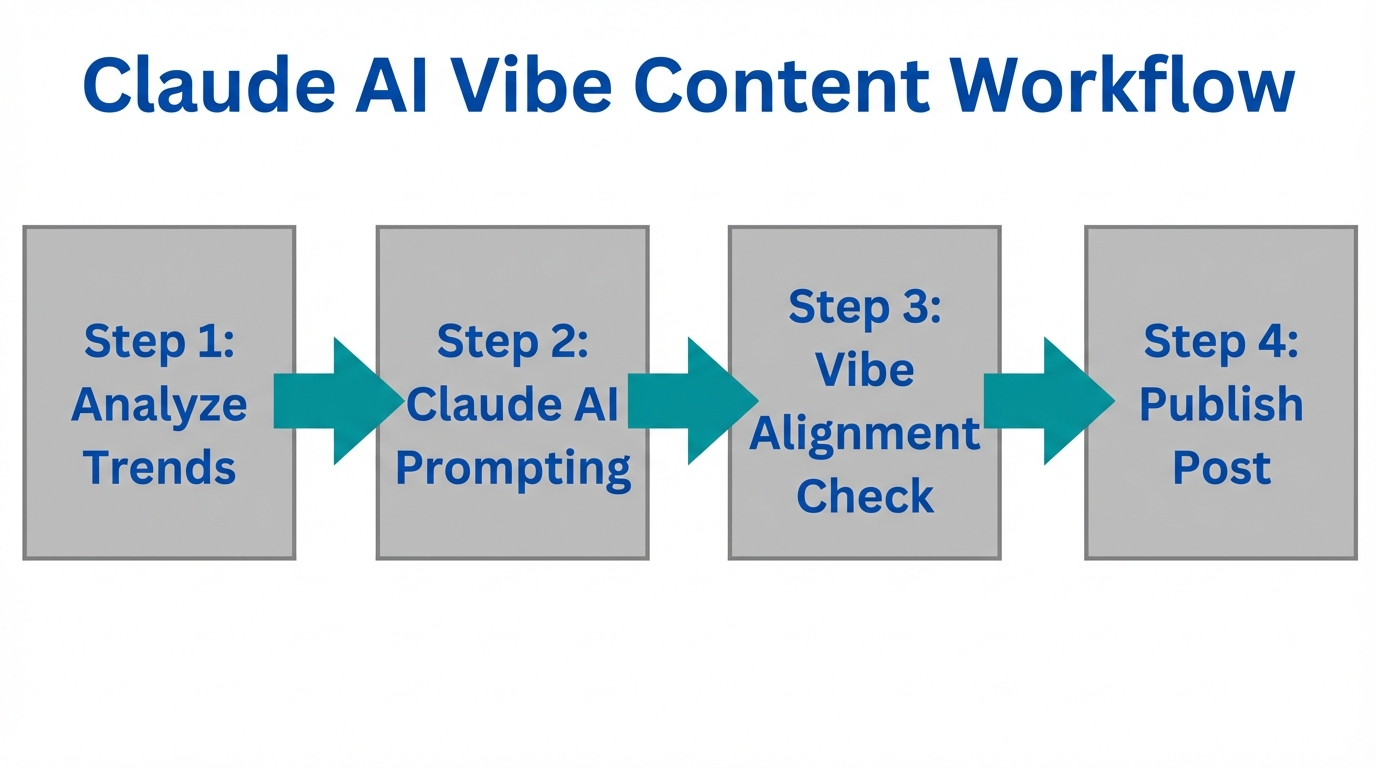
While the output looks accidental, the strategy behind it is often deeply technical. Savvy marketers are leveraging a Claude AI content strategy to bridge the gap between human 'taste' and machine speed. Using Claude allows lean teams to draft scripts that capture the specific, idiosyncratic voice of Gen Z without the 'uncanny valley' feel of older LLMs. Claude excels at nuances—sarcasm, self-deprecation, and specific niche references—that are essential for a vibe-first approach.
Applying the VIBE Framework
To implement this, marketers should follow the VIBE acronym as suggested by industry leaders:
- V – Velocity: Using tools like n8n and Claude to move at the speed of culture, launching campaigns in 24 hours rather than weeks.
- I – Identity: Focusing on the mood or 'aura' of the content rather than just the product specifications.
- B – Boundaryless: Removing the silos between the creative team and the data analysts to iterate in real-time.
- E – Emotions First: Defining how the viewer should *feel* before a single frame is shot.
By using Claude as a collaborative 'brain,' one marketer can effectively do the work of a five-person creative team. This efficiency allows for a high volume of 'shots on goal,' which is critical on platforms where the algorithm dictates success based on rapid engagement spikes. Agencies like The Vibe Agency emphasize that this high-velocity output is the only way to stay relevant in a 24-hour news cycle.
| Metric | Traditional Marketing | Vibe-Led Marketing |
|---|---|---|
| Content Polish | High / Airbrushed | Lo-fi / Authentic |
| Production Time | 3-6 Weeks | 24-48 Hours |
| Conversion Rate | Baseline | +39% Higher |
| Consumer Recall | Standard | +70% (with Sensory) |
Performance Data: Why Unpolished Content Wins
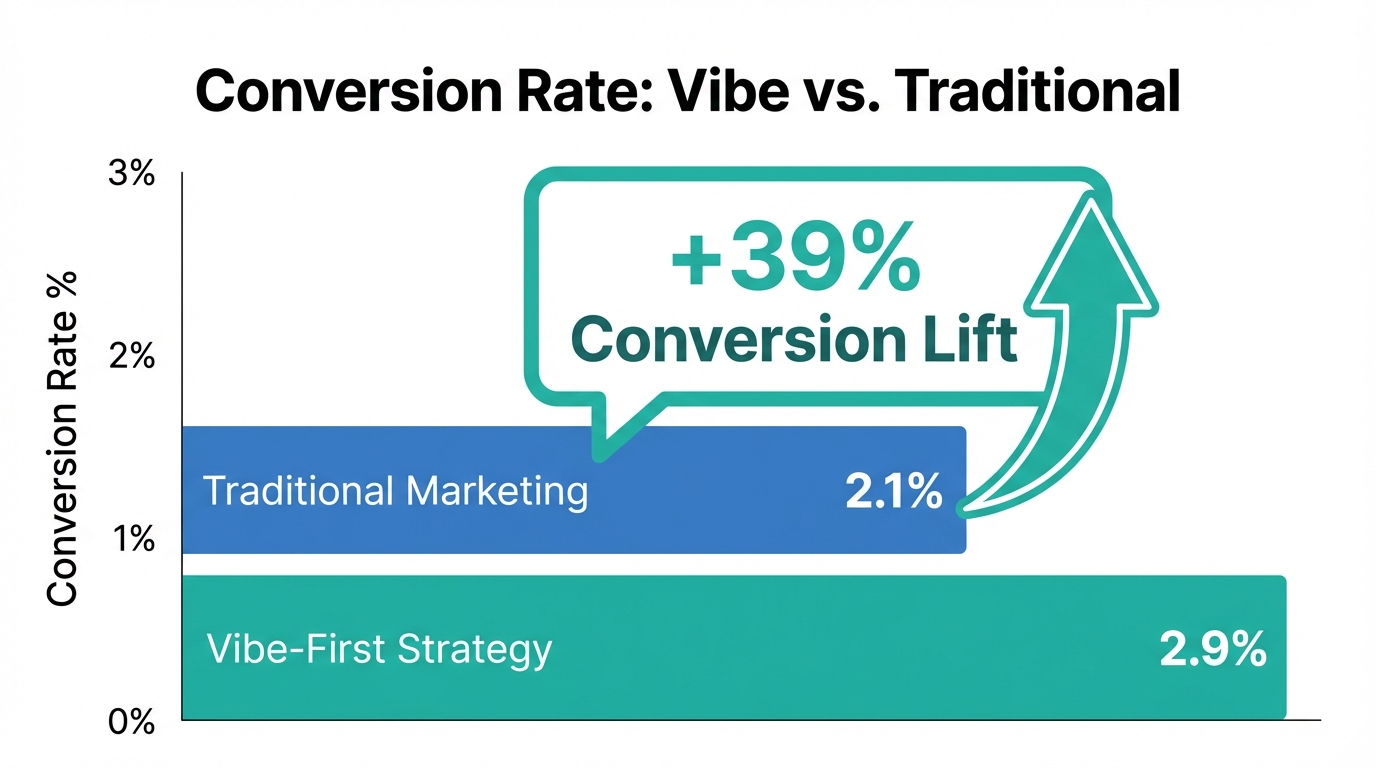
The move to a 'vibe' isn't just about aesthetics; it's about the bottom line. Research from BCG shows that companies using AI-driven vibe strategies report 39% higher conversion rates and 60% greater revenue growth than their traditional peers. This is because unpolished content removes the 'sales' friction. When content feels like a recommendation from a friend, trust is built instantly. Vibe-led workflows reduce production costs while simultaneously increasing the dwell time of users who would otherwise scroll past a standard ad.
Furthermore, incorporating sonic branding and scent identity is becoming a non-negotiable part of the UGC marketing playbook. Brands are treating audio logos—those 3-second sound bites at the start of a video—as critical assets. According to ScentAir, multi-sensory branding can improve brand recall by up to 70%. Even in a digital-first world, the 'vibe' is a multi-sensory experience that extends from the screen to the real world.
"In a world of infinite content, the only thing that cannot be commoditized is the specific emotional frequency your brand emits."Scaling UGC and Creator Economy Integration
Scaling a vibe-led strategy requires more than just high-quality AI prompts; it requires a robust network of creators who embody that vibe. This is where UGC (User-Generated Content) becomes the fuel for the engine. Managing these relationships manually is impossible at scale, which is why brands are integrating AI into their influencer management workflows. Platforms like Stormy AI allow marketers to source creators across TikTok, Instagram, and YouTube using natural-language search, ensuring the 'vibe' of the creator matches the campaign goals perfectly.
By using an AI creator CRM, brands can track interactions, manage payments, and monitor campaign performance in one place. Instead of spending weeks vetting influencers for fake followers, modern tools like Stormy AI provide AI-powered quality reports in seconds. This allows brands to focus on the creative direction—the 'what' and 'why'—while the AI handles the 'how' of discovery and outreach.
Integrating the Tool Stack
A modern growth stack for 2025 focuses on connectivity and intelligence. You might use Canva AI for rapid visual iterations, then pair it with Stormy AI to find the right UGC creators to bring those visuals to life. For broader outreach and general customer relationship management, traditional platforms like Salesforce can be used to manage the long-term sales funnel, but the 'top of the funnel' vibe-check is increasingly handled by agentic platforms like Averi AI which automate A/B testing and optimization.
Common Mistakes: Avoiding 'Vibe Washing'
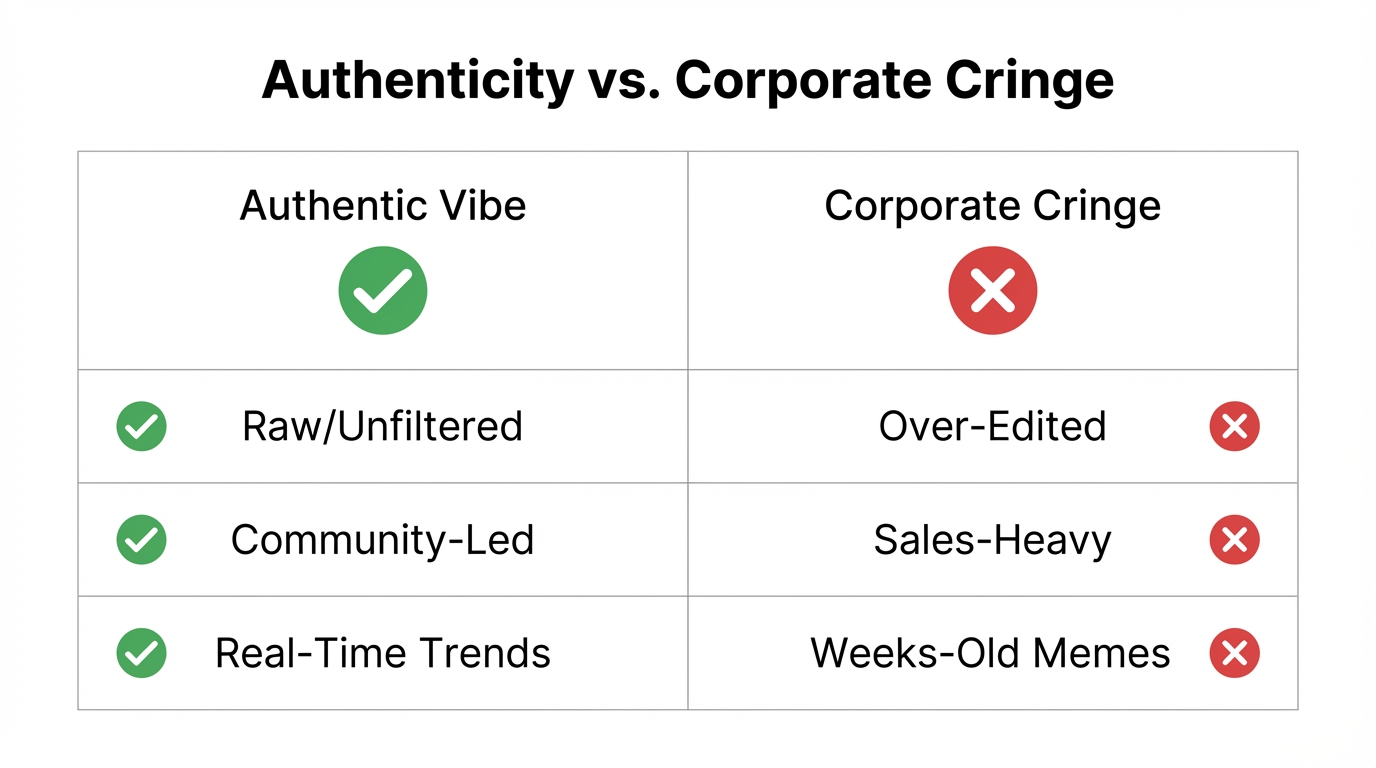
As brands rush to adopt this new aesthetic, many fall into the trap of Vibe Washing—chasing trends like 'brat' or 'cottagecore' without authentic alignment. This is a fatal error in Gen Z brand building. If the content doesn't align with the brand’s core identity, the audience will sniff it out instantly. 50% of users will delete brand emails or ignore content if it doesn't pass a quick, intuitive 'vibe check' on mobile, a challenge often discussed on Social Media Today.
Another common mistake is relying on Generic AI Output. Letting AI write middle-of-the-road content results in a brand that sounds like everyone else. The goal is to use AI to augment human taste, not replace it. The most successful 'vibe' campaigns, like Liquid Death, succeed because they have a strong, unwavering point of view that the AI is then trained to amplify.
Conclusion: The Future is Vibe-First
The transition to vibe marketing is more than a trend; it's a structural change in how consumers interact with the digital world. By leveraging Claude AI content strategies, embracing the unhinged marketing aesthetic, and using tools like Stormy AI to source authentic UGC creators, brands can build a sustainable, high-growth presence that resonates with Gen Z. Authenticity is the new currency, and in a world of AI-generated noise, the brands that win will be those that prioritize human feeling over robotic perfection. Start by auditing your current 'vibe'—if it feels too safe, it might be time to get a little unhinged.