The Vibe Marketing Playbook: Building Emotionally Resonant Brands with Claude Code
Learn how to use a vibe marketing strategy and Claude Code for marketing to build adaptive ecommerce brands that boost conversion rates by 25% in 2026.
In the digital landscape of 2026, the traditional linear marketing funnel has officially been retired. Consumers no longer move predictably from 'Awareness' to 'Consideration' to 'Purchase' through a series of static, one-size-fits-all landing pages. Instead, we have entered the era of vibe marketing—a strategy where brand building is centered on emotional resonance, cultural alignment, and real-time adaptation. Today, top-performing ecommerce brands aren't just selling products; they are curating digital atmospheres that mirror the visitor’s intent and emotional state.
Driving this shift is the rise of agentic AI tools like Claude Code. By leveraging AI personalization in ecommerce, brands are now able to generate thousands of real-time content variations that feel uniquely human. According to research from McKinsey, companies using AI for hyper-personalization have seen a 25% increase in conversion rates and a 10–15% boost in Average Order Value (AOV). This guide serves as your playbook for mastering this new frontier of ecommerce brand building.
Understanding Vibe Marketing in 2026: The Death of the Static Funnel
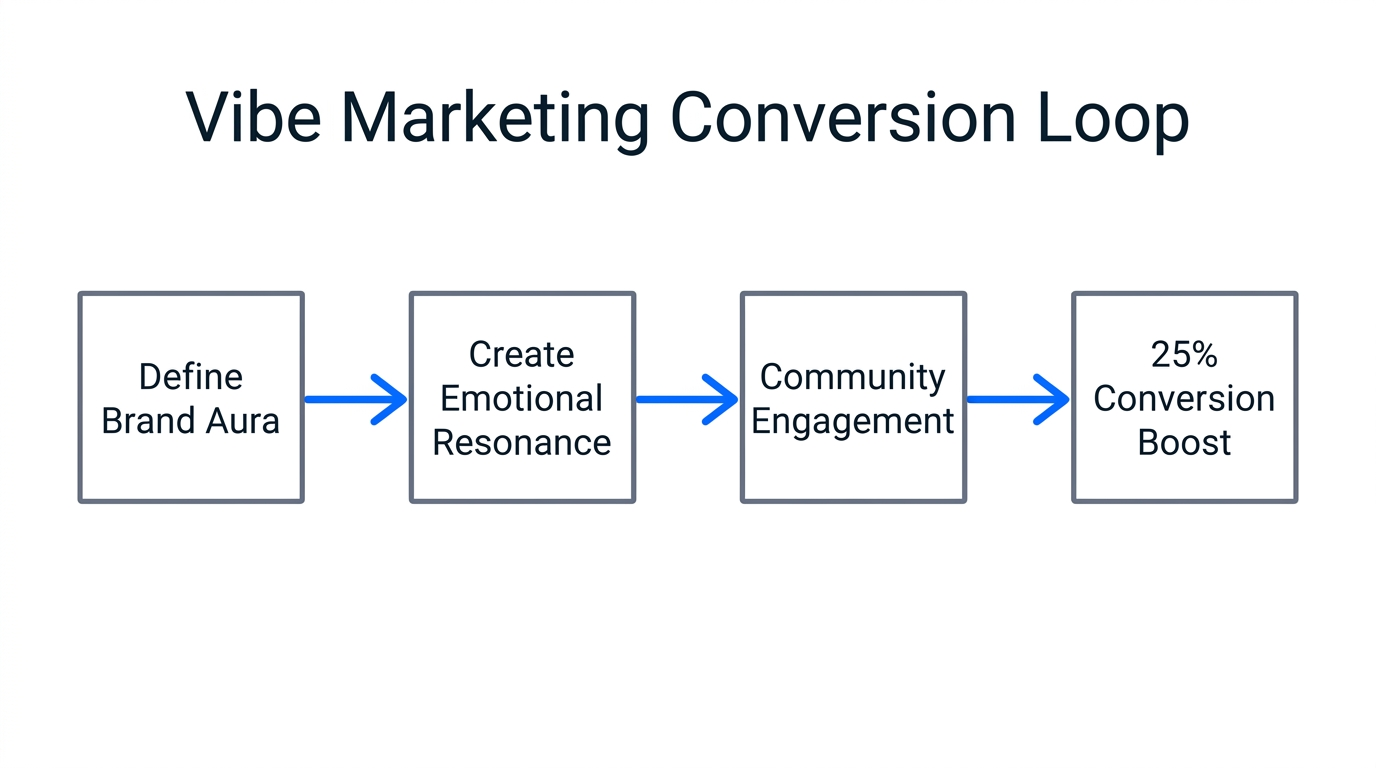
Vibe marketing is the strategic practice of prioritizing a brand's emotional frequency over its functional utility. While old-school marketing focused on 'features and benefits,' vibe marketing focuses on 'identity and feeling.' This shift is a response to a saturated market where mobile devices account for over 65% of all web traffic, and users decide within milliseconds if a brand "gets" them.
The data supports this transition. Top-tier performers in the ecommerce space now achieve conversion rates upwards of 11.45%, while the industry average languishes at 6.6%, according to Nudge. The difference lies in the 'vibe.' Static pages feel like a sterile retail aisle; adaptive 'vibe' pages feel like a conversation with a friend.
"Vibe marketing isn't about the transaction; it's about the feeling of belonging before the 'Buy' button is even clicked."
| Feature | Traditional Funnel (2023) | Vibe Marketing (2026) |
|---|---|---|
| Content | Static Sales Copy | Adaptive Storytelling |
| Technology | Standard CMS | AI-Agentic (Claude Code) |
| Goal | Direct Conversion | Emotional Resonance |
| Data Source | Cookies/Pixels | Model Context Protocol (MCP) |
How to Use Claude Code to Generate Real-Time Content Variations
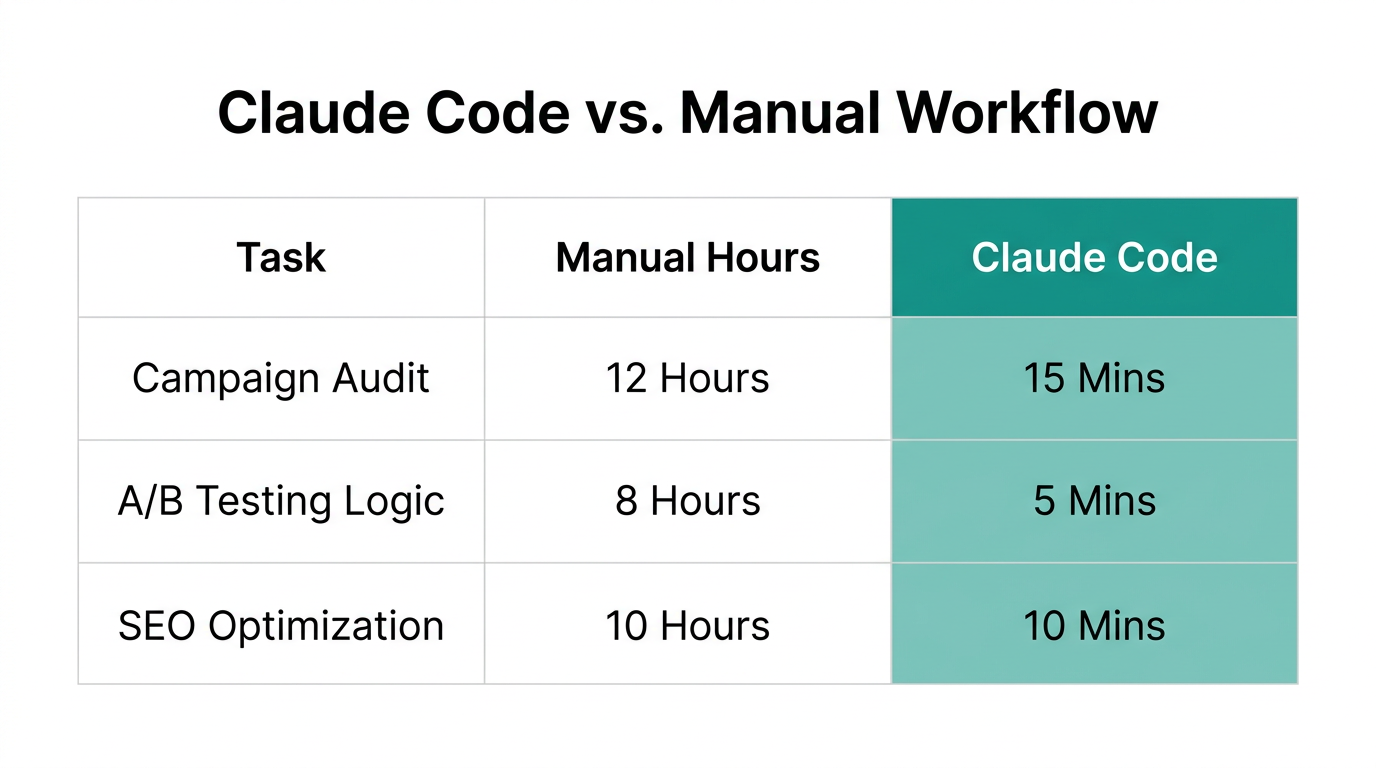
The backbone of a modern vibe marketing strategy is Claude Code, Anthropic’s agentic coding tool that has reached a $2.5 billion run-rate revenue as of early 2026. Unlike simple chat interfaces, Claude Code allows brand managers to modify their site’s logic and UI on the fly. Approximately 34% of tasks on the platform are now dedicated to software modification and coding, making it the premier tool for building adaptive frontends, according to DemandSage.
The Strategy-First Prompting Workflow
To avoid the dreaded "AI Look"—characterized by generic gradients and stock layouts—you must feed Claude Code your Ideal Customer Profile (ICP) and Unique Selling Proposition (USP) before a single line of code is written. Expert developers, as noted on r/ClaudeAI, warn that AI lacks inherent "taste," so humans must provide the emotional nuance.
- Define the Vibe: Prompt Claude to analyze your brand book and competitor links.
- Generate Intent Gaps: Ask Claude: "Identify gaps in these competitors and draft 3 hero headlines + 1st-person CTAs before generating the Next.js components."
- Deploy Variants: Use Claude Code to generate 50 variations of a landing page, check character limits, and deploy them to a Vercel staging environment automatically.
This workflow, often called "Action AI," allows marketing teams to move from idea to execution in minutes. Data from Marketing LTB suggests that AI coding assistants like Claude Code improve developer workflow speed by 28–44%.
The 70% Growth Secret: Storytelling Over Selling
One of the most striking trends in 2026 is the success of brands that dedicate 50% or more of their page real estate to brand storytelling rather than product grids. The fashion leader J. Lindeberg recently migrated to an AI-supported Shopify Plus setup and saw a 70% increase in sales by implementing this exact ratio.
By using Claude Code to build immersive, narrative-driven sections, you can bridge the gap between high-intent shopping and emotional discovery. This is especially critical for mobile users, who are 20% more likely to purchase if they feel a sense of interactivity or brand depth, according to SuperAGI.
"Storytelling is the utility of the 2026 internet. If people don't feel the story, they don't see the product."
Integrating Model Context Protocol (MCP) for Hyper-Personalization
A major breakthrough in personalized customer acquisition is the Model Context Protocol (MCP). This standard allows Claude Code to pull live data directly from your Shopify backend, Google Ads, or CRM systems.
With MCP, your landing page is no longer a static document. It is a living entity that knows:
- What the customer previously bought (via Stripe or Shopify data).
- Which influencer lead them here (via integration with creator platforms like Stormy AI).
- What their current local weather is (to suggest relevant apparel).
By connecting Claude Code to these live data streams, you can build "Agentic Coding Teams" that audit your page performance in under 30 seconds, swapping out underperforming assets for new, AI-generated variations that align with current performance trends.
Maintaining E-E-A-T: Avoiding the Generic AI Trap
The biggest risk of using Claude Code for marketing is the potential for content to feel hollow. Google’s Helpful Content standards and E-E-A-T (Experience, Expertise, Authoritativeness, and Trustworthiness) metrics have become even more sophisticated in 2026. To maintain trust, brands must manually insert "human-in-the-loop" elements.
Expert advice from seoTuners suggests that strategic placement of expert proof and real customer quotes is the only way to satisfy modern search algorithms. Do not let Claude generate your testimonials; use Claude to optimize the layout of your real testimonials.
Avoiding the "AI Look"
According to design experts at Mejba Ahmed, many AI-generated sites fail because they rely on default styles. To fix this:
- Use the Figma MCP to extract your exact design tokens from Figma and feed them to Claude.
- Instruct Claude to use lean, utility-first libraries like Tailwind CSS and Shadcn UI to ensure the code remains fast.
- Implement performance hooks that block deployments if your Core Web Vitals score drops below 90 on Vercel.
Fueling the Vibe with Real People
No amount of AI coding can replace the raw authenticity of a real human creator. To truly master vibe marketing, your AI-driven landing pages should be populated with UGC (user-generated content) that matches the visitor's niche. This is where Stormy AI becomes an essential part of your growth stack. By using Stormy's AI search engine, you can find creators on TikTok, Instagram, and YouTube who already embody your brand's desired 'vibe.'
When you find the right influencers, you can use Claude Code to build specific "creator-led funnels" that feature those influencers' content prominently. Combining the efficiency of AI-powered creator discovery on Stormy AI with the adaptive web design of Claude Code creates a powerful synergy for ecommerce brand building.
The Future is Adaptive
As we navigate 2026, the brands that win will be those that view their website not as a digital brochure, but as an emotionally intelligent agent. By adopting a vibe marketing strategy and empowering your team with tools like Claude Code and Stormy AI, you can create commerce experiences that are as dynamic as the humans they serve.
Start by identifying your brand's "Vibe Blueprint," connect your Shopify data via MCP, and begin the transition from static selling to adaptive storytelling. The 25% conversion lift is waiting for those brave enough to stop selling and start vibrating at the right frequency.