In the rapidly evolving digital landscape of 2025, a seismic shift has occurred in how brands communicate with their audiences. We have moved past the era of feature-dumping and hyper-polished advertisements into the age of emotional resonance. This phenomenon, known as "Vibe Marketing," is no longer just a buzzword used by creative agencies; it is a data-driven strategy that leverages Claude AI to bridge the gap between raw aesthetic trends and high-speed technical execution. For modern marketers, the goal is no longer just to sell a product, but to curate a mood that consumers want to inhabit.
Defining Vibe Marketing: The Convergence of Emotion and AI
Vibe marketing represents the evolution of brand building where the aesthetic pillar and the technical pillar converge. It is the practice of prioritizing a brand's "feeling"—its sensory signals, curated moods, and unpolished authenticity—over its technical specifications. This shift is largely driven by Gen Z and Millennial consumers who have developed a psychological immunity to traditional, high-gloss marketing tactics. According to research from The Vibe Marketer, the strategy is defined by two core components:
- The Aesthetic Pillar: Moving away from airbrushed perfection toward "vibes"—unfiltered, lo-fi content that feels native to social platforms.
- The Technical Pillar (Vibe Coding): Utilizing agentic marketing tools and no-code automation to execute these complex, multi-channel campaigns at 10x speed.
The Vibe Shift by the Numbers: Why 2025 is Different
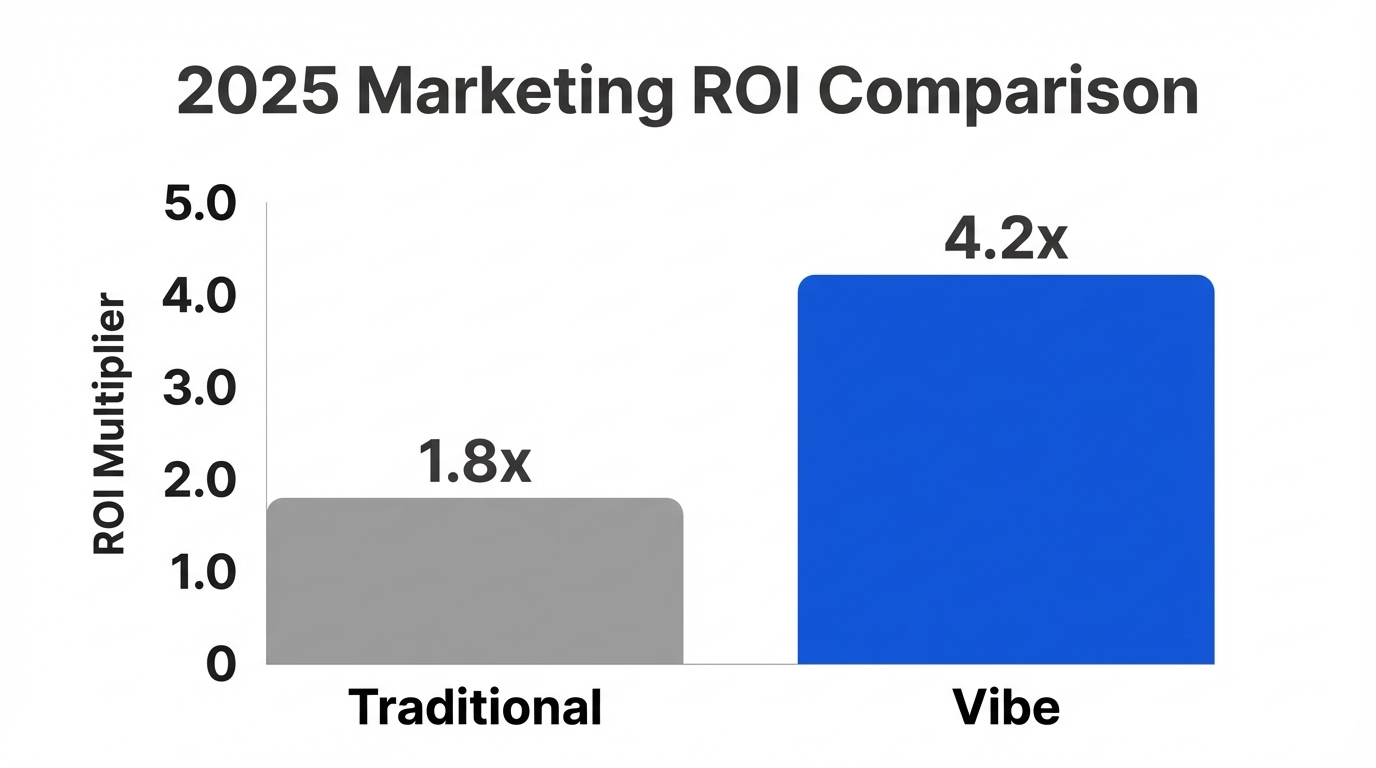
The transition toward vibe-first strategies isn't just a matter of taste; it is backed by staggering growth metrics. Interest in the term "vibe marketing" has surged by 686% over the last 12 months. This isn't just limited to startups or niche DTC brands; approximately 47% of Fortune 500 companies have already integrated vibe-first elements into their 2025 strategies. The financial incentives are clear: companies employing AI-driven vibe strategies report 39% higher conversion rates and 60% greater revenue growth compared to those sticking to legacy frameworks, according to BCG.
"Interest in 'vibe marketing' surged 686% in 2025, marking the end of the traditional feature-led sales funnel."
Furthermore, the efficiency gains provided by tools like n8n and Claude AI allow a single marketer to perform the workload previously reserved for a 5-person team, reducing campaign production time by up to 75%. This speed is essential because vibe marketing thrives on cultural velocity—the ability to react to a trend before it becomes stale.
The Aesthetic Pillar: Embracing the "Beautifully Unhinged"
Why are Gen Z and Millennials obsessed with lo-fi authenticity? Because in an era of AI-generated deepfakes and corporate platitudes, imperfection is a trust signal. Brands like Marc Jacobs and Loewe have pioneered the "beautifully unhinged" aesthetic, ditching professional lighting for shaky camera work and chaotic energy that feels human. This approach prioritizes personality over product specs, making the brand feel like a friend rather than a faceless entity.
This aesthetic also extends to sensory branding. Research from ScentAir suggests that multi-sensory branding—including signature scents and unique sonic identities—can improve brand recall by up to 70%. In 2025, your brand's "vibe" is defined by the three-second audio logo at the start of a TikTok and the specific color grading of your Instagram Reels.
Leveraging Claude AI to Generate High-Resonance Signals
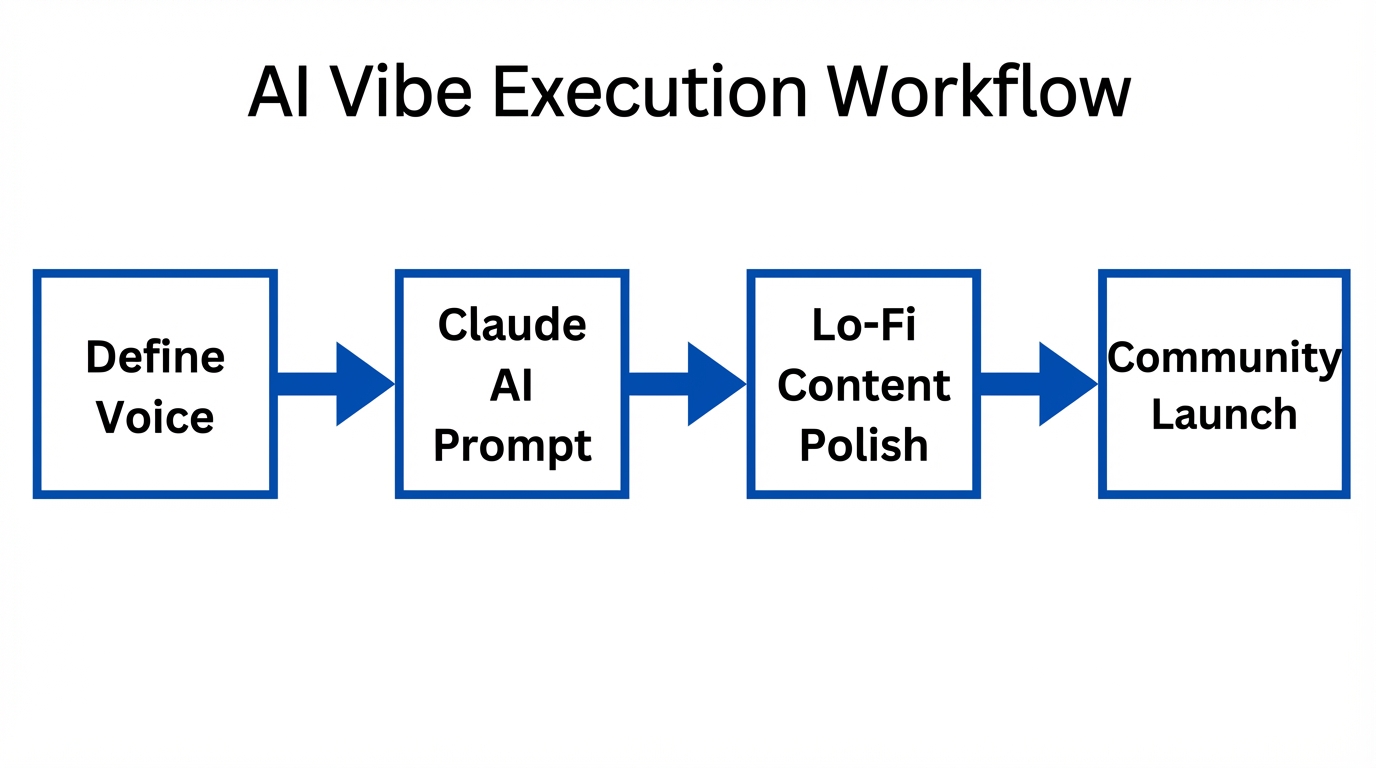
The challenge for many marketers is how to maintain a "vibe" while scaling. This is where Claude AI for marketers becomes indispensable. Unlike older LLMs that can produce generic, robotic text, Claude excels at capturing nuanced tone and "human-like" wit. Marketers are using Claude as a cultural translator—feeding it raw social data and asking it to output content that aligns with specific subcultural vibes without sounding like a "fellow kids" meme.
| Marketing Element | Traditional Approach | Vibe Marketing (AI-Led) |
|---|---|---|
| Content Quality | Highly Polished/Studio | Lo-fi/Authentic |
| Production Speed | 3-4 Weeks | 24-48 Hours |
| Primary Goal | Feature Awareness | Emotional Resonance |
| Success Metric | Click-Through Rate (CTR) | Dwell Time & Recall |
By using Claude to analyze high-resonance brand signals, marketers can identify the specific emotional triggers that drive their community. This allows for agentic marketing, where AI tools handle the research and optimization autonomously, letting the human creative focus on the "gut-check" and high-level strategy.
The VIBE Framework for 2025
Expert marketing thinkers like Greg Isenberg have codified this approach into the VIBE acronym. This framework helps brands move away from rigid silos and toward a more fluid, emotion-first structure.
V – Velocity
In 2025, culture moves too fast for monthly approval cycles. You must move at the speed of the internet. Using tools like Zapier to automate content distribution ensures that your brand remains relevant in real-time conversations.
I – Identity
Design for who the customer aspires to be. People don't buy Liquid Death because they are thirsty; they buy it because they identify with the heavy metal, anti-corporate vibe the brand projects.
B – Boundaryless
The most successful vibe-led companies remove the silos between their creative, data, and social teams. Information must flow freely so that the "vibe" remains consistent across every touchpoint, from an email subject line to a Discord community post.
E – Emotions First
Define the target feeling first. Do you want your audience to feel empowered, relaxed, or playfully annoyed? Build your content backward from that emotional goal rather than starting with a list of product features.
"The key to scaling in 2025 is defining the target feeling first, then building the technology stack to deliver it at scale."
Sourcing Authenticity: Finding the Right Vibe Creators
A significant portion of vibe marketing relies on User-Generated Content (UGC) and creator collaborations. However, finding creators who authentically embody a specific subculture can be a manual nightmare. Platforms like Stormy AI streamline this by allowing brands to search for creators using natural language prompts. Instead of filtering by follower count alone, you can find "fitness creators in LA who have a minimalist, lo-fi aesthetic," ensuring that the creators you partner with already match the vibe you are trying to project.
Once you've identified the right partners, tools like Stormy AI can help manage the entire outreach process through AI-personalized emails, allowing you to maintain that human touch while scaling your creator network to hundreds of contributors.
The Shift from Funnels to Community Spaces
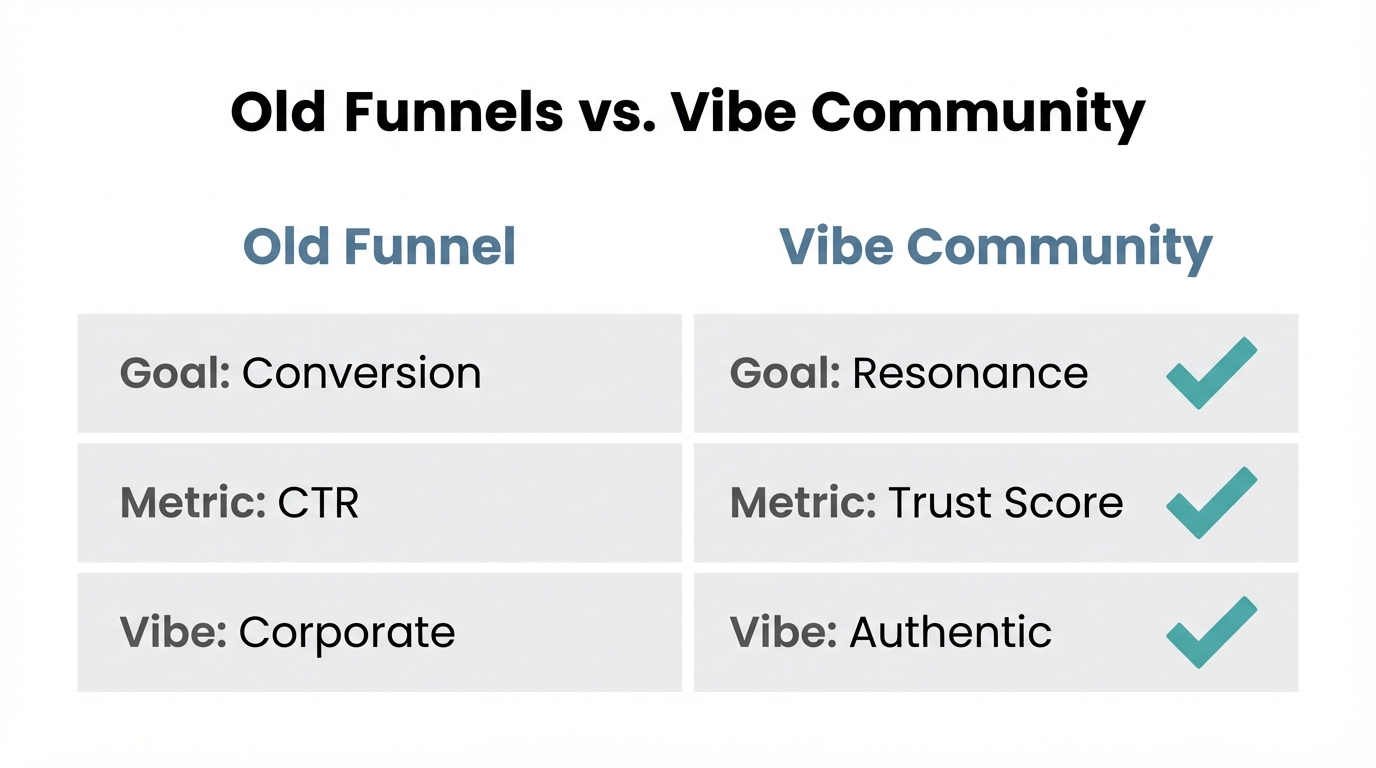
The traditional sales funnel—Awareness, Interest, Desire, Action—is being replaced by private, community-led spaces. Marketing is shifting to platforms like Discord and Reddit where the vibe of the community dictates brand loyalty. In these spaces, the brand acts as a facilitator rather than a broadcaster.
Success in these spaces requires a "vibe check"—a gut-check feedback loop where engagement dictates content strategy in real-time. Brands like Duolingo have mastered this by using a "chaotic mascot" vibe to grow to 17M+ followers, effectively turning their marketing into a form of community entertainment.
The 2025 Vibe Marketing Playbook
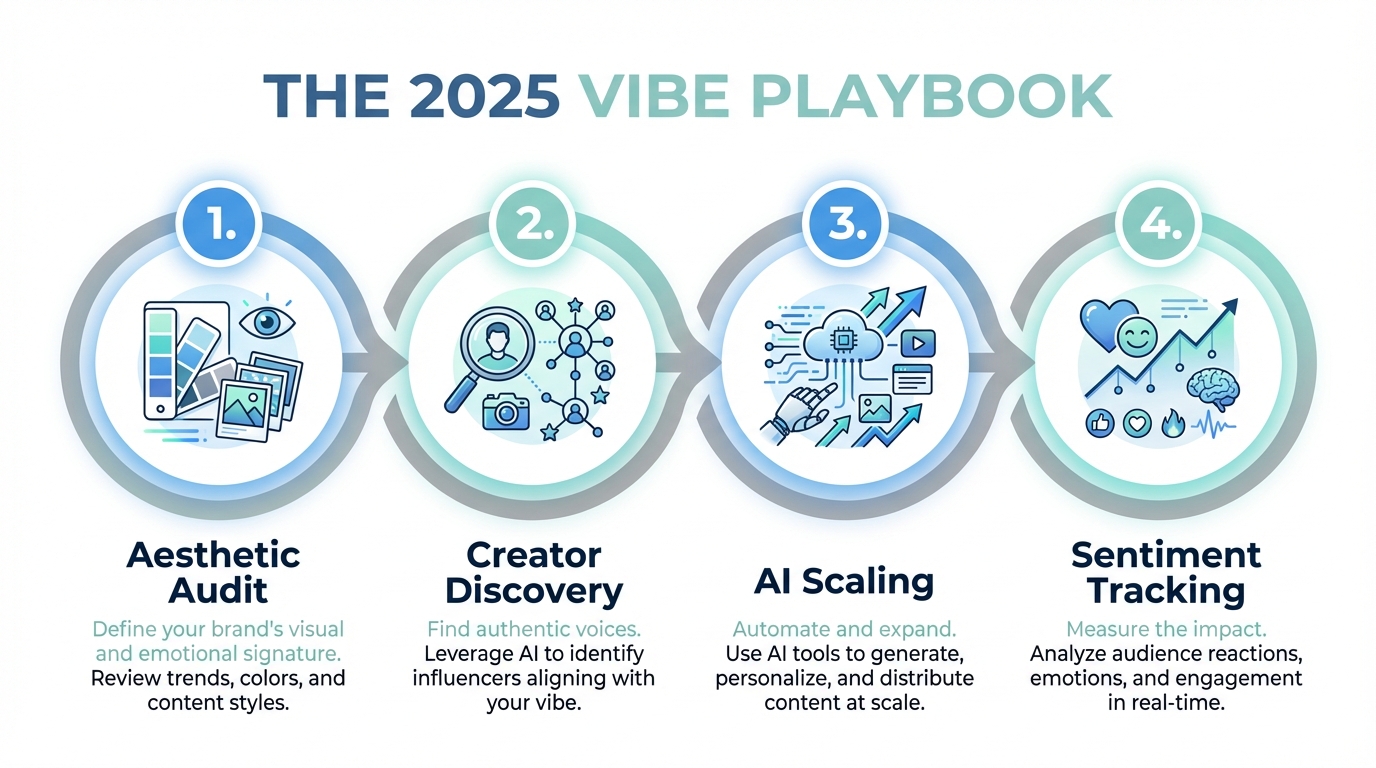
To implement this in your own organization, follow this sequential 5-step playbook:
- Step 1: Audit Your Sensory Identity. Use tools like SoundOut to test your sonic branding. Does your audio logo evoke the right emotion?
- Step 2: Build Your Vibe Stack. Combine Claude (the brain), n8n (the body), and Midjourney (the senses) to automate content creation.
- Step 3: Define Your Aspiring Identity. Use Claude to research your target audience's aspirations. What subcultures do they belong to? What aesthetic do they trust?
- Step 4: Launch a "Unhinged" Pilot. Create a lo-fi, TikTok-first campaign that prioritizes personality over product. Don't over-edit.
- Step 5: Measure Emotional Recall. Move beyond clicks. Use surveys and AI sentiment analysis to measure how your brand is perceived emotionally.
Common Mistakes: Avoiding the "Vibe Washing" Trap
As brands rush to adopt these trends, many fall into the trap of vibe washing—chasing a trend (like "brat" or "cottagecore") without authentic alignment. Research shows that 62% of Gen Z will stop buying from brands they perceive as disingenuous. If your brand's core values don't align with the aesthetic you're projecting, the audience will see through it immediately.
Another common failure is relying too heavily on generic AI output. While Claude is an incredible tool, it requires human "taste" to guide it. AI democratizes the how of marketing, but humans must still provide the what and the why. Finally, ignoring mobile optimization is a fatal error; 50% of users will delete a brand email if it doesn't pass a quick mobile "vibe check" within seconds.
The Ultimate Vibe Marketer’s Tool Stack
To scale your brand growth in 2025, you need a modern tech stack that supports both creativity and automation.
| Category | Recommended Tool |
|---|---|
| Generative AI (Strategy) | Claude |
| Video Generation | Runway Gen-3 |
| Unified CRM | Notion |
| Creator Sourcing | Stormy AI |
| Visual Design | Canva AI |
The Future of Resonance
Vibe marketing isn't just a fleeting trend; it is the natural response to a world saturated with content. By combining the emotional intelligence of human-led aesthetics with the technical speed of Claude AI, brands can create lasting connections that transcend simple transactions. The winner in 2025 isn't the brand with the biggest budget, but the brand that best understands the "vibe" of its community and can deliver that feeling at the speed of culture.
Ready to find the creators who truly match your brand's vibe? Start by exploring modern influencer discovery tools and build a strategy that resonates with the next generation of consumers.